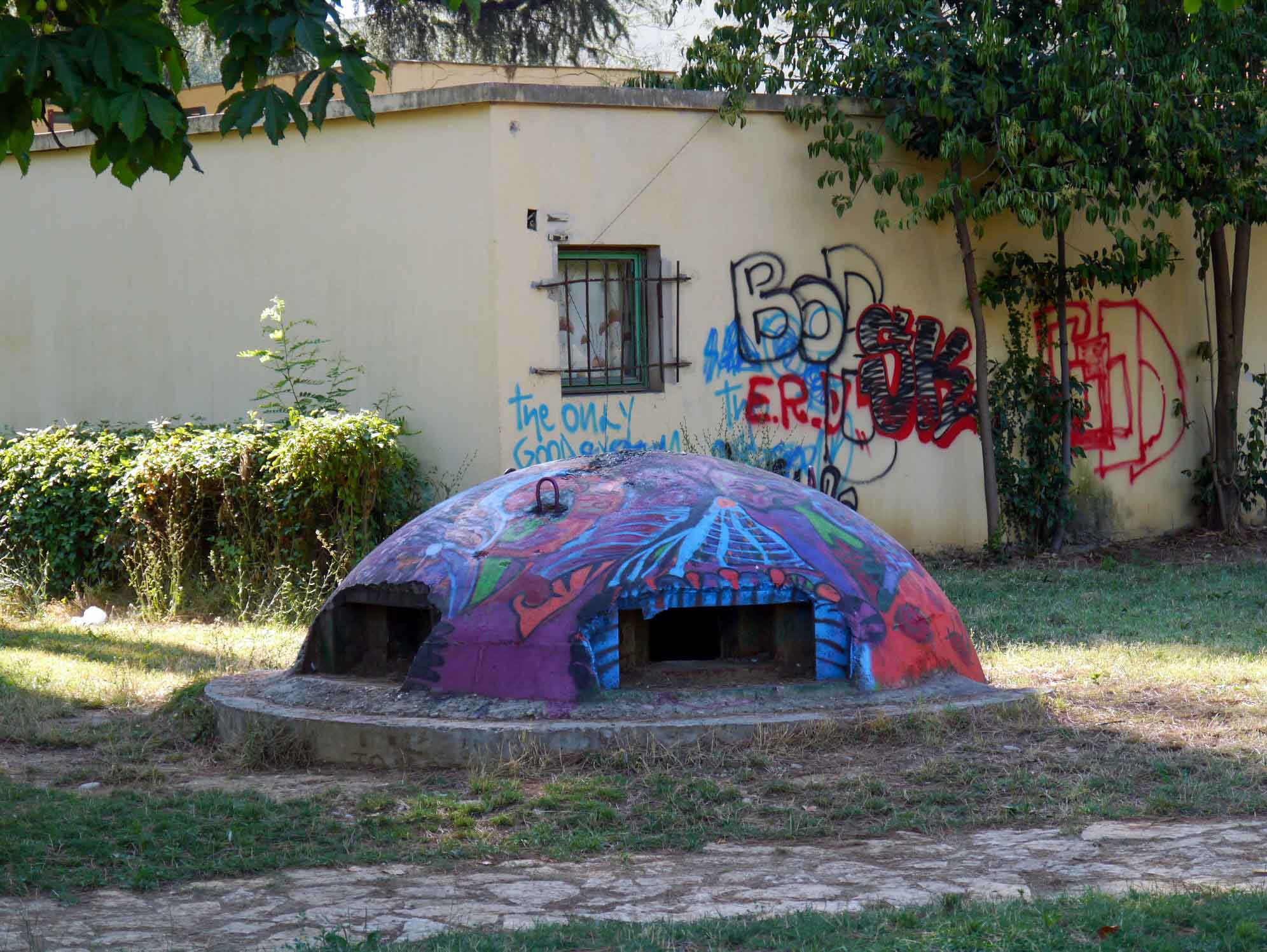
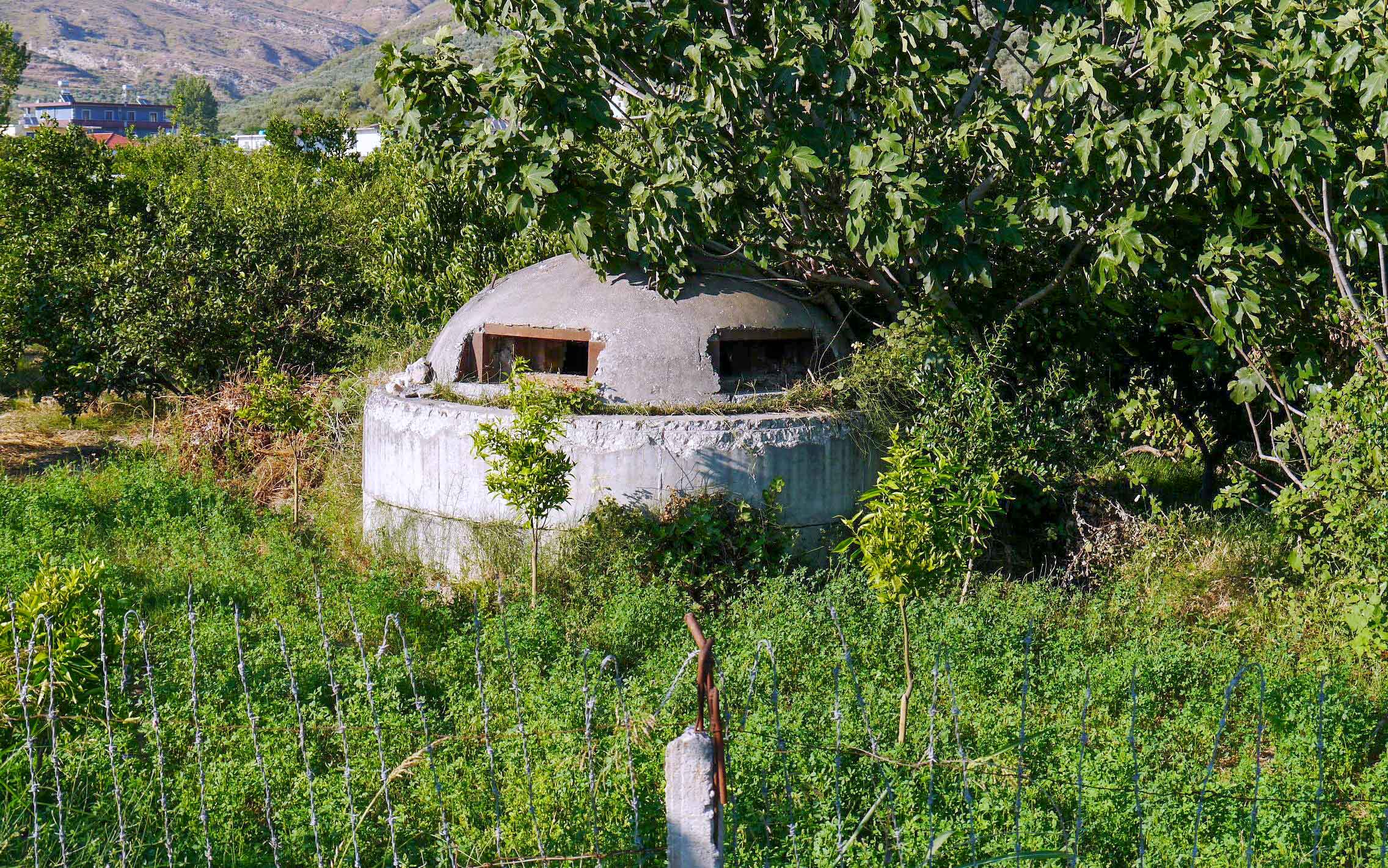
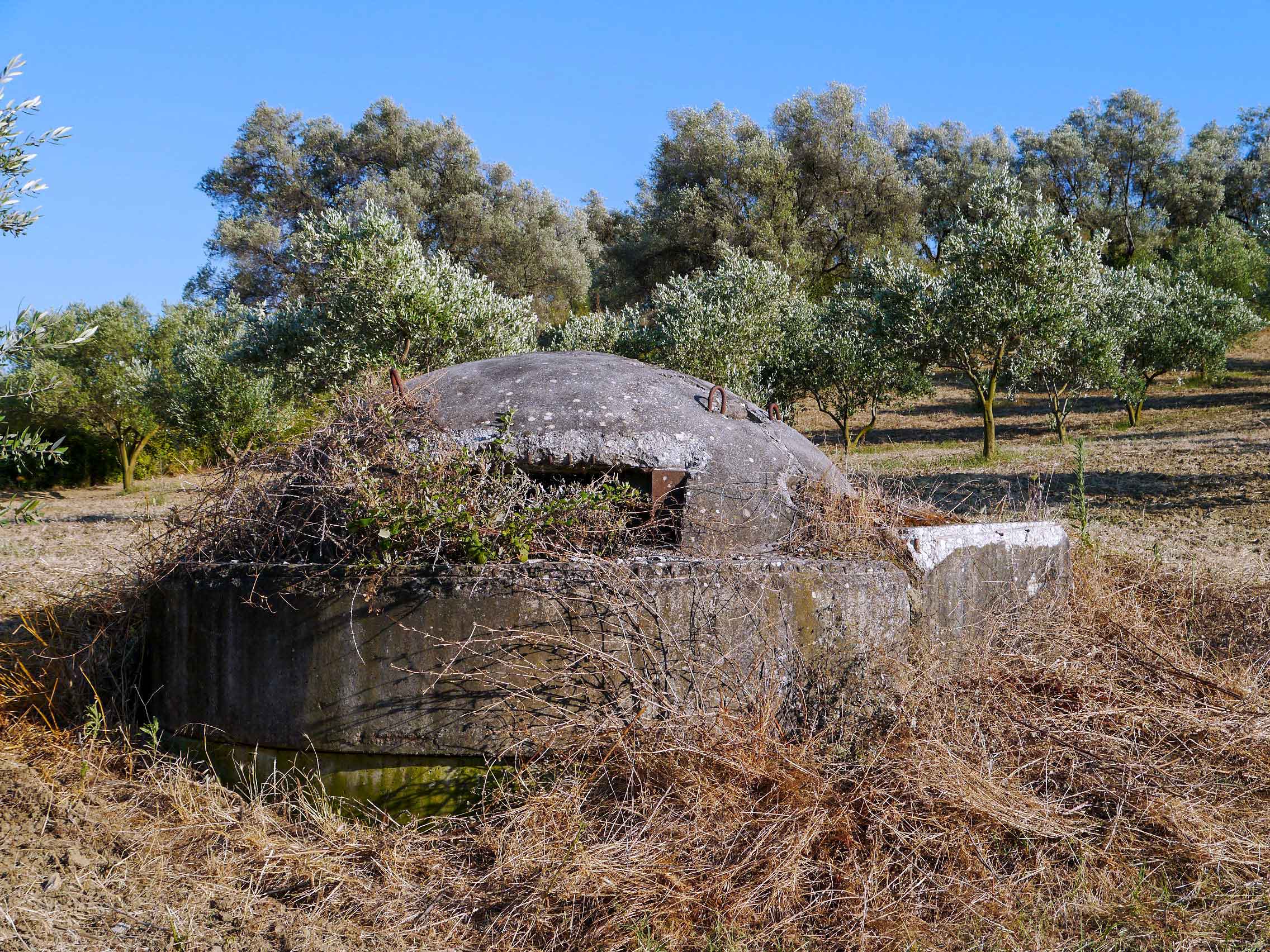
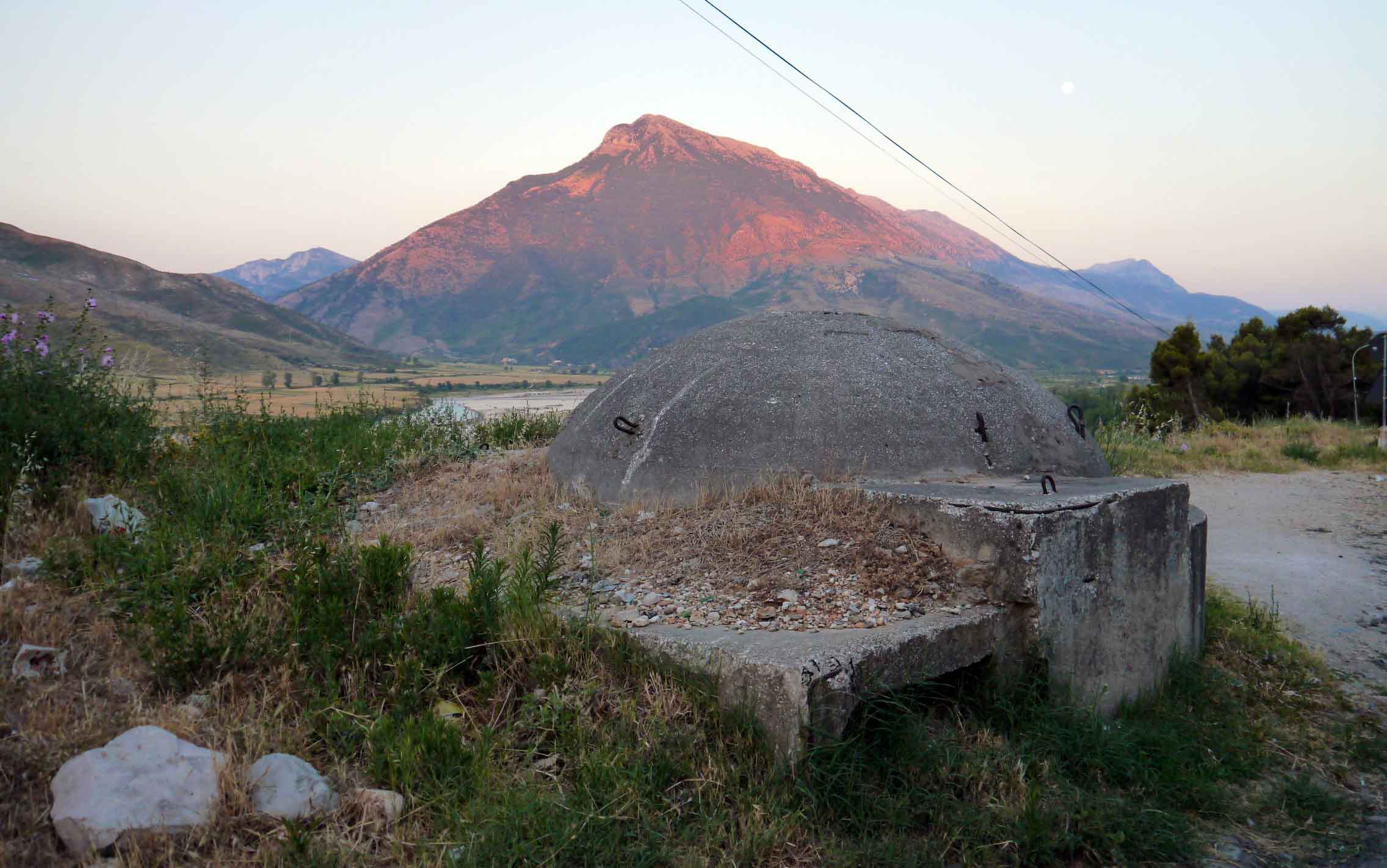
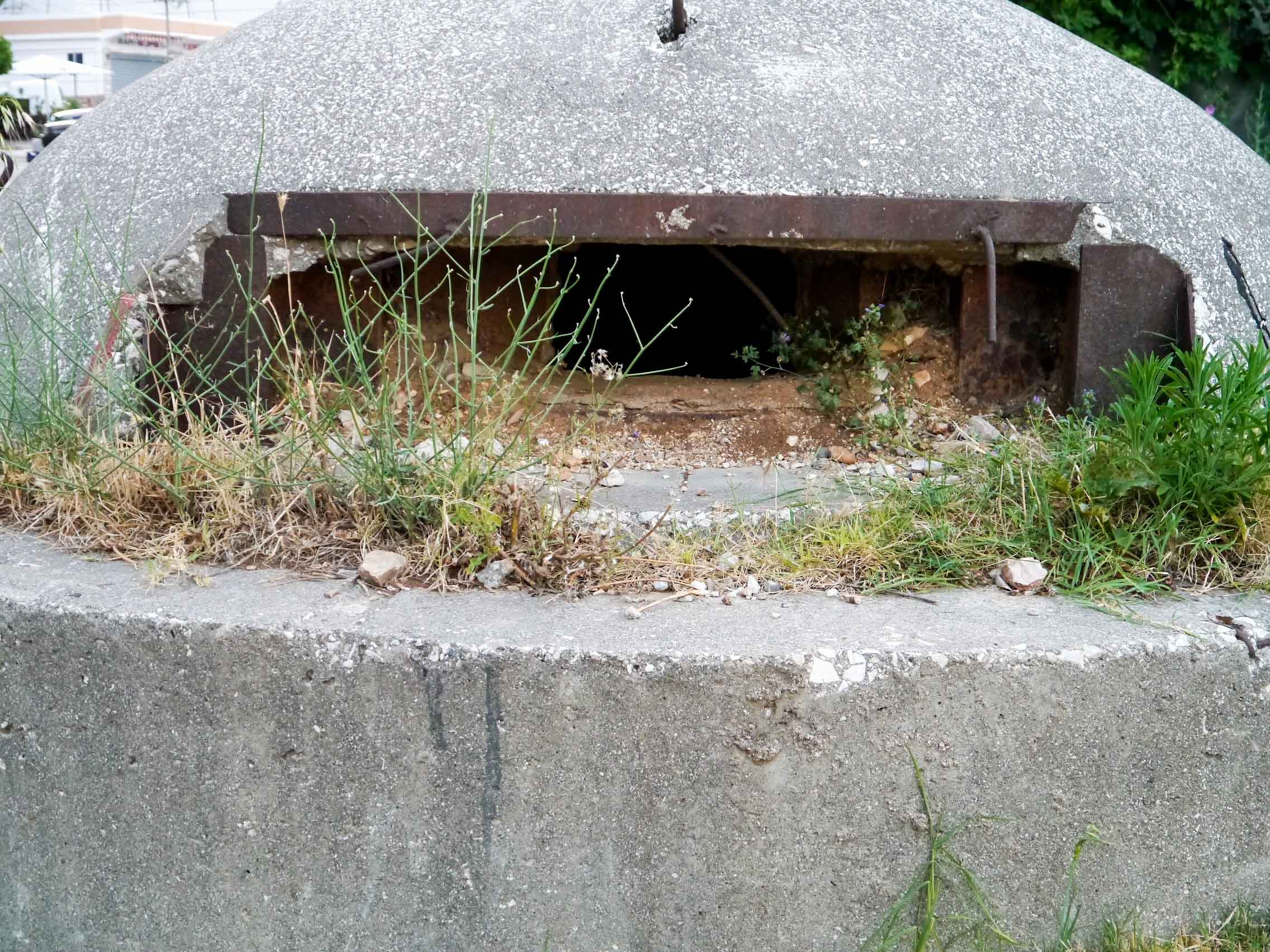
Albania is the land of bunkers. At first glance, they are easy to overlook – derelict, overgrown with vegetation, and absorbed into the grey fabric of cities and landscapes. Yet once you become accustomed to noticing them, they appear everywhere: in the middle of neighborhoods, beside playgrounds, and scattered across cemeteries, farmlands, forests, and beaches. These small concrete domes are more than abandoned military structures; they are enduring symbols of Albania’s 45-year totalitarian regime, one of the most isolated and repressive in the Eastern Bloc.
To understand the origins of these bunkers, it is necessary to consider Albania’s unique historical trajectory during the Cold War. Communist forces led the resistance during the Second World War, fighting Italian and German occupiers as well as local collaborators. In 1944, they succeeded in liberating the country with minimal external assistance. By 1946, the People’s Socialist Republic of Albania had been established under the leadership of Enver Hoxha (1908-1985) and the Party of Labor, marking the beginning of a tightly controlled socialist state.
In the early years of the regime, the rebuilding of the country relied heavily on support from Josip Broz Tito (1892–1980), the president of Yugoslavia. However, this relationship deteriorated rapidly following Tito’s rejection of Joseph Stalin (1878-1953), the leader of the Soviet Union, and his ambitions to incorporate Albania into the Yugoslav federation. In response, Hoxha turned to Stalin for guidance and support, adopting a staunchly Stalinist model in his efforts to industrialize the country. This alliance remained stable until Stalin’s death in 1953, after which the ideological unity of the Communist world began to fracture. In his memoirs, Enver Hoxha recalls his apprehension about the post-Stalin leadership just days after Stalin’s passing:
“The way in which the death of Stalin was announced and his funeral ceremony was organized created the impression amongst us, the Albanian communists and people, and others like us, that many members of the Presidium of the Central Committee of the Communist Party of the Soviet Union had been awaiting his death impatiently.”
Hoxha viewed the changes introduced by the new Soviet leadership with deep suspicion. Nikita Khrushchev’s (1894-1971) 1956 ‘Secret Speech’, delivered at the 20th Party Congress and denouncing Stalin’s purges, was considered shocking at the time. The subsequent Soviet de-Stalinization efforts in the Eastern Bloc, along with attempts at reconciliation with Yugoslavia, were perceived by Albania’s Communist leadership as ideological betrayal. These tensions intensified during Khrushchev’s 1959 visit to Albania, when he urged Hoxha to improve relations with Tito and proposed a new vision for the country, suggesting that Albania could become the Eastern Bloc’s orchard and holiday destination rather than an industrialized wasteland. Hoxha interpreted this as both condescending and strategically dangerous, further straining relations with the Soviet Union.
As a result, Albania turned to Mao Zedong (1893-1976), the leader of the People’s Republic of China, for support, aligning itself with Beijing during the Sino-Soviet split. In 1966, inspired by Mao’s Cultural Revolution in China, Hoxha developed his own version of a Cultural and Ideological Revolution in Albania. The Albanian leader focused on reforming the economy, education system, government bureaucracy, and army, while also reinforcing his repressive system. During this period, he not only suppressed religion but also declared Albania an atheist state. However, the alliance with China proved equally fragile. Following Mao’s death in 1976 and the new Chinese leadership’s gradual opening to the United States and Western Europe, Albania once again found itself without allies. The regime responded by embracing a doctrine of extreme self-reliance, accompanied by increasing political repression and ideological rigidity. By this stage, Albania had effectively severed ties with both East and West, becoming one of the most isolated countries in the world.
It was within this context of profound isolation that the increasingly paranoid Enver Hoxha initiated the policy of ‘bunkerization’ in the early 1970s. The regime ordered the construction of approximately 750,000 bunkers of various sizes across the country – an extraordinary number for a nation with a relatively small population. While some larger installations functioned as command centers and artillery positions, the vast majority were small, dome-shaped structures designed as single-person machine gun posts. The rationale behind building such an excessive number of ubiquitous concrete bunkers was to enable the entire population to resist a potential invasion, with citizens expected to defend the country from these dispersed defensive positions. However, this strategy reflected less a realistic assessment of external threats and more the regime’s deeply ingrained fear of foreign invasion. Albania faced no immediate danger that justified such an extensive defensive network, particularly given its limited economic resources.
The construction of the bunkers placed a heavy burden on the economy, diverting labor and materials away from essential sectors such as housing, infrastructure, and industry. The cost of their construction was exorbitant. In comparison to France’s Maginot Line – a famous concrete defensive barrier constructed in northeastern France in the 1930s to deter a potential German invasion and already regarded as a flawed defensive system – this bizarre project ended up costing more than twice as much and consumed over three times as much concrete. In this sense, bunkerization exemplified the broader inefficiencies of a centrally planned system driven by ideology rather than practicality. For ordinary Albanians, the bunkers became an inescapable feature of daily life. Citizens were trained in their use, reinforcing a culture of vigilance and suspicion. Rather than offering security, these structures often served as constant reminders of the regime’s expectation of conflict and its deep mistrust of both foreign powers and its own population. Despite their vast number, the bunkers were never used for their intended purpose. While some structures near the border with Serbia were later repurposed or saw limited use during the Kosovo War of 1999, their overall redundancy highlights the extent to which the project was rooted in paranoia rather than strategic necessity.
Today, the bunkers remain scattered across Albania. More than simple relics of a failed military strategy, they are silent witnesses of Enver Hoxha’s paranoia, the regime’s isolationist policies, and the broader consequences of totalitarian rule. Some have been repurposed as living spaces, storage units, shops, cafés, or even museums, such as the Bunk’Art complex – the former command center on the outskirts of Tirana – and the Cold War tunnel in Gjirokastër. Others have been painted in bright colors in an attempt to reclaim or reinterpret their meaning. Yet most of them are left crumbling in silence, too costly and difficult to remove.

Sources
Enver Hoxha (1984) The Khrushchevites: Memoirs
Miranda Vickers (1999) The Albanians: A Modern History

