
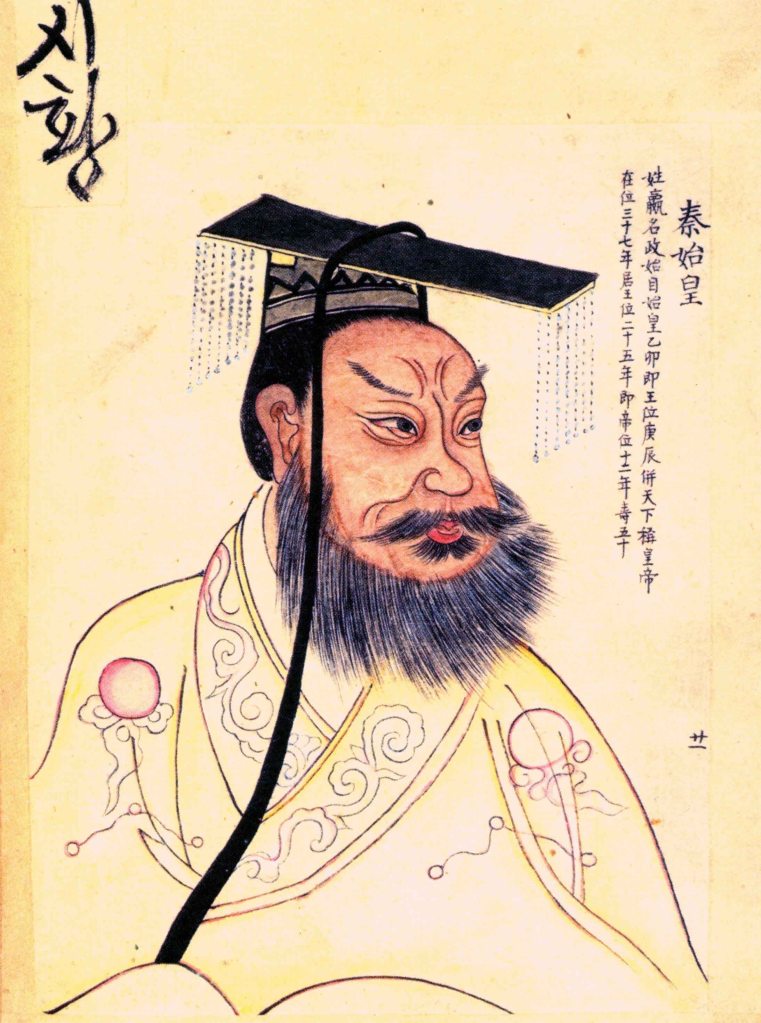
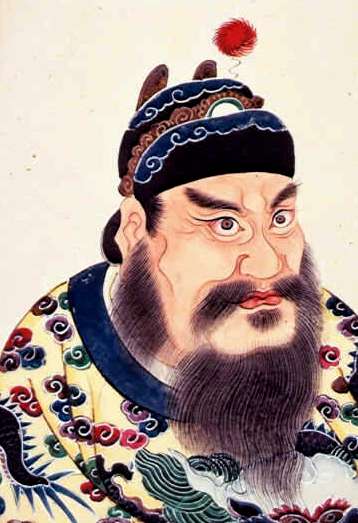
Qin Shi Huang stands as one of history’s most controversial rulers, reshaping China through an unprecedented centralization of power, the strict and uniform enforcement of laws, ambitious infrastructure projects, and sweeping standardization reforms. His achievements laid the institutional and structural foundations of imperial China, which would endure for more than two millennia.
Qin Shi Huang (259-210 BC) was born in Handan, the capital of the state of Zhao, one of the seven major states during the Warring States period (475-221 BC) of the Zhou dynasty. Born under the name Ying Zheng, he was the heir to the State of Qin. His early life unfolded amid intense interstate rivalry, political intrigue, and shifting alliances – circumstances that would profoundly shape his approach to governance. In 246 BC, at the age of 13, Ying Zheng ascended the Qin throne following the death of his father. Because of his youth, real power was initially exercised by the influential merchant-turned-politician Lü Buwei (291–235 BC), who served as chancellor and regent. Lü Buwei played a crucial role in stabilizing the Qin government during the young king’s minority. However, in 235 BC, he was implicated in a major court scandal involving Queen Dowager Zhao, Ying Zheng’s mother. As a result, he was stripped of his titles and offices and exiled to a remote island, where he later committed suicide. Following Lü Buwei’s downfall, Ying Zheng assumed full control of the Qin state.
By this time, owing to the fundamental Legalist reforms carried out in the mid-4th century BC by Shang Yang (390-338 BC) – a philosopher and chancellor of Qin – the Qin state had developed into one of the most powerful states in ancient China. Shang Yang replaced aristocratic privilege with the rule of law, enforcing strict and clearly defined laws that applied equally to all subjects. He introduced collective responsibility to ensure social discipline and dismantled hereditary noble power, replacing it with a merit-based system in which rank, land, and titles were awarded primarily for military achievement. This shift redirected loyalty away from noble families toward the state. Shang Yang also restructured the military through mass conscription, promotion based on battlefield success, and harsh penalties for failure, thereby creating a highly disciplined and effective fighting force. Economically, he promoted agriculture as the foundation of state strength by permitting land privatization, rewarding productivity, and discouraging occupations deemed unproductive, such as trade. At the same time, strict population registration enabled the state to closely monitor population movement and labor availability, while policies encouraging early marriage and large families expanded both the labor force and the military base. Together, these reforms strengthened state control and laid the foundations that enabled Qin’s rise to dominance and eventual unification of China.
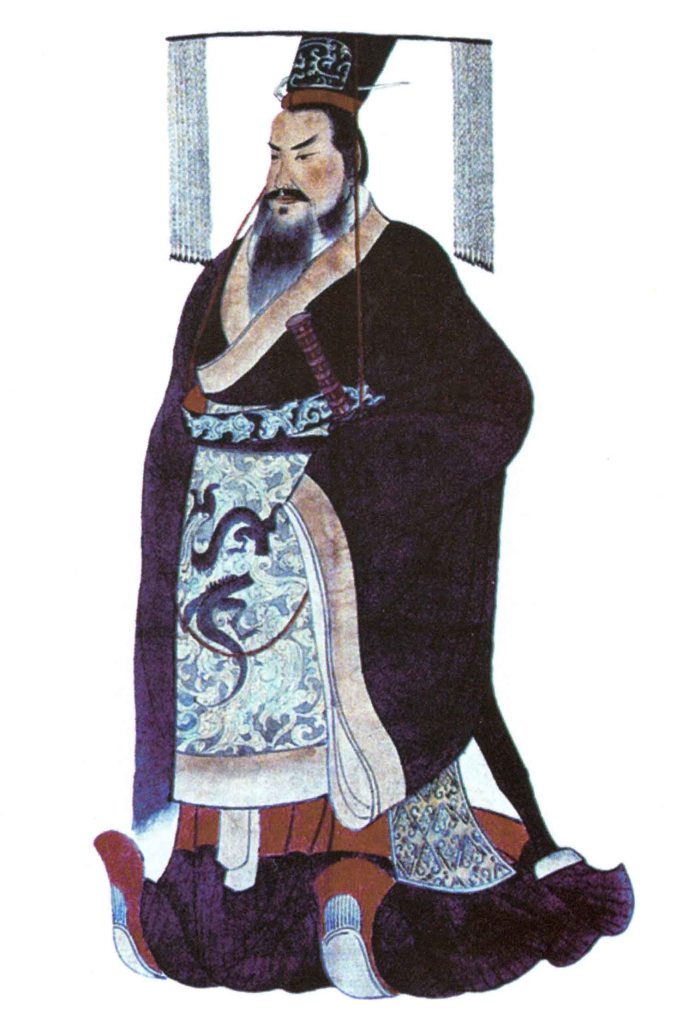
Despite facing a coup attempt and multiple assassination plots, Ying Zheng launched an ambitious and relentless campaign of conquest, gradually defeating the six remaining rival powers of the Warring States period – Han, Zhao, Wei, Chu, Yan, and Qi. In 221 BC, he completed the unification of China and established the Qin dynasty, inaugurating a new era of centralized imperial rule. Rejecting the traditional title of ‘king’ used by Shang and Zhou rulers, who viewed themselves as earthly monarch ruling by divine right, he adopted the unprecedented title of huángdì [emperor]. Drawing on ancient mythic and political concepts, this title asserted universal and eternal authority and would be used by Chinese rulers for the next two millennia, underscoring the lasting impact of his reign.
The newly unified Qin Empire was organized into a highly centralized administrative system designed to strengthen imperial control and reduce the influence of local elites. The realm was divided into 36 prefectures, which were further subdivided into counties and districts, enabling the central government to manage local affairs efficiently. Officials at every level were appointed directly by the emperor, ensuring loyalty to the throne rather than to hereditary aristocratic families. At the top of the imperial bureaucracy, authority was exercised through three chancellors and nine ministers, each responsible for key areas of governance such as law, finance, military affairs, and public works. This structure allowed the emperor to delegate administrative responsibilities while maintaining strict oversight, thereby ensuring the uniform enforcement of laws and policies throughout the empire. By combining territorial division with a hierarchical bureaucracy, Qin Shi Huang created a model of governance that emphasized efficiency, accountability, and absolute central control – a model that would serve as a template for successive dynasties throughout Chinese history.
Qin Shi Huang is renowned for undertaking some of the most ambitious infrastructure projects in ancient Chinese history. These projects were designed to unify the empire and strengthen centralized control, improve communication across vast distances, facilitate the swift movement of troops and supplies, and ostentatiously assert imperial power. To support these transformations, the Qin administration implemented sweeping standardization reforms, including the unification of weights and measures. The Ban Liang – a round coin with a square hole at its center – became the first unified currency in Chinese history. The writing systems of the conquered states were standardized through the codification of approved characters and the elimination of obsolete scripts, ensuring uniform written communication across the empire.
Xianyang emerged as the political, economic, and cultural center of the Qin Empire, featuring advanced urban planning, fortified walls, and sophisticated drainage systems. Qin Shi Huang commissioned the construction of an elaborate palace complex that included lavish ceremonial halls and replicas of the palaces of conquered states, serving as a powerful visual assertion of Qin supremacy and the unification of formerly independent realms under a single ruler. According to historical records, bronze weapons confiscated from the defeated states were melted down to cast twelve monumental statues, known as the Twelve Metal Colossi, which adorned the emperor’s palace grounds. Qin-dynasty architecture was particularly notable for its innovations in urban drainage systems. Engineers employed conduits with both circular and pentagonal cross-sections; the latter, with thicker walls and greater capacity, were less prone to breakage and more efficient at managing water flow. These developments not only improved sanitation and urban resilience but also demonstrated the sophisticated engineering capabilities of the Qin state.
Beyond urban architectural improvements, Qin Shi Huang sought to connect the far-flung regions of his empire. He expanded the road network and standardized road widths and cart axle sizes, thereby facilitating administrative control, economic integration, transportation, and military movement across the empire. Alongside the road network, another crucial component of Qin infrastructure was its system of canals, which further improved the movement of goods and the deployment of troops over long distances. These hydraulic projects also supported agricultural production by enhancing irrigation and flood control. Among these undertakings, the most significant was the construction of the Lingqu Canal, one of the earliest large-scale canal systems in Chinese history. Connecting the Xiang River of the Yangtze River basin with the Li River of the Pearl River basin, the canal created a strategic north-south inland waterway. Originally constructed to supply Qin military campaigns in the southern regions, it enabled the reliable transport of soldiers, weapons, and provisions across otherwise difficult terrain. Over time, the Lingqu Canal also promoted trade and agricultural development. Its sophisticated water-control system – most notably the division weir, which regulated water flow and prevented flooding – demonstrates an advanced understanding of hydraulic engineering. Remarkably, it remains one of the oldest functioning canals in the world.
One of Qin Shi Huang’s most famous and enduring achievements was the reinforcement and unification of existing defensive walls constructed by earlier Chinese states to protect their territories from incursions by northern nomadic tribes. By connecting these segments, extending them by about 5,000 kilometers, and supplementing them with watchtowers and garrisons, the emperor laid the foundations of what would later become known as the Great Wall of China, referred to in Chinese as the ‘Wall of Ten Thousand Li’. Stretching from the Gulf of Zhili in the east to Jiayuguan in Inner Asia, this defensive line functioned not only as a physical barrier but also as a powerful symbol of imperial authority. Qin Shi Huang’s most significant innovation was the establishment of a permanent guard service and a signaling network along the wall, which used smoke signals to transmit messages rapidly across vast distances. This system greatly enhanced military coordination and response time, enabling the Qin state to monitor frontier threats effectively.
Qin Shi Huang traveled extensively throughout his empire, particularly to frontier regions, where his presence reinforced imperial authority over newly conquered territories. These imperial tours were meticulously choreographed spectacles that presented the emperor as the supreme ruler of both the earthly and cosmic realms. In 220 BC, he traveled westward from the capital Xianyang, along the Wei River to Yongcheng, the former capital of the Qin state. There, he formally reported his achievements in unifying the empire to his ancestors, symbolically linking his unprecedented authority to ancestral legitimacy and tradition. From 219 BC onward, Qin Shi Huang’s travels extended eastward and southward, and in total he undertook four major imperial inspection tours across the empire. These journeys served multiple purposes: they enabled the emperor to assert direct control over regional officials and ensure the consistent enforcement of Qin laws and standardized practices. On Mount Tai, the most sacred peak among China’s Five Great Mountains [Wuyue], the emperor performed the Feng Shan sacrifices to Heaven and Earth, rites traditionally reserved for the most legitimate rulers. These rituals involved paying homage to Heaven on the mountain’s summit and to Earth at its base. By conducting these ancient rites, Qin Shi Huang sought heavenly sanction for his rule and publicly affirmed his status as the rightful Son of Heaven. Along the routes of these imperial tours, stone stelae were erected on prominent mountains and sites. Inscribed with official proclamations, they celebrated the unification of the Chinese empire, outlined economic policies essential for prosperity, and emphasized the need to abandon outdated customs in favor of Qin reforms. Together, these journeys, rituals, and inscriptions fused political authority with cosmological legitimacy, reinforcing the ideological foundations of the Qin imperial state and projecting the emperor’s power across both land and belief.
One of the most controversial episodes in Qin history is the so-called ‘Burning of Books and Burying of Scholars’ of 213–212 BC. After unifying China, Qin Shi Huang worked closely with his chancellor Li Si (c. 280-208 BC) to implement sweeping economic and political reforms aimed at standardizing the diverse customs, laws, and traditions inherited from the conquered states. At the same time, the emperor sought to eliminate dissenting ideas that might challenge imperial authority or undermine the Qin state’s Legalist ideology. Acting on Li Si’s advice, he ordered the destruction of philosophical works – particularly Confucian texts – because they emphasized moral governance, historical precedent, and criticism of rulers, all of which conflicted with Legalist principles of strict law, obedience, and centralized power. Works related to agriculture, medicine, and divination were exempt. According to later Confucian sources, hundreds of scholars who resisted the edict or were suspected of opposing the regime were executed, allegedly by being buried alive. However, modern historians question both the accuracy and the scale of this narrative, which first appeared more than a century later in the Han dynasty historian Sima Qian’s Records of the Grand Historian – a Confucian work written under a regime hostile to the Qin. For a long time, this text remained the primary source of information about the emperor. Most scholars agree that Qin Shi Huang did indeed order the distraction of many texts he considered politically subversive, but also required that copies of these works be preserved in imperial libraries. While executions of scholars likely occurred, there is little reliable evidence that mass burials took place in the manner described by later sources. The episode thus reflects both the Qin dynasty’s drive for ideological control and the powerful role of later historical interpretation in shaping Qin Shi Huang’s reputation.
Despite the highly rational and legalistic nature of his governance, Qin Shi Huang was deeply influenced by early Chinese cosmology and Taoist thought. He embraced the doctrine of the Five Elements [wuxing], which explained the structure and transformation of the universe through the dynamic, cyclical interaction of wood, fire, earth, metal, and water. Interpreting this cosmology in political terms, Qin Shi Huang placed his empire under the dominion of Water, an element associated with fluidity, adaptability, persistence, and hidden strength. Water yields rather than resists, flowing around obstacles instead of confronting them directly, yet over time it erodes even the hardest stone; when concentrated, it can also unleash immense and uncontrollable destructive power. In Taoist philosophy, water embodies intelligence, wisdom, humility, renewal, and regeneration. It nourishes all living things without discrimination, sustains growth, and returns cyclically through rain, rivers, and seas, symbolizing continuity beyond decay and death. In alchemical traditions, water was further associated with jing, the vital essence believed to determine human vitality, reproductive power, and lifespan. The preservation of jing was considered essential to longevity and, in some traditions, a prerequisite for achieving immortality. For Qin Shi Huang, aligning his empire with the element of Water symbolically linked both his dynasty and his own person to endurance, cosmic legitimacy, and the promise of renewal beyond mortality. Accordingly, the emperor adopted black – the color associated with Water – for imperial banners, court attire, and official uniforms, visually reinforcing the alignment of his rule with the cosmic order.
Qin Shi Huang was profoundly preoccupied with death and the desire for immortality, a concern that intensified as his power and achievements grew. He sought every possible means to prolong his own existence and surrounded himself with Taoist sages and alchemists, whom he believed possessed secret knowledge of longevity and the hidden forces of nature. Central to this quest was the pursuit of the legendary elixir of eternal life, a substance thought to grant physical immortality and believed to be obtainable only in remote and sacred realms. In pursuit of this goal, Qin Shi Huang repeatedly commissioned maritime expeditions in search of the mythical Islands of the Immortals, believed to lie in the Eastern China Sea. These islands were imagined as places where time stood still, death did not exist, and divine beings resided. Their location across vast expanses of water reinforced the notion that immortality lay beyond the boundaries of the known world. On several occasions – most notably in 219 BC and again in 215 BC – the emperor dispatched fleets of ships carrying young boys and girls, believed to possess the purity necessary to approach the immortals, along with supplies and ritual offerings. None of these expeditions ever returned, underscoring the illusory nature of his quest.
Qin Shi Huang died suddenly in 210 BC at the age of 50 while traveling during his fifth imperial tour, at the Palace of Shaqiu (in present-day Hebei Province), near the seashore. The precise cause of his death remains uncertain, but ancient sources suggest that chronic mercury poisoning is the most plausible explanation. In his obsessive pursuit of immortality, the emperor regularly consumed alchemical elixirs prepared by Taoist practitioners. Many of these potions contained mercury, a substance believed at the time to possess life-extending properties but now known to be highly toxic. Prolonged ingestion likely caused severe physical deterioration and ultimately hastened his death – a tragic irony that starkly contrasts with his fervent desire to escape mortality.
In the aftermath of the emperor’s death, the chief eunuch Zhao Gao and the chief minister Li Si concealed the news from the court and the empire at large. During this interregnum, they manipulated the imperial succession in order to secure their own power. According to historical accounts, the emperor had intended his eldest son, Fusu, to inherit the throne. Fusu, however, was known for his relatively moderate views and his criticism of some of the harsher Legalist policies, making him an obstacle to Zhao Gao and Li Si’s ambitions. The two officials therefore conspired to forge an imperial edict ordering Fusu to commit suicide. At the same time, they elevated the emperor’s youngest son, Huhai, to the throne, who assumed the reign title Qin Er Shi. Zhao Gao and Li Si believed that Huhai’s youth and inexperience would make him easy to manipulate, allowing them to exercise real control over the empire behind the scenes. As anticipated, Qin Er Shi proved an ineffective and cruel ruler. He ordered the execution of numerous ministers and members of the imperial family, continued Qin Shi Huang’s massive construction projects, expanded the army, and imposed ever heavier taxes and labor demands on the population. These policies intensified existing social tensions and placed immense strain on a society already exhausted by decades of warfare and state-imposed labor. The resulting resentment quickly erupted into widespread rebellions across the empire. Lacking broad popular support and effective leadership under Qin Er Shi, the Qin state proved unable to suppress these uprisings. In 206 BC – barely fifteen years after its founding – the Qin dynasty collapsed, giving way to a period of civil war that ultimately culminated in the establishment of the Han dynasty.
Despite the brevity of his rule and the severity of his autocratic governance, Qin Shi Huang’s impact on Chinese history was profound and long-lasting. His achievements fundamentally reshaped Chinese statecraft and established the institutional and structural foundations of imperial China, which would endure – albeit with significant modifications – for more than two millennia.
Today, Qin Shi Huang is best known for the Terracotta Army, created to guard his tomb at the foot of Mount Li – the traditional burial ground of Qin rulers. The mausoleum complex – encompassing the central burial mound, the renowned Terracotta Army, and hundreds of ancillary tombs, trenches, workshops, and architectural remains – forms the Emperor Qinshihuang’s Mausoleum Site Museum, a UNESCO World Heritage Site dedicated to the preservation, excavation, and interpretation of the First Emperor’s funerary landscape. Through a combination of in situ displays, purpose-built exhibition halls, and ongoing archaeological research, the museum offers visitors a comprehensive understanding of the scale, organization, and symbolic meaning of Qin Shi Huang’s mausoleum, while also highlighting the technical achievements and historical significance of the Qin dynasty. As excavations and research are still ongoing, the site remains a living archaeological landscape, constantly yielding new discoveries.
Sources
https://www.bmy.com.cn/jingtai/bmyweb/index.html
https://www.sxhm.com/en/index.html?_isa=1
https://www.bjqtm.com/
https://en.chnmuseum.cn/
 Trespasser-on-Earth