The Zhou dynasty was a formative period in Chines history, marked by political fragmentation and persistent warfare alongside profound philosophical, cultural, and technological transformation. These developments laid the groundwork for the emergence of a powerful centralized state – first realized under the Qin dynasty and subsequently refined under the Han – that would shape Chinese civilization for more than two millennia.
According to historical accounts, the Bronze Age in China began around 2200 BC with the establishment of the Xia dynasty. However, this period is not currently supported by identifiable archaeological evidence, and much of what is known about the Xia derives from later textual traditions. During this early phase, Chinese civilization was primarily concentrated in the fertile river valleys of the Yellow River [Huang He] and the Wei River [Wei He]. The Xia dynasty was followed by the Shang dynasty (c. 1750-1050 BC), the earliest Chinese dynasty firmly attested by archaeological remains. Rather than a unified empire, Shang political organization consisted of a network of scattered principalities located mainly along the lower reaches of the Yellow River. The Shang period is particularly significant for the emergence of the earliest known form of Chinese writing. Inscriptions carved onto ox bones and turtle shells – known as oracle bones – were used in divinatory rituals to communicate with ancestral spirits and deities.
The Shang were eventually overthrown by the Zhou dynasty (c. 1050-221 BC), generally regarded as the longest-ruling dynasty in Chinese history, lasting more than eight centuries. To legitimize their conquest, the Zhou rulers introduced the concept of the Mandate of Heaven, which held that Heaven grants the right to rule to a just and capable leader. This mandate was not permanent; it could be withdrawn if a ruler became corrupt, cruel, or incompetent. In this way, political authority became inseparable from moral responsibility. Over time, the Mandate of Heaven became one of East Asia’s most enduring political doctrines, shaping ideas of legitimacy, leadership, and dynastic change for more than two thousand years. Despite the political challenges of governing a vast and culturally diverse territory, Zhou rule was marked by remarkable cultural vitality and significant technological development.
During the Western Zhou period (c. 1050-770 BC), the Zhou kings exercised effective military and political control over territories centered on the Wei River valley and extending across much of the North China Plain, with their capital at Feng (near present-day Xi’an). Governance relied on a feudal-style system in which land was granted to relatives and loyal allies, who ruled local states on behalf of the Zhou king. While this system initially ensured stability and territorial expansion, it gradually weakened central authority as regional lords accumulated power. The Western Zhou period also witnessed sustained interactions with northern horse-riding nomadic tribes, whose incursions posed new military challenges and influenced Zhou defensive strategies. These encounters contributed to the growing importance of cavalry forces and frontier defense in later Chinese history. Culturally, the Western Zhou was a formative age. It saw the emergence of some of the earliest surviving works of Chinese classical literature, including hymns and poems later compiled in the Book of Songs [Shijing]. These texts offer valuable insight into the social values, ritual practices, agricultural life, and political ideals of early Zhou society. Alongside advances in ritual bronze production and ancestral worship, they helped establish cultural traditions that would remain central to Chinese identity for centuries.
The Eastern Zhou period (c. 770-221 BC) marked the second major phase of Zhou rule and was characterized by profound political, military, and intellectual transformation. In 770 BC, amid internal unrest and growing external pressures, the Zhou court retreated about 400 kilometers eastward to a new capital at Luoyi (near present-day Luoyang). In the power vacuum left behind, the Qin state established control over the former Zhou heartland in the western regions of present-day Shaanxi Province, strategically positioning itself for future expansion. The early phase of the Eastern Zhou, known as the Spring and Autumn period (770–475 BC), was marked by political fragmentation and shifting alliances among more than one hundred small and medium-sized states. While the Zhou king remained symbolic authority, actual power rested with regional rulers. During this time, many states began constructing defensive walls – precursors to the Great Wall – to protect themselves from northern nomadic incursions. The period also witnessed significant advances in knowledge and record-keeping; for instance, in 501 BC, a medical text was compiled outlining four fundamental diagnosis methods, reflecting the early development in Chinese medical theory. Prolonged competition and political consolidation eventually gave rise to the Warring States period (475-221 BC), during which seven powerful states – Qin, Chu, Qi, Yan, Han, Zhao, and Wei – dominated the Chinese political landscape. Despite their shared cultural foundations, these states were locked in near-constant warfare as they sought territorial expansion and supremacy. The intensity of conflict spurred significant innovations in governance, technology and military strategy. The widespread use of cast iron tools enhanced agricultural productivity and enabled the mobilization of larger armies. New weapons were developed, military organization became more sophisticated, and chariot warfare was refined before gradually giving way to infantry and cavalry tactics. Scientific progress also continued; in 444 BC, scholars calculated the solar year to be approximately 365.25 days, demonstrating a sophisticated understanding of astronomy.
The political fragmentation, constant warfare, and social upheaval of the Zhou period fostered extraordinary intellectual diversity, a phenomenon traditionally known as the ‘Hundred Schools of Thought’. Among the most influential were the Confucian ideals of moral leadership, the Taoist principles of harmony with the natural order, and the Legalist doctrines of strict law and centralized authority. Philosophers were in high demand and often served as advisors or ministers to rulers, who relied on their guidance to maintain control and legitimacy. Their ideas were not merely abstract musings but practical responses to the instability and complexity of Zhou society. Together, these philosophical traditions offered competing yet complementary visions of human nature, social order, and political authority, profoundly shaping Chinese political thought for centuries. Confucius (c. 551 – 479 BC) taught that social harmony depends on individuals fulfilling their proper roles within a structured network of relationships, such as those between ruler and subject, parent and child, and elder and younger. Central to his philosophy were the concepts of appropriate conduct [li] and humaneness [ren], which guided ethical behavior and interpersonal relations. Confucius argued that while social order requires hierarchy, stability should not be enforced through coercion or harsh punishment. Instead, it relies on moral cultivation, virtuous example, and ethical persuasion – particularly by rulers, whose conduct sets the standard for society as a whole. A morally exemplary ruler, he maintained, inspires obedience and loyalty without resorting to force.
The core of Taoist thought, most famously articulated in the Tao Te Ching attributed to Laozi (traditionally dated to the 6th century BC), emphasizes living in harmony with the Tao – the natural, ineffable force underlying all existence. Taoism valued simplicity, softness, flexibility, and non-interference, embodied in the principle of effortless action [wu wei]. Its practices focus on self-cultivation, encouraging individuals to deepen their awareness of the natural world and align their actions with its rhythms. In contrast to Confucian engagement with society and politics, Taoism often advocates withdrawal from political ambition and a cautious, skeptical approach to excessive regulation and control. Legalist philosophers addressed the realities of ruling in a violent and competitive world. Thinkers such as Shang Yang (390-338 BC) and Han Fei (c. 280-233 BC) argued that a strong and stable state could not rely on moral virtue alone. Instead, they promoted governance based on strict laws, uniform enforcement, and clearly defined rewards and punishments, all under a powerful centralized authority. Legalists held a pessimistic view of human nature, assuming that people were motivated primarily by self-interest and fear of punishment. Although often criticized for its harshness, Legalism proved highly effective in state-building and played a decisive role in the rise of the Qin dynasty.
“From birth, humans possess desires. When these desires go unsatisfied, they will inevitably seek fulfillment. Yet, if, in this pursuit, they know no measure or limit, conflict is bound to arise. Conflict, however, brings disorder, and disorder breeds misery. The ancient kings, abhorring such chaos, established the principles of ritual propriety and righteousness to impose order. In doing so, they nurtured human desires and provided people with what they sought, ensuring that desires would not be exhausted by things, nor things depleted by desires. Instead, the two would support one another and sustain each other’s existence. It is for this reason that rituals were created.”
Xunzi: Discourse on Ritual (3rd century BC)
Mountains occupied a central place in Chinese religious and philosophical thought as sacred sites that linked Heaven and Earth. Rising above the human realm, they were regarded as liminal spaces where the boundary between the earthly and celestial worlds was especially thin. In these elevated landscapes, qi – the vital life force believed to permeate the universe and animate all living beings – was thought to manifest in a particularly pure and concentrated form, making mountains ideal locations for spiritual cultivation, ritual practice, and communication with the divine. As early as the Warring States period, the veneration of the Five Great Mountains [Wuyue] took shape: Mount Tai, the exalted mountain of the east; Mount Hua, the splendid mountain of the west; Mount Heng, the balanced mountain of the south (in present-day Hunan Province); Mount Heng, the permanent mountain of the north (in present-day Shanxi Province); and Mount Song, the lofty mountain at the center. Each peak was associated with specific directions, elements, seasons, and divine forces, and together they embodied cosmic balance and imperial order. These mountains were believed to be dwelling places of gods and immortals, and were closely linked to legends of transcendence, longevity, and divine revelation. The worship of the Five Sacred Mountains became especially prominent during the Han dynasty, when religious practice, cosmology, and imperial ideology grew increasingly intertwined. Under Emperor Wu (156–87 BC), state-sponsored rituals at these sites were formalized, reinforcing the emperor’s role as the supreme mediator between Heaven and Earth.
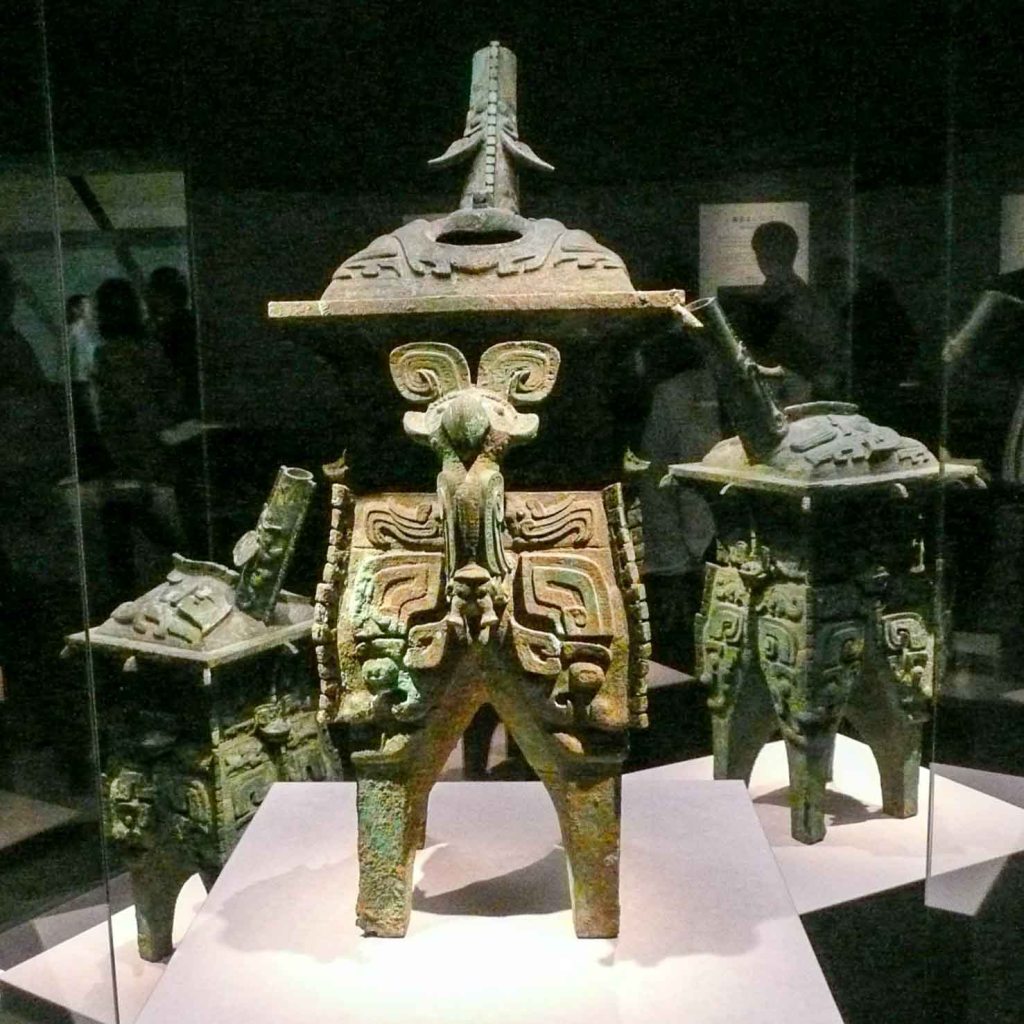
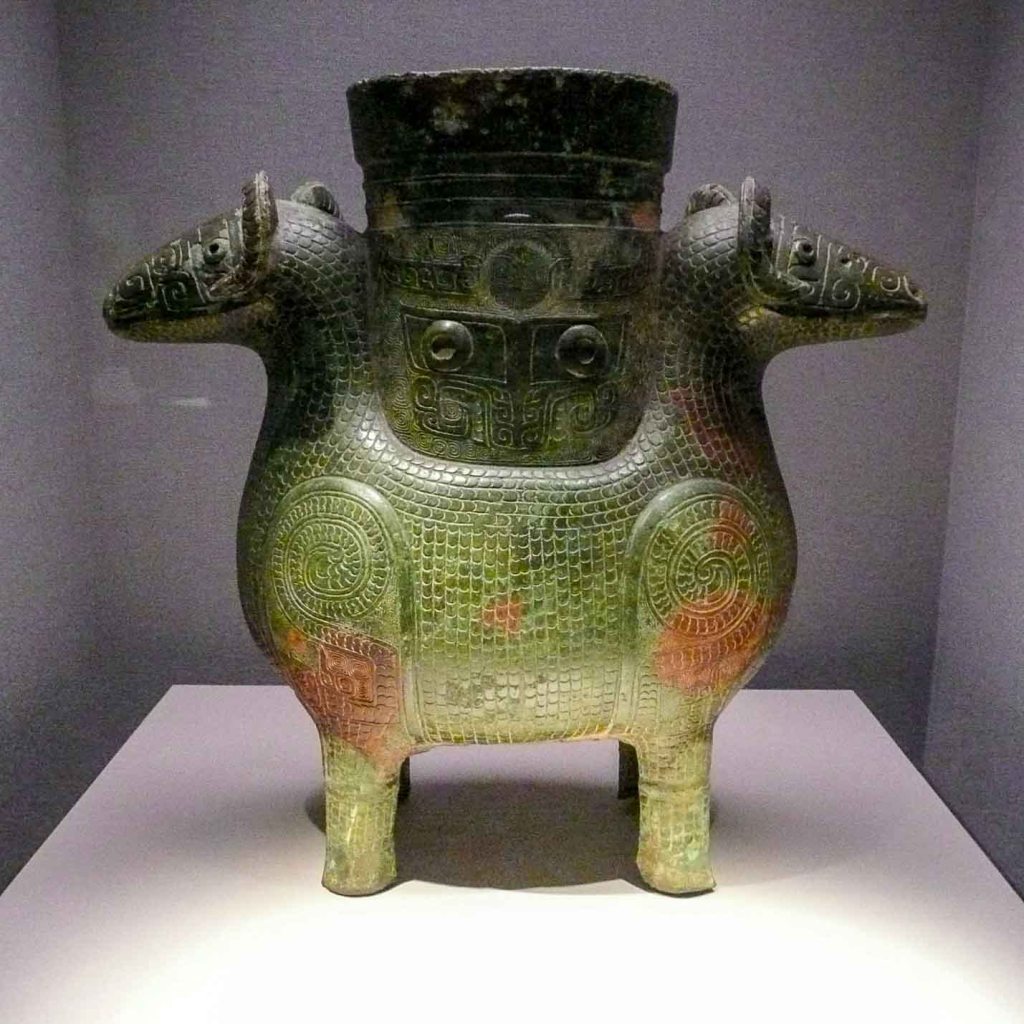
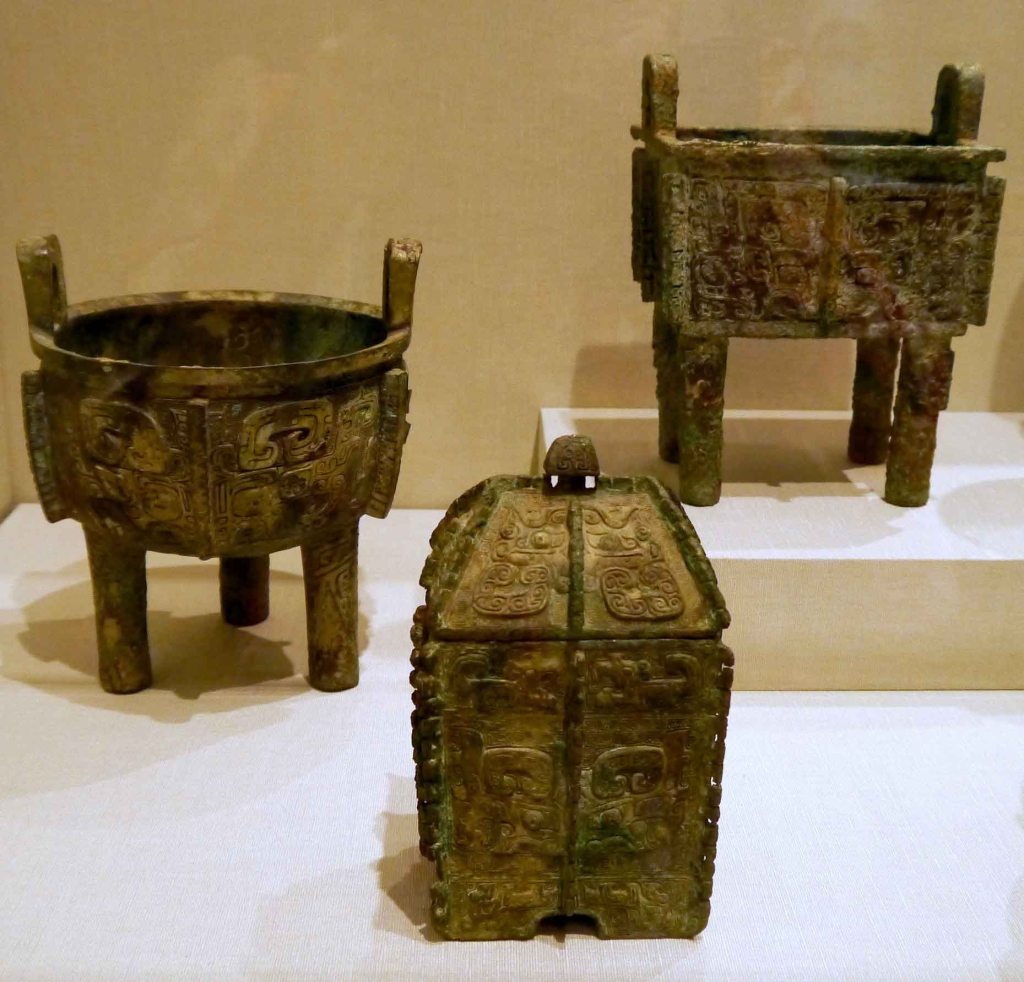
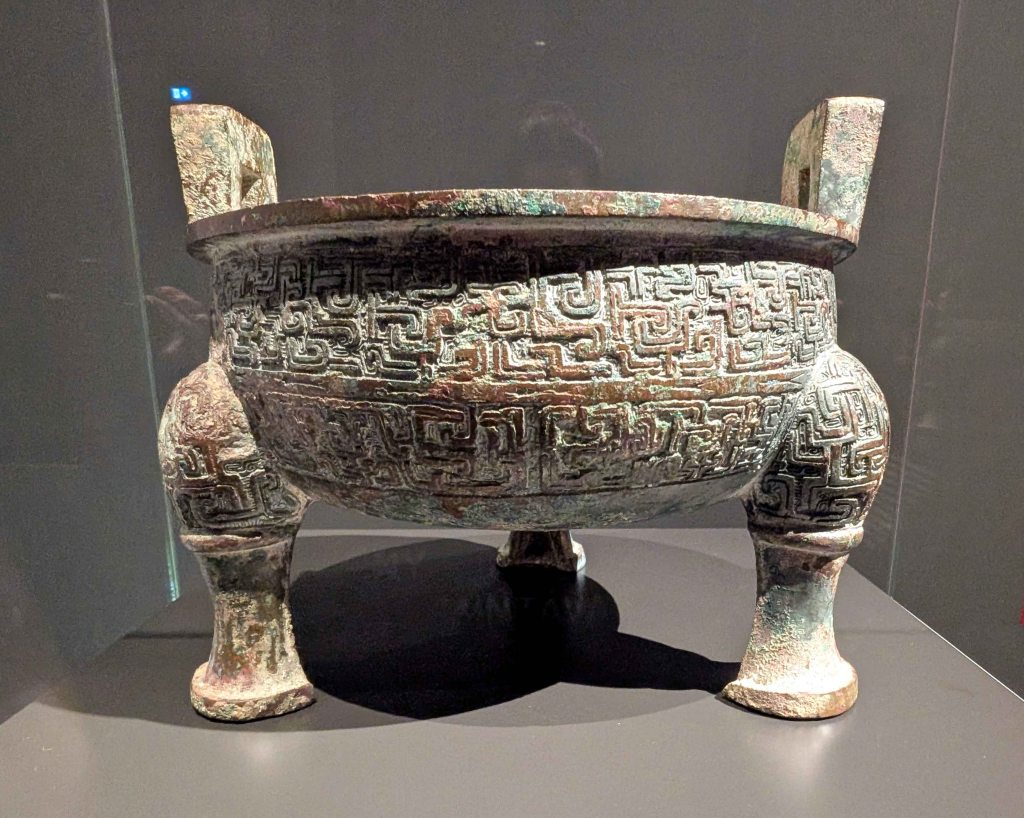
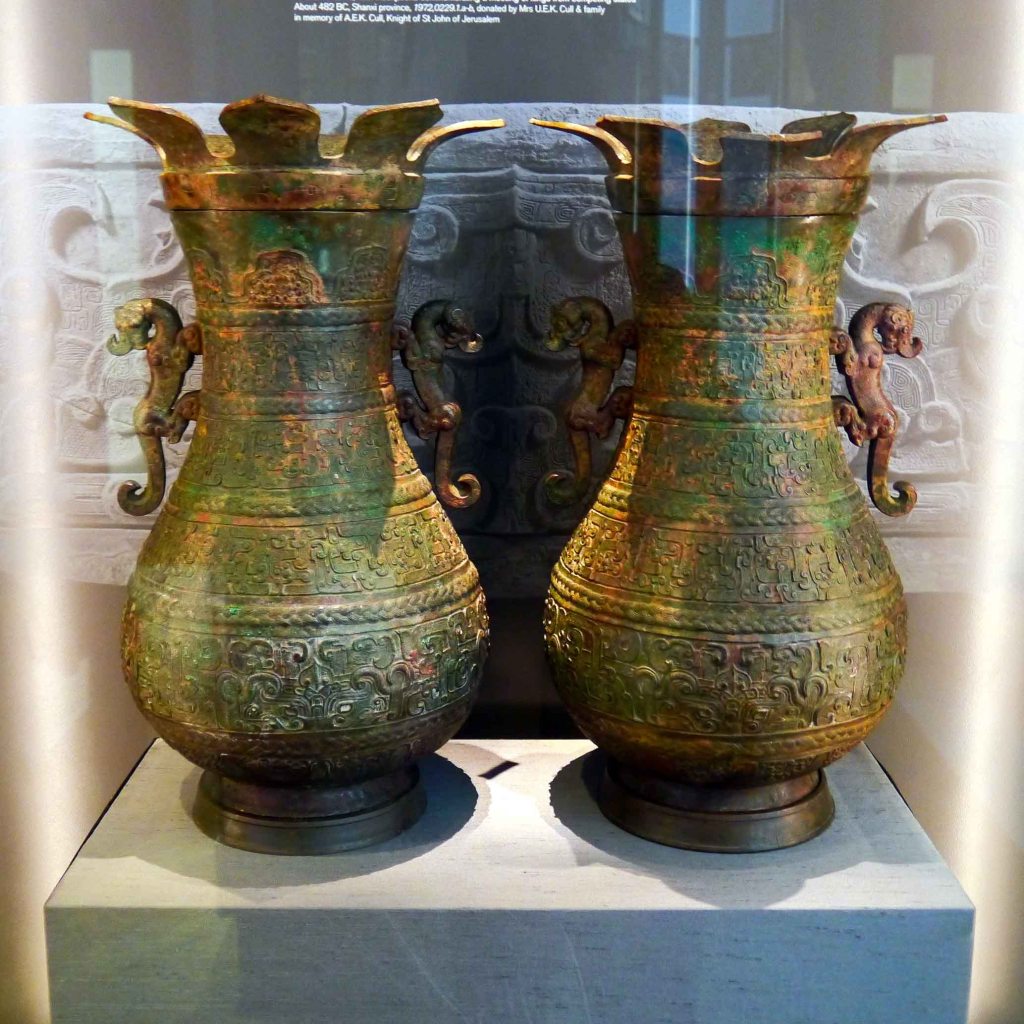
Bronze technology appeared in China around 1650 BC, marking a major technological and cultural development. This highly advanced metallurgical technology, which likely arrived from the western regions of Eurasia, was rapidly adapted and perfected by Chinese craftsmen. Bronze soon became one of the most important materials, particularly for the production of ritual objects, reflecting its association with durability, prestige, and spiritual power. The ownership and use of bronze vessels signified rank and honor, a symbolic association that has continued in Chinese culture to the present day. During the 1st millennium BC, dingvessels emerged as the most fundamental and symbolically significant type of bronze ritual vessel. They were primarily used to present food offerings during ancestral sacrifices and state rituals. Their heavy form and imposing appearance conveyed ideas of solidity, permanence, and stability, symbolizing both the authority of the ruler and the enduring strength of the state. As such, ding vessels were regarded as royal regalia and closely associated with legitimate political power. Alongside ding vessels, other ritual bronzes developed rich symbolic associations. Mountain-shaped incense burners appeared as ritual objects designed to reflect cosmological beliefs. Early examples were often chalice-shaped, with sacrificial smoke rising through openwork lids, visually representing sacred mountains and the ascent of prayers and offerings from the human world to the divine realm. The Zhou period is widely regarded as the zenith of Chinese bronze craftsmanship. Artisans achieved extraordinary technical mastery in casting, surface decoration, and symbolic design, producing vessels that combined artistic refinement with profound ritual and political meaning. During the Western Zhou, large numbers of bronze objects were buried with elite individuals, reflecting their social status and political authority. Placing these vessels in tombs allowed the deceased to continue performing ritual and ancestral ceremonies in the afterlife.
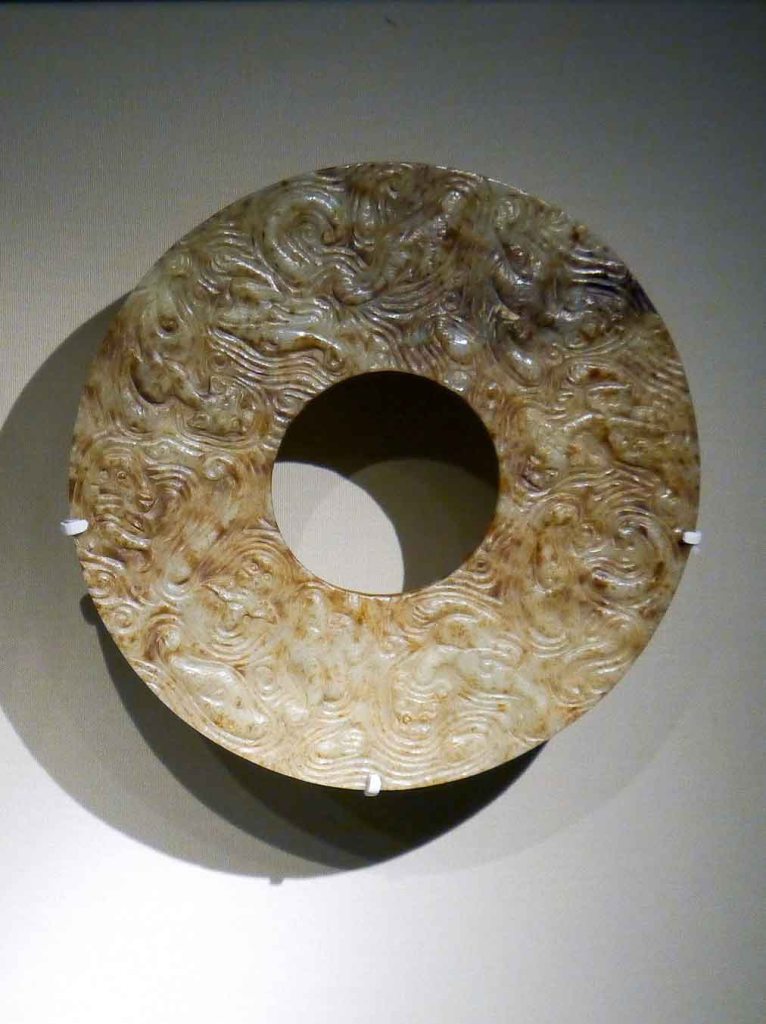
Alongside bronze, jade held profound ritual and symbolic significance in Chinese culture, its prestige often regarded as equal to that of gold. As early as the Neolithic period, Chinese societies demonstrated remarkable sophistication in both the selection of jade materials and the technical skill required to shape, polish, and decorate them, despite jade’s extreme hardness and resistance to carving. Jade artifacts were highly valued for their durability and perceived indestructibility, as well as for their luminous color and subtle translucency. These physical qualities imbued jade with deep symbolic meaning, associating it with purity, moral integrity, and permanence. As ritual objects, jade items were believed to embody exceptional spiritual power, with their enduring material qualities symbolizing both earthly authority and heavenly legitimacy. Jade thus functioned simultaneously as a symbol of wealth and status, a talisman used by rulers in offerings to Heaven and Earth, a medium for communication with ancestors, and a protector of the deceased against malevolent forces in the afterlife. Over time, six principal jade ritual forms emerged, reflecting the Chinese understanding of cosmology and the universe’s directional order:
- Pi disc – circular in form, symbolizing Heaven
- Cong tube – square on the outside and cylindrical within, symbolizing Earth
- Huang – semicircular pendants, symbolizing the North
- Zhang – blade-shaped objects, symbolizing the South
- Gui – ritual tablets denoting rank, symbolizing the East
- Tiger-shaped object – symbolizing the West
Together, these objects symbolized the harmony between Heaven and Earth, reinforcing both cosmic balance and social hierarchy during rituals. During the Han dynasty, jade burial practices became especially elaborate; the tomb of Prince Liu Sheng, for example, contained a complete jade burial suit composed of small stone plaques reflecting the belief that jade could preserve the body and protect the spirit in the afterlife. In addition to formal ritual objects, jade was widely used in personal adornment among the elite. Jade carvings depicting coiled dragons were worn as hanging ornaments on garments, signaling noble status and providing spiritual protection. The prominence of the dragon motif may have been influenced by emerging beliefs about the afterlife, which from the 4th century BC onward envisioned the celestial realm as inhabited by powerful, serpentine creatures. At the same time, the coiled dragon form appears to have drawn inspiration from the S-shaped depictions of predatory animals found on belt ornaments used by nomadic tribes along China’s frontier regions, illustrating the dynamic exchange of artistic motifs between settled Chinese societies and neighboring cultures.
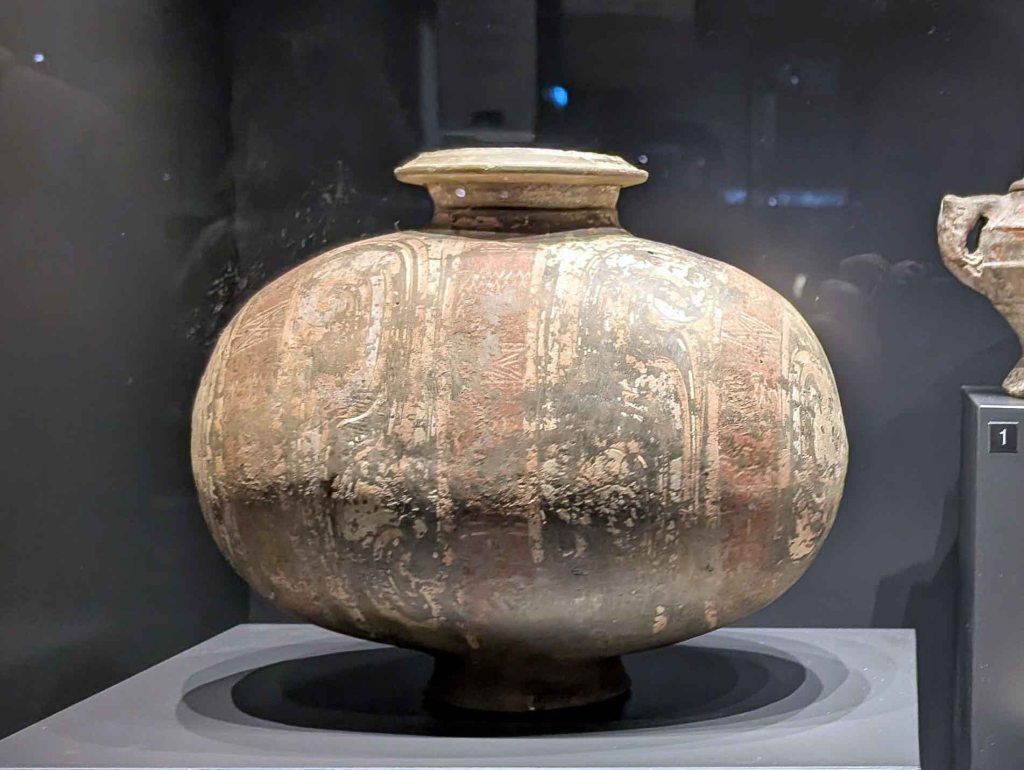
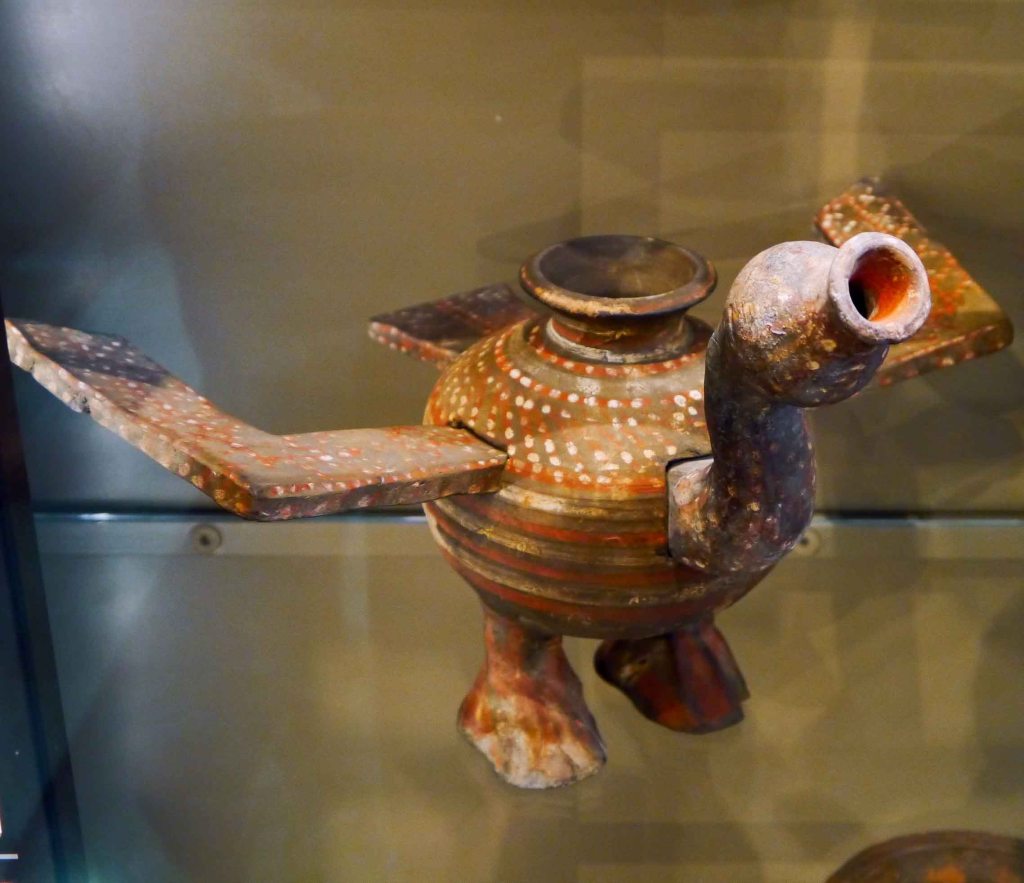
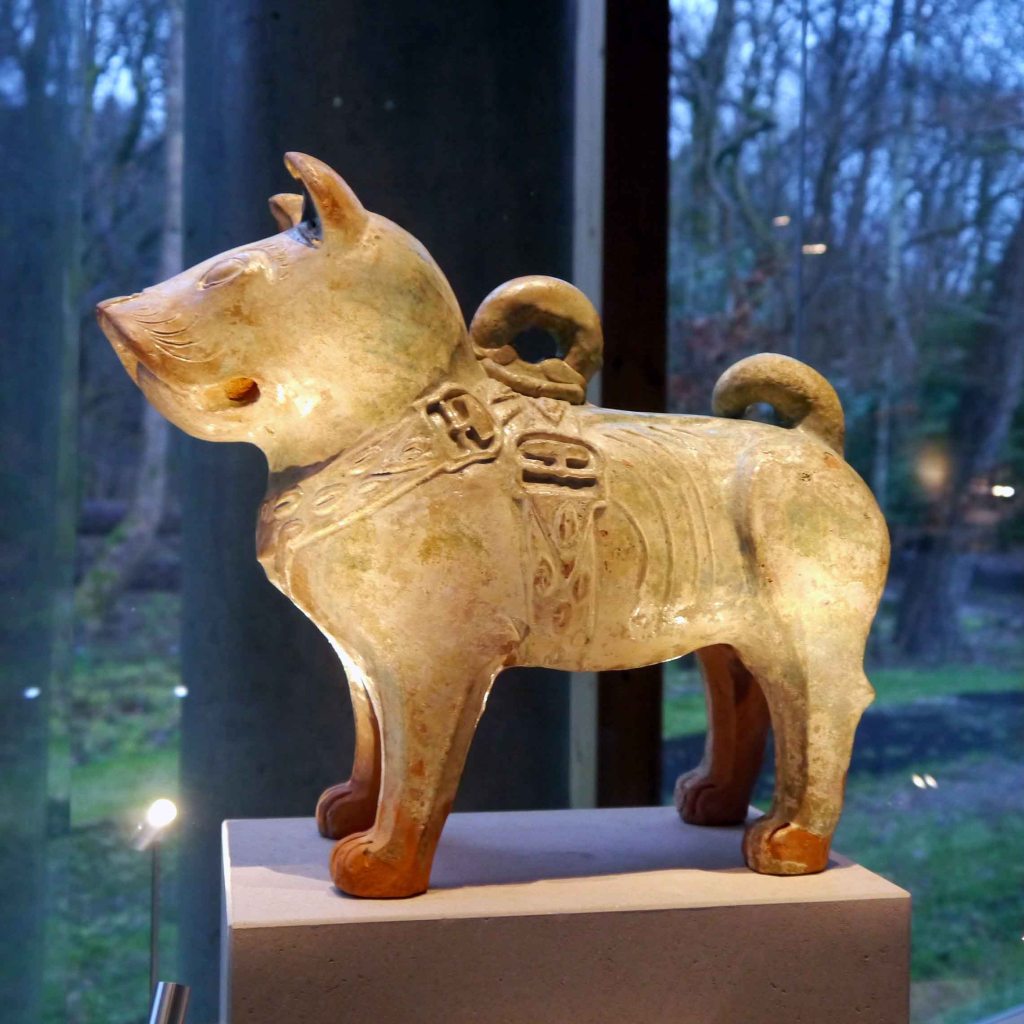
In ancient China, pottery played an essential role in daily life from the Neolithic period onward. Made from inexpensive yet high-quality clay readily available across the region, pottery was widely accessible and adaptable to local needs. Vessels were often fired at high temperatures, resulting in durable stoneware suited for everyday use. Early pottery was primarily utilitarian, serving functions such as cooking, storage, and food serving. Despite their practical purpose, these vessels frequently featured geometric patterns, painted designs, and symbolic motifs, reflecting aesthetic preferences as well as social identity and spiritual beliefs. As Chinese societies became more complex and socially stratified, pottery took on increasingly specialized and symbolic roles. Beyond domestic use, ceramic objects were employed in elite, ceremonial, and funerary contexts, with forms and decorations becoming more intricate. Initially, ceramic grave goods were placed in tombs as substitutes for expensive bronze vessels, allowing families of modest means to fulfill ritual obligations. Over time, pottery assumed a more expressive funerary function: stoneware models of everyday objects –tools, utensils, and furniture – were included to ensure that the deceased would be surrounded in the afterlife by the familiar comforts of their earthly lives. By the late Warring States period, pottery production had become highly specialized and sophisticated, both technically and artistically. Tombs were furnished with ceramic models of buildings, farmyards, chariots, animals, and servants, creating miniature representations of daily life. By the Eastern Zhou period, bronzes were increasingly passed down within families rather than buried, making ceramic substitutes more common.
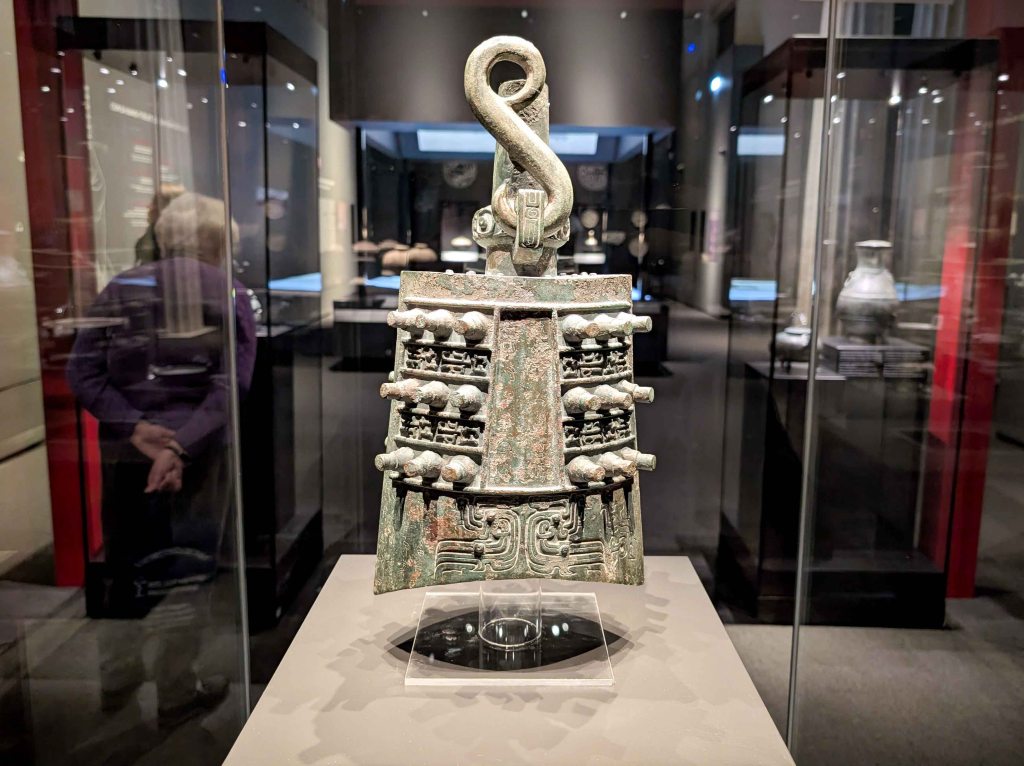
In ancient China, the Six Arts formed the foundation of elite education, combining moral, intellectual, and physical training to cultivate well-rounded and capable individuals. The six disciplines were: rituals (including proper conduct, ceremonies, and moral behavior), music (appreciation, performance, and understanding), archery (emphasizing discipline, precision, and focus), calligraphy (mastery of writing, script, and literary expression), arithmetic (knowledge of numbers, calculation, and measurement), and chariot driving (including horsemanship, coordination, and battlefield strategy). Together, they provided a comprehensive education designed to prepare the elite for roles in governance, military command, and ritual leadership, embodying the Confucian ideal of cultivating both virtue and practical competence. The chariot appeared in China around 1200 BC and quickly became central to both warfare and transportation, as well as a powerful symbol of social rank and authority. Because of its military and ceremonial significance, great attention was paid to the decoration of horse tack and chariots. The rank of the passenger was indicated by the quality and richness of the harness decorations, and by the number of harness bells, which not only displayed wealth but also produced resonant sounds during processions and in battles. Among the most striking elements of chariot ornamentation were the bronze axle caps – cylindrical fittings that tapered toward the ends and were secured with intricately crafted animal-headed axle pins – combining technical functionality with symbolic artistry. During the Zhou period, chariots were so highly valued that they were often included in elite tombs, sometimes alongside their horses and drivers, reflecting the belief that the deceased would continue to require them in the afterlife.
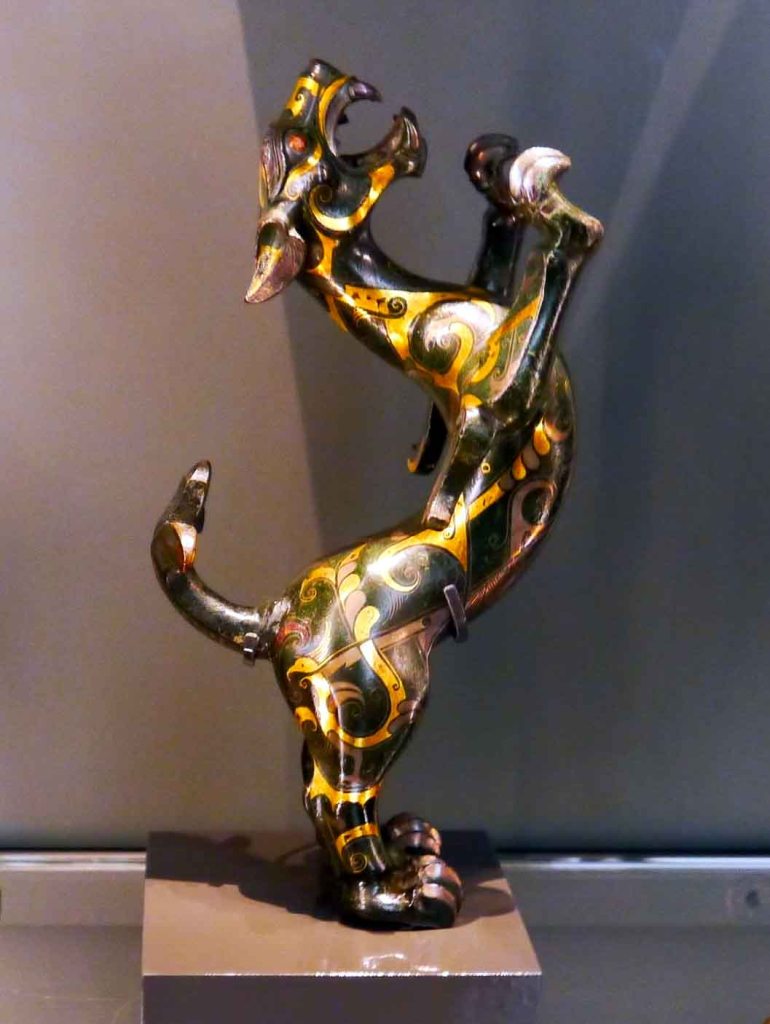
Although marked by political fragmentation and persistent warfare, the Zhou dynasty gave rise to the philosophical traditions, ritual systems, and material cultures that laid the foundations for the later emergence of imperial rule. In 221 BC, the state of Qin emerged as the dominant power among the seven Warring States – Han, Zhao, Wei, Chu, Yan, and Qi – successfully unifying China under Qin Shi Huang (259-210 BC), who became the first ruler of a centralized Chinese empire. Guided by Legalist principles, he established a highly centralized administrative system characterized by strict, uniformly enforced laws and a disciplined, effective military force designed to strengthen imperial authority and curb the influence of regional elites. He also undertook ambitious infrastructure projects and sweeping standardization reforms aimed at consolidating the empire, strengthening centralized control, improving communication across vast distances, facilitating the rapid movement of troops and supplies, and ostentatiously demonstrating imperial power. His achievements laid the institutional and structural foundations of imperial China, which would endure for more than two millennia.
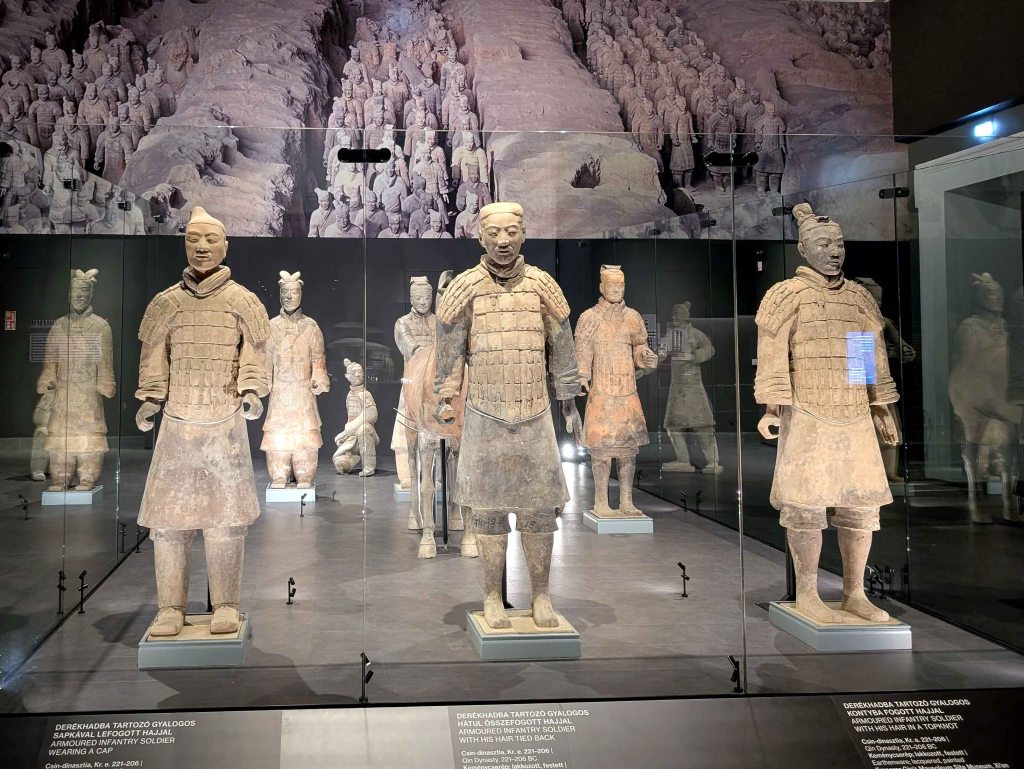
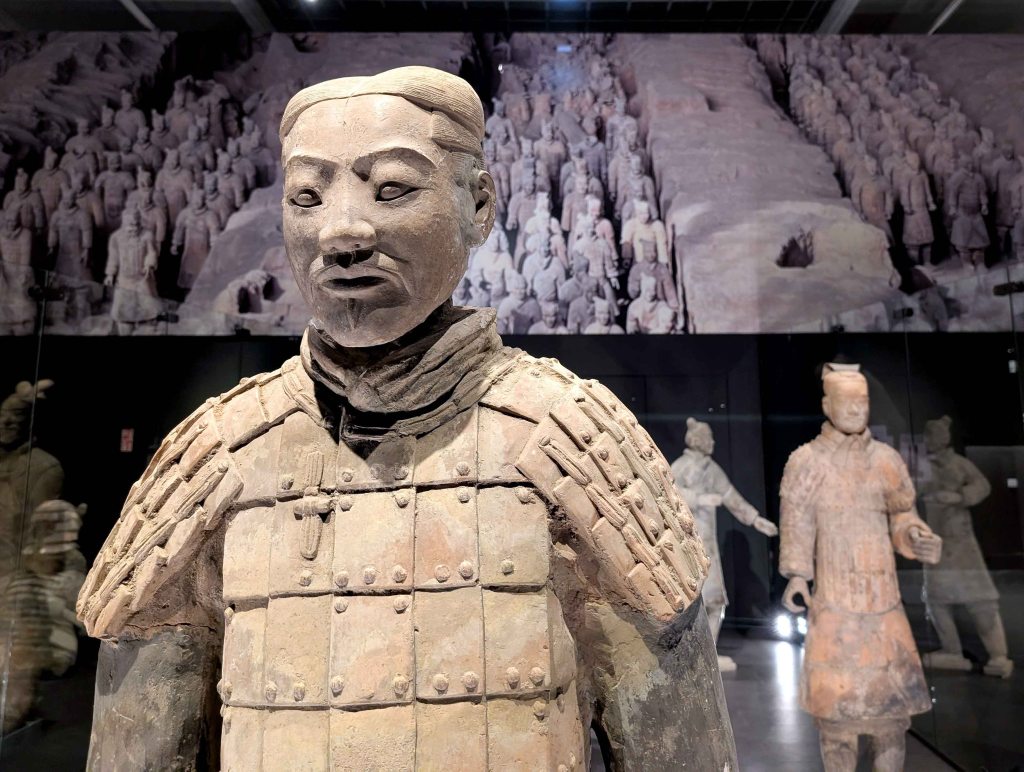
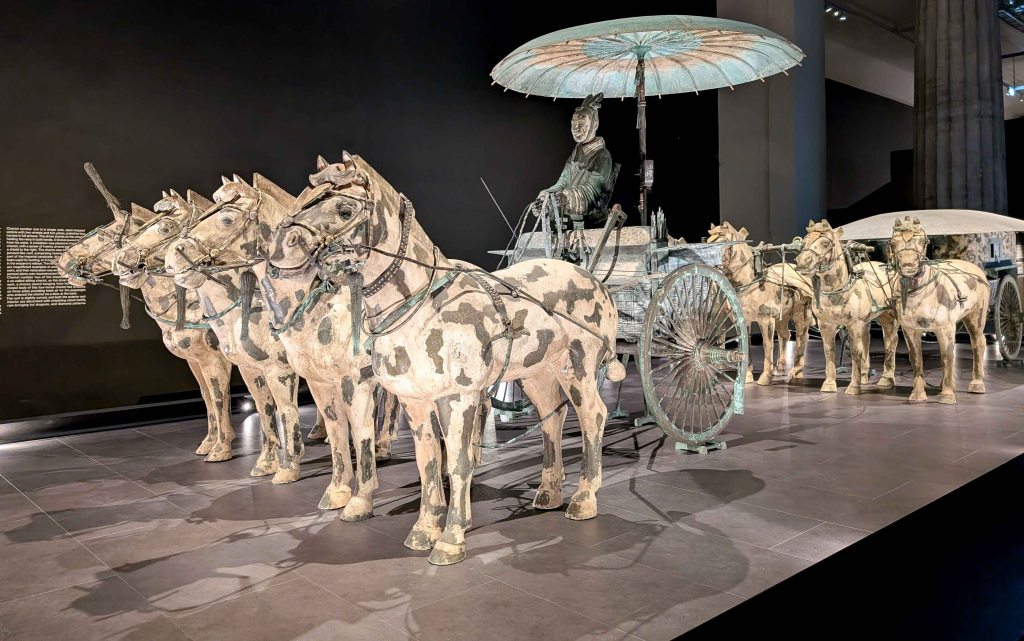
After Qin Shi Huang’s death, his son Qin Er Shi continued the massive construction projects, expanded the army, and imposed ever heavier taxes and labor demands on the population. These policies intensified existing social tensions, leading to widespread rebellions throughout the empire. Lacking broad popular support and effective leadership, the Qin state proved unable to suppress these uprisings. In 206 BC – barely fifteen years after its founding – the Qin dynasty collapsed, giving way to a period of civil war that ultimately culminated in the establishment of the Han dynasty. The Han dynasty (206 BC – 220 AD) retained the Qin’s centralized bureaucratic framework while incorporating Confucian principles to temper Legalist rigidity. Han governance emphasized moral leadership, ethical responsibility, and the cultivation of virtuous rulers, alongside the development of a strengthened merit-based bureaucracy. Under the Han, military campaigns extended China’s influence westward, facilitating the establishment of the Silk Road – a vast network of trade routes connecting China with Central Asia, India, and the Mediterranean world – leading Greek and Roman geographers to refer to China as Serica [the land of silk]. Economically, politically, and culturally, the Han dynasty is widely regarded as a golden age of Chinese civilization. Its enduring legacy is reflected even today, as the majority ethnic group in China identifies as Han, a testament to the dynasty’s central role in shaping Chinese statehood and civilization.
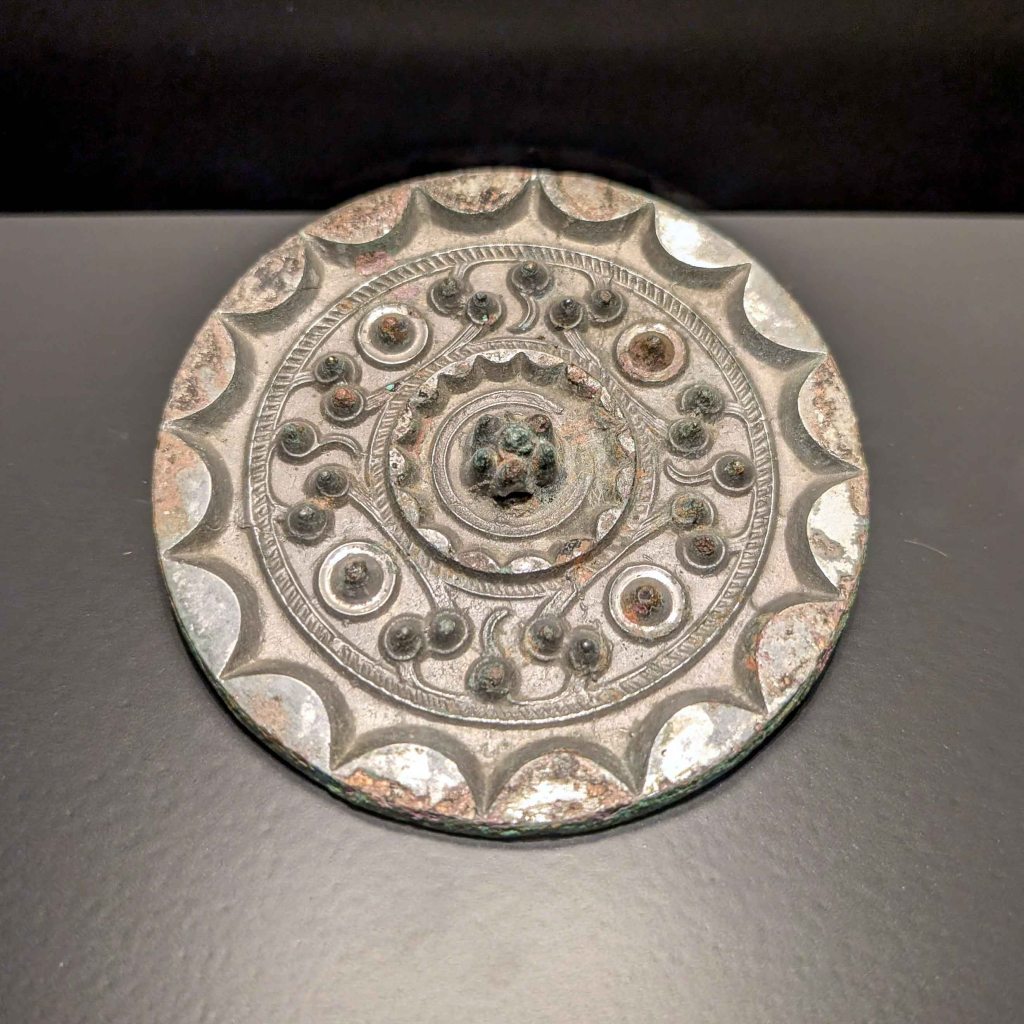
Today, the legacy of the Zhou, Qin, and Han dynasties can be explored at some of China’s most remarkable historical sites and museums. The remains of Zhou capitals – such as the Fenghao archaeological site near Xi’an and the Luoyi archaeological site near Luoyang – offer insight into early political centers. Near Xi’an in Shaanxi Province, visitors can explore the vast mausoleum complex of Qin Shi Huang. This site includes the central burial mound, the world-famous Terracotta Army, and hundreds of subsidiary tombs, pits, workshops, and architectural remains, all forming the Emperor Qinshihuang’s Mausoleum Site Museum. Also near Xi’an is the Yangling Mausoleum, the burial site of Emperor Jing, the sixth ruler of the Han dynasty and one of the most significant imperial tombs of the period. Several major museums further illuminate this history. The Shaanxi History Museum in Xi’an houses extensive collections of Shang, Zhou, Qin, and Han artifacts, including bronze ritual vessels, jade carvings, pottery, chariots, and tomb relics. The Baoji Bronzeware Museum in Baoji is especially renowned for its collection of ancient bronzes, particularly from the Zhou and Qin periods. The Henan Museum in Zhengzhou displays important Shang and Zhou bronzes and jade ceremonial objects, while the Luoyang Museum features bronzes and pottery from the Eastern Zhou period. In Beijing, the National Museum of China presents selected Zhou, Qin, and Han treasures, including bronzes, jade, ceramics, and Han tomb artifacts. Together, these sites and collections offer a tangible connection to the dynasties whose influence continues to shape China today.
Sources
https://www.bmy.com.cn/jingtai/bmyweb/index.html
https://www.sxhm.com/en/index.html?_isa=1
https://www.bjqtm.com/
https://english.chnmus.net/
https://www.lymuseum.cn/
https://en.chnmuseum.cn/
 Trespasser-on-Earth