
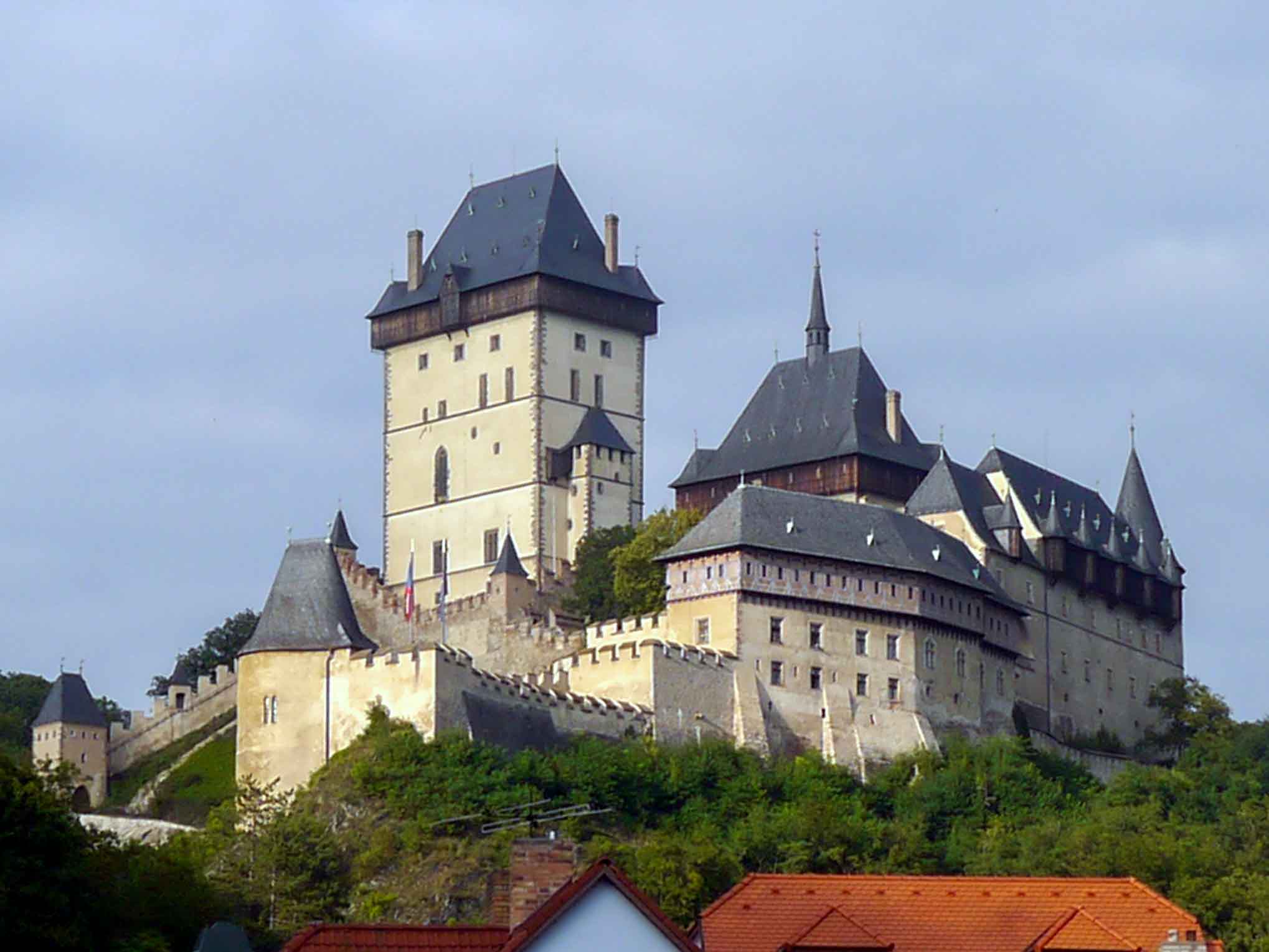
Karlštejn Castle, an imposing Gothic fortress surrounded by wooded hills, stands in magnificent isolation on a cliff above the market town of the same name. It is one of the most visited historic sites in the country.
Karlštejn Castle [Hrad Karlštejn] was established in 1348 by Karel IV (reign: 1346–1378), Bohemian King and Holy Roman Emperor. It served as a fortress for safeguarding the Imperial Regalia of the Holy Roman Empire, the Crown Jewels of Bohemia, the state archive, numerous works of art, and a vast collection of holy relics that the devout Catholic Emperor amassed from all corners of the Empire.
Following the Hussite Wars (1419–1434), a series of conflicts between the followers of Jan Hus, a Bohemian religious reformer, and the Catholic Crusaders, the Imperial Regalia were removed from Hrad Karlštejn in 1420. In the 16th century, the Gothic castle underwent renovations in the Renaissance style. The castle’s present-day appearance is the result of extensive restoration work carried out in the 19th century by architect Josef Mocker. Mocker meticulously restored the castle to its original Gothic style, adding ridge roofs that became a hallmark of medieval architecture. Thanks to his efforts, visitors can now experience the castle as it would have looked during Karel IV’s reign.
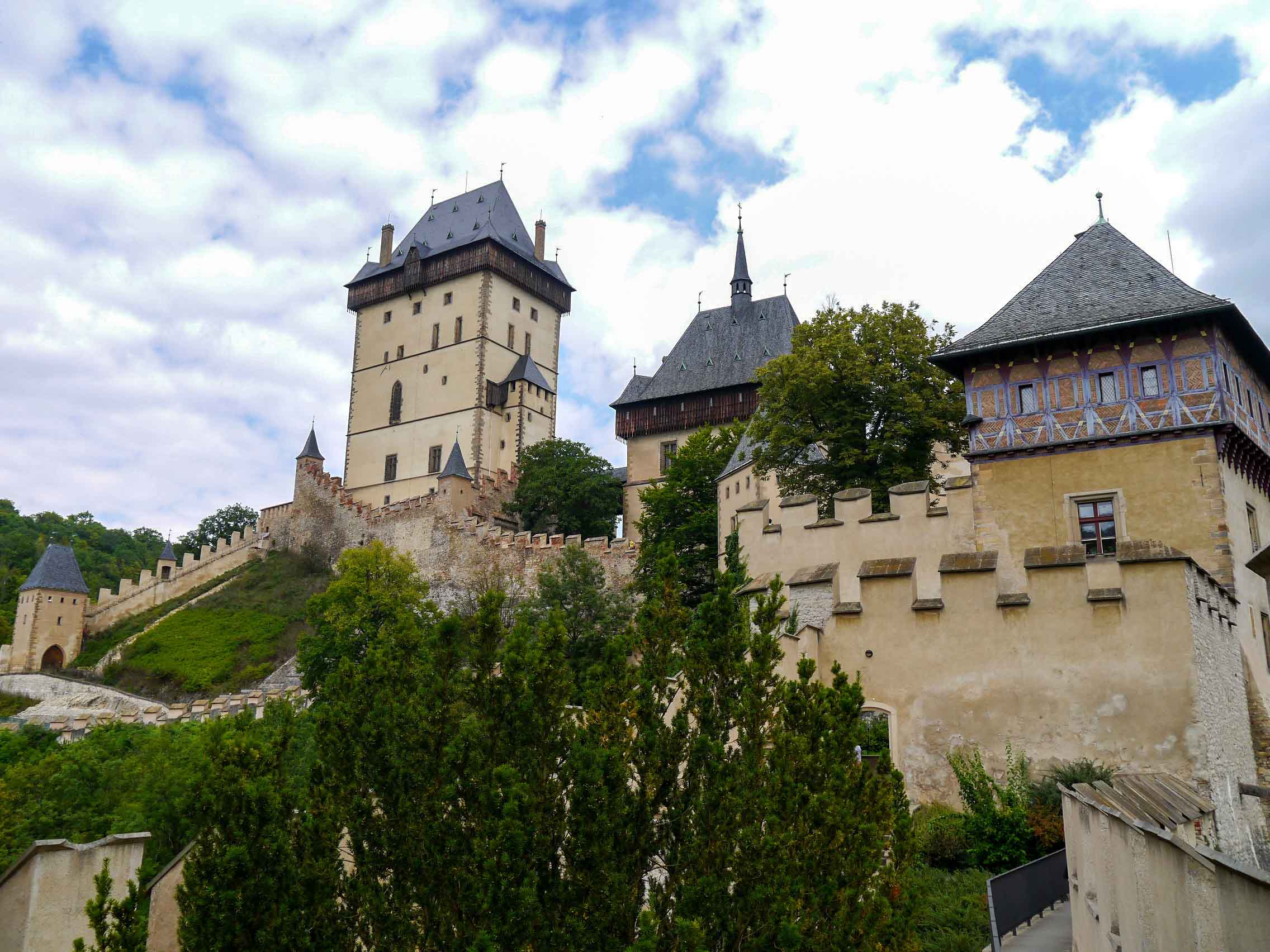
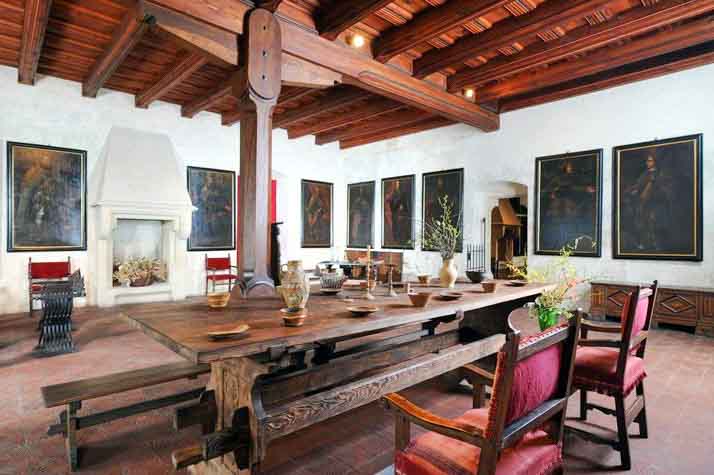
At the heart of the castle lies a complex comprised of three main structures: the Imperial Palace, the Marian Tower and the Great Tower. The Imperial Palace houses the State Rooms, the Emperor’s Bedchamber and the Treasury, which contains a replica of the St Wenceslas Crown – the medieval crown of the Bohemian kings. Visitors can explore these areas and get a sense of what life was like for the Emperor and his courtiers during the castle’s heyday.
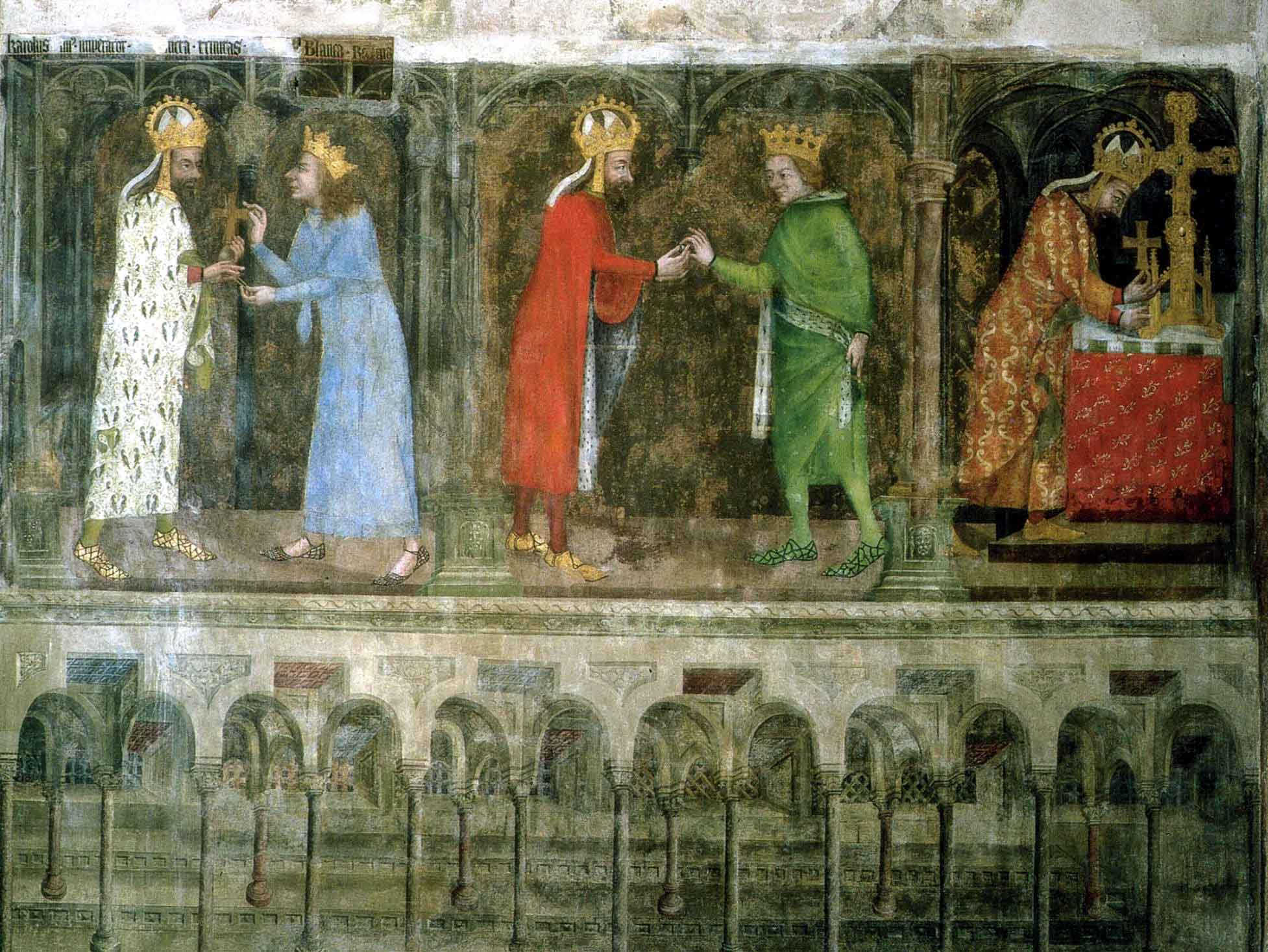
Located within the Marian Tower is the Church of the Virgin Mary, a stunning example of Gothic architecture adorned with 14th-century murals. Among the murals are two depicting Karel IV receiving relics from the French Dauphin, including two thorns from the crown of Jesus and a piece of his cross. In another mural, the Emperor is seen placing the fragment of the cross in a reliquary. Visitors can also explore the Chapel of St Catherine, which can be accessed through a narrow passage. This tiny chapel was a favorite meditation spot of Karel IV and features walls richly decorated with semi-precious stones set in plaster.
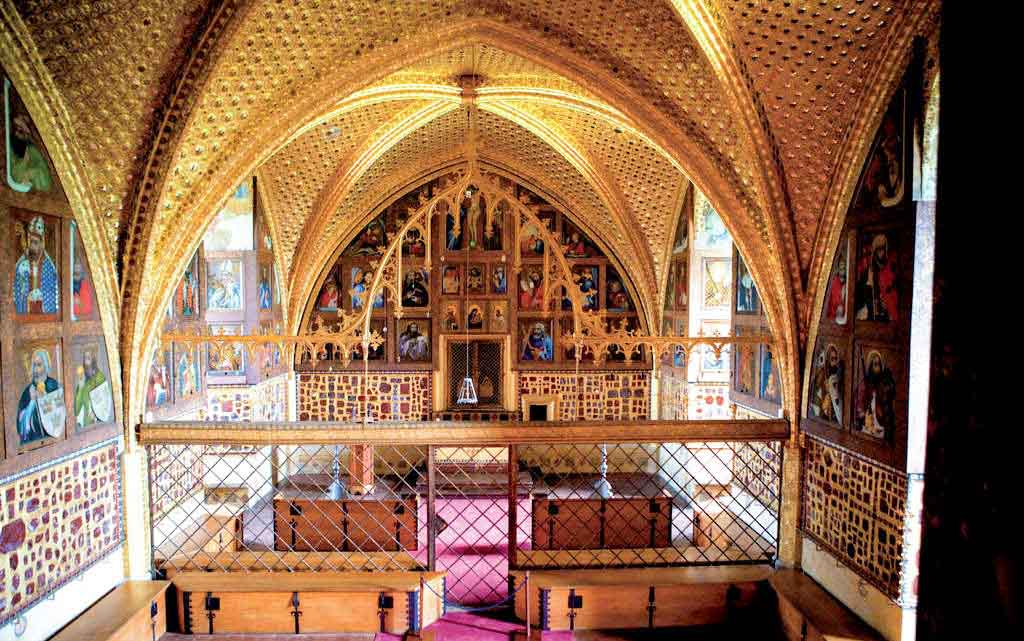
At the heart of the Great Tower lies the Chapel of the Holy Cross, a secure chamber where important documents and symbols of state power were once kept. The chamber was so well protected that it required four doors and nineteen locks, each guarded by a separate individual. The chapel’s walls are adorned with a stunning collection of 129 portraits of saints and monarchs, painted by the Emperor’s court painter, Master Theodoric. These portraits are a testament to the castle’ rich history and provide a glimpse into the artistic tastes of Karel IV and his court.
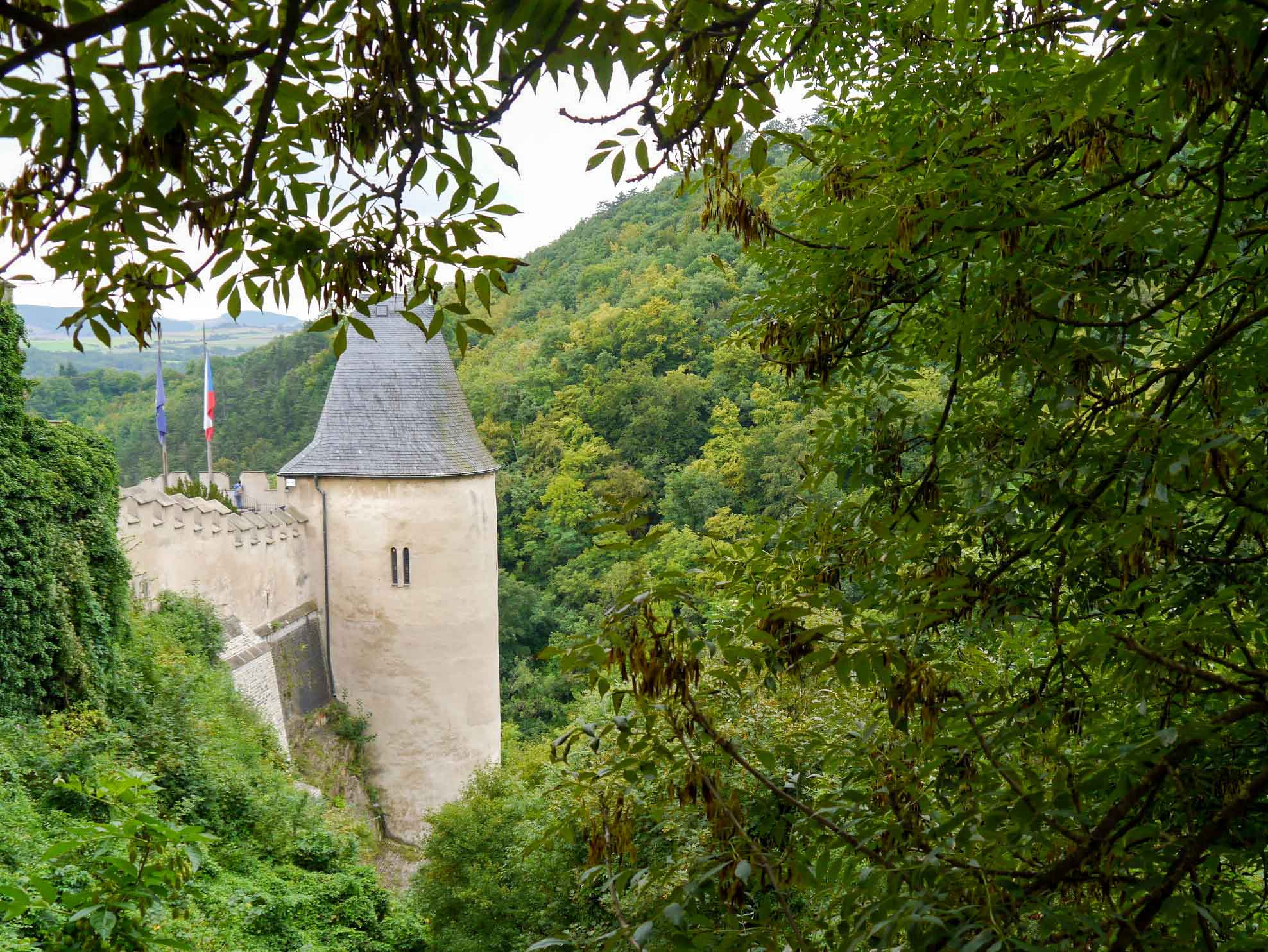
For those who enjoy hiking, the surrounding hills offer breathtaking views of the castle and the same natural beauty that Karel IV would have experienced during his hunting excursions in the 14th century. These hills have remained largely unchanged over the centuries, making it possible for visitors to immerse themselves in the same picturesque landscapes that have inspired artists and writers for generations.
Know Before You Go
To explore the castle, visitors must join a guided tour, as unaccompanied admission is not allowed. There are three main tours available, each providing a unique perspective on the castle’s history and architecture.
 Trespasser-on-Earth