Albi, the hometown of the bohemian painter Henri de Toulouse-Lautrec, is a charming historic city renowned for its striking red-brick architecture and rich medieval heritage.
While the area around the town of Albi has been inhabited since the Bronze Age, it was not until the construction of the Old Bridge [Pont Vieux], around 1040 that significant urban expansion took place. The town’s prosperity grew due to increased trade and tolls collected from the use of the bridge.
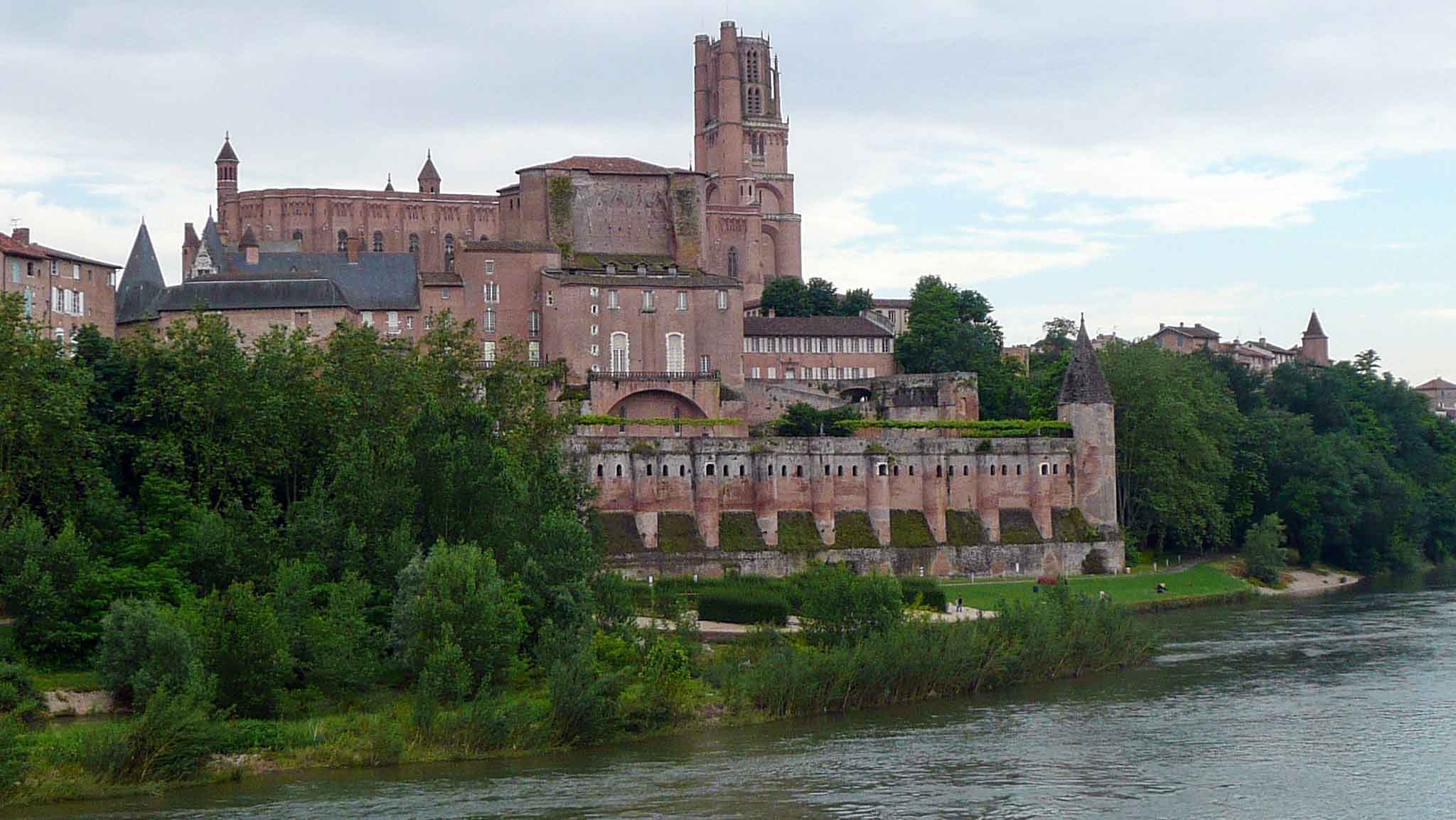
After the Albigensian Crusade, launched against the Cathars, a new Christian religious movement, Bishop Bernard de Castanet (1240-1317) commissioned the construction of the Cathedral of St Cecilia and the Episcopal Palace of Berbie. The bishop’s intension in constructing the grand castle-like complex was to assert the authority of the Christian church and remind the surviving Cathars, as well as future heretics, of its power. The complex exemplifies the distinctive Languedoc-style red brick architecture.
Albi was added to the UNESCO World Heritage List in 2010, thanks to its exceptional urban and architectural heritage, specifically the impressive brick cathedral and the bishops’ palace. These structures, along with the surrounding area, effectively showcase the growth and power of the city during its medieval period.
Albi is an appealing destination for tourist due to its unique blend of history, art, culture, and natural beauty. Besides the city’s imposing cathedral, another popular attraction is the museum dedicated to the extravagant painter Henri de Toulouse-Lautrec (1864-1901), who was born in Albi. Furthermore, surrounded by vineyards, the city is known for its delicious wine, making it a popular destination for wine enthusiasts. In the summertime, Albi comes alive with various festivals and events, including the Music Festival [Fête de la Musique], and the Joan of Arc Festival [Fêtes Johanniques], a medieval festival that celebrates the city’s history.

Cathedral of St Cecilia
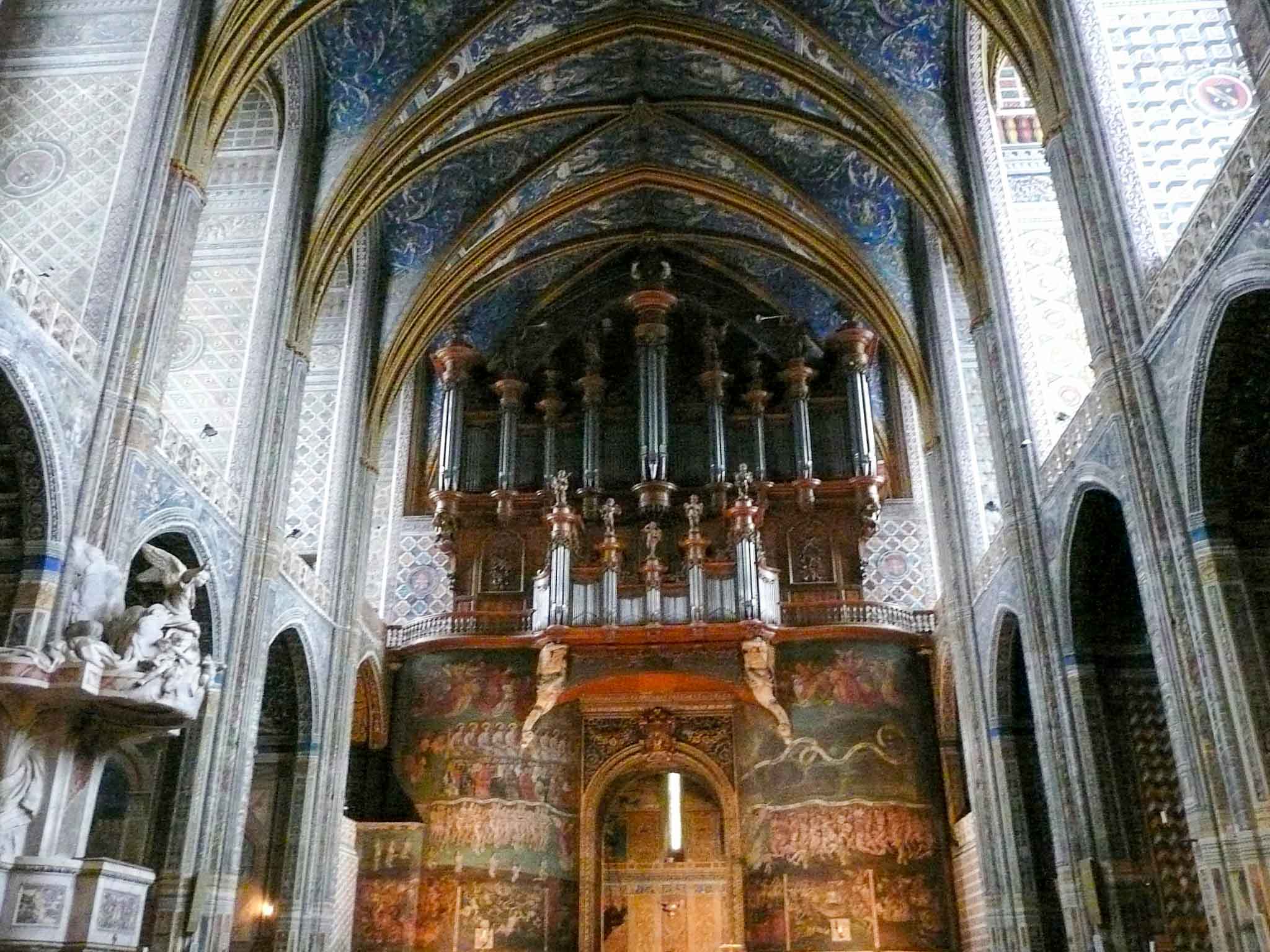
From 1282, the construction of the Cathedral of St Cecilia [Cathédrale Ste-Cécile] took two centuries. Eight centuries later, it is still one of the largest brick buildings in the world. The austere and formidable exterior of the building hides sumptuous interior decorations, such as the rood screen. This 15th-century ornamental screen is a filigree masonry made in the Flamboyant Gothic style and decorated with polychrome sculptures.
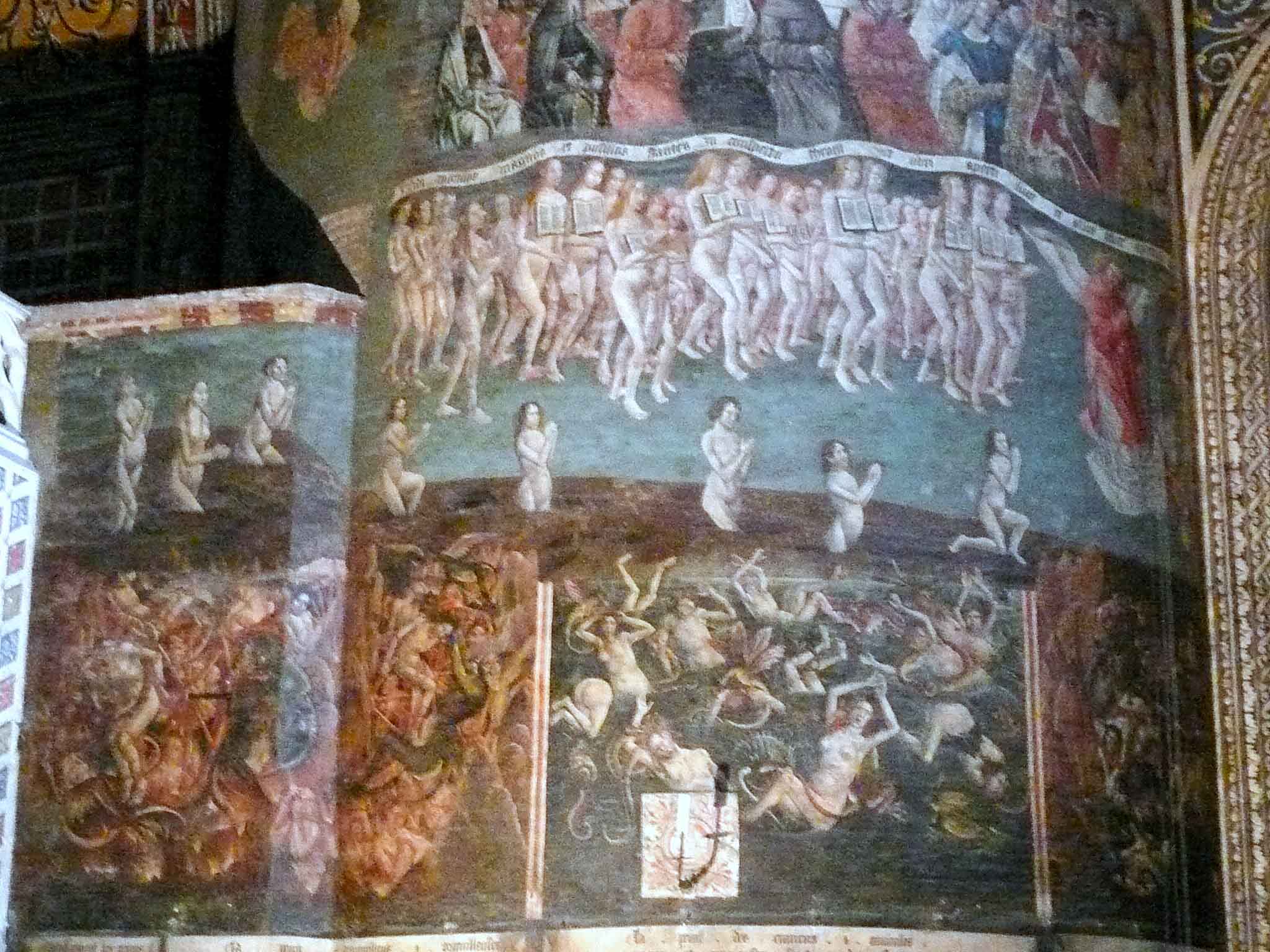
The cathedral’s most significant masterpiece is the Last Judgement [Jugement Dernier], a massive apocalyptic fresco painted at the end of the 15th century. Unfortunately, the construction of a new chapel behind the fresco in 1693 led to the destruction of its central part, including the figure of Christ rendering judgement. The upper section of the painting features angels, followed by apostles dressed in white, and various saints, clerics and monks. In the middle of the fresco, sinners are being judged, and the book hanging around their necks contains their good and bad deeds. At the bottom, the fresco portrays hell, organized into seven sections that correspond to the seven deadly sins.
St Cecilia of Rome, after whom the cathedral is named, is among the most famous virgin martyrs of the early Christian church. According to a legend from the 5th century, her parents forced her to marry a pagan nobleman despite her vow of virginity to God. During her wedding, she sang to God in her heart, which led her to be declared the patron saint of music and musicians. The devout Cecilia first converted her husband, then his brother to the Christian faith. She spent her life giving her possessions to the poor, which angered the local prefect, who ordered her execution by burning. However, the flames did not harm her, so she was beheaded. Despite being struck three times on the neck with an axe, she lived for three days. In the 9th century, her remains were discovered undecayed. The St Cecilia chapel in the cathedral houses her reliquary and a statue with three scars on the back of its neck.

Henri de Toulouse-Lautrec Museum
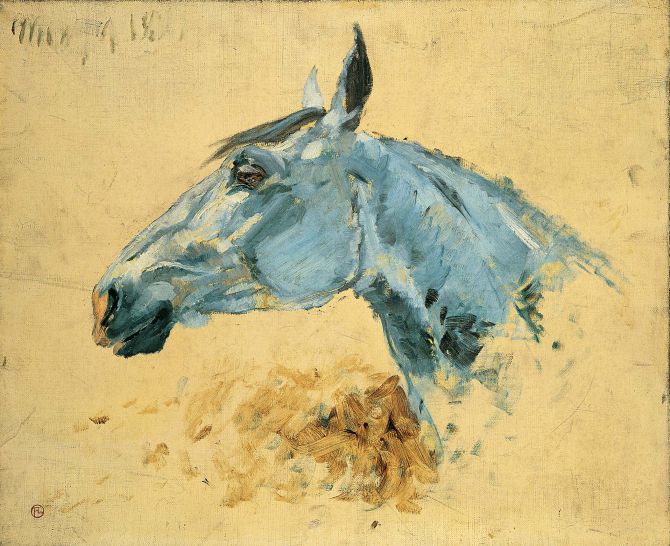
The Henri de Toulouse-Lautrec Museum [Musée Henri de Toulouse-Lautrec] is situated in the former bishop’s palace, Episcopal Palace of Berbie [Palais Épiscopal de la Berbie].. Comte Henri de Toulouse–Lautrec, who was born in Albi in 1864, broke his right femur at the age of 13 and his left femur at the age of 14. The fractures did not heal properly and caused his legs to remain child-sized, while his torso grew to adult size, likely due to an unknown genetic disorder. Despite this, his exceptional artistic abilities flourished due to his immeasurable willpower and toughness. Moving to Paris in 1882, he captured many snapshots of the city’s late-19th-century bohemian way of life through his work. Sadly, alcoholism and syphilis led to his untimely death at the age of 36.
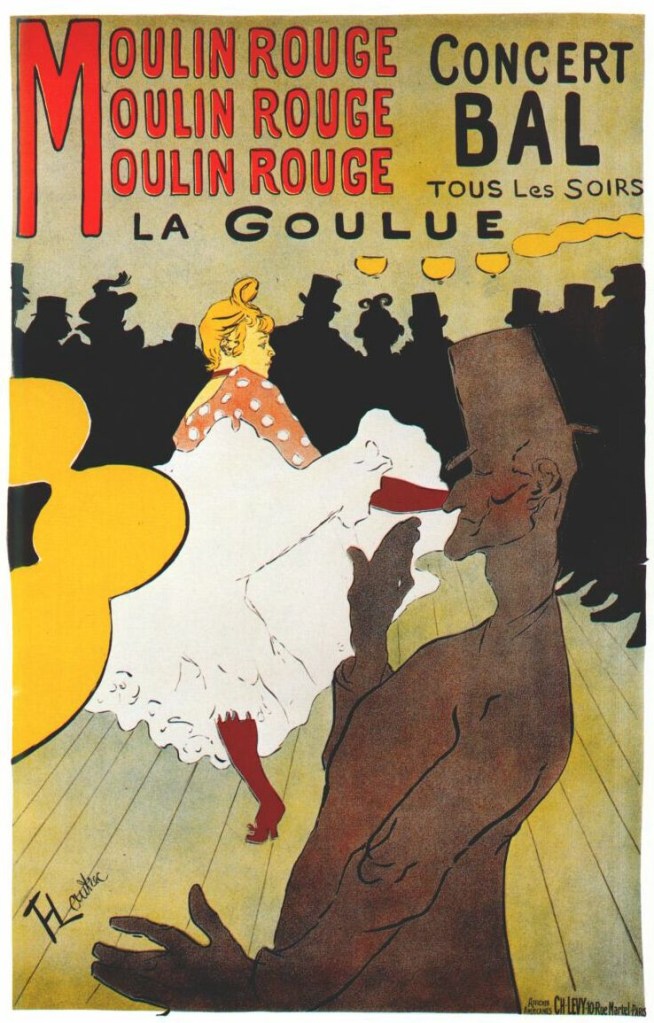
The museum boasts the most comprehensive permanent collection of the works of Albi’s most renowned son, which were donated by his mother. It comprises over 1,000 original works, spanning his artistic career from early post-impressionist paintings to depictions of the Parisian nightlife. In addition to the early paintings of his mother, among the museum’s most popular exhibits are his famous depictions of scenes from Parisian brothels and posters for the Moulin-Rouge. His striking and bold posters contributed significantly to the elevation of lithography into an art form.


Sources
https://www.albi-tourisme.fr
http://www.cite-episcopale-albi.fr
http://www.musee-toulouse-lautrec.com/
Mure, Pierre la (1947) Moulin Rouge: A novel based on the life of Henri de Toulouse-Lautrec
 Trespasser-on-Earth