The Minoan civilization, renowned for its monumental architecture and refined art, flourished during the Bronze Age on the island of Crete and is often acknowledged as Europe’s inaugural civilization.
Situated at the intersection of sea routes connecting three continents, Crete has consistently acted as a melting pot for culture, knowledge, and innovative ideas. The continuous enrichment and revitalization of Cretan culture during the Bronze Age, facilitated by interactions with neighboring cultures in the Aegean, Egypt, and the Middle-East, set the stage for the emergence of Europe’s first great urban-palatial civilization. This civilization took its name from the mighty King Minos, the semi-divine ruler of the island. The Minoan civilization reached its zenith between 1700 BC and 1450 BC. They constructed multistoried labyrinthine palaces that served as the epicenters of political, economic, and religious life. Minoan artistic traditions encompassed the crafting of exquisite pottery, the intricate art of fresco painting, the creation of small-scale sculptures in faience, bronze, and ivory, and the masterful craftsmanship displayed in seal-stones and jewelry. They held a dominant position across the eastern Mediterranean and established a network of colonies. Sites exhibiting Minoan cultural characteristics have been discovered in various locations, including the Aegean islands (Kea, Kos, Kythera, Lemnos, Milos, Rhodes, Santorini, Samos, and Samothrace), the Peloponnese (Mycenae and Vapheio), the coast of Asia Minor (Qalna in Syria and Tel Kabri in Israel), and Egypt (Avaris).
In Crete, while stone tools as early as the Paleolithic period have been discovered, it is during the Neolithic era that a clearer picture of early Cretan prehistory emerges. This period witnessed the establishment of settlements by scattered groups of nomadic hunter-gatherers around 7000 BC. This shift towards organized communal living was accompanied by the cultivation of cereals and legumes, along with the domestication of animals. The oldest Neolithic site in Crete was unearthed on the hill of Knossos. The initial small settlement featured closely grouped pile huts, with inhabitants sharing the enclosed open spaces for their daily activities.
Over the millennia that followed, the settlements on Crete experienced significant growth. They were characterized by houses built on sturdy foundations, fortified walls, and designated spaces for each household. These changes in spatial arrangement reflect a restructuring of the community and the establishment of new social boundaries among its members. Around 3000 BC, a pivotal event in socioeconomic progress occurred with the introduction of metalworking, primarily copper, marking the onset of the Bronze Age in Crete. Despite the island’s richness in natural resources, there was a notable scarcity of metals, necessitating the need to obtain copper from mines in the Cyclades, Attica, and Anatolia. The metalworkers in Crete were pioneers of cutting-edge technology of the period, creating alloys of copper that enhanced its malleability and conduciveness for crafting durable artefacts. Minoan traders went on to establish colonies in the Cyclades, with Akrotiri on the island of Santorini being particularly noteworthy. Its strategic position along the primary sailing route between the Cyclades and Minoan Crete made it an important hub for the copper trade. This led to its development as a significant center for copper processing, substantiated by the discovery of molds and crucibles there. Trade intensified and, possibly facilitated by the introduction of masted ships, Minoan vessels embarked on voyages beyond the Aegean, reaching regions including Egypt and the Middle East. This expansion in maritime trade also brought in other precious raw materials such as silver, gold, ivory, and semi-precious stones. These developments led to an increase in primary production, fostering growth and prosperity in the settlements. Concurrently, ruling groups amassed wealth and influence through their control of production and trade.
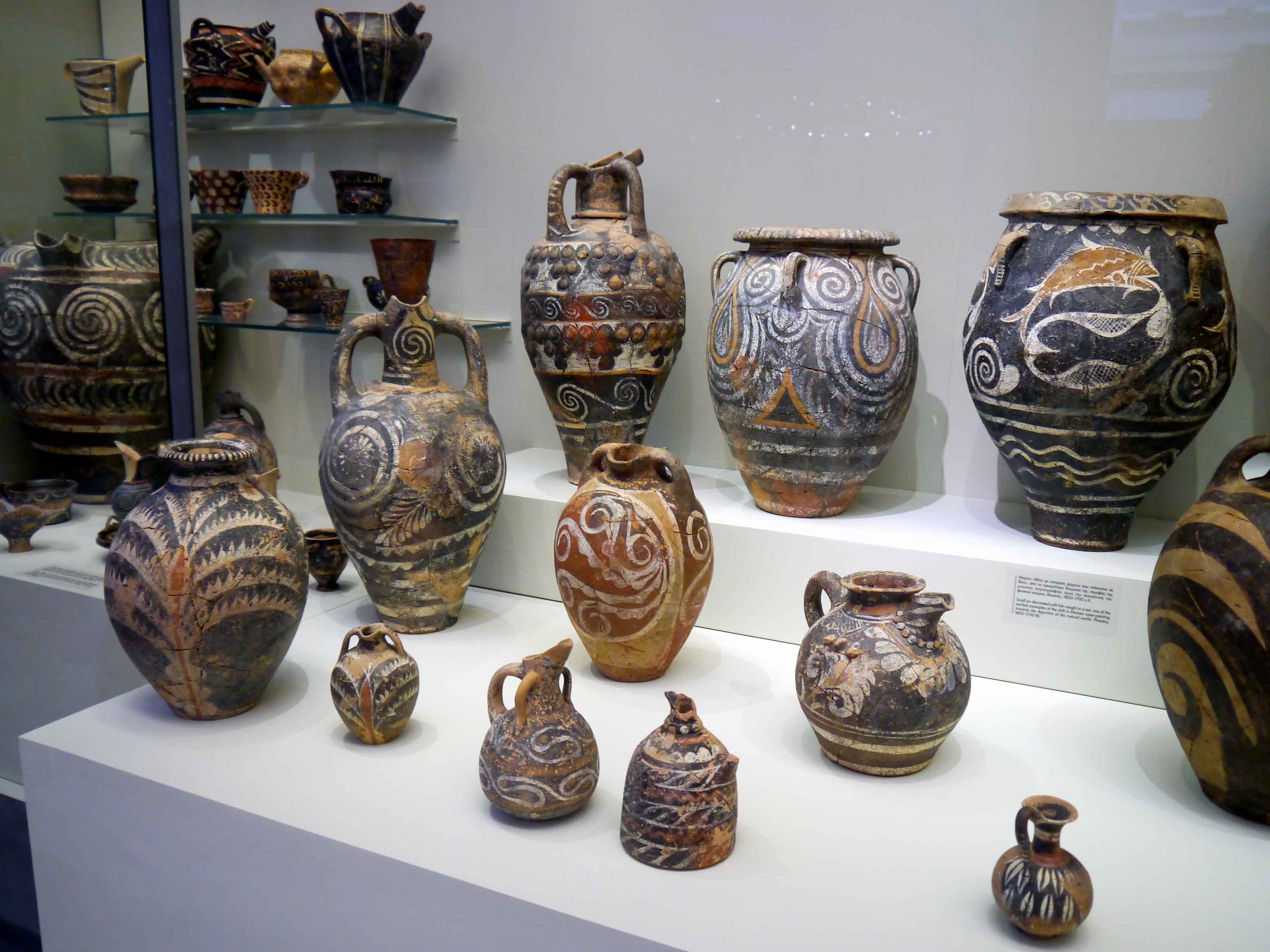
Around 1900 BC, the settlements underwent substantial expansion, evolving into sizable urban centers with intricate building complexes known as ’Old’ Palaces at their cores. Remnants of these early structures, concealed beneath the later palaces, have been discovered and partially excavated at sites such as Knossos, Phaistos, and Malia. These complexes encompassed dining areas, spacious assembly and ceremonial halls, storerooms, and a central courtyard. Society was organized in a hierarchical manner, and various skills and activities were specialized among its members. The era’s sophistication in craftmanship is exemplified by the renowned Kamares Ware, one of the most ornate styles in the history of pottery. These were luxury vessels meticulously crafted in palace workshops by artisans who developed new colorful pigments and adopted the potter’s wheel. Their diverse shapes and innovative polychrome decorations were coupled with exceptional craftsmanship. Kamares Ware was highly sought after not only within Crete but also in neighboring regions. Regrettably, around 1700 BC, the Old Palaces met their end in fires, although alternative explanations suggest violent destruction as another possible cause.
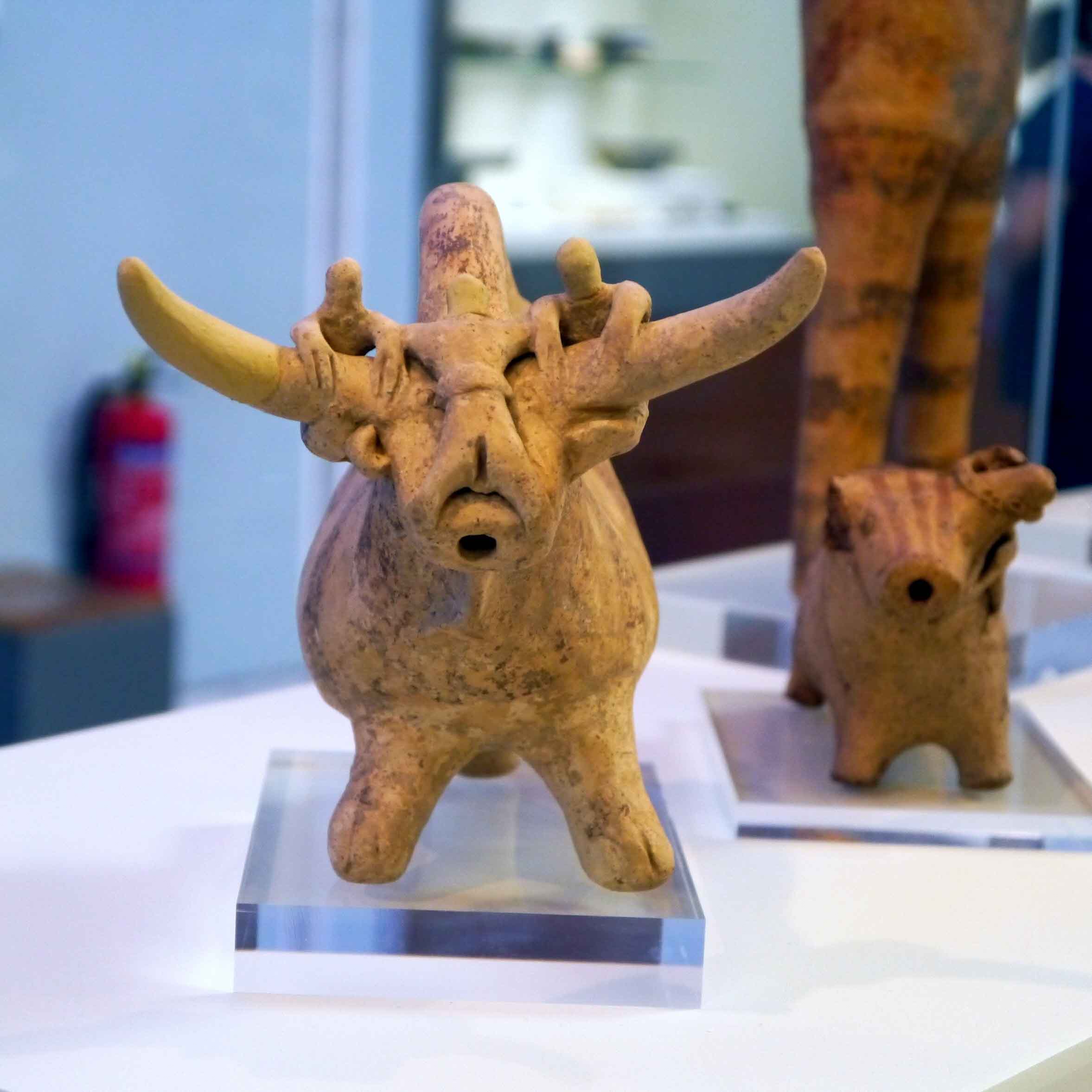
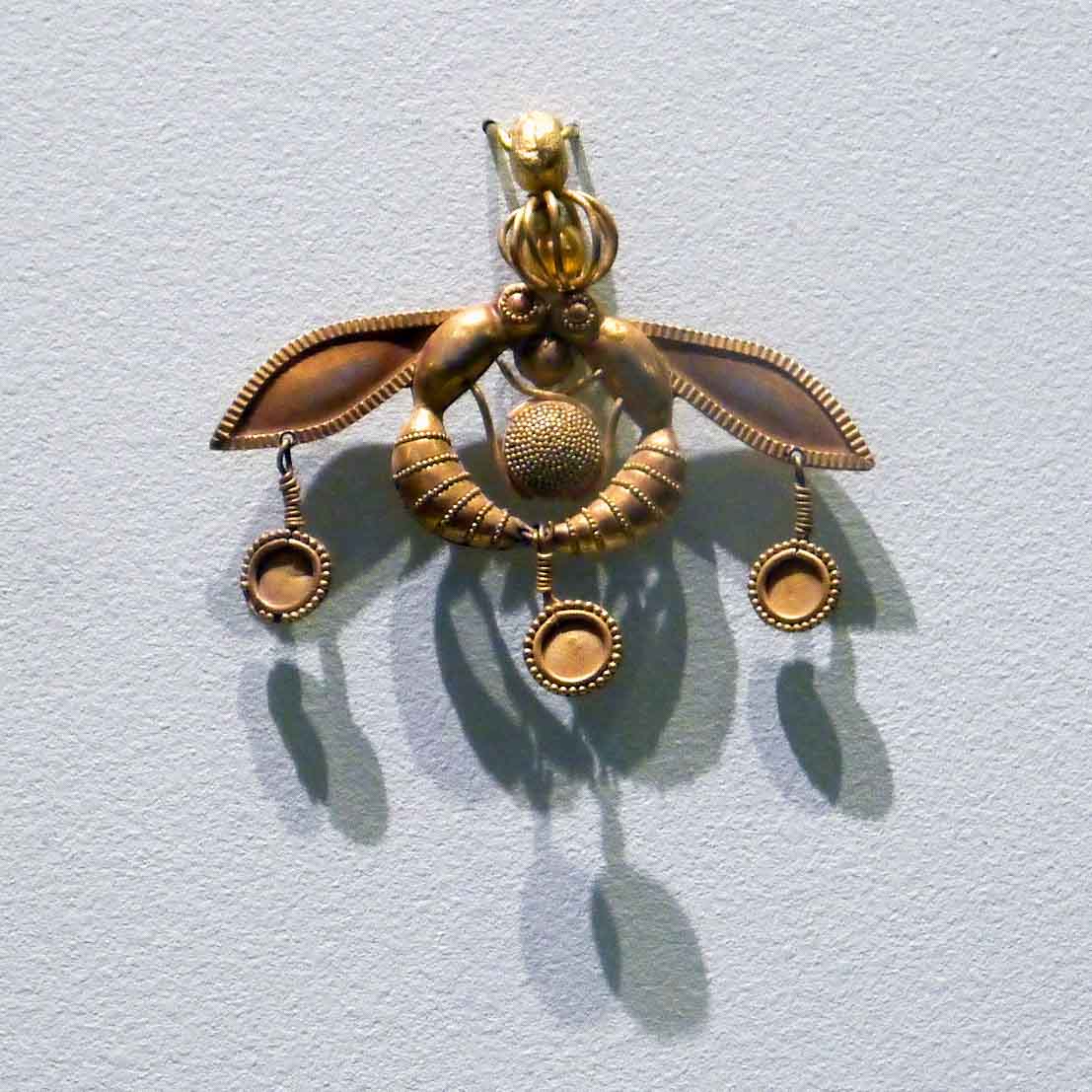
The Minoan civilization reached its peak between 1700 BC and 1450 BC. Following the destruction of the old palaces, splendid new multistoried palaces were constructed in the major towns. These labyrinthine structures served various purposes, both practical and symbolic. They functioned as the rulers’ residence and the administrative center for governing their territory. Additionally, they provided a grand stage for the ostentatious display of wealth and power by the ruling class. Furthermore, the palaces included shrines for conducting religious ceremonies. The most grandiose of these palaces was the one in Knossos, a complex of unparalleled renown.
In the palatial centers, the administration of production held significant importance. Writing played a key role in this administrative process, giving rise to two writing systems: Cretan Hieroglyphic and Linear A, both of which remain undeciphered to this day. Additionally, intricate sealing methods were devised to secure storerooms, boxes, and various items. The enigmatic Phaistos Disc, inscribed on clay, holds a prominent place in the history of Cretan script. It features forty-five pictorial signs, arranged in various combinations into sixty-one groups, separated by incised lines, presumably representing words. These signs were impressed in a spiral pattern on both sides of the disc using seals on soft clay. Experts have yet to reach definitive conclusions about the content of the inscription and its connection to Minoan scripts. The repetition of specific combinations of signs provides the most compelling evidence that the inscription may be a hymn or a text with magical significance.
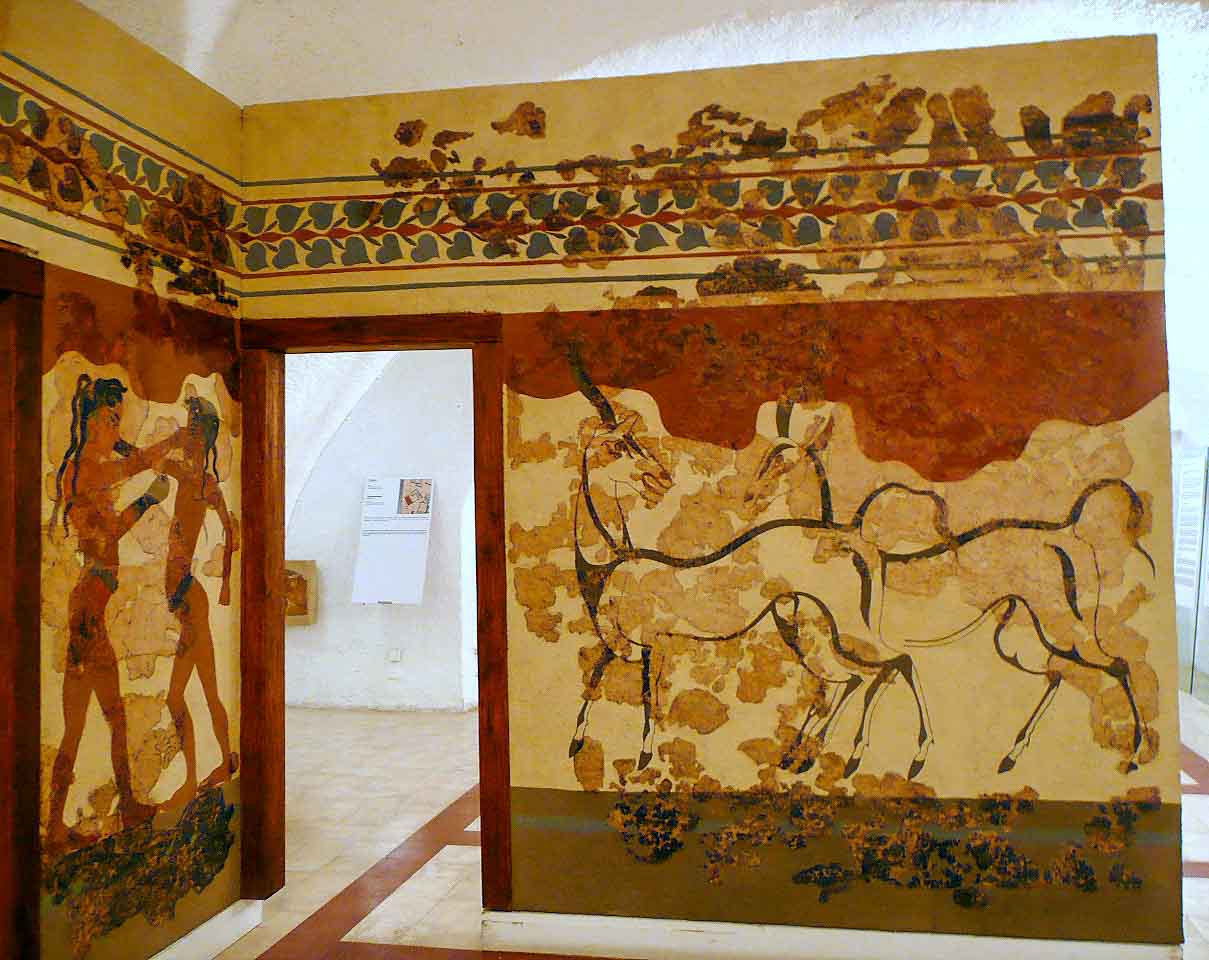
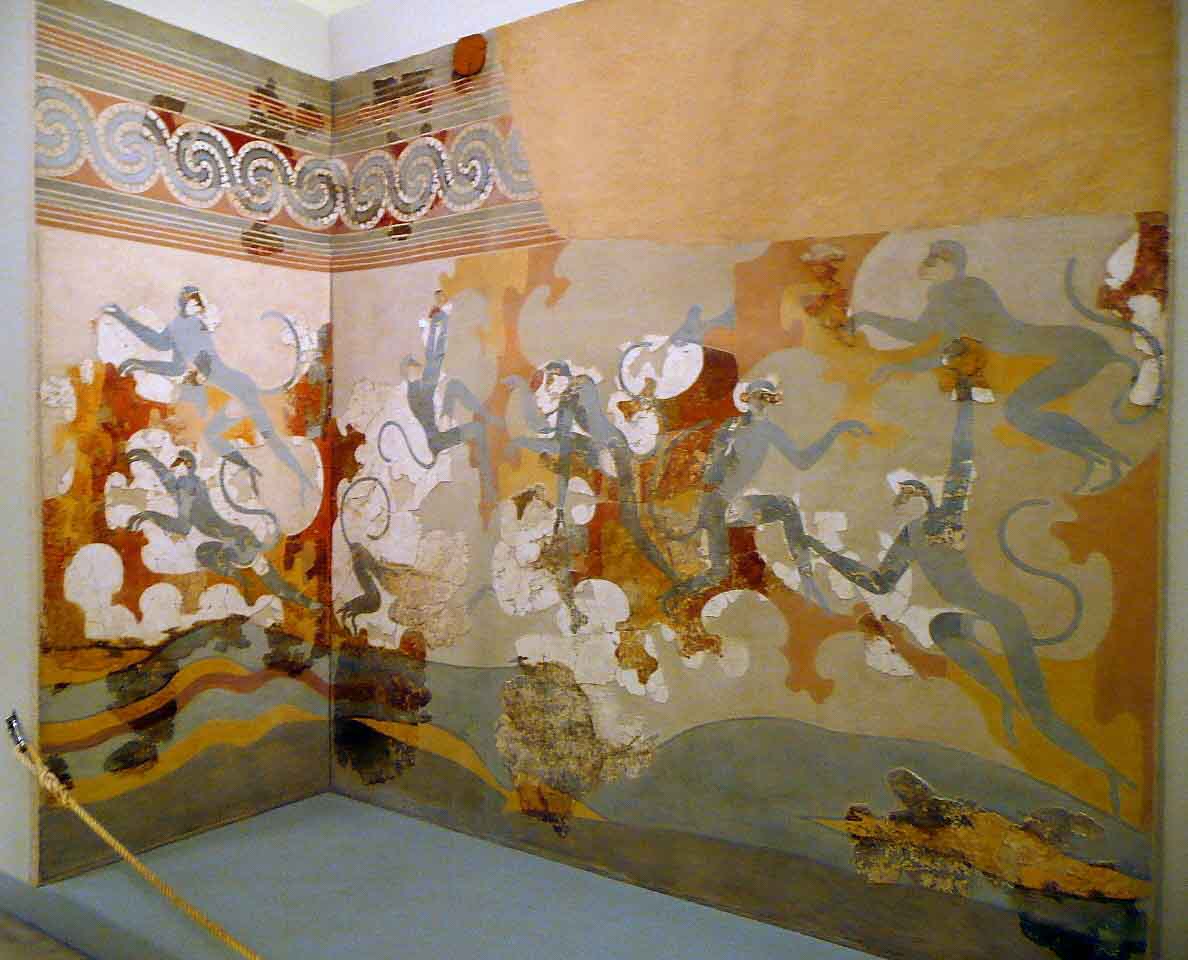
The wall paintings discovered in the palaces and mansions provide valuable insights into the Minoan civilization. The Minoan artisans are credited with pioneering true fresco, a technique where the pigment becomes an integral part of the wall. The pictorial themes are primarily derived from two realms: the Court and nature. The former showcases scenes of courtly etiquette and palatial religious rituals, featuring multi-figured processions and depictions of extravagantly adorned men and women. Additionally, these frescos portray imaginary creatures, like the griffins found in the Throne Room of the Knossos Palace. Nature-inspired themes, drawn from the island’s rich flora and fauna including lilies, roses, birds, wild goats, fish, octopuses, dolphins, and even exotic monkeys are depicted in gardens, riverside landscapes, rocky mountainsides, and marine settings.
Religious practices encompassed worship at mountain-top peak sanctuaries, sacred caves, and shrines within the palaces. Palatial rituals permeated every aspect of public and private life, forming the foundation of power and exalting the ruler as the paramount guardian of both secular and religious realms. Elaborate communal religious ceremonies were conducted, with the most significant being the Procession – a parade of men and women bearing precious ritual vessels, vividly depicted in the ‘Fresco of the Procession’ from the Palace of Knossos. While representations suggesting gods or goddesses were common in Minoan art, the specifics of their pantheon remain uncertain. However, there is an indication that Minoan religious beliefs were centered around the veneration of the Great Goddess, who was regarded as the protector of nature. Votive offerings included exquisite pottery, stone vases, terracotta and bronze figurines, and sometimes tools or weapons. Certain religious symbols like the double axes and stylized bull’s horns appear to hold particular significance.
A significant aspect of Minoan public life involved organized spectacles where trained athletes competed in tests of strength, endurance, and skill. They highly valued gymnastics, showcasing activities such as running, somersaulting, wrestling, boxing, and bull-leaping in their frescoes. These contests likely took place in spacious outdoor areas or even within the courtyards of the palaces. The most spectacular Minoan acrobatic sport was bull-leaping, a challenging and perilous feat where trained young athletes leaped over the horns of a charging bull. Both men and women participated in these events, distinguished by the depiction of their skin tones – dark for men and white for women – on frescoes. The competitive spirit and pursuit of excellence fostered by the Minoans would be centuries later revived in the Olympic Games of ancient Greece.
During this time, a significant event occurred: the eruption of the Thera volcano on Santorini around 1600 BC. This eruption stands as one of the largest in recorded history, ejecting approximately 60 to 100 cubic kilometers of material. The resulting lava flow destroyed the settlement of Akrotiri, while the ensuing tsunami, triggered by the eruption, even reached Crete and inflicted damage to some coastal sites, leading to their abandonment. However, Knossos, situated on higher ground, continued to thrive. By 1450 BC, the Minoans came under the cultural and possibly political domination of the mainland Mycenaean Greeks, giving rise to a hybrid culture that lasted until around 1100 BC.
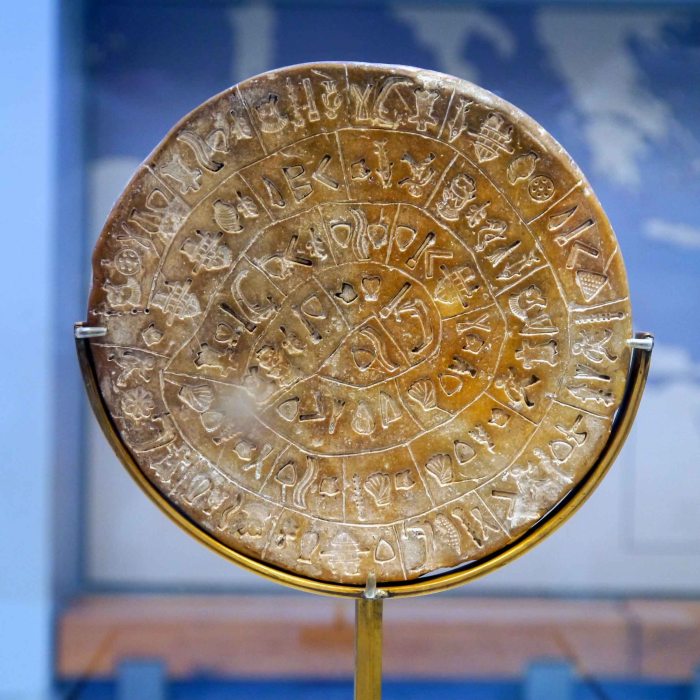

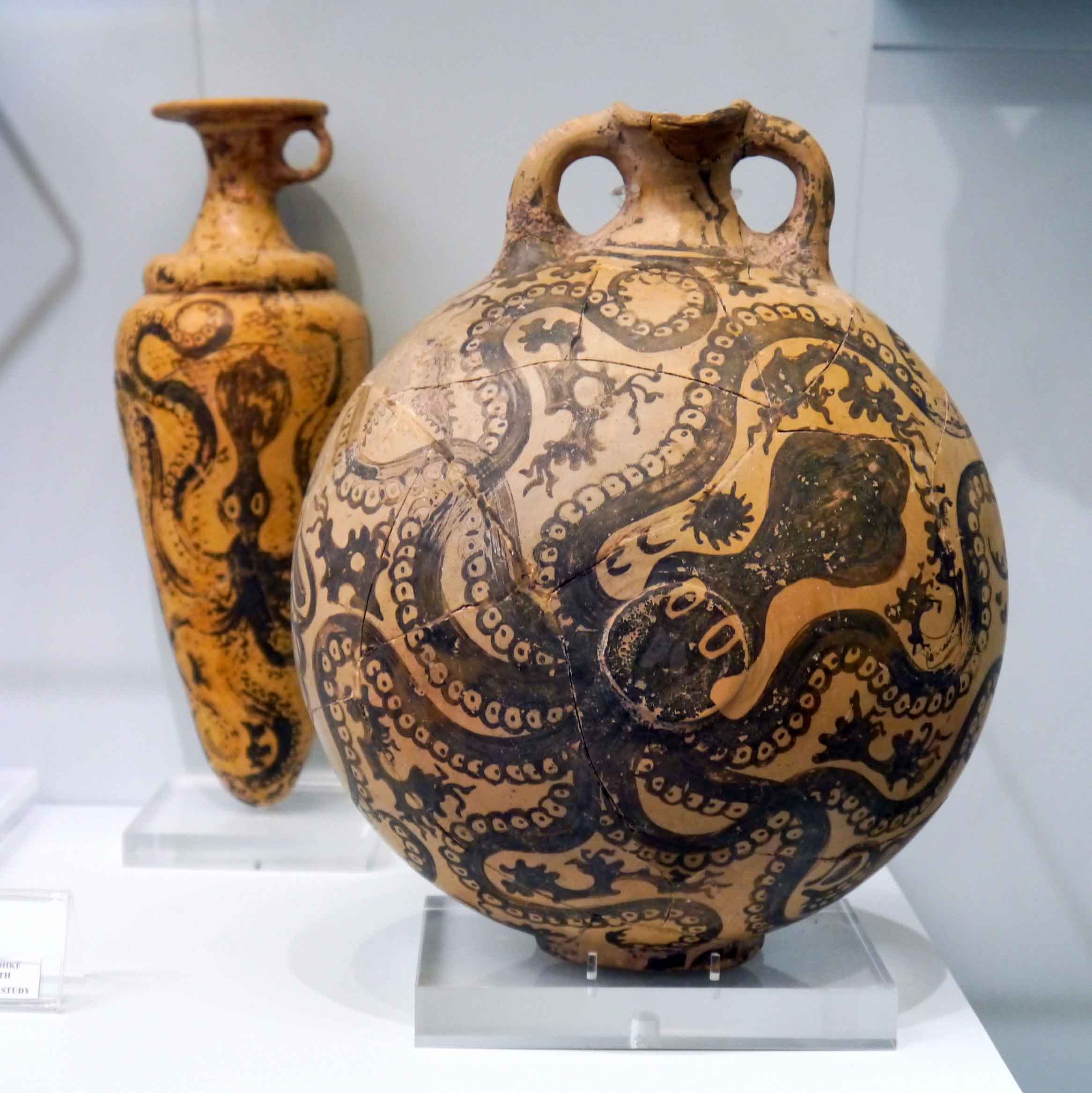
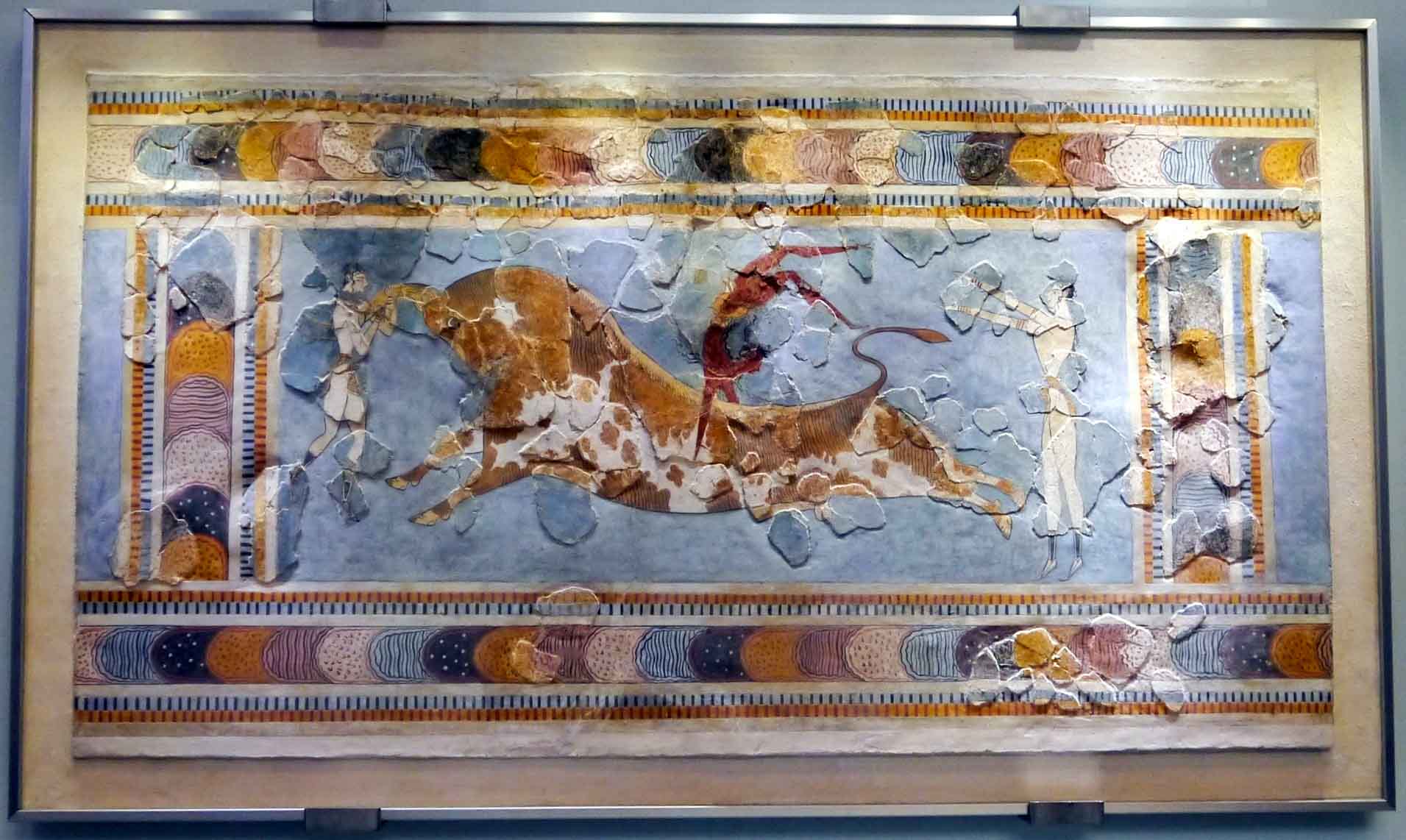


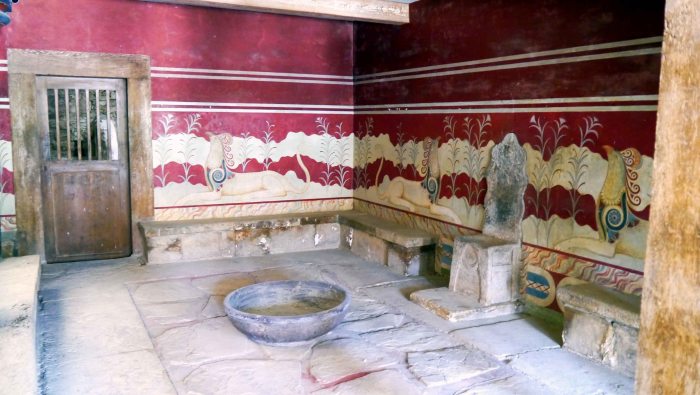
Today, there are several archaeological sites and museums associated with the Minoan civilization. Among them, the Palace of Knossos stands out as one of the most significant archaeological sites on Crete. In the early 20th century, British archaeologist Sir Arthur Evans conducted extensive excavations at Knossos, unearthing most of the palace. Covering a vast area, the site comprises a complex network of buildings, passages, and courtyards. In some sections, controversial reconstruction efforts were applied. Notable artifacts discovered at Knossos include the Bull-Leaping Fresco and the Snake Goddess Figurines. Another notable Minoan site is the Palace of Phaistos, which, unlike Knossos, features a more compact and less complex layout. Nevertheless, it still showcases the advanced architectural techniques and artistic achievements of the Minoans. Phaistos is renowned for the discovery of the Phaistos Disc, an enigmatic clay disk inscribed with a unique hieroglyphic script. Exploring the remains of the palaces in Malia, Zakros, and Gournia also contributes to our understanding of Minoan history, culture, and achievements. Additionally, the Heraklion Archaeological Museum houses the largest and most important collection of Minoan artifacts globally, featuring masterpieces representative of all periods of Minoan civilization found on the island. Other notable Minoan artifacts can be found in the Archaeological Museums of Chania, Rethymno, and Siteia.
The Minoan settlement remains at Akrotiri on the island of Santorini represent a significant archaeological site. Buried under layers of volcanic ash from the eruption of the Thera volcano around 1600 BC, the city has been remarkably preserved, offering unique insights into ancient Minoan life. Excavations at Akrotiri have unveiled a sophisticated urban center featuring multi-story buildings, paved streets, and a complex drainage system. Renowned for its well-preserved frescoes depicting vibrant scenes of daily life, nature, and religious rituals, these artworks provide valuable insights into the Minoan civilization. The artifacts and frescoes recovered from the Akrotiri site are displayed in the Museum of Prehistoric Thera [Mousio Proϊstorikis].
Sources
https://www.heraklionmuseum.gr
https://knossos-palace.gr/
https://archaeologicalmuseums.gr/el/museum/5df34af3deca5e2d79e8c191/museum-of-prehistoric-thira
https://akrotiri-museum.com/
https://www.santorini.gr
 Trespasser-on-Earth