
Boyne Valley is the cradle of Irish civilization and includes some of its most sacred and symbolic sites.
The fertile Boyne Valley has been inhabited since the Neolithic period (4th millennium BC). The region is filled with the remnants of ancient sites from this early civilization, encompassing ringed forts, sacred enclosures, and passage tombs, most notably the renowned Newgrange. Additionally, the area boasts significant medieval monastic sites like Monasterboice and Mellifont Abbey.
ARCHAEOLOGICAL ENSAMBLE OF THE BEND OF BOYNE
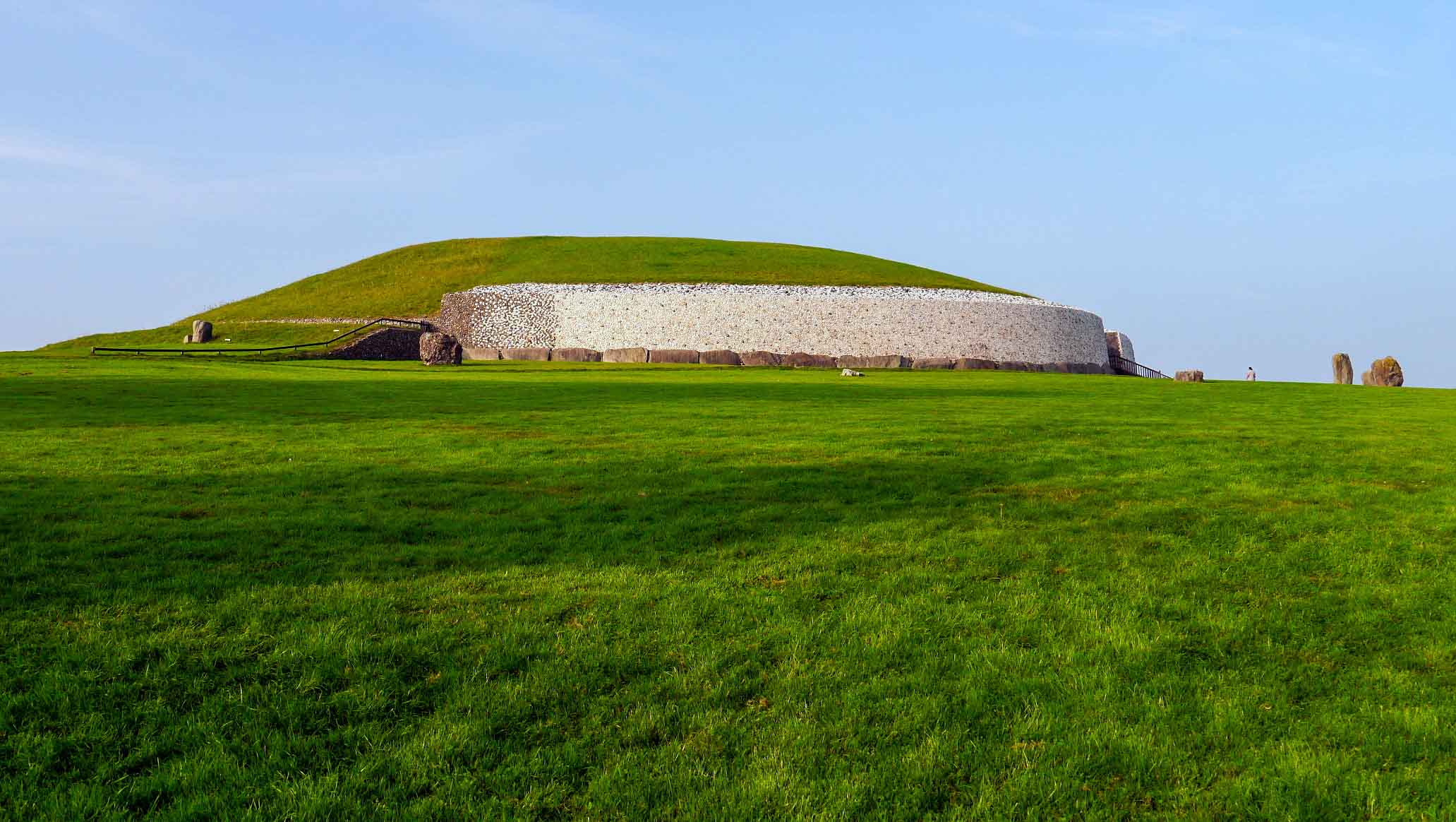
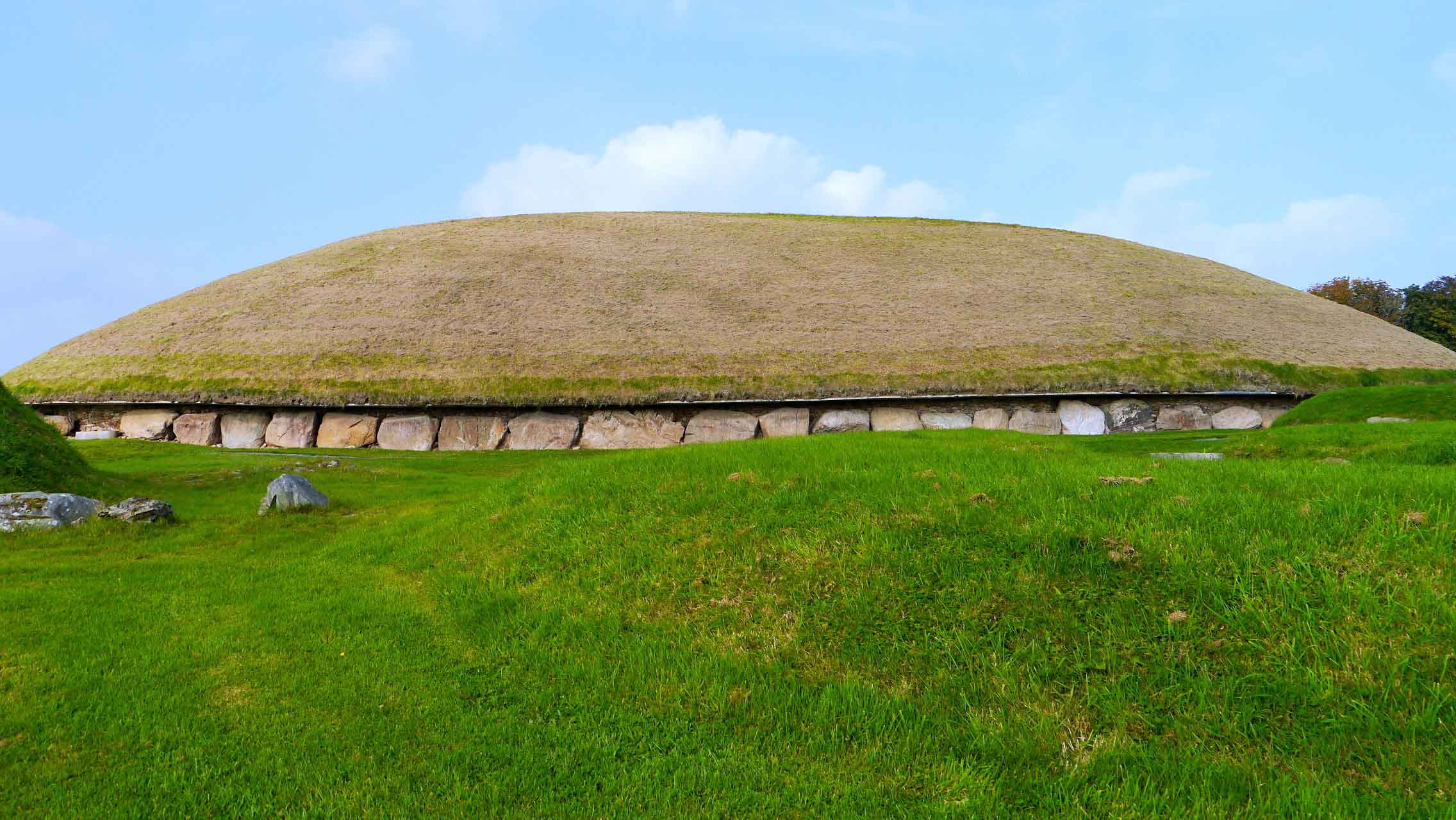
The Bend of Boyne, known as Brú na Bóinne [Palace of the Boyne], hosts the most significant Neolithic monuments in the valley. Among them are three passage graves: Newgrange, Knowth and Dowth (which is currently inaccessible due to incomplete excavation). These tombs stand as remarkable examples of the advanced engineering skills possessed by their builders. Newgrange, dating back to around 3200 BC, is the most impeccably restored Neolithic tomb in Ireland. Knowth, constructed between 3000-2300 BC, boasts the largest collection of megalithic art in Europe, with over 200 decorated megalithic stones discovered during excavations. According to Celtic mythology, the legendary Kings of Tara found their final resting place within these tombs. The archaeological ensemble of the Bend of the Boyne was inscribed as a UNESCO World Heritage Site in 1993 due to its outstanding universal value and significance in terms of cultural heritage and archaeological importance.
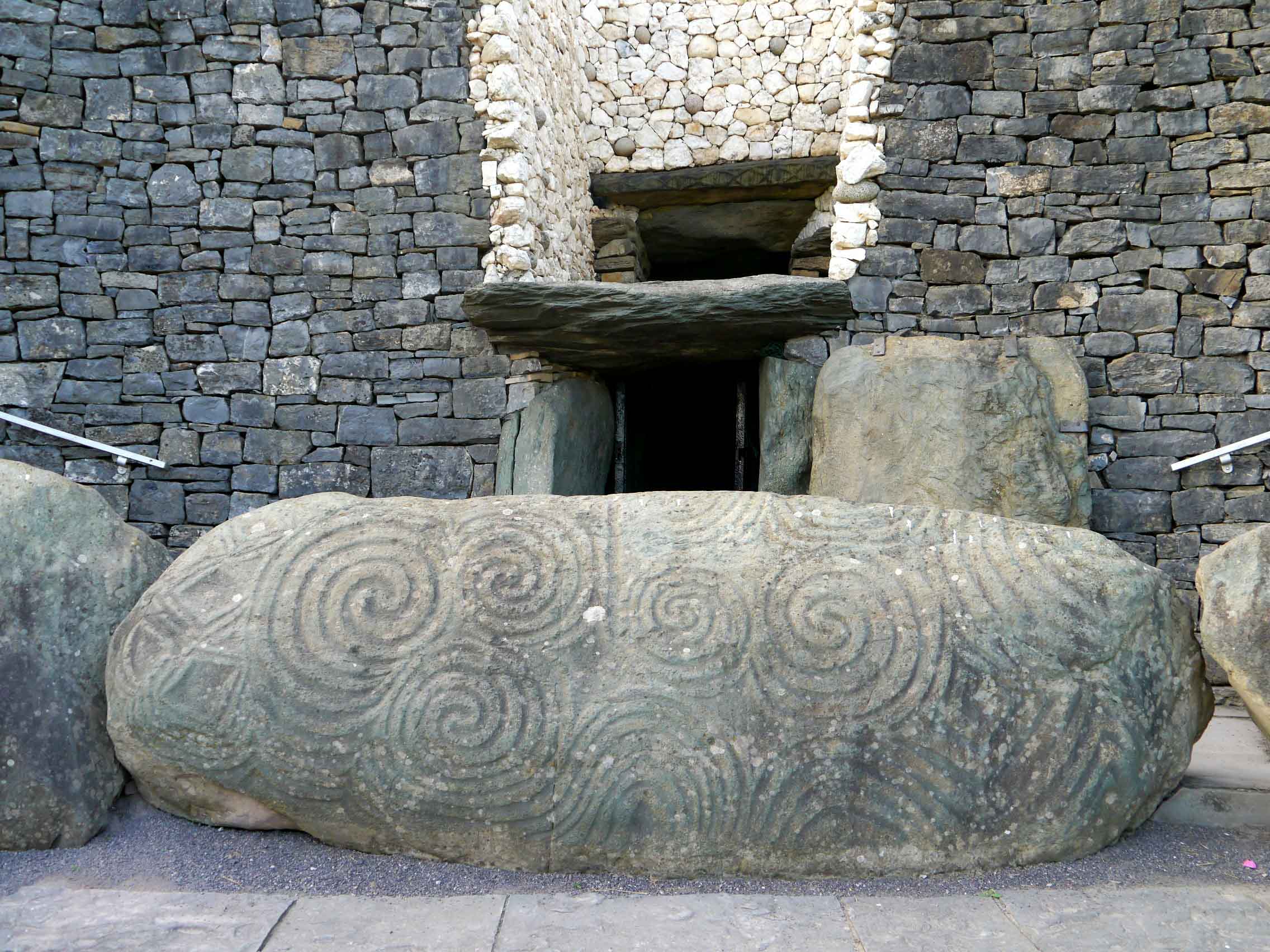
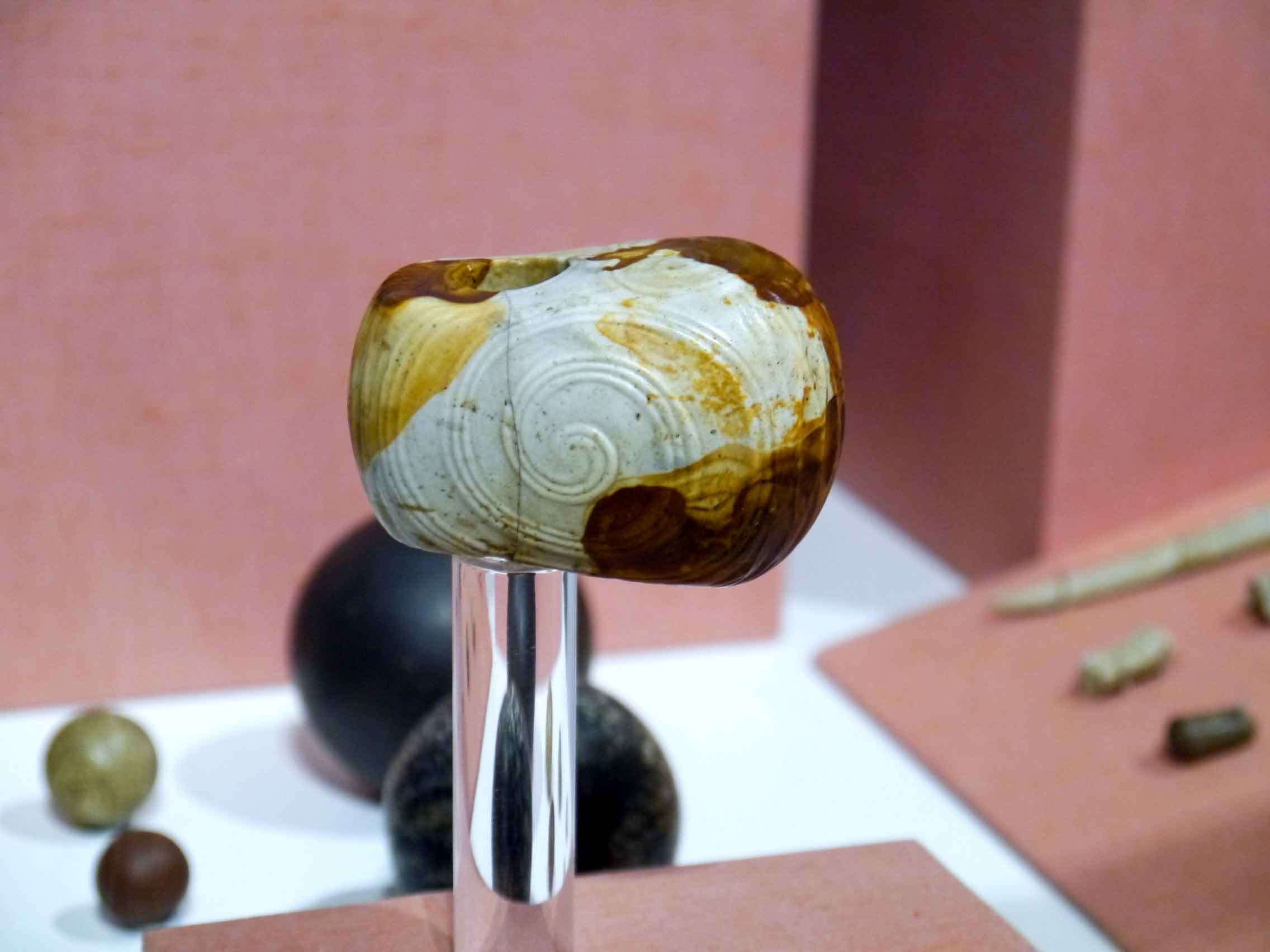
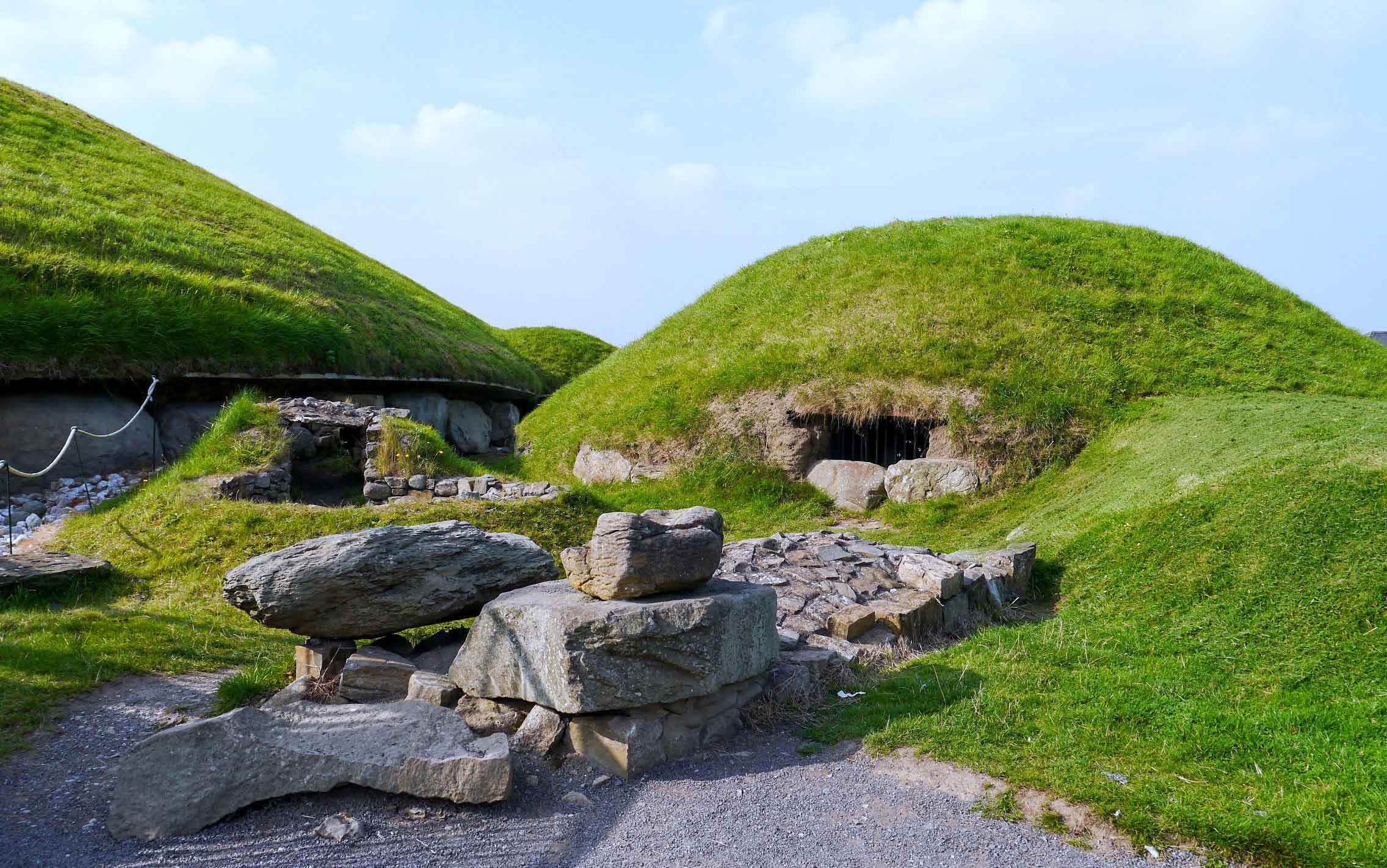
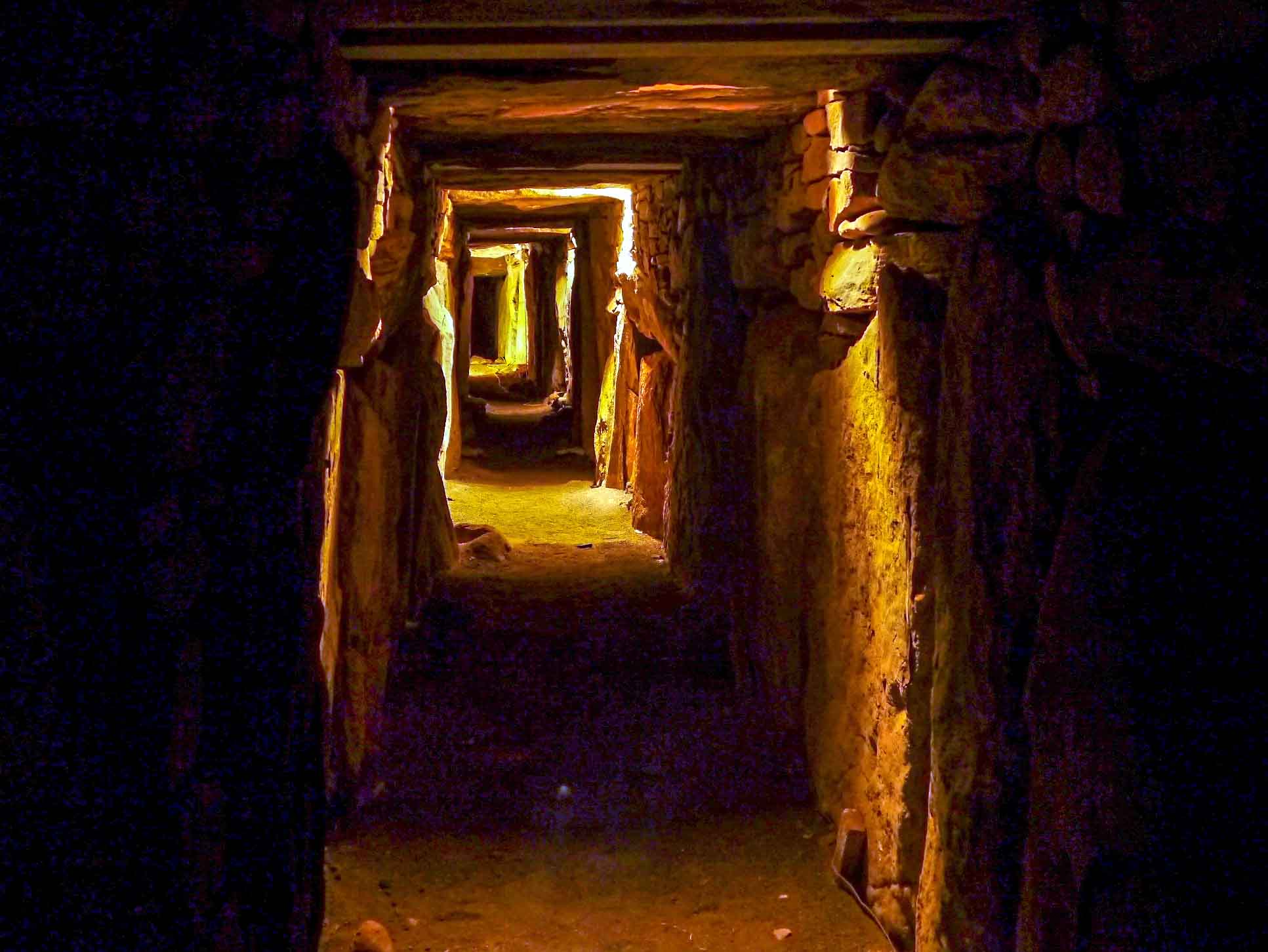
The burial grave of Newgrange is safeguarded by a massive mound built from layers of stone, earth, and re-deposited turf. Approximately 200,000 tons of soil and loose stones were brought to this location for its construction. The integrity of the entire structure is maintained by the presence of 97 boulders forming the curb ring. During excavation, the retaining wall encircling the front of the mound was reconstructed using white quartz and granite stones that were discovered scattered throughout the site. Access to the chamber itself is possible through a straight passage that extends for 19 meters. Inside the burial chamber, there are three side recesses and a corbel-vaulted ceiling. This type of ceiling is constructed by gradually layering large rocks until the opening can be sealed by a single stone, known as the capstone. The recesses contain large stone basins that once held the cremated remains of the deceased. Many of the boulders surrounding the mound, as well as the slabs lining the passage and burial chamber, are decorated with carved spirals, concentric circles, and other geometrical patterns. Every year at dawn, on the winter solstice (21 December), a beam of sunlight shines through the opening above the entrance, slowly travels down the lengthy passage, and eventually illuminates the central recess of the burial chamber for a duration of 17 minutes. This extraordinary event draws large crowds who gather at the site to witness this spectacle.
Knowth consists of a large central mound surrounded by smaller satellite tombs. The main tomb contains two burial chambers, one with an eastern entrance and the other with a western entrance. Similar to Newgrange, the Eastern Tomb features a burial chamber with three side recesses housing stone basins and a corbelled ceiling. Access to this chamber is possible through a straight passage spanning 35 meters in length. The Western Tomb, on the other hand, has a single rectangular chamber with a stone basin and can be reached through a 34-meter-long passage that bends slightly to the right two-thirds of the way. Notably, Knowth’s two entrances are strategically oriented so that during the equinoxes (20 March and 23 September), a beam of sunlight illuminates the eastern burial chamber at dawn and the western burial chamber at dusk. This site has a longer history of occupation compared to Newgrange. During the early Christian period (7th-8th century AD), Knowth held great importance as a prominent political center, serving as the royal residence for the kings of North Brega. Concurrently, a settlement protected by a double ditch was established at the top of the mound. Furthermore, in medieval times (12th to 16th century), Cistercian monks established a farm on the site. However, due to the Reformation and the subsequent changes in political and religious conditions, the farm was eventually abandoned.
MONASTIC SITES
The Boyne Valley is home to two significant monastic sites: Monasterboice and Mellifont Cistercian Abbey. Monasterboice, renowned as one of Ireland’s most important religious sites, was founded in the 5th century by St Buithe, a lesser-known disciple of St Patrick. Over time, St Buithe’s name transformed into Boyne. Mellifont Abbey, established in 1142, holds the distinction of being the first Cistercian monastery in Ireland. Displaying the formal architectural style of continental monasticism, the abbey stands as the finest example of Cistercian architecture in the country.
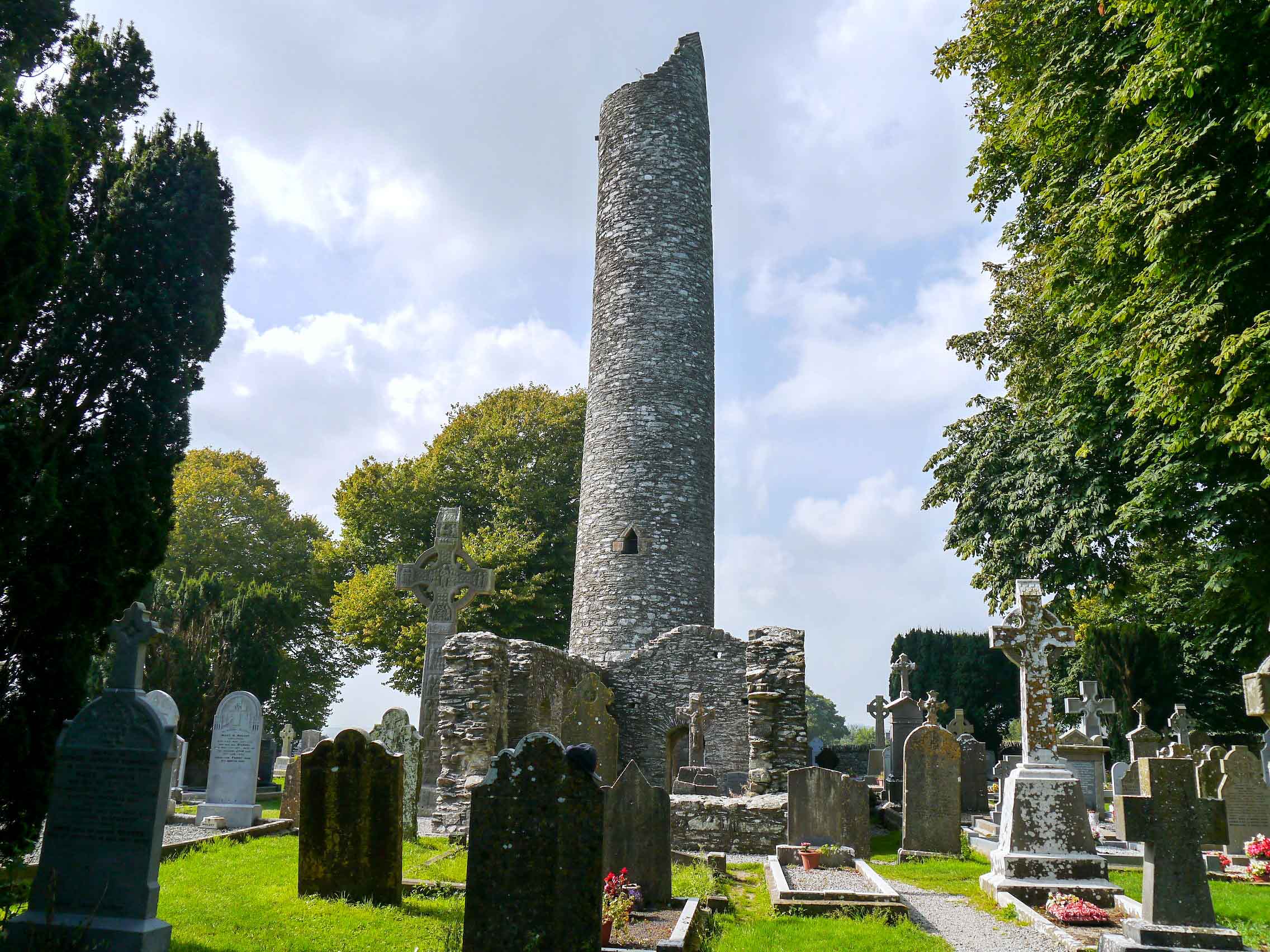
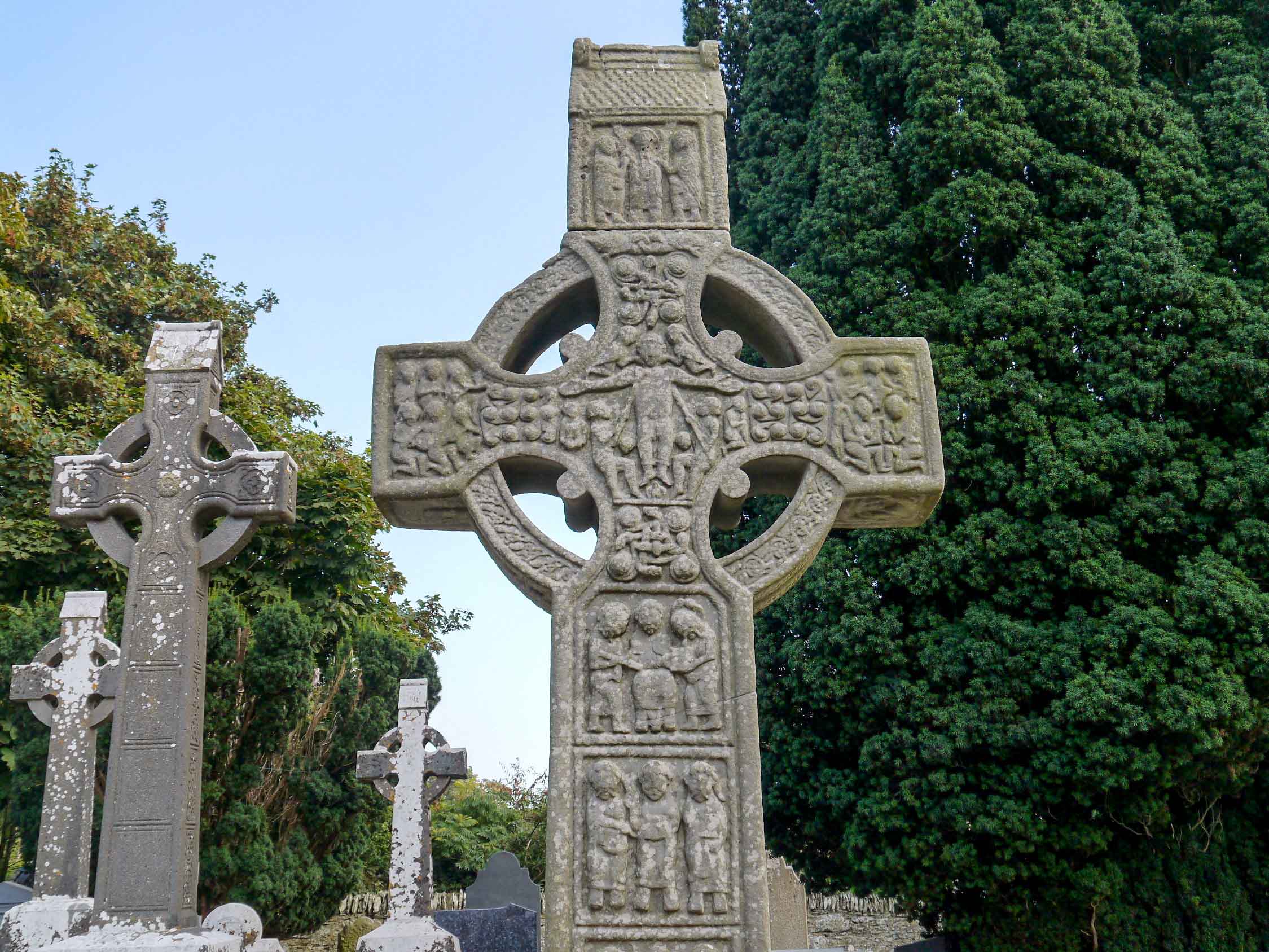
The ruins of Monasterboice are situated within a graveyard. The site features the remains of a round tower, a characteristic feature of Irish Christian architecture dating from the 10th to 12th centuries. These tall bell towers served various purposes, including lookout points for Viking raiders, as vaults, and shelters if needed. In 968, Vikings occupied the monastic settlement but were later expelled by a King of Tara. Historical records indicate that the tower caught fire in 1097, resulting in the destruction of numerous valuable manuscripts and treasures. Today, the monastery is particularly renowned for its High Crosses. High crosses, mostly carved between the 8th and 12th centuries in Ireland, initially featured geometric motifs. As time progressed, the carvings evolved to include biblical scenes. Among them, the 10th-century Muiredach’s High Cross in Monasterboice stands as the finest of its kind in Ireland. Its western face depicts scenes from the New Testament, starting from the bottom with the arrest of Christ, Doubting Thomas, Christ giving a key to St Peter, and ending with the Crucifixion. On the eastern face, scenes from the Old Testament are carved, beginning from the bottom with the Fall of Man, David struggling with Goliath, Moses obtaining water, Adoration of the Magi, and concluding with the Last Judgement. Adjacent to the round tower, the West High Cross stands at an impressive height of 6.5 meters, making it one of the tallest crosses in the country. Unfortunately, it has weathered considerably compared to Muiredach’s High Cross. Noteworthy carvings on this cross include the Death of Christ, as well as depictions of David slaying a lion and a bear. The North High Cross, the least remarkable of the three, is believed to have been vandalized by Cromwell’s troops in the 17th century. It showcases a Crucifixion scene and a carved spiral pattern. The crosses served an important educational purpose through their carvings, bringing religious stories closer to the uneducated.
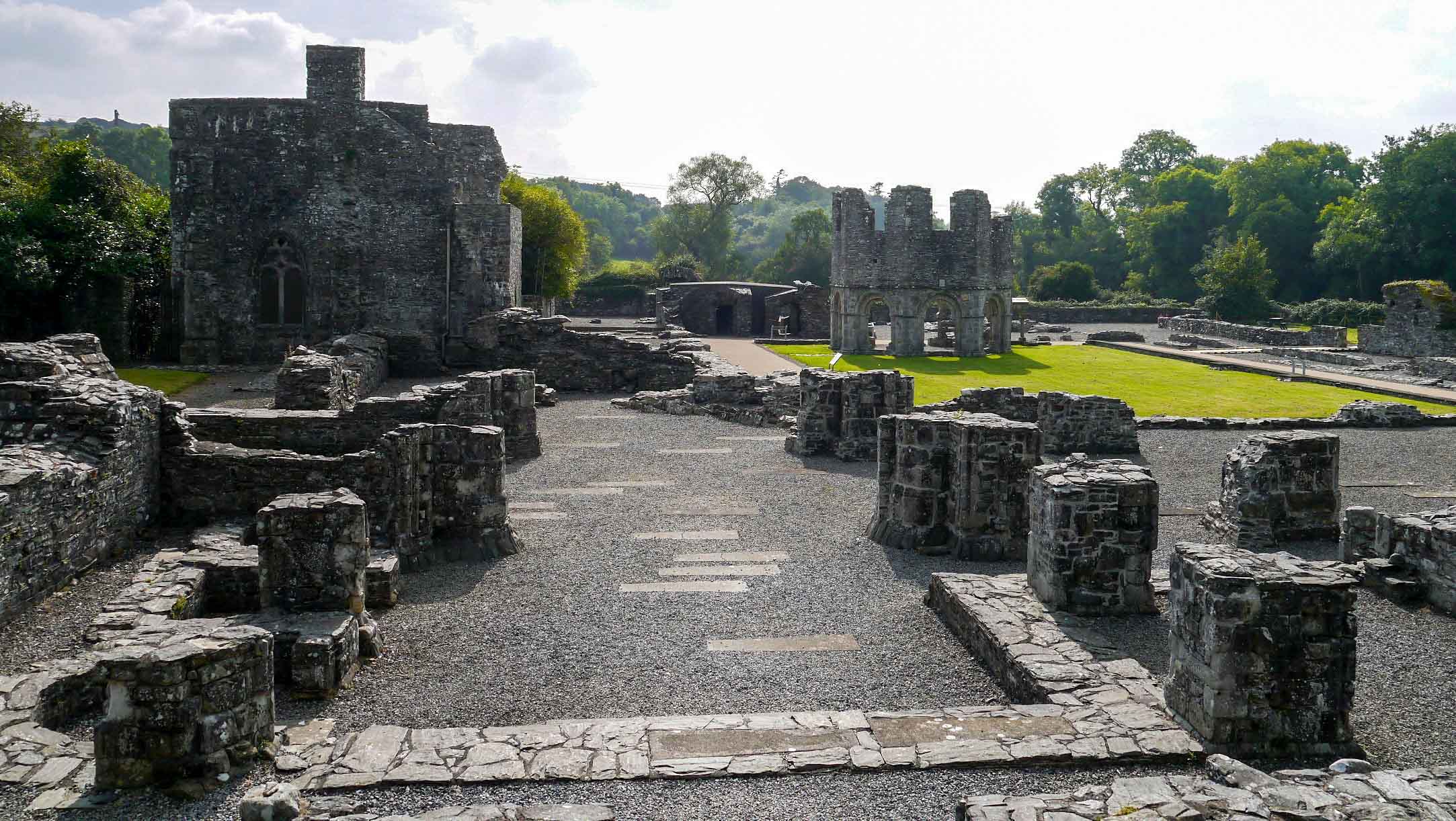
Mellifont Abbey was founded by St Malachy (1094-1148), Archbishop of Armagh, in response to the extravagant and scandalous lifestyle of the Irish monastic orders. Frustrated by this, he invited a dedicated group of monks from Clairvaux, France, to establish an exemplary monastery at Mellifont. Unsurprisingly, tensions arose between the local clergy and the newcomers, leading to the departure of the French monks back to France. Nevertheless, the construction of Mellifont Abbey continued. Over time, an additional 21 Cistercian monasteries were established in Ireland, with Mellifont retaining control over them. At its peak, the abbey housed around 400 monks. In 1539, following the Dissolution of the Monasteries by Henry VIII, Mellifont Abbey was closed and converted into a fortified Tudor manor house. Today, the abbey lies in ruins, yet the remnants showcase the former grandeur and scale of the original complex. One of Mellifont’s notable structures is the 13th-century lavabo, an octagonal washroom where monks would cleanse their hands in a fountain before meals. Additionally, the 14th-century chapter house features an impressive vaulted ceiling and a floor laid with glazed medieval tiles taken from the abbey church.
Sources
https://www.newgrange.com
https://www.discoverboynevalley.ie
https://mellifontabbey.ie
 Trespasser-on-Earth