Newgrange and Knowth are located in the Boyne Valley, often regarded as the cradle of Irish civilization and home to some of the island’s most sacred and symbolic sites.
The fertile Boyne Valley has been inhabited since the Neolithic period (4th millennium BC). The region is rich in the remains of early settlements and ceremonial landscapes, including ringforts, sacred enclosures, and passage tombs. The bend of the River Boyne – known as Brú na Bóinne [Palace of the Boyne] – contains the most significant Neolithic monuments in the valley. Among them are three great passage tombs: Newgrange, Knowth and Dowth (the latter currently inaccessible due to incomplete excavations). These monuments stand as remarkable examples of the advanced engineering skills of their builders. According to Celtic tradition, the legendary High Kings who ruled from the nearby Hill of Tara were believed to have found their final resting place within these tombs. The archaeological complex of the Bend of the Boyne was inscribed on the UNESCO World Heritage List in 1993 for its outstanding universal value and exceptional cultural and archaeological significance.
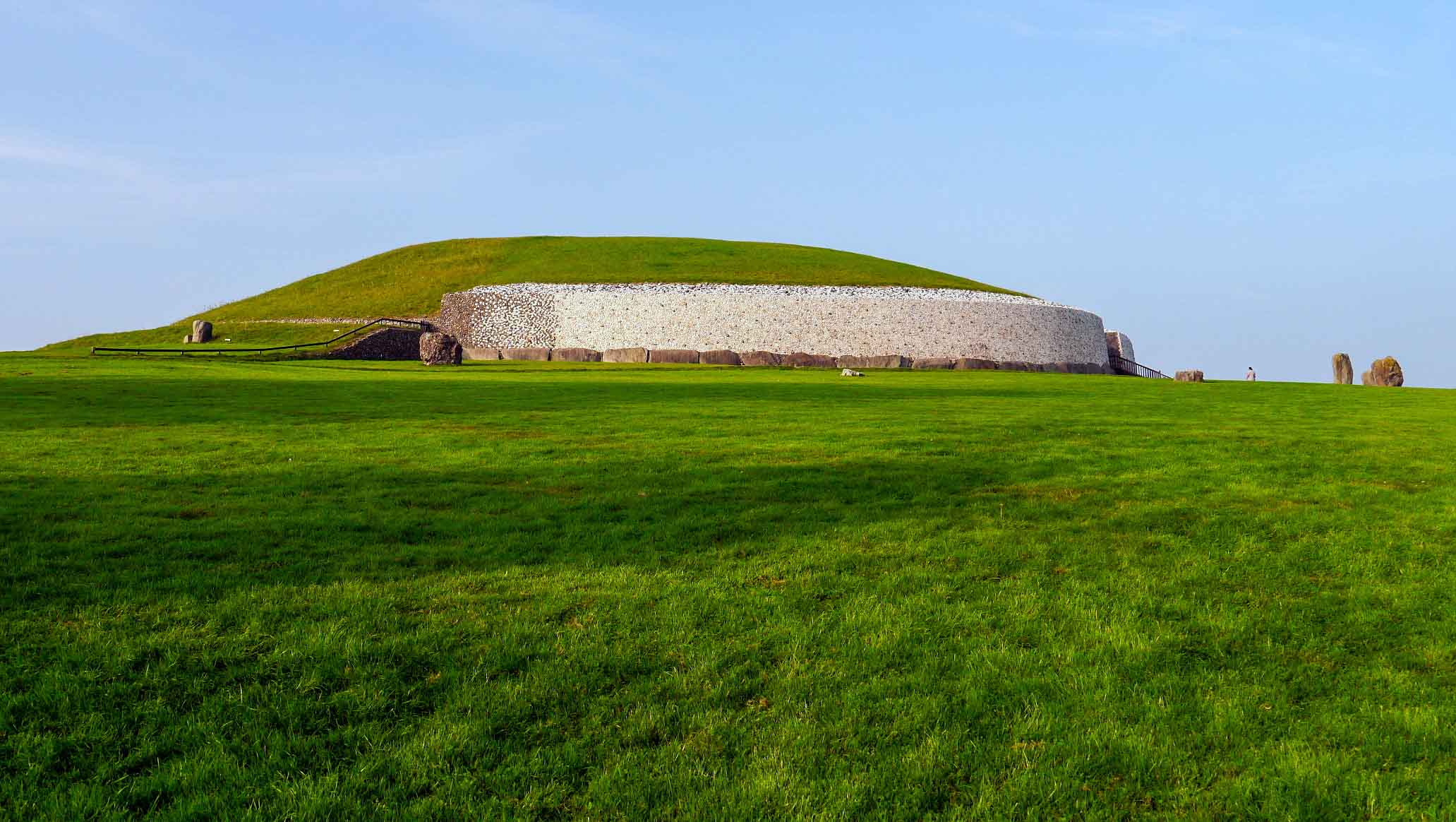
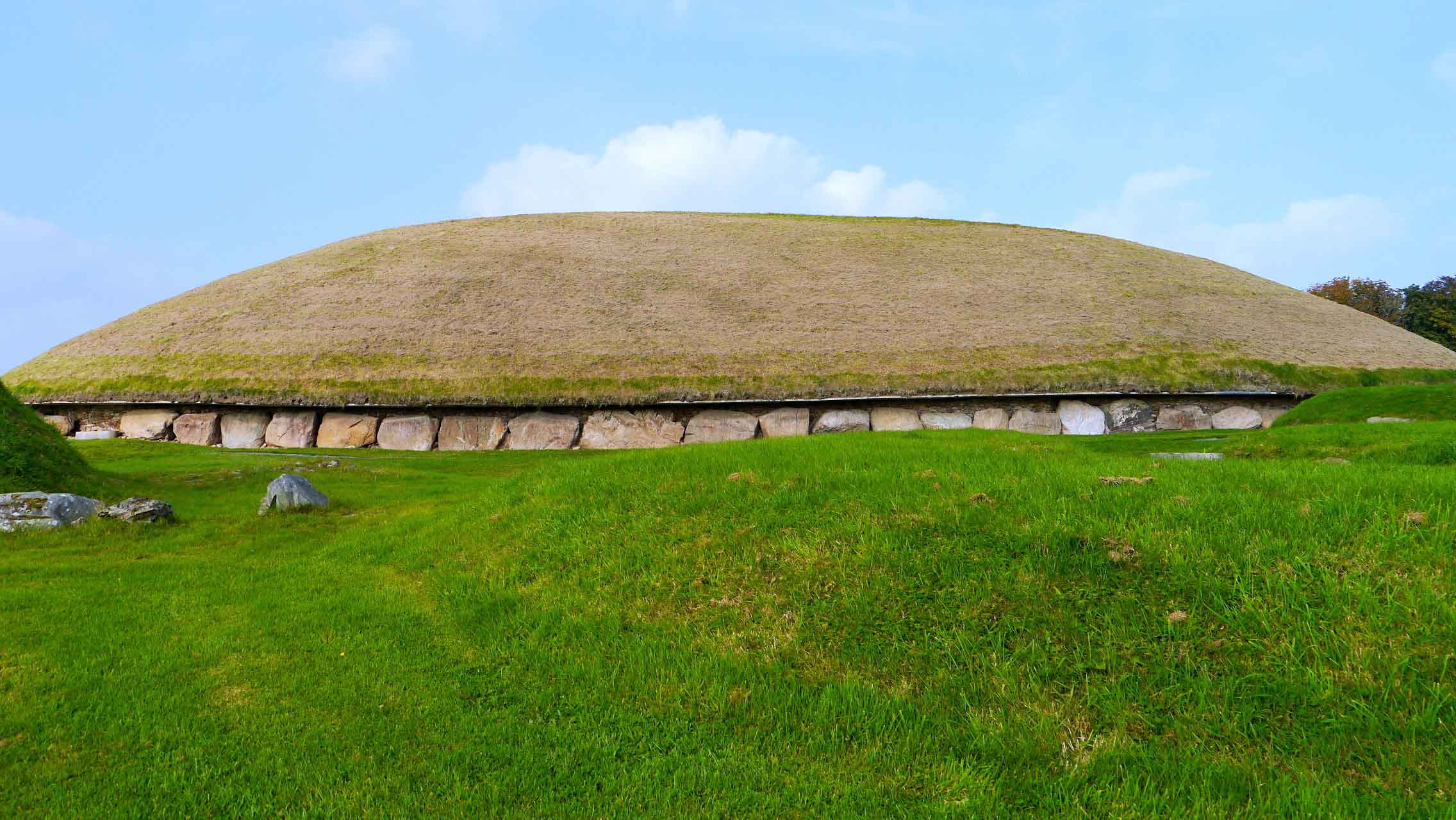
Newgrange, dating to around 3200 BC, is the best-preserved and most carefully restored Neolithic passage tomb in Ireland. The burial chamber of Newgrange is protected by a massive mound constructed from layers of stone, earth, and redeposited turf. Approximately 200,000 tons of soil and loose stones were brought to the site for its construction. The stability of the mound is ensured by a ring of 97 boulders forming the outer curb. During excavation, the retaining wall encircling the front of the mound was reconstructed using white quartz and granite stones that had been discovered scattered throughout the site.
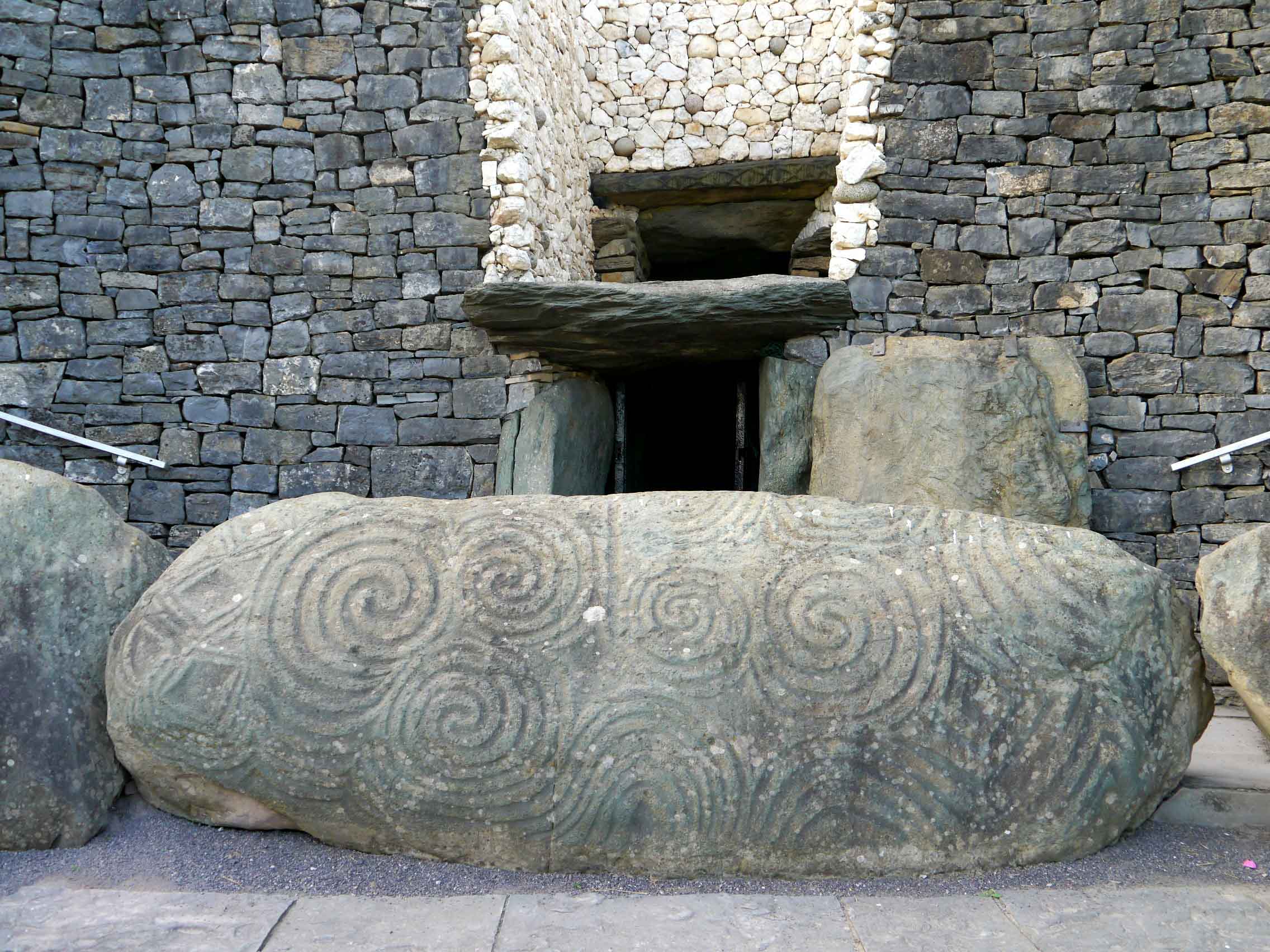
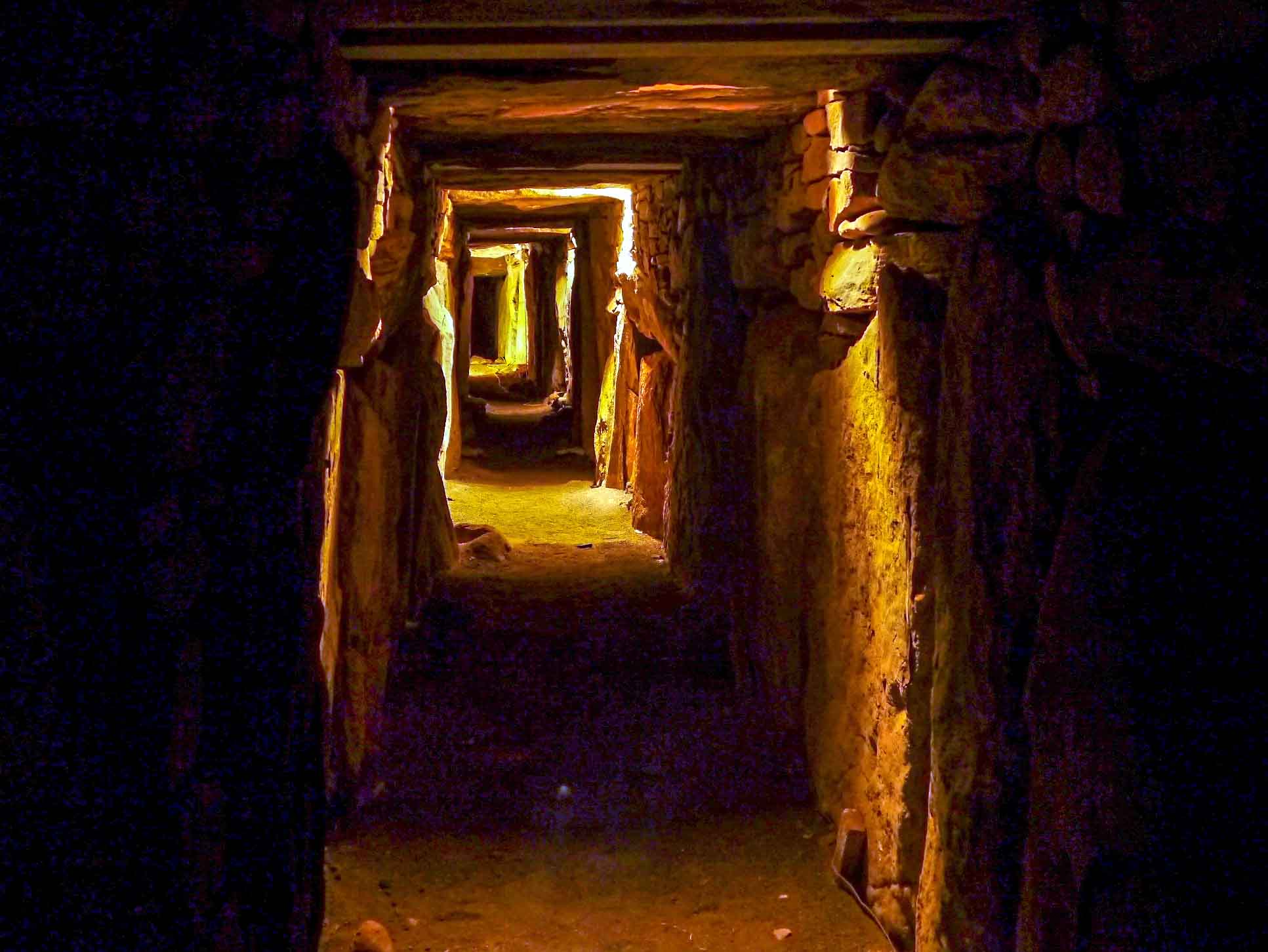
Access to the chamber is provided by a straight passage about 19 meters long. Inside the burial chamber are three side recesses and a corbel-vaulted ceiling. This type of ceiling is constructed by gradually overlapping large rocks until the opening can be sealed by a single stone, known as the capstone. The recesses contain large stone basins that once held the cremated remains of the deceased. Many of the curbstones surrounding the mound, as well as the slabs lining the passage and burial chamber, are decorated with carved spirals, concentric circles, and other geometric patterns. Every year at dawn on the winter solstice (21 December), a beam of sunlight enters through an opening above the entrance, travels slowly along the passage, and eventually illuminates the central recess of the burial chamber for about 17 minutes. This remarkable event draws large crowds who gather at the site to witness the spectacle.
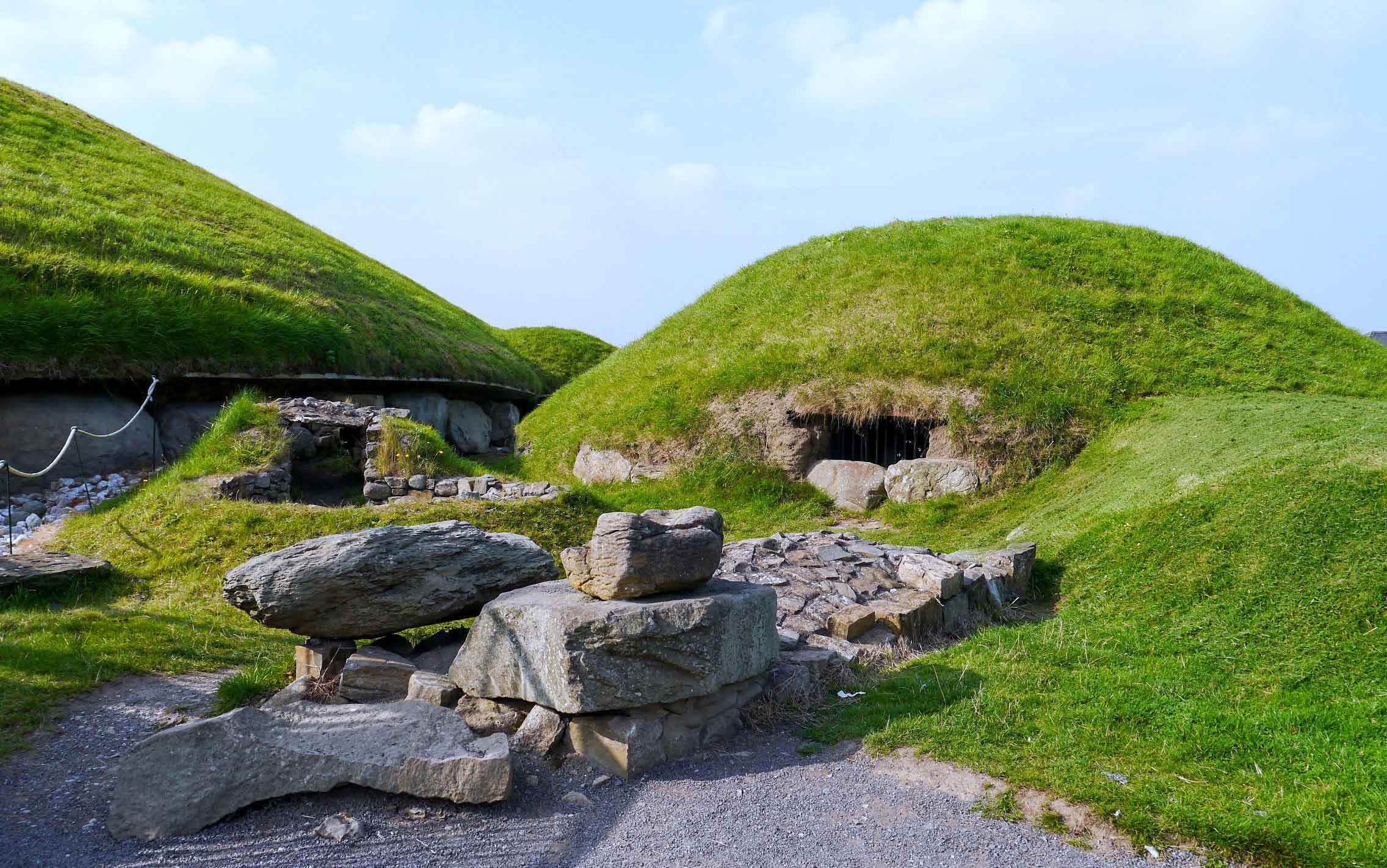
Knowth, constructed between about 3000 and 2300 BC, contains the largest collection of megalithic art in Europe, with more than 200 decorated stones discovered during excavations. Knowth consists of a large central mound surrounded by numerous smaller satellite tombs. The main mound contains two burial chambers: one with an eastern entrance and the other with a western entrance. Similar to Newgrange, the Eastern Tomb features a burial chamber with three side recesses containing stone basins and a corbelled ceiling. This chamber is reached through a straight passage approximately 35 meters long. The Western Tomb, by contrast, contains a single rectangular chamber with a stone basin and is accessed by a 34-meter passage that bends slightly to the right about two-thirds of the way along. Notably, Knowth’s two entrances are aligned so that during the equinoxes (around 20 March and 23 September), sunlight illuminates the eastern burial chamber at dawn and the western burial chamber at dusk.
Knowth also has a longer history of occupation than Newgrange. During the early Christian period (7th-8th centuries AD), it became an important political center and served as the royal residence for the kings of North Brega. At that time, a settlement protected by a double ditch was established on top of the mound. Later, in the medieval period (12th – 16th centuries), Cistercian monks established a farm on the site. Following the Reformation and subsequent political and religious changes, the farm was eventually abandoned.
Sources
https://www.newgrange.com
https://www.discoverboynevalley.ie
 Trespasser-on-Earth