Hiking in Petra offers an unforgettable journey through dramatic sandstone landscapes, secluded trails, and ancient monuments – unveiling the city’s hidden treasures far beyond its iconic façade.
Spread across a vast plateau measuring approximately 23 by 11 kilometers, Petra stands as the most iconic legacy of the ancient Nabataean civilization. With its monumental façades carved directly into rose-colored sandstone cliffs and nestled within Jordan’s rugged desert terrain, Petra is one of the most visited archaeological sites in the world – an essential stop on any ultimate Jordanian road trip. Designated a UNESCO World Heritage Site in 1985, it is also a protected archaeological park and one of the New Seven Wonders of the World, attracting visitors from across the globe to its windswept valleys, crimson cliffs, and timeless monuments. Despite its global fame, undeniable grandeur, and decades of archaeological exploration, Petra remains a city of secrets. Its vast expanses and silent cliffs still guard untold stories, with much of its ancient fabric buried beneath layers of sand, rubble, and time – awaiting discovery. As archaeological work continues, newly uncovered structures, artifacts, and insights are shedding light on the Nabataeans’ complex society, far-reaching trade networks, and spiritual life – offering revelations that may yet reshape our understanding of this ancient civilization.
While Petra’s most iconic landmarks – such as the Siq, the Treasury [Al-Khazneh], and the Royal Tombs – can be visited on a half-day tour, those who choose to linger are rewarded with a much deeper and more intimate experience. A full day allows for a comprehensive journey along Petra’s main trail, stretching from the Visitor Center to the sacred precinct of Qasr al-Bint [Palace of the Pharaoh’s Daughter], with ample time to explore the Royal Tombs and climb to either the Monastery [Ad-Deir] or the High Place of Sacrifice.
With two or more days, the experience becomes truly immersive. Visitors can tackle both major hikes at a more relaxed pace, uncover lesser-known trails, and venture off the beaten path to discover hidden tombs, unexcavated ruins, and panoramic views rarely seen by day-trippers. An extended stay also provides the opportunity to visit nearby Siq al-Barid, commonly known as Little Petra – a smaller, more intimate Nabataean site that likely served as a caravanserai, offering lodging and provisions to traders traveling along the incense and spice routes.
Petra’s hiking network is expansive and diverse, offering trails suitable for all skill levels. The Treasury Trail is a short but rewarding climb to a dramatic overlook above the Treasury, providing a breathtaking and unusual perspective of the monument below. From this lofty perch, the full majesty of the façade is revealed – framed by rugged cliffs and bathed in golden light – an awe-inspiring reminder of Petra’s fusion of natural wonder and human ingenuity. The Monastery Hiking Trail, with its 800 rock-cut steps, ascends to the massive façade of the Monastery – one of Petra’s most iconic monuments, rising like a mirage from the mountainside. Meanwhile, the High Place of Sacrifice Hiking Trail offers some of the most breathtaking panoramic views across the Petra plateau and access to Petra’s most significant and best-preserved ceremonial platforms. Beyond these well-trodden paths, numerous lesser-known trails wind through Petra’s remote valleys and towering cliffs, offering solitude and a more profound connection with the site’s natural beauty and historical richness – far from the crowds.
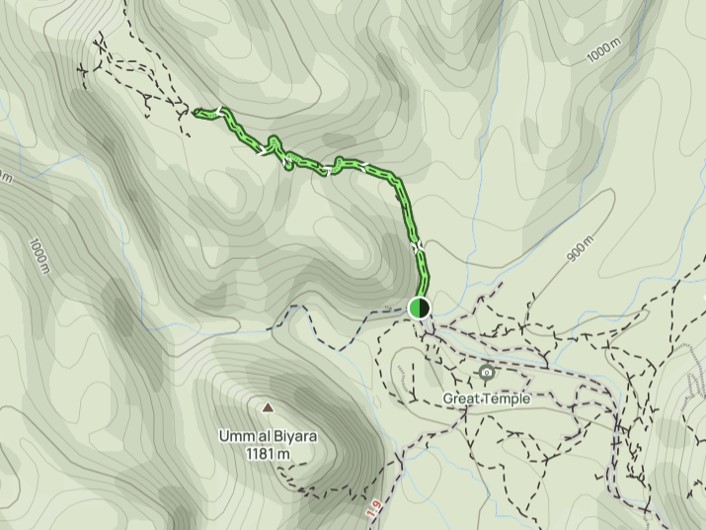
Monastery Hiking Trail
It is an out-and-back climb along more than 800 rock-cut steps, requiring stamina and steady footing.
Distance: 3.2 km
Ascent: 211 m
Duration: 1-2 hours
Info and map:
https://www.alltrails.com/en-gb/trail/jordan/ma-an–2/petra-monastery-trail-ad-deir-trail
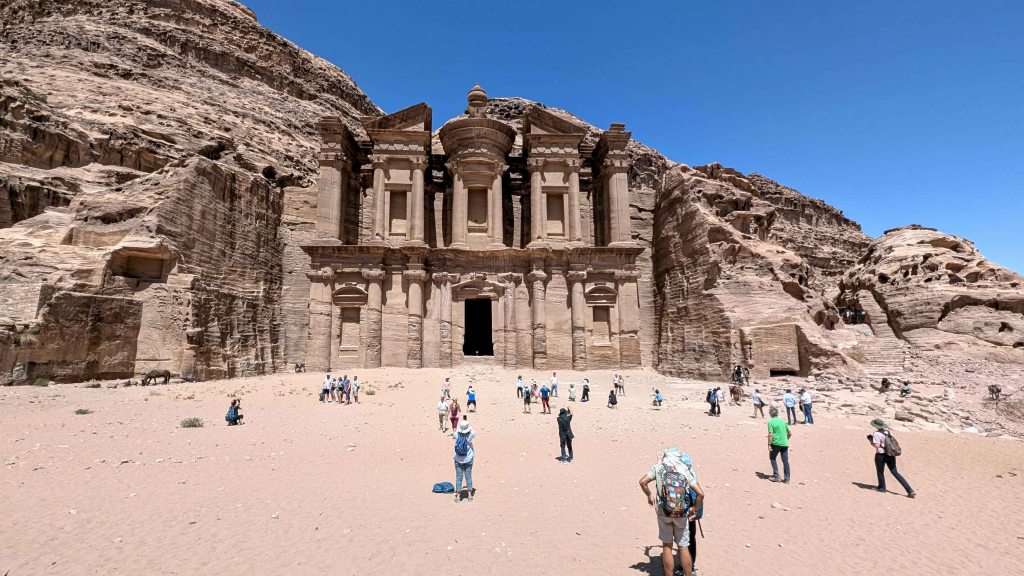
Tucked high in the mountains overlooking Petra, the Monastery stands as one of the most awe-inspiring and iconic monuments of the ancient Nabataean civilization. This colossal rock-carved structure showcases the Nabataeans’ exceptional adaptability in construction techniques and mastery in craftsmanship. Grander in scale but less ornamented than its more famous counterpart, the Treasury, the Monastery commands both reverence and curiosity. Its remote location – accessible only via a strenuous uphill climb – adds to its mystique, rewarding those who undertake the journey with a profound sense of discovery.
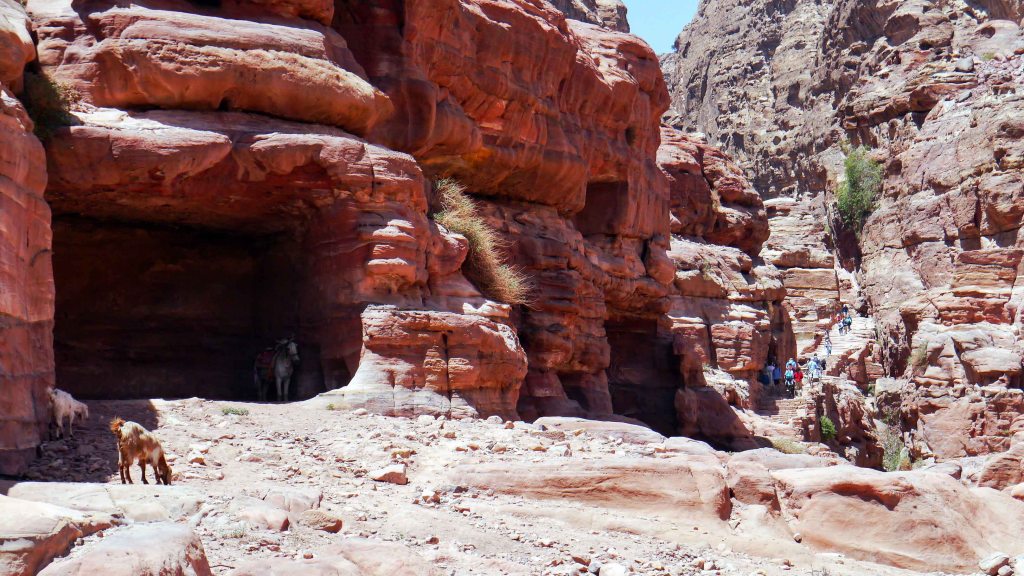
Just beyond Qasr el-Bint in the heart of Petra, a path crosses the Valley of Musa and begins an arduous yet deeply rewarding ascent. This iconic journey is both a physical and visual adventure. The trail climbs steeply through rugged terrain, winding along more than 800 rock-hewn steps – weathered by centuries of use and, at times, dotted with donkey droppings, a reminder of the animals still used to carry goods and transport visitors unable or unwilling to make the climb on foot. Navigating the narrow stairways while sidestepping the occasional stampede of sure-footed donkeys and maintaining balance beside dizzying cliff edges is as thrilling as it is challenging. Yet with each upward step, hikers are rewarded with ever-expanding views of the rose-red mountains and hidden detours revealing lesser-known Nabataean carvings tucked into the stone.
Eventually, the path squeezes between two massive boulders before opening dramatically onto a broad, rock-cut terrace – once colonnaded, now weathered and silent. Rising to the right is the Monastery, Petra’s largest and most imposing façade. Carved directly into the cliff face, it dominates the terrace with monumental presence. Though its form echoes that of the Treasury, the Monastery is significantly larger and more restrained in ornamentation –its now-empty niches once held statues that have long since vanished. Despite its minimal decoration, it displays the same level of technical brilliance. Built in the 1st century AD, the monument exemplifies Nabataean Classical architecture: bold, harmonious, and profoundly influenced by both local tradition and Hellenistic design. The two-tiered façade features soaring columns and a 10-meter-high funerary urn crowning the structure. Inside, the vast chamber is stark and solemn, consisting of a single open hall centered around a large arched niche – presumed to have held an altar. As Christianity spread through the region, crosses were later etched into the walls, giving rise to the monument’s present-day name: the Monastery.
For those with the stamina to press onward, a final climb of approximately 250 meters leads to a dramatic hilltop lookout. From this vantage point, panoramic views stretch across the wild, rocky Jordanian landscape toward the distant Valley of Araba, with glimpses of Israel’s Negev Desert beyond. It is a breathtaking reward –offering a moment of serenity and awe, and a fitting conclusion to one of Petra’s most iconic pilgrimages.
High Place of Sacrifice Hiking Trail
It is a point-to- point climb, requiring stamina and steady footing.
Distance: 3.2 km
Ascent: 170 m
Duration: 1-2 hours
Info and map:
https://www.alltrails.com/en-gb/trail/jordan/ma-an–2/petra-high-place-of-sacrifice-wadi-al-farasa-trail

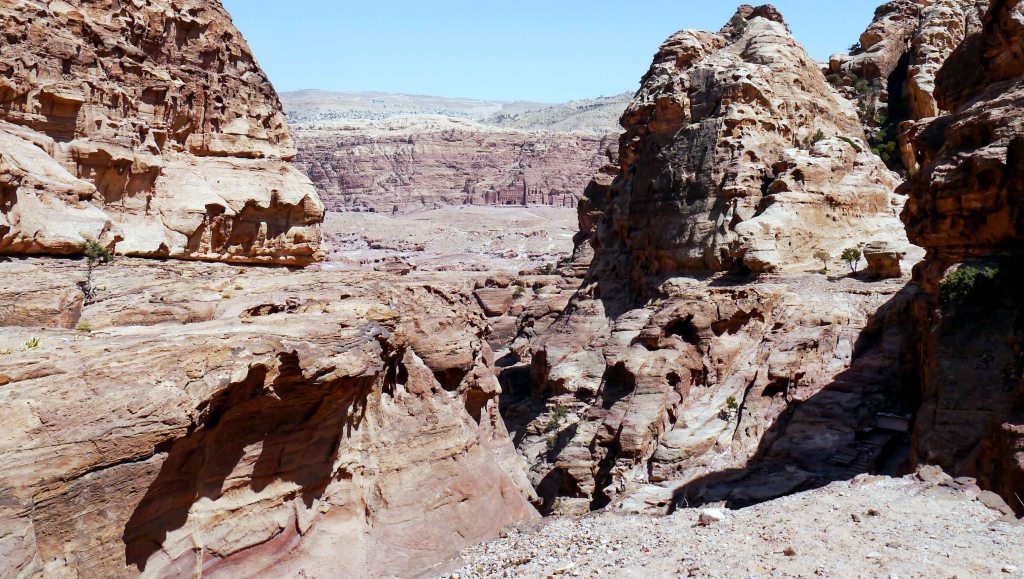
The High Place of Sacrifice trail ascends to the summit of Attuf Hill, where one of Petra’s most significant and best-preserved ceremonial platforms – believed to have been used for ancient rituals – stands as a silent sentinel overlooking the city. Beyond its spiritual and historical significance, the mountaintop offers some of the most breathtaking panoramic views across the Petra plateau, making the climb as visually rewarding as it is culturally enriching.
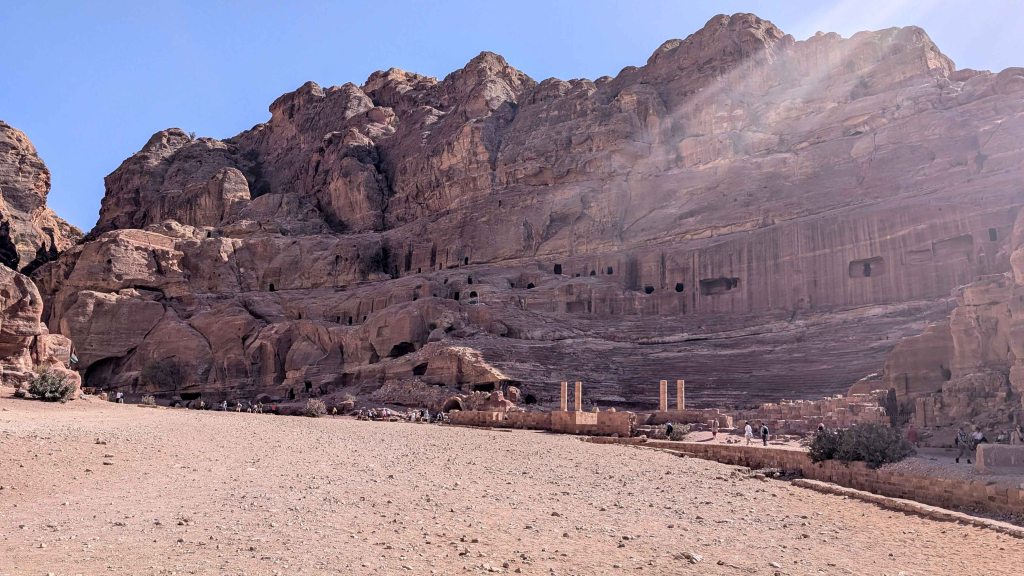
The journey begins at the end of the Street of Façades, just before reaching the Theatre. Here, a rock-cut stairway – marked by several enigmatic djinn blocks, rectangular stone monuments believed to be dwellings for Nabataean spirits – signals the start of the ascent. Although the climb is relatively gradual, it requires stamina and steady footing, especially as the trail narrows and winds along rugged cliffside terrain. The first major landmark atop Madhbah Hill is a broad terrace, once used as a quarry by the Nabataeans. The scale of excavation is astonishing: two imposing, seven-meter-high stone obelisks dominate the site. These monolithic columns stand as the last remaining indicators of the mountain’s original height before it was systematically carved away, offering a rare glimpse into ancient Nabataean quarrying techniques. A short scramble northward, past the remains of a small Nabataean structure, leads to a second plateau: the High Place of Sacrifice itself. Nestled just beyond a rock-cut cistern, this sacred platform features a flat ceremonial area with an altar, drainage channels, and rock-hewn benches. Its elevated position and solemn design suggest it was used for important public rituals or offerings to the gods.
From this lofty vantage point, a dramatic descent into Valley of Farasa begins. The stepped trail winds down the opposite side of the mountain, clinging to sheer cliffs and following ancient stairways carved into the rock. The first major landmark along the descent is the Lion Monument – an impressive relief depicting a lion, the symbol of the goddess al-Uzza, one of the principal deities of the Nabataeans. Originally functioning as a fountain, water would have once flowed from the lion’s mouth, showcasing the Nabataeans’ advanced water management systems. As the trail continues downward, it reveals a series of remarkable rock-carved monuments nestled in secluded alcoves. The Garden Triclinium, a charming chamber topped by a large cistern, likely served as a ceremonial dining space. Further along the path, to the left, stands the Tomb of the Roman Soldier, named for the figure carved in one of its niches, dressed in the attire of a high-ranking Roman officer. This tomb exemplifies the fusion of Nabataean and Roman architectural elements, reflecting Petra’s cosmopolitan character at the height of its prosperity. Opposite the tomb lies the Painted Triclinium, notable for its richly adorned interior. The chamber’s niches, fluted half-columns, and elaborate cornices are dramatically enhanced by vibrant striations of red, orange, and ochre that ripple through the sandstone walls and ceiling – making it the only monument in Petra where the interior decoration outshines the exterior in visual impact.
As the valley widens, the elegant Renaissance Tomb comes into view, easily recognized by the trio of urns that crown its arched entrance. Nearby stands the Broken Pediment Tomb, named for the distinctive interruption in its triangular pediment – an architectural oddity that sets it apart from Petra’s other rock-cut façades. Beyond this point, Valley of Farasa opens even further. The trail passes the evocative Skull Cave, a small cavity in the cliff face, before descending gently to rejoin Petra’s main trail near Qasr el-Bint.
Sources
https://international.visitjordan.com/
https://international.visitjordan.com/Wheretogo/Petra
https://visitpetra.jo/en
 Trespasser-on-Earth