Kuala Lumpur is essentially a modern city, where soaring skyscrapers overshadow quaint ethnic enclaves, flamboyant colonial buildings, and lush jungle dens.
Kuala Lumpur, meaning ‘muddy confluence’, is a relatively young city that has developed beyond recognition over the past few decades. Originally a modest trading post for the growing tin industry, it has now emerged as the vibrant capital of the country.
In the 1840s, tin mines were established approximately 16 km north of present-day Kuala Lumpur, which was then a small hamlet consisting of only a few houses and shops serving the mining activities. The town was officially founded in 1857 when Rajah Abdullah, the Chief of Selangor state, secured funds from Chinese businessmen in Malacca to develop the tin industry in the region. Despite the challenging conditions of the jungle, including a high death tolls from malaria, the mines thrived, leading to rapid growth in the town and its accompanying issues. Among the Chinese miners, gangs emerged, and clashes between different groups became frequent. To maintain order, Rajah Abdullah introduced the office of Kapitan China in 1858, appointing a headman to oversee the Chinese community. Yap Ah Loy (in office: 1868-1885), one of the most renowned Kapitans, played a significant role. In 1869, he found himself in the midst of a violent civil war between various Chinese factions and local Malays. Eventually, a decisive victory led by Yap Ah Loy in 1873, combined with the arrival of the first British residents in 1874, brought an end to the conflict. Yap Ah Loy is widely regarded as the founding father of modern Kuala Lumpur.
The significant development surge commenced with British control of the city in the 1880s. A diverse population comprising Malays, Chinese, and Indians began settling in greater numbers, forming ethnic districts that still exist today: the predominantly Malay Kampung Baru, Chinatown, and Little India. In 1896, Kuala Lumpur was designated as the capital of the newly established Federal Malay State. In 1957, Tunku Abdul Rahman, Malaysia’s first Prime Minister, proclaimed the country’s independence at Kuala Lumpur’s Stadium Merdeka.
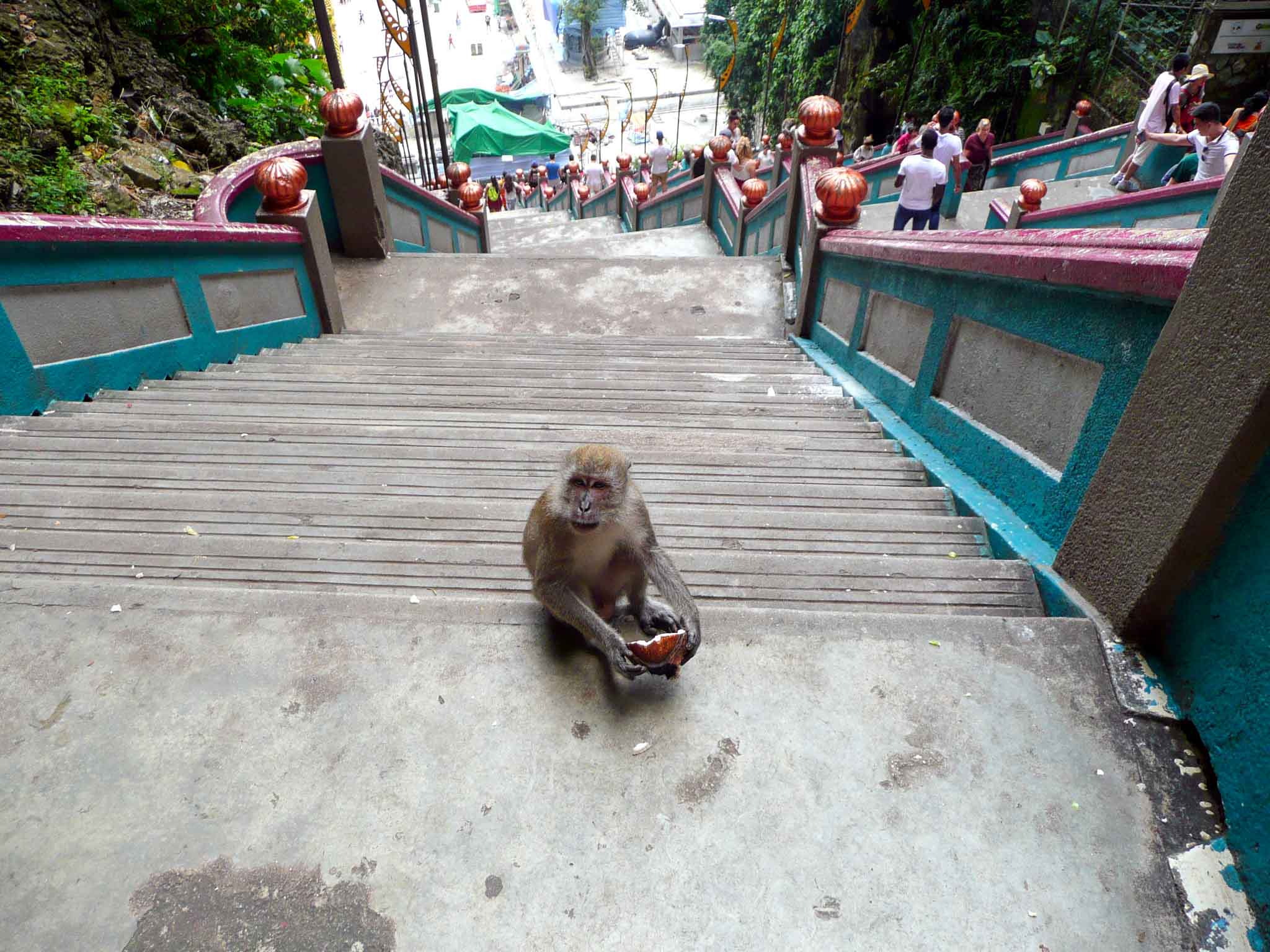
The rapid urban expansion of Malaysia’s capital in recent decades has resulted in the encroachment upon extensive sections of the neighboring rainforest, displacing much of its wildlife. Nevertheless, the long-tailed macaques have managed to endure, enticed by the easily accessible food sources provided by the human inhabitants. This dynamic has led to an increasingly intricate relationship between the human residents and the macaque population. Hence, caution is advised when encountering mischievous monkey groups in the city.
Petronas Towers
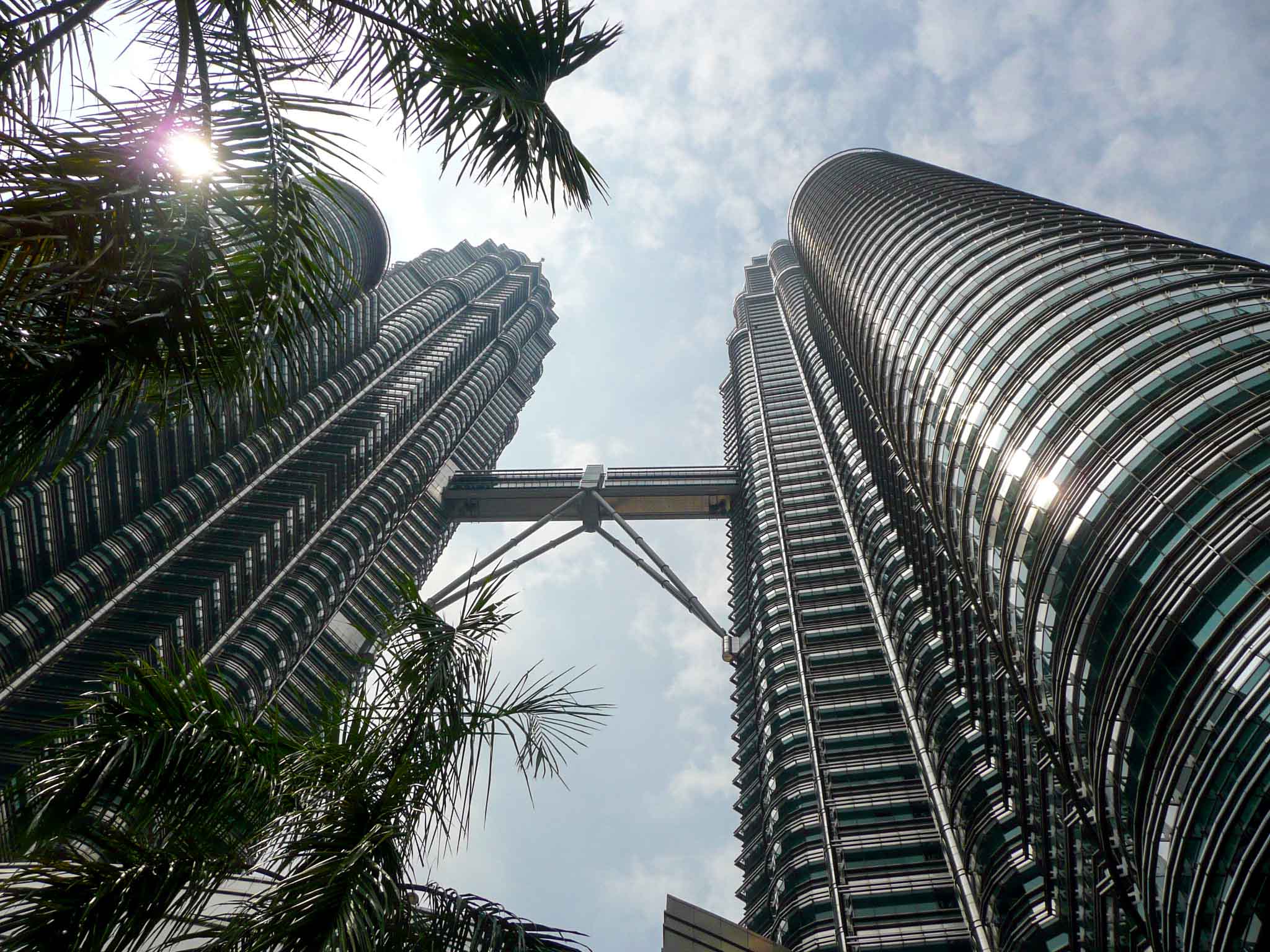
The Petronas Towers, which hold the distinction of being the tallest twin buildings in the world, command the cityscape in Kuala Lumpur’s bustling business district. They serve as an iconic symbol of the city’s ambitious aspirations. Designed by the renowned Argentine architect César Pelli as the headquarters for the national oil and gas company, Petronas, these towers were completed in 1998. The architectural design of the towers incorporates Islamic influences, utilizing heat-reflecting stainless steel and laminated glass. Initially resembling a pair of minarets, the towers’ floor plan follows an eight-sided star, evoking arabesque patterns often seen in Islamic art. Islamic influences are further manifested in the five tiers of each tower, symbolizing the five pillars of Islam: the declaration of faith, the performance of ritual prayers five times a day, the giving of alms to help the less fortunate, fasting during the month of Ramadan, and the pilgrimage to the holy city of Mecca in Saudi Arabia.
Visitors can enjoy an excellent panoramic view of the city from the Skybridge, which connects the towers at the 41st floor, as well as the Observation Deck on the 86th floor. For the perfect vantage point to admire the Petronas Towers, the Kuala Lumpur City Center Park comes highly recommended.

Merdeka Square
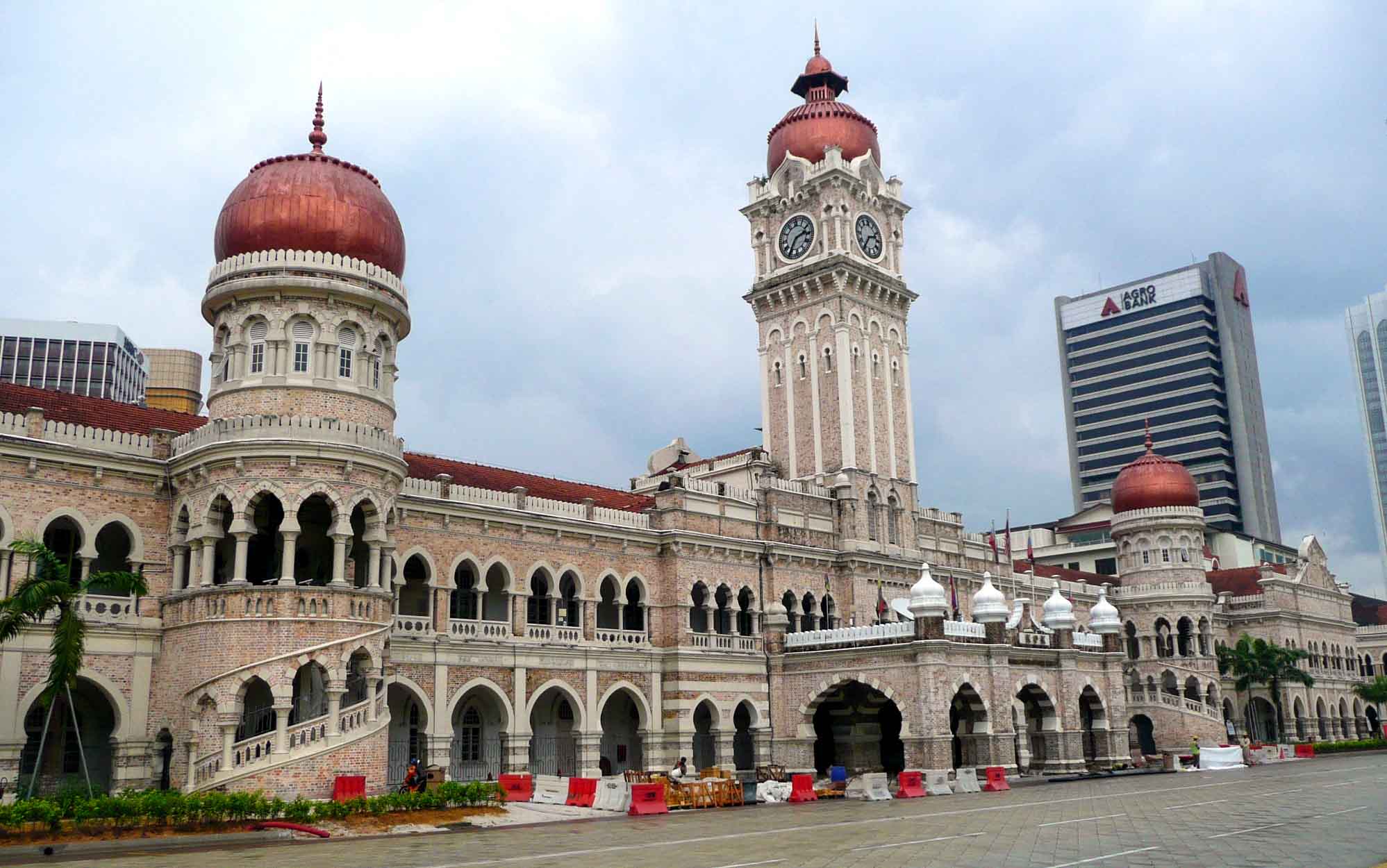
Situated in the heart of Kuala Lumpur’s colonial district, Merdeka Square [Dataran Merdeka] encompasses a spacious rectangular grassy area that holds historical significance as the site of Malaysia’s declaration of independence in 1957. During the British colonial era, the square served as a venue for cricket matches and parades. It is surrounded by architectural landmarks that exhibit a blend of British and Islamic influences, such as the mock-Tudor Royal Selangor Club and the Mughal-style Sultan Abdul Samad Building.
The flamboyant Sultan Abdul Samad Building was built in 1897 as the headquarters for the British colonial administration. It was named after the fourth Sultan of Selangor, who ruled from 1857 to 1898. Designed by the esteemed colonial architect A.C. Norman, the building captivates with its majestic clock tower, intricate arches, and graceful domes. Currently unoccupied and inaccessible to the public, it remains one of the city’s most photographed landmarks.
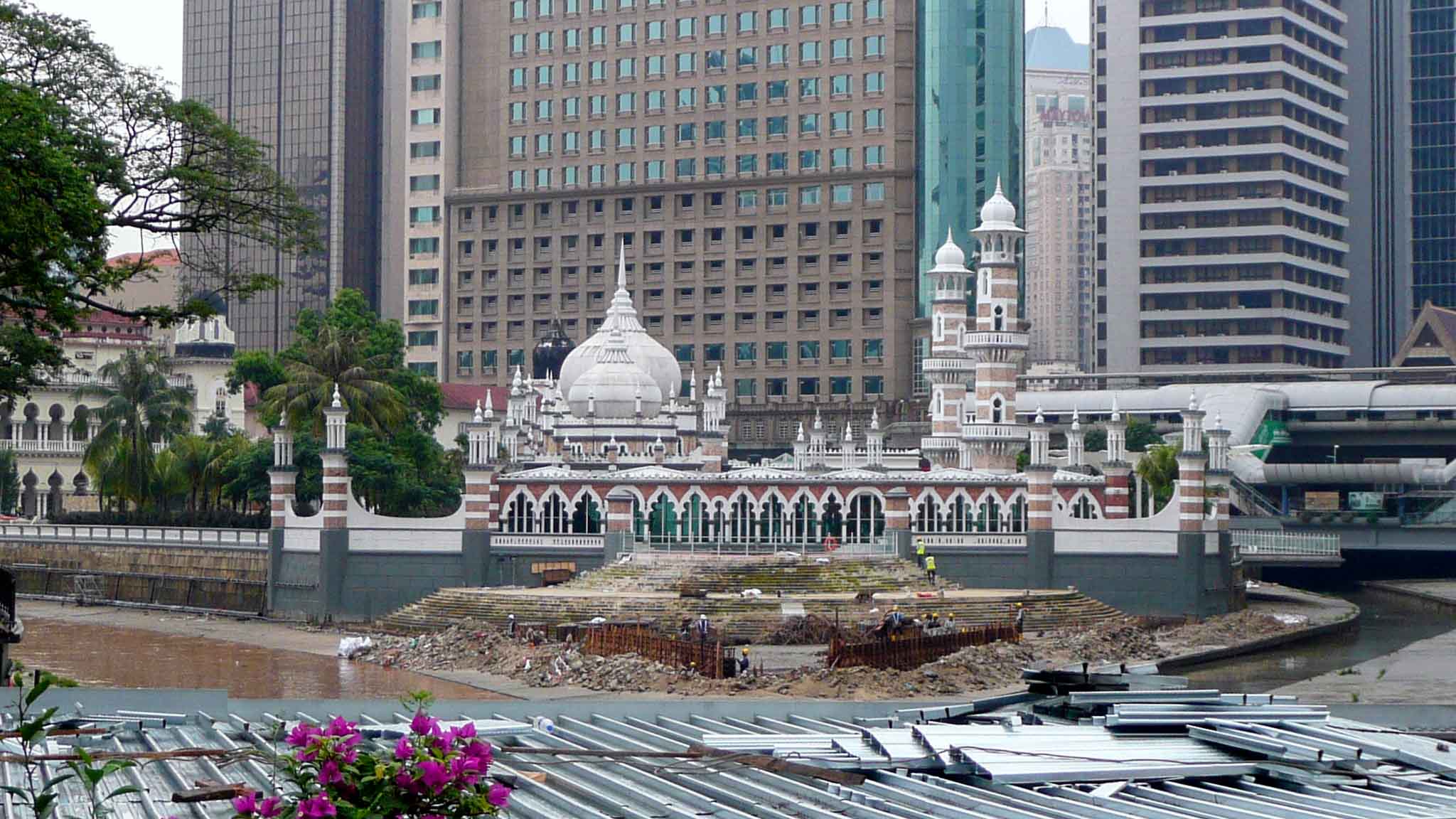
Kuala Lumpur’s oldest mosque, Jamek Mosque [Masjid Jamek], is located at the very site where the city’s initial settlers arrived in the 1950s. Completed in 1909, it was designed by British architect A.B. Hubback inspired by Mughal architecture, and was the first brick mosque in Malaysia. Its notable architectural elements include three large onion-shaped domes, two minarets, and arched colonnades. In 2017, the mosque was renamed in tribute to Sultan Abdul Samad.
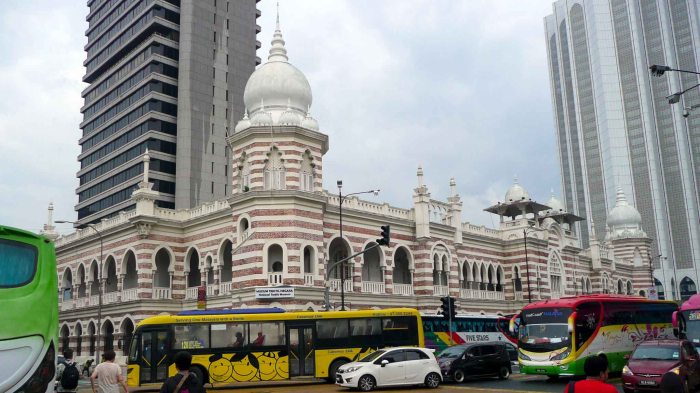
Another Mughal-style building found in the square is the National Textiles Museum [Muzium Tekstil]. Initially constructed for the railway works department, the museum provides great insight into the wealth of indigenous textile traditions. The museum’s extensive collection is organized into four themed galleries. The Tree of Life [Pohon Budi] collection covers the history of textile making, with a particular emphasis on Malaysia’s prominent textiles like batik, ikat (cloth made from threads colored with tie-and-dye technique), and songket (a silk sarong adorned with golden thread). The Rainbow [Pelangi] gallery highlights the wealth of textile treasures crafted by different ethnic groups, while the Interlocking Bays [Teluk Berantai] collection focuses on Malaysian fabrics and design motifs. Surprisingly, the Precious Essence [Ratna Sari] gallery features jewelry from various ethnic groups.
Tasik Perdana Gardens
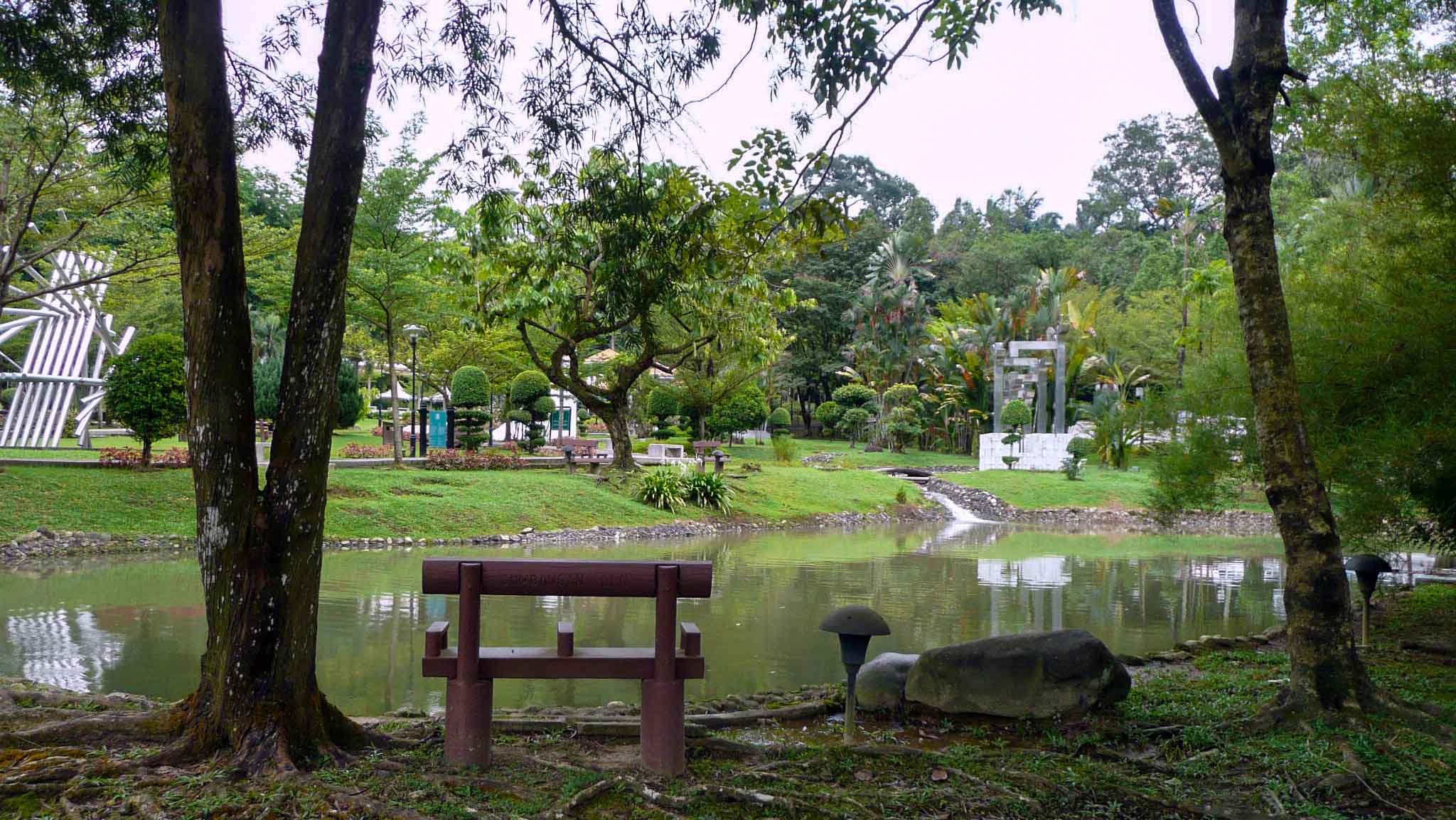
The tranquil Tasik Perdana Gardens [Taman Tasik Perdana] provides a perfect escape from the bustling urban environment. This expansive and lush landscaped park is Kuala Lumpur’s largest green space. Alongside the large lake at its core and the Perdana Botanical Gardens, the park offers a range of attractions, including the Deer Park, KL Bird Park featuring a spacious walk-in free-flight aviary, KL Butterfly Park, and the Orchid and Hibiscus Gardens. Notably, the hibiscus is the national flower of the country.
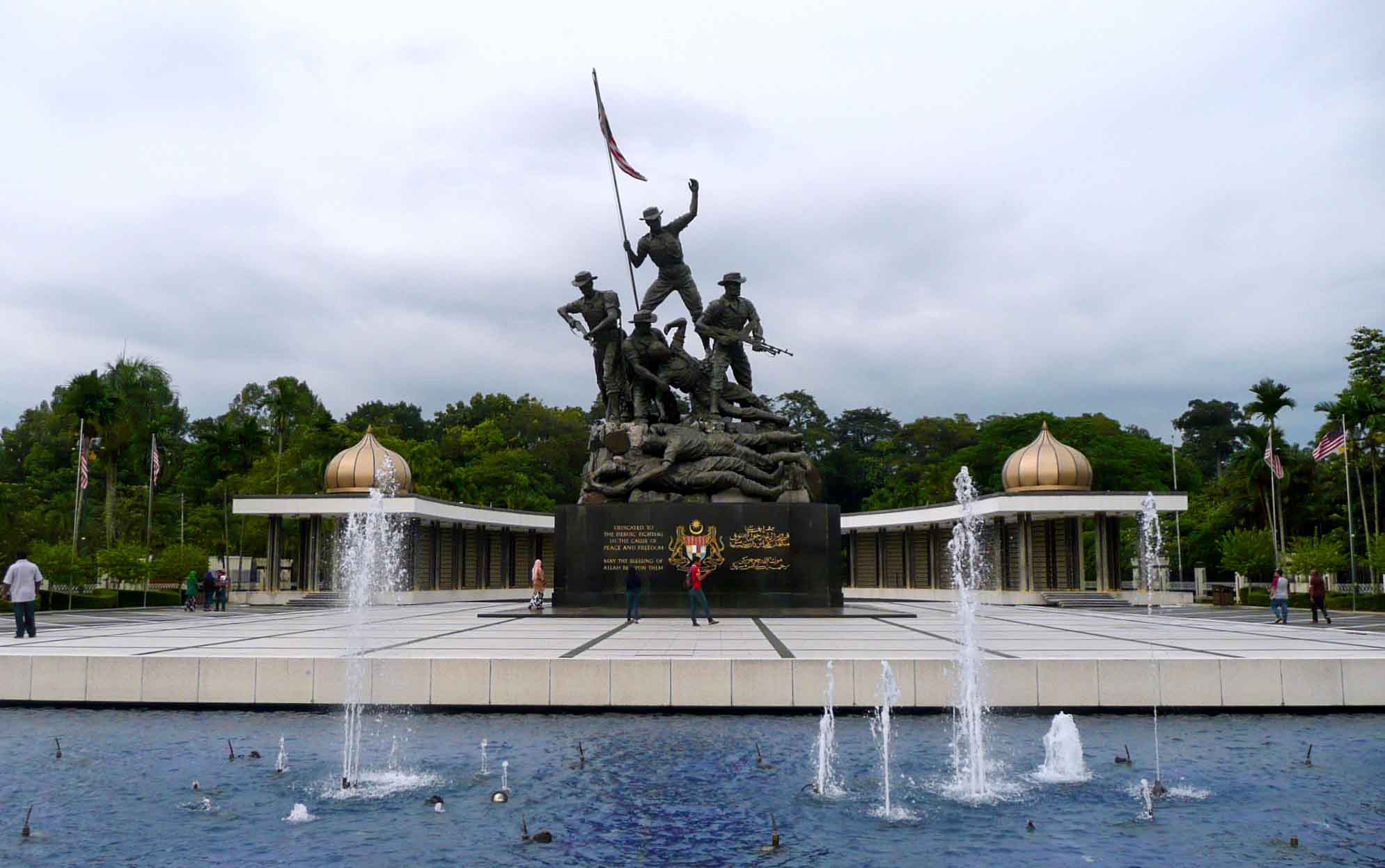
Located at the northern end of the park, the National Monument [Tugu Negara] stands as a prominent symbol. It serves as a commemoration of those who sacrificed their lives in Malaysia’s fight for freedom. The centerpiece of the monument is a bronze sculpture depicting soldiers, with one of them proudly raising the Malaysian flag. The sculptures were created in 1966 by Felix de Weldon, renowned for the Iwo Jima monument near Washington D.C. Additionally, the memorial includes a cenotaph dedicated to the Malay fighters who lost their lives in the First and Second World Wars.
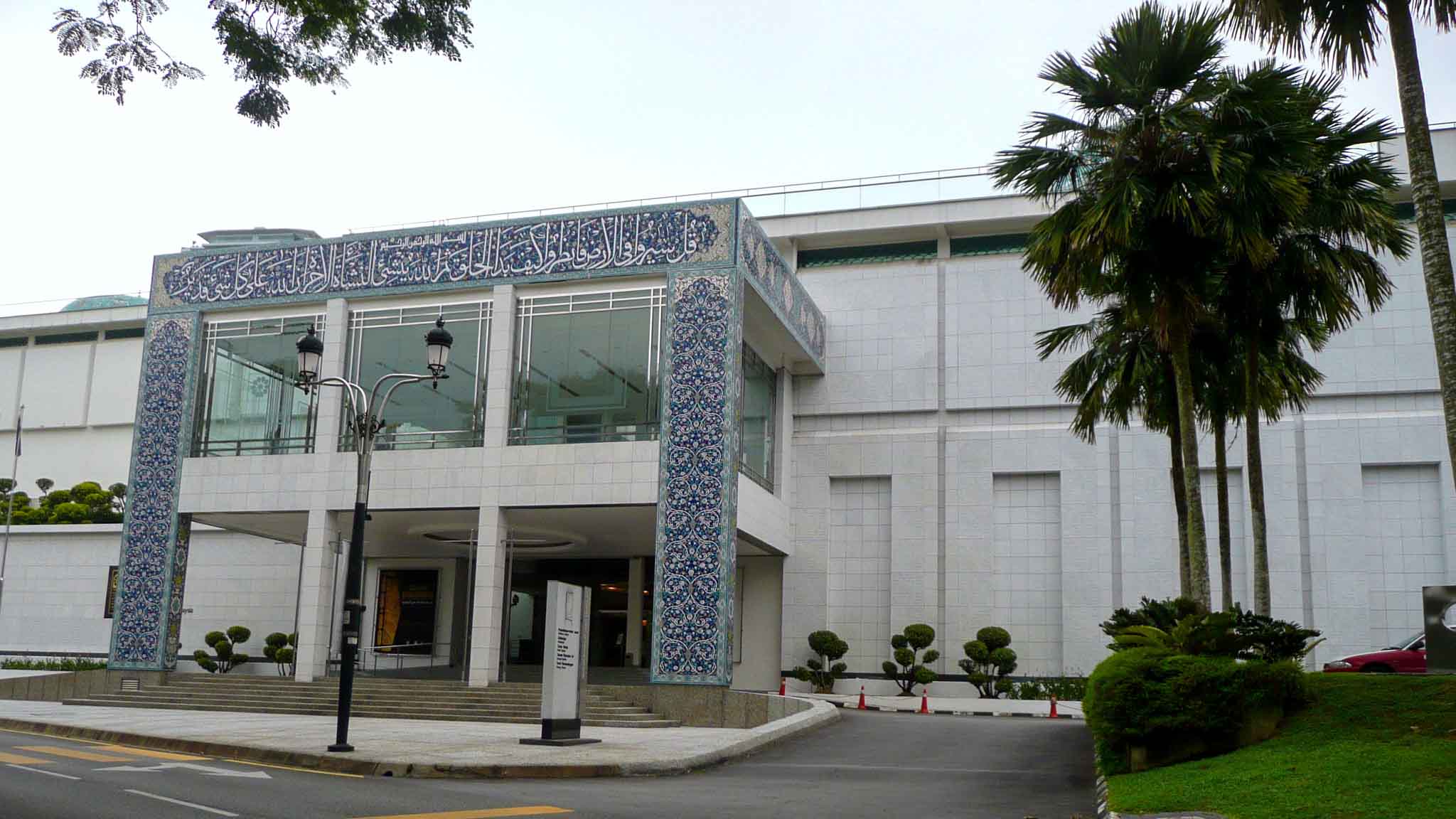
There are several significant museums located at the periphery of the park. One of them is the Islamic Arts Museum of Malaysia [Muzium Kesenian Islam Malaysia], which houses an extensive collection of artifacts related to Islamic decorative arts. Architecture was the earliest manifestation of Islamic art, and the Architecture Gallery features scale models of important Islamic buildings, including the Dome on the Rock in Jerusalem, the Al-Haram Mosque in Mecca, and the Taj Mahal in Agra. Secular Islamic architecture also has its moments of greatness. One of the highlights of the collection is the restored 19th-century Damascus Room, which provides a glimpse into the opulent lifestyle of Ottoman Syria. Visitors will also encounter other captivating artifacts, such as handwritten Qur’ans, Mughal jewelry, Turkish Iznik tiles, and intricately crafted wooden objects, all competing for attention. The museum building itself is an impressive modern construction decorated with intricate domes and Iranian tiles.
The National Museum [Muzium Negara] can provide context for understanding Malaysia’s culture and history. Its collection takes visitors on a journey spanning from prehistoric times to the present day. The museum is housed in a replica of a traditional Malay palace, providing an immersive experience. Inside, the collection is divided into four themed galleries. Among the notable artifacts in the Prehistory collection is a replica of the 11,000-year-old Perak Man, which stands as the most significant discovery of Homo sapiens remains in Malaysia. This recognition is owed to its age and remarkably complete anatomical state. The Malay Kingdom gallery primarily focuses on the Malay Melaka Sultanate, considered the golden era of Malay-Islamic civilization. The Colonial Era collection highlights the country’s history under the grip of various foreign powers such as the Portuguese, Dutch, British, and Japanese. On the other hand, the Malaysia Today gallery recounts the nation’s unwavering struggle for independence, featuring exhibits like the green-silver Parker pen used to sign the Federation of Malaya Independence Agreement in 1957.
The small Indigenous Craft Museum [Muzium Seni Kraf Orang Asli], located next to the Muzium Negara, aims to preserve the cultural heritage of indigenous people in Peninsular Malaysia through their traditional crafts. The museum collects artifacts from various ethnic groups that are significant to their way of life, culture, and animist beliefs. The exhibition’s highlights include intricate woodcarvings and masks created by the Mah Meri, an ethnic group native to the western part of Peninsular Malaysia. Their carvings skillfully depict deities, humans, animals, and plants, showcasing their remarkable artistic abilities.
Batu Caves
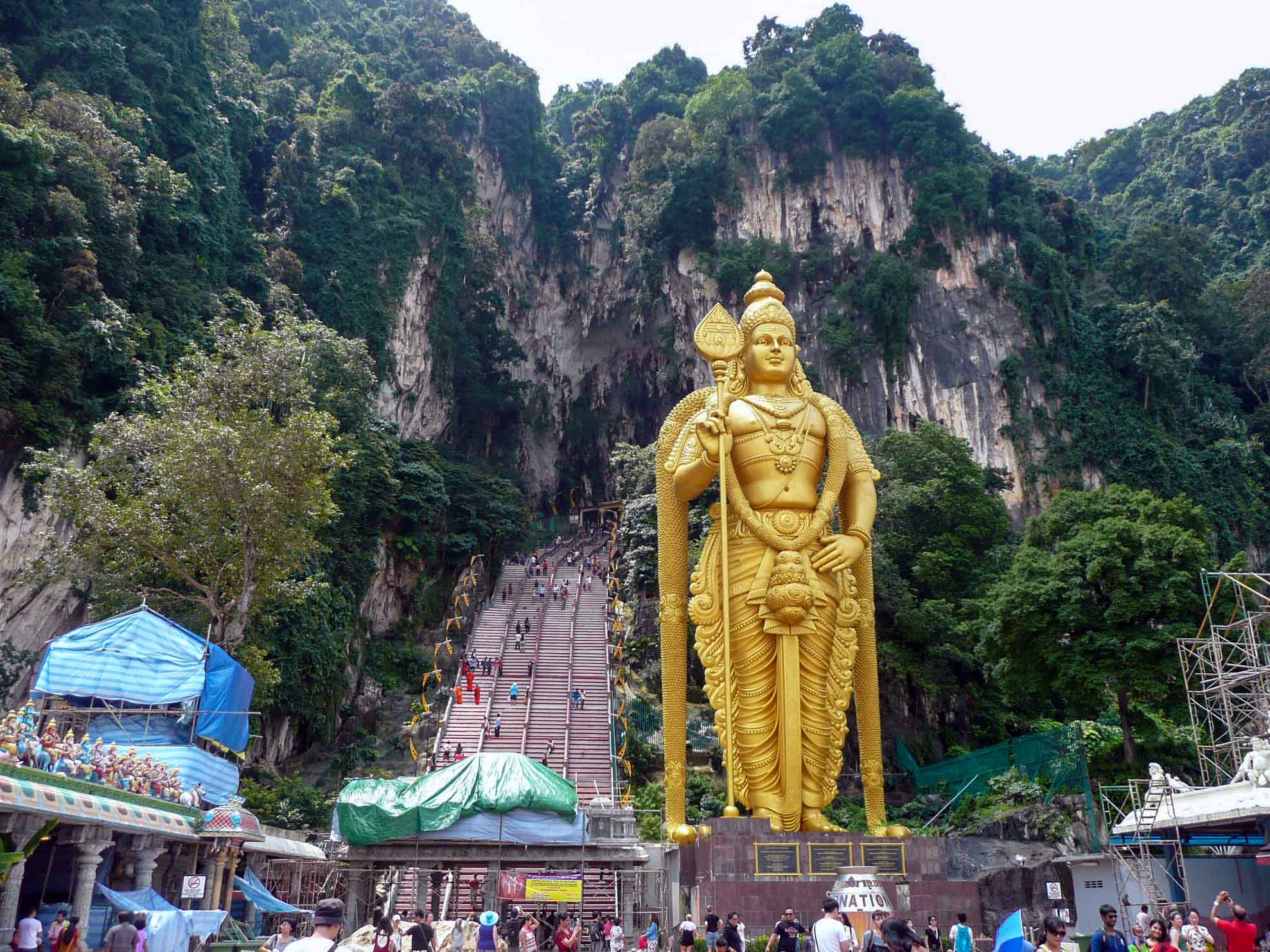
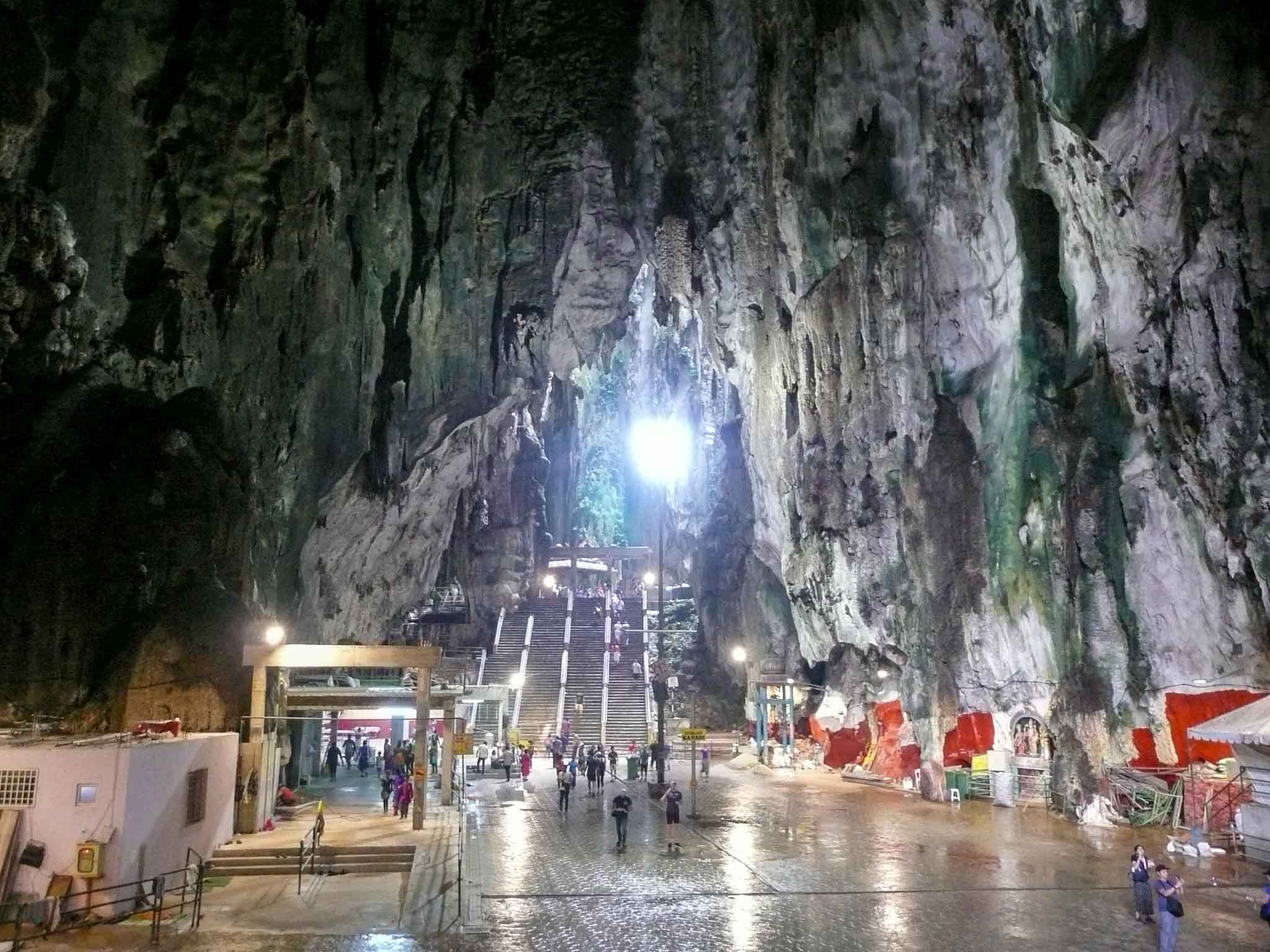
The Batu Caves, perched atop a range of striking limestone cliffs, form an expansive complex of caverns that have become one of the most popular attractions in the capital. These limestone caves house Hindu temples that feature dioramas depicting scenes from the Hindu scriptures, all enveloped in the shadows of stalactites. While the indigenous Orang Asli people and Chinese settlers had long been aware of these caves and collected guano from them, they gained popularity when American naturalist William Hornaday stumbled upon them in 1878. Impressed by the size and beauty of the main cave, he likened it to a grand cathedral.
In 1890, the cave complex underwent a transformation into a shrine dedicated to Lord Murugan, the Hindu deity who is the youngest son of the divine couple Shiva and Parvati. Since then, it has become the primary pilgrimage site for Malaysia’s Hindu population. At the entrance to the caves stands a monumental golden statue of Lord Murugan, commanding attention. Ascending to the main cave, known as the Temple Cave, entails climbing a steep flight of 272 steps, often accompanied by the scampering presence of long-tail macaques. Within the Temple Cave, rays of light streaming through openings formed by the ceiling’s collapse cast an ethereal glow. Throughout the caves, visitors will discover a multitude of statues, including those of Lord Murugan, as well as other Hindu deities like Shiva, Ganesh, and Durga.
Exploring the Batu Caves is always a lively experience, but it reaches its peak during the annual Thaipusam festival, which takes place in late January or early February. During this time, over a million pilgrims and 10,000 tourists flock to the caves, infusing them with vibrant energy and spiritual devotion.


Sources
http://www.kuala-lumpur.ws/
http://www.muziumtekstilnegara.gov.my/
https://www.iamm.org.my/
https://www.muziumnegara.gov.my/ms
https://www.malaysia.travel/explore/batu-caves
 Trespasser-on-Earth