The Order of Knights of the Hospital of St John of Jerusalem stands as the oldest existing Order of Chivalry.
Jerusalem (603-1291)
In 603, Pope Gregory the Great (papacy: 590-604) initiated the construction of a hospice in Jerusalem to provide care for Christian pilgrims in the Holy Land. By 638, as part of the Muslim conquest of the Levant, Byzantine Jerusalem was seized. Jerusalem, with its sacred significance for Christians, Jews, and Muslims, became a focal point for long-running territorial disputes. Christians prayed at the Church of the Holy Sepulchre, Muslims at the Dome of the Rock, and Jews at the Wailing Wall. Despite this, daily interactions among the diverse communities in Jerusalem unfolded peacefully. In 800, Charlemagne (reign: 800-814), the Holy Roman Emperor, expanded the hospice by incorporating a library into its facilities. Regrettably, in 1010, the Fatimid caliph of that time destroyed the hospice and obliterated the Christian structures at the Holy Sepulchre site. Subsequently, in 1023, Amalfi merchants acquired the old hospice site, but it took another 50 years to obtain permission for reconstruction. In 1073, the reconstructed hospice was dedicated to St John the Baptist, with its first rector being Brother Gerard (1040-1120), a lay brother in the Benedictine Order from the Duchy of Amalfi. The members of the hospice, known as nursing brothers, focused on providing aid to the sick and the poor.
Years of desecration of Christian holy sites and escalating territorial disputes underscored the Christian belief that the Holy Land was an integral part of the Byzantine Empire. Consequently, in 1095, Pope Urban II (papacy: 1088-1099) initiated the First Crusade, marking the onset of a series of religious wars aimed at reclaiming the Holy Land from Muslim rule. The crusader army, consisting of four forces jointly led by Godfrey of Bouillon (1060-1100), the Duke of Lower Lorraine, and Raymond IV (1041-1105), the Count of Toulouse, numbered as many as 100,000. The crusaders traversed Europe and reached Jerusalem in June 1099. During the siege of the city, the residents endured ruthless massacres that indiscriminately targeting Muslims and Jews, showing little regard for distinctions between soldiers and civilians, including women and children.
After regrouping following the conquest of Jerusalem, Godfrey was appointed as the Christian leader of the city. One of his initial actions was to inspect the hospice of the Brothers of St John. Impressed by their efforts to enhance survival rates and patient care, he, along with a group of knights, supported the hospice’s charitable works. Under the leadership of Brother Gerard, a religious confraternity was established, requiring members to take solemn vows of poverty, chastity, and obedience. They wore simple black robes with a white cross. In 1113, Pope Paschal II (papacy: 1099-1118) recognized the Knights Hospitaller Order as a self-governing organization through his Papal Bull. Gerard’s successor, Guardian Raymond du Puy (in office: 1118-1160), a French knight, also admitted knights into their revised Order and organized a militia, providing armed escorts for pilgrims in addition to caring for them. Raymond structured the Order into classes, established rules of conduct, and devised an administrative and command structure. He introduced the Order’s Great Seal and the eight-pointed cross. Over time, the Knights Hospitaller, alongside the Knights Templar, emerged as the most formidable military order in the Holy Land. In 1130, Pope Innocent II (papacy: 1130-1143) granted the Order its coat of arms – a silver cross on a field of red. The Order expanded and flourished under Christian governance in the Holy Land.
Rhodes (1310-1522)
After the fall of the Kingdom of Jerusalem in 1291 (the city of Jerusalem had fallen in 1187), the Hospitallers sought refuge in the Kingdom of Cyprus. As the Cypriot King was uneasy about hosting such a powerful and wealthy order, Guardian Guillaume de Villaret (in office: 1296-1305), devised a plan to secure a new residence for them, choosing Rhodes, then part of the Byzantine Empire. He also restructured the Order into eight Tongues [Langues], corresponding to a geographic or ethno-linguistic area: Aragon, Auvergne, Castile, England, France, Germany, Italy, and Provence. Guillaume’s successor and nephew, Foulques de Villaret (in office: 1305-1319), implemented the plan to seize Rhodes, and, in 1310, after more than four years of campaigning, the city surrendered to the knights. Despite his success, allegations arose of increasingly arrogant, even tyrannical behavior, and an assassination attempt was made against him by the knights of his own Order.
During this period, a significant political shift unfolded in Europe, triggered by the conflict between Pope Boniface VIII (papacy: 1294-1303) and King Philip IV of France (reign: 1285-1314). In the early 14th century, the secular influence of the papacy was waning, presenting an opportunity for King Philip to strengthen his monarchy. The king believed that a portion of the wealth of the Catholic Church in France should contribute to supporting the state. In response, Pope Boniface issued a papal bull asserting, “it is necessary to salvation that every human creature be subject to the Roman pontiff”, challenging the authority of secular rulers and posing a threat to the political ambitions of the French King. The culmination of this conflict was marked by the Pope’s death after his abduction and abuse by Guillaume de Nogaret, the chief minister of the King. In 1305, the French King wielded enough influence to compel a deadlocked conclave to choose his favorite, the French Clement V (papacy: 1305-1314) as pope. Later, in 1309 the newly appointed pope relocated his court to the papal enclave at Avignon. The King, leveraging his influence over the papacy, accused the Knight Templars of immorality, usury, heresy, and sodomy – actions seemingly driven by financial motives. Aligning with the king’s wishes, the Pope summoned the Council of Vienne in 1311. Despite the Council’s refusal to convict the Templars of heresy, the Pope abolished the order and allowed the torcher and execution of many of its members. Incidentally, the Hospitallers acquired a substantial portion of the Templars’ property following their dissolution.
In 1444, the Hospitallers, by then known as the Knights of Rhodes, successfully repelled the invasion of the Mamluk Sultanate and defended Rhodes. During the 15th century, the Ottomans gradually supplanted the Arabs as the standard-bearers of Islam. Ottoman Sultan Mehmed the Conqueror (reign: 1444-1446 and 1451-1481), after capturing Constantinople and defeating the Byzantine Empire in 1453, prioritized the Hospitallers as a target. In 1480, the knights successfully defended the island against the sultan’s forces. However, in 1522, the formidable military might of Sultan Suleiman the Magnificent (reign: 1520-1566) – comprising 400 vessels and between 100,000 to 200,000 men – attacked Rhodes with unwavering determination and defeated the Order. The sultan, acknowledging the valor of the knights, allowed them and their Grand Master, Philippe Villiers (in office: 1521-1534), a French nobleman, to withdraw to Sicily with their arms, possessions, and holy relics. Subsequently, the Sultan might have regretted this display of chivalry, as the Order reconstituted its strength and remained a persistent threat to the Ottomans.


Malta (1530-1798)
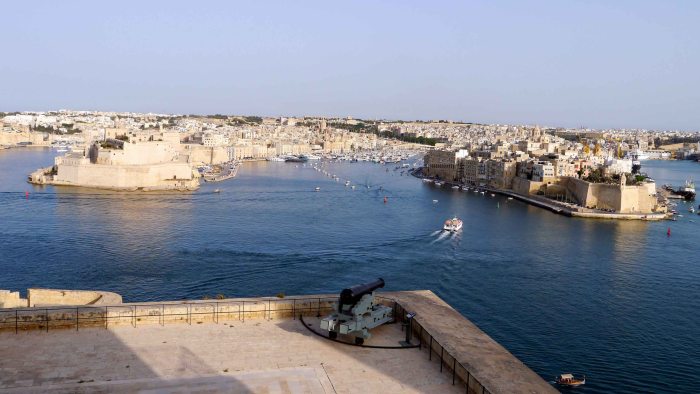
After the fall of Rhodes in 1522, the Order spent eight years searching for a permanent residence, until Charles V (reign: 1519-1556), Holy Roman Emperor and King of Spain and Sicily, offered them the Maltese islands in exchange for an annual tribute: a Maltese falcon dispatched to the king’s representative, the Viceroy of Sicily, every All Saints’ Day. They arrived in Malta in 1530. The knights’ presence here was deemed crucial for maritime defense, preventing Muslim Barbary pirates from seeking slaves and countering the Ottoman Empire’s military expansion in the Mediterranean. The knights remained in Malta for the next 268 years, initially facing challenges such as the island’s rocky terrain, scarce timber, and limited water supply. Moreover, the indigenous islanders were wary of the Order’s presence. The primary focus initially was on constructing substantial fortifications to defend against Ottoman threats. In addition to fortifications, the Knights built hospitals, churches, schools, orphanages, and residencies to aid the island’s 12,000 inhabitants. The Ottomans’ first attempt to take Malta in 1551 was unsuccessful. In anticipation of another Ottoman invasion, Grand Master Juan de Homedes (in office: 1536-1553), a Spanish nobleman, initiated a program to enhance Malta’s fortifications. This involved strengthening Fort St Angelo and constructing two new forts, Fort St Michael and Fort St Elmo, all in the Grand Harbor region.
Under the leadership of Grand Master Jean Parisot de la Valette (in office: 1557-1568), a French nobleman, the fortifications of the islands were completed by 1560 – just in time for what would become the Great Siege of Malta. In 1565, Sultan Suleiman the Magnificent dispatched a considerably smaller force than he did in Rhodes – 193 vessels and approximately 40,000 men – to besiege the 600 knights and about 6,000 men-at-arms in Malta. The Sultan’s objective was to expel the knights and establish a new strategic base in Malta, potentially enabling another assault on Europe. The Ottoman siege proved formidable. After capturing Fort St Elmo, the Ottomans decapitated the knights and floated their headless bodies across the Grand Harbor on mock crucifixes. Grand Master Valette, a brave and charismatic leader who was 70 years old at the time, responded to the Ottoman insult by beheading all his Ottoman prisoners, loading their heads into his cannons, and firing them into the Ottoman camp. Six months of courageous defense severely weakened the Order’s forces. Further pressure from the Ottoman forces would have meant a lost battle for the knights. Thankfully, adhering to his earlier promise, the Spanish Viceroy of Sicily sent an army of about 8,000 men, providing welcome relief to the exhausted knights and dealing a demoralizing blow to the brave Ottoman soldiers. Despite great losses, Malta had survived the Ottoman assault. This siege, which would prove to be the last epic battle involving the Order, was celebrated throughout Europe. In Voltaire’s words: “Nothing is so well known as the Siege of Malta”. Even Protestant England celebrated the victory. Consequently, funds and reinforcements poured into Malta, and European nations united against the Ottomans. The triumph of the Order in Malta, coupled with the Ottoman defeat in the naval Battle of Lepanto in 1571, where the Sovereign Order also played a part, effectively put a stop to Ottoman expansion in the Western Mediterranean.
After the triumph, Grand Master Valette commenced the construction of a city on the dominating heights of the Sciberras peninsula. This city, named after him, swiftly evolved into the home port of one of the most formidable navies in the Mediterranean. The Orders’ trading and property revenues resulted in significant wealth. The island’s hospitals underwent expansion, with the Sacra Infermeria [Sacred Infirmary] gaining fame as one of the world’s finest. Pioneering in medicine, they excelled in surgery, ophthalmology, nursing, sterilization techniques, and the care of the mentally ill. The Hospital of Malta also included Schools of Anatomy, Surgery, and Pharmacy. In addition to medical facilities, in 1578, the newly completed St. John Cathedral was consecrated as the conventual church of the Order. The Knights also built beautiful palaces, chapels and inns [auberges]. In Rhodes, the knights had been accommodated in inns segregated by the Tongues, a structure maintained in Valletta as well. The city itself became renowned as a center of art and culture.
During the Middle Ages, religious beliefs played a crucial role in shaping individuals’ identities and their perceptions of the world. However, as the 16th century unfolded, Europe experienced profound and swift transformations. Established beliefs came under scrutiny due to emerging religious ideologies. This ongoing debate eventually escalated into a fierce conflict that divided Europe between Catholic adherents and proponents of Protestants reforms. The two most important European reformers who broke away from the Catholic Church were Martin Luther (1483-1546), a German theologian, and Jean Calvin (1509-1564), a French theologian based in Genève. The Reformation took its toll on European commandries of the Order. In 1540, King Henry VIII (reign: 1509-1547) suppressed the English Langue and seized its vast properties to pay his war debts. In 1577, the German Bailiwick of Brandenburg professed Lutheran beliefs and separated from the Order. In Malta, the knights became divided but the Order survived the Reformation.
At the beginning of the 17th century, Grand Master Alof de Wignacourt (in office: 1601-1622), a French nobleman, served as the head of the Order. Unlike some of his predecessors, whom the Maltese people perceived as a privileged class, he enjoyed popularity among them. He is chiefly remembered for overseeing the construction of several coastal fortifications, including the St Lucien Fort at Marsaxlokk and the Wignacourt Tower in St Paul’s Bay. Additionally, he played a significant role in funding a new aqueduct to convey water from Rabat to Valletta, which now bears his name. Wignacourt also became the patron of the Italian painter Michelangelo Merisi da Caravaggio. The painter hoped that patronage from a Grand Master of the Knights of Malta (as it was known at that time) could secure a pardon for his involvement in the killing of Ranuccio Tommasoni, a gangster from a wealthy family, in Rome. Wignacourt was so impressed by having the famous artist as the official painter to the Order that he knighted him. However, Caravaggio’s stay was short-lived, as he had a conflict with an aristocratic knight that led to the knight being seriously wounded. Consequently, Caravaggio was imprisoned (though he managed to escape) and expelled from the Order, formally described as “a foul and rotten member”, a phrase commonly used in such cases.
Nicolas Cotoner (in office: 1663-1680) succeeded his brother Raphael (in office1660-1663) as Grand Master. These two Spanish knights played a key role in the opulent Baroque decoration of the interior of St John’s Cathedral. Rafael initiated collaboration with the Italian Baroque painter, Mattia Preti, for the cathedral’s paintings. Nicolas continued the redecoration efforts, overseeing the carving and gilding of most of the walls. In 1669, the fall of Candia, marked the end to the Cretan War (started in 1645), a conflict between the Republic of Venice and its allies, including the Knights of Malta, against the Ottoman Empire and the Barbary States. Crete, Venice’s largest and wealthiest overseas possession, held strategic importance. Following the Ottoman victory, Nicolas deemed it necessary to strengthen the fortifications of Valletta. He ordered the construction of the Cottonera Lines and Fort Ricasoli, both designed to protect the Three Cities – Vittoriosa, Senglea, and Cospicua – located directly across from Valletta on the Grand Harbor.
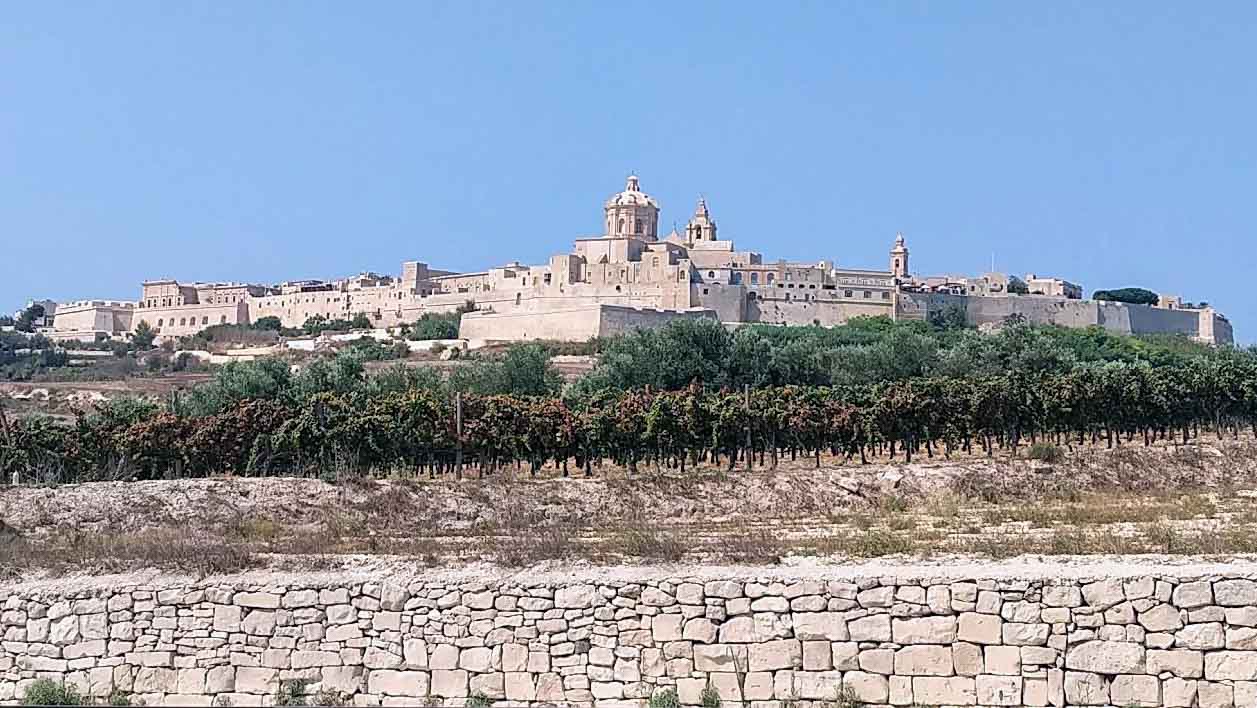
The Knights usually limited their interactions with the local population. However, Grand Master Antoine Manoel de Vilhena (in office: 1722-1736), a Portuguese nobleman, deviated from this trend. He undertook extensive measures to improve the lives of the Maltese people, gaining significant popularity. Impressed by the warm welcome in Mdina, Vilhena ordered the restoration of the entire city and the construction of the Mdina Gate and Vilhena Palace. To address housing demand in Valletta, he developed the suburb of Floriana. The Grand Master also erected Fort Manoel in Marsamxett Harbor and enhanced the fortifications of Grand Harbor. In Valletta, he established the Manoel Theatre, which remains operational today. Beyond the capital, he constructed Manoel Palace (now Leoni House) in Santa Venera, a hunting lodge (later converted into Parisio Palace) in Naxxar, and renovated Verdala Palace in Buskett. His rule is noteworthy for the sole attempt to end the perpetual war between the Order and the Ottoman Empire through negotiating a peace treaty, although no significant progress was achieved.
The extravagant lifestyle of Grand Master Manoel Pinto de Fonseca (in office: 1741-1773), a Portuguese nobleman, led to the Order’s financial downfall after his death. This flamboyant and vain Grand Master maintained an extensive court that rivaled the most fashionable in Europe. During his rule, many of Valletta’s understated Renaissance buildings, including the Grand Master’s Palace and the Inn of Castille, were adorned. Dealing with the consequences, Grand Master Emmanuel de Rohan-Polduc (in office: 1775-1797), a member of the wealthy and influential Rohan family of France, took decisive measures to revive the spirit of the Order. He convened the first general chapter meeting in nearly 150 years, and compiled the Code de Rohan, a constitutional law book. In 1797, he finalized a treaty with Tsar Paul I of Russia (reign: 1796-1801). This treaty was a natural extension of a friendly relationship that had begun 100 years earlier when the Order agreed to train Russian naval officers. As part of the treaty, funding flowed to Malta from the great priories of Poland and Russia.
In the 18th century, as the Ottoman threat diminished, the Order’s security was no longer under immediate threat, and the demand for its military services gradually declined. Consequently, the Order began to lose focus, and the passion among its members waned. Despite this, the Order remained prosperous at a time when the war chests of many European powers were perilously empty. However, in 1792, Napoleon dealt a severe blow to the Order in France by dissolving its three Tongues. This had a significant impact on the Order’s finances, resulting in the loss of almost two-thirds of its income.
On June 6th, 1798, two French ships requested permission to enter Valletta harbor and replenish their water supply. For centuries, providing fresh water to passing ships had been a courtesy extended by the Order. Despite the imminent danger posed by the likely vanguard of Napoleon’s naval squadron, Grand Master Ferdinand von Hompesch zu Bolheim (in office: 1797-1799), the first German elected to office in the Order, granted permission. As the ships anchored in the harbor, Napoleon’s naval squadron appeared on the horizon and stood off Malta, demanding the unconditional surrender of the island. French knights, aligned with Republican ideals, urged surrender, while others were determined to resist. Napoleon’s troops launched multiple landing assaults on the island, and most defense outposts made commendable attempts to repel the invaders but were hopelessly unprepared to confront the greatest fighting force in the world at that time. Faced with uncertain loyalty from some of his knights and fearing a major loss of life, the Grand Master decided to surrendered.
The Grand Master and his knights vacated the palace, taking little with them except for the holy relics of the Order, including a splinter of the True Cross, the hand of St John the Baptist, and the icon of Our Lady of Philermos. Napoleon seized the vast wealth accumulated by the Order over the centuries. Contrary to common belief, the bulk of the treasure sacked by Napoleon was not lost in Aboukir harbor when L’Orient, the flagship of the French fleet, exploded and sank during the Battle of the Nile in August 1798. Much of the silver was, in fact, minted in Malta and Alexandria, with gold and precious stones auctioned in Cairo. Other treasures surfaced in Eastern markets. Napoleon personally selected some exceptional items, which are now on display in the National Library [Bibliothèque nationale] in Paris. History has never clearly revealed whether Napoleon aimed to eliminate the Order, wanted to control Malta, or simply needed the treasure to pay his long-unpaid army. It is probable that a combination of all three factors influenced his actions.

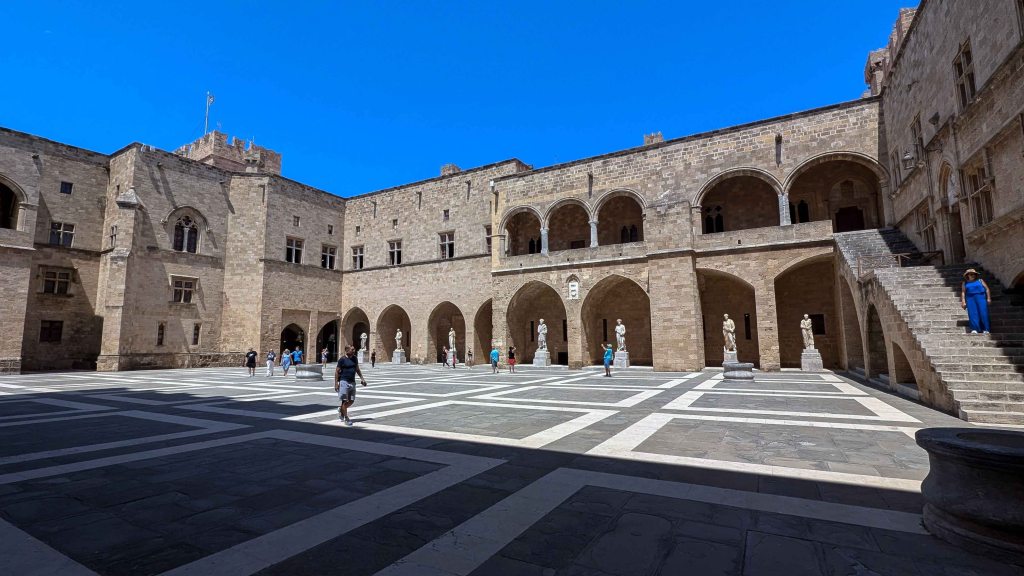
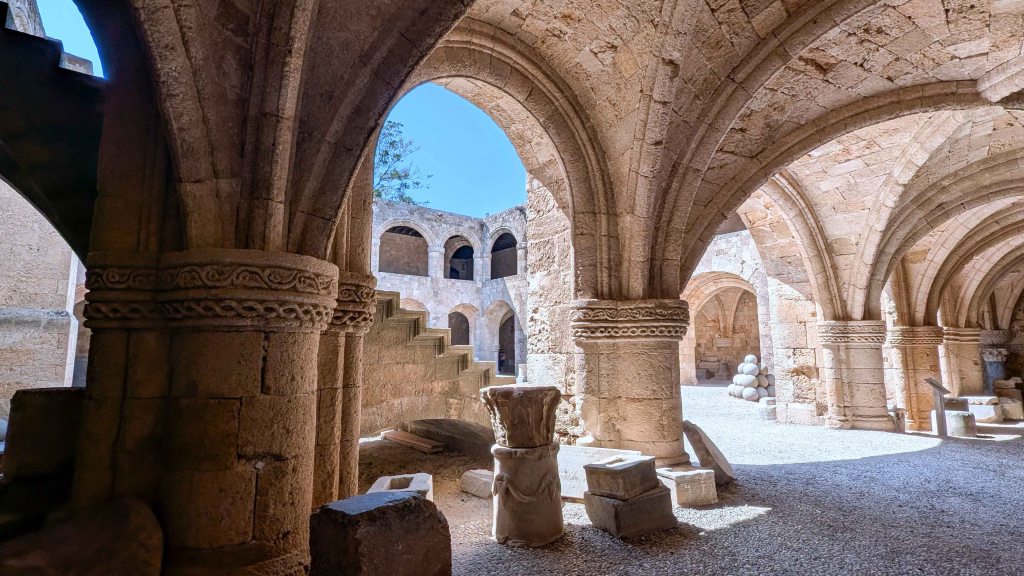
Today, the most striking remains of the Order in Rhodes Town lie within the medieval walled city, built over ancient foundations and now recognized as a UNESCO World Heritage Site. Accessible through several monumental gates, the town is encircled by nearly four kilometers of massive fortifications – walls, moats, bastions, and towers – that form one of the best-preserved defensive systems in Europe. The town itself was divided into two distinct quarters: the Collachium, reserved for the Knights and their institutions, and the Bourg, where the broader population resided. At the heart of the Collachium rises the Palace of the Grand Masters, a formidable fortress and the symbolic center of the Knights’ power. Nearby runs the celebrated Street of the Knights, one of the finest surviving examples of a medieval street in Europe. Along its length stand the austere yet imposing inns of the Tongues. Another of the Order’s great institutions was the Gothic Hospital of the Knights, now repurposed as the Archaeological Museum of Rhodes. Scattered throughout the Old Town are Gothic churches dating from the Knights’ era, such as the Church of Our Lady of the Castle. Elements of their military and administrative complexes also survive, including outer defenses such as the Fort of St. Nicholas in Mandraki Harbor. After the Ottoman conquest, new monuments appeared, reflecting the presence of the new rulers – most notably the Mosque of Sultan Suleiman the Magnificent, built in 1523 to commemorate his victory.
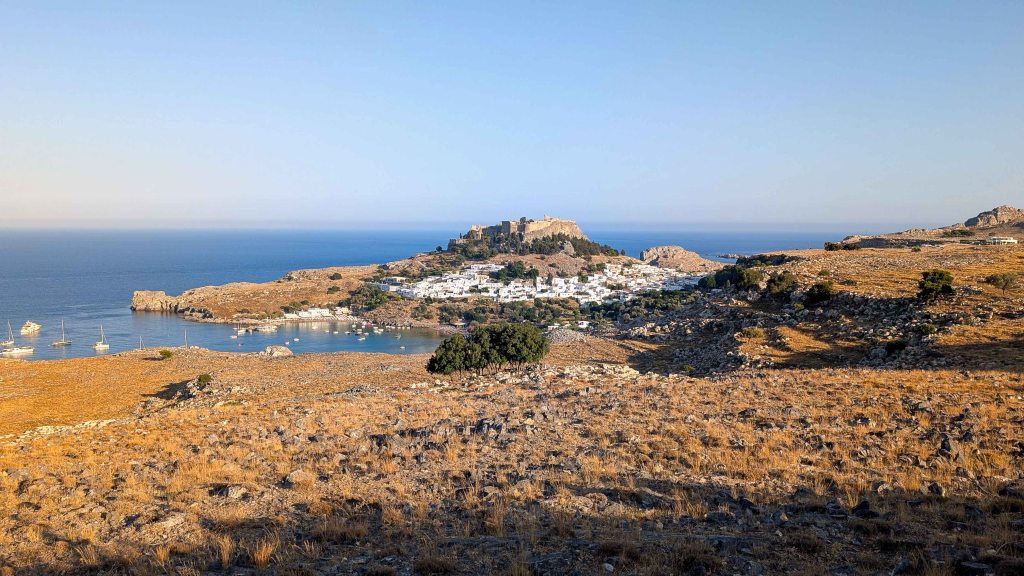
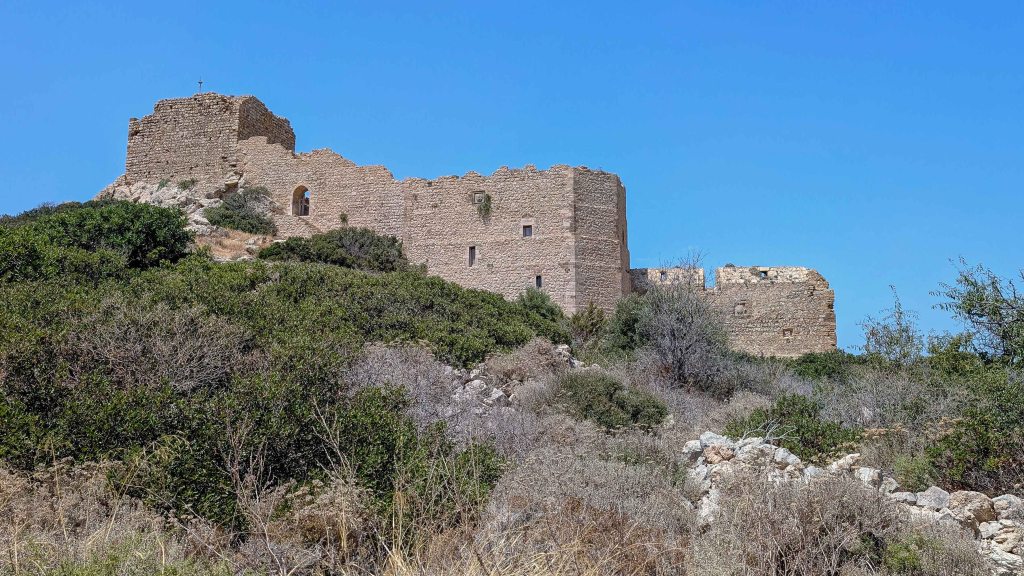
Beyond the town of Rhodes, the Order left their mark across the island in the form of castles, watchtowers, and religious buildings. They also improved infrastructure to strengthen both defense and administration. Many of the fortifications, often built on earlier Byzantine or ancient foundations, formed part of a carefully organized network designed to protect the island’s population from piracy and Ottoman attack, while also serving as outposts of Knightly authority in the countryside. Though ruined today, Feraklos Castle, perched on a hill on the island’s east coast, is particularly significant. Seized by the Order in 1306, it was their first stronghold on Rhodes and became the foothold for their later conquest and enduring presence. The Acropolis of Lindos, though primarily an ancient Greek and Byzantine site, also bears traces of Hospitaller occupation. Other significant remains include the castles of Archangelos, Monolithos, and Kritinia. In addition to their military architecture, the Order left behind numerous religious buildings scattered through the countryside, often blending Gothic forms with local Byzantine traditions. A notable example is the Hospitaller Church at Filerimos, part of a larger monastic and pilgrimage complex built on a site revered since antiquity. Many of these sites, set on commanding heights, not only provide an evocative glimpse into the island’s medieval past but also offer some of the most breathtaking panoramas of the Aegean and the surrounding islands.
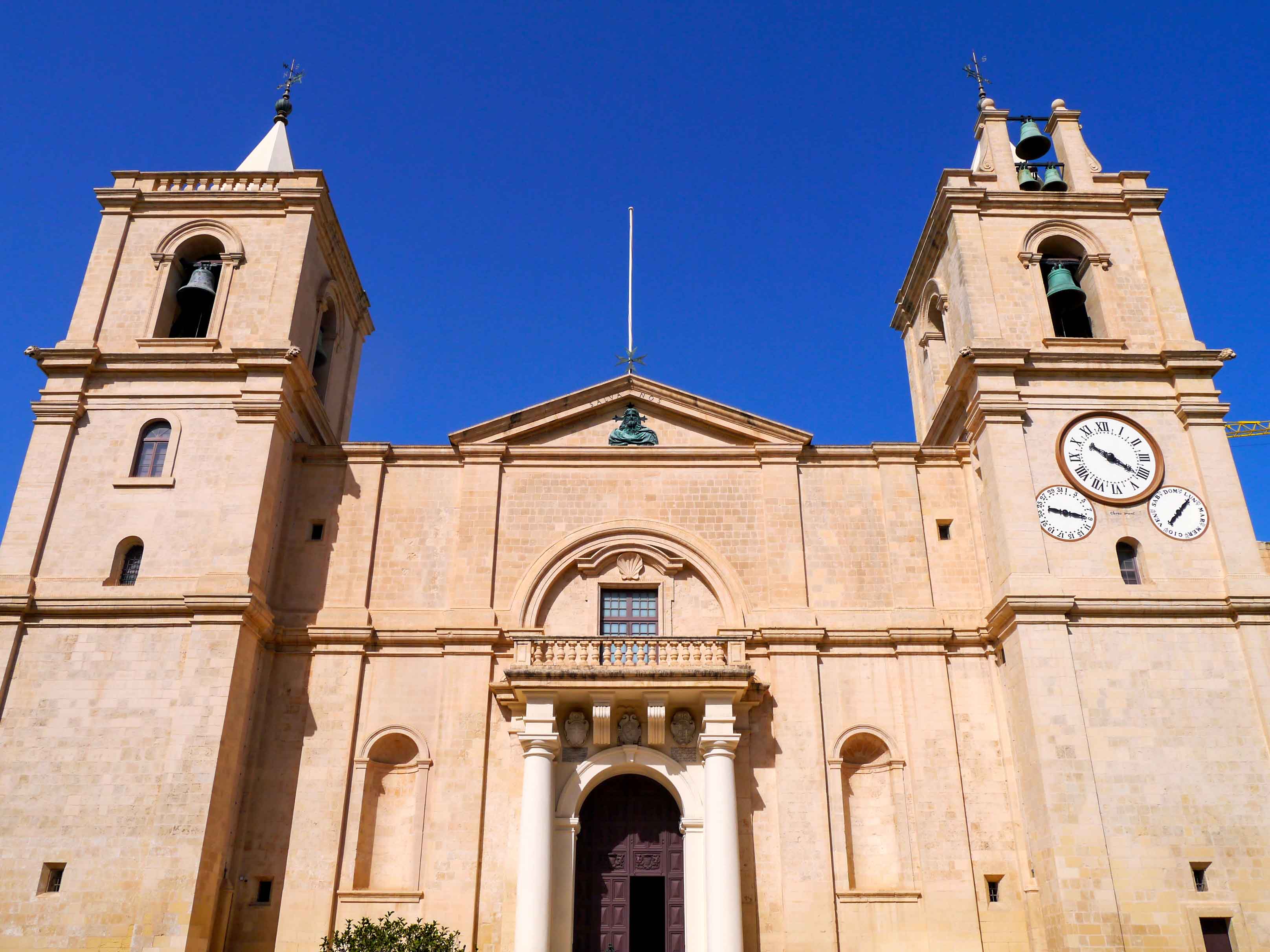
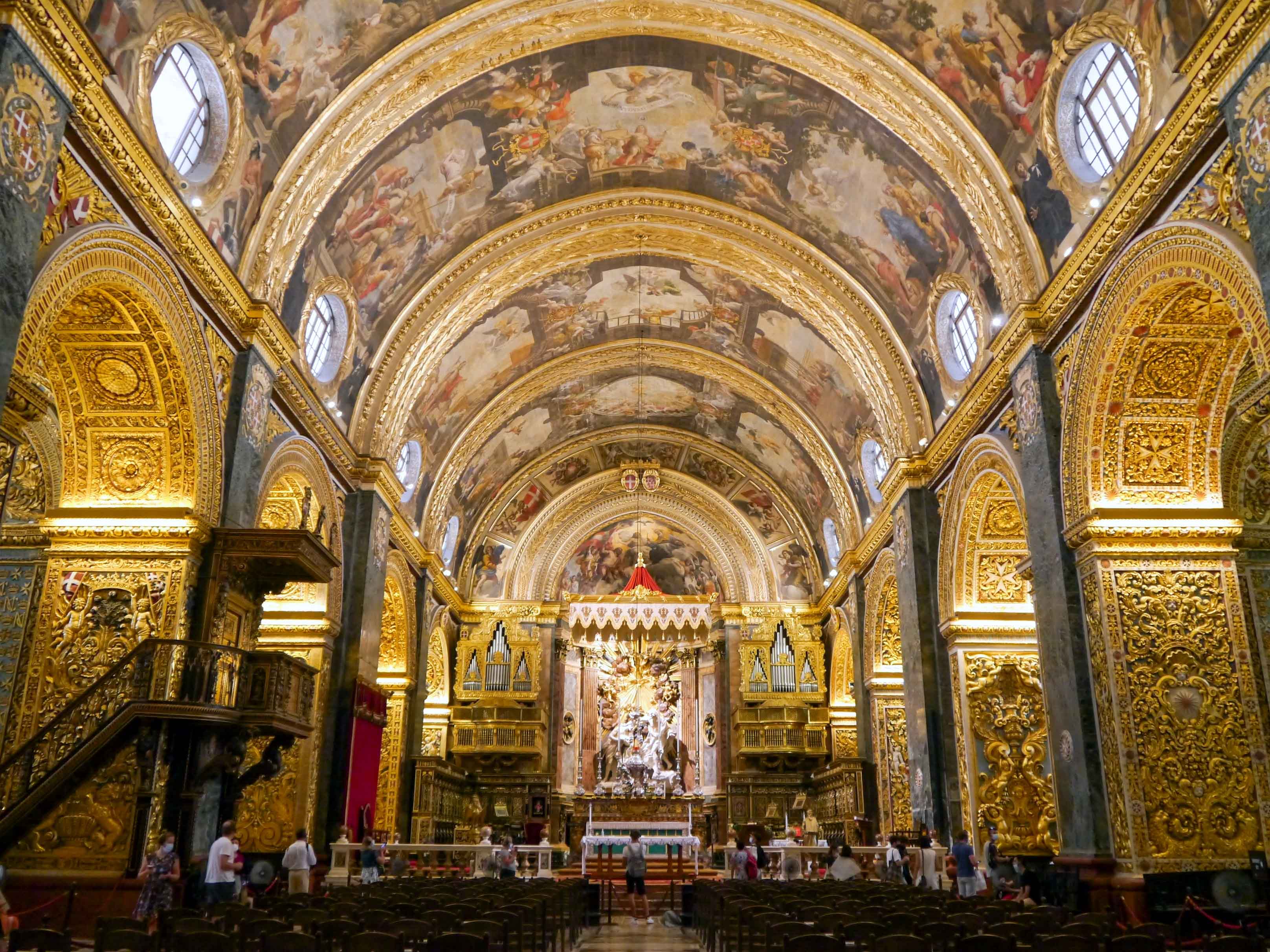
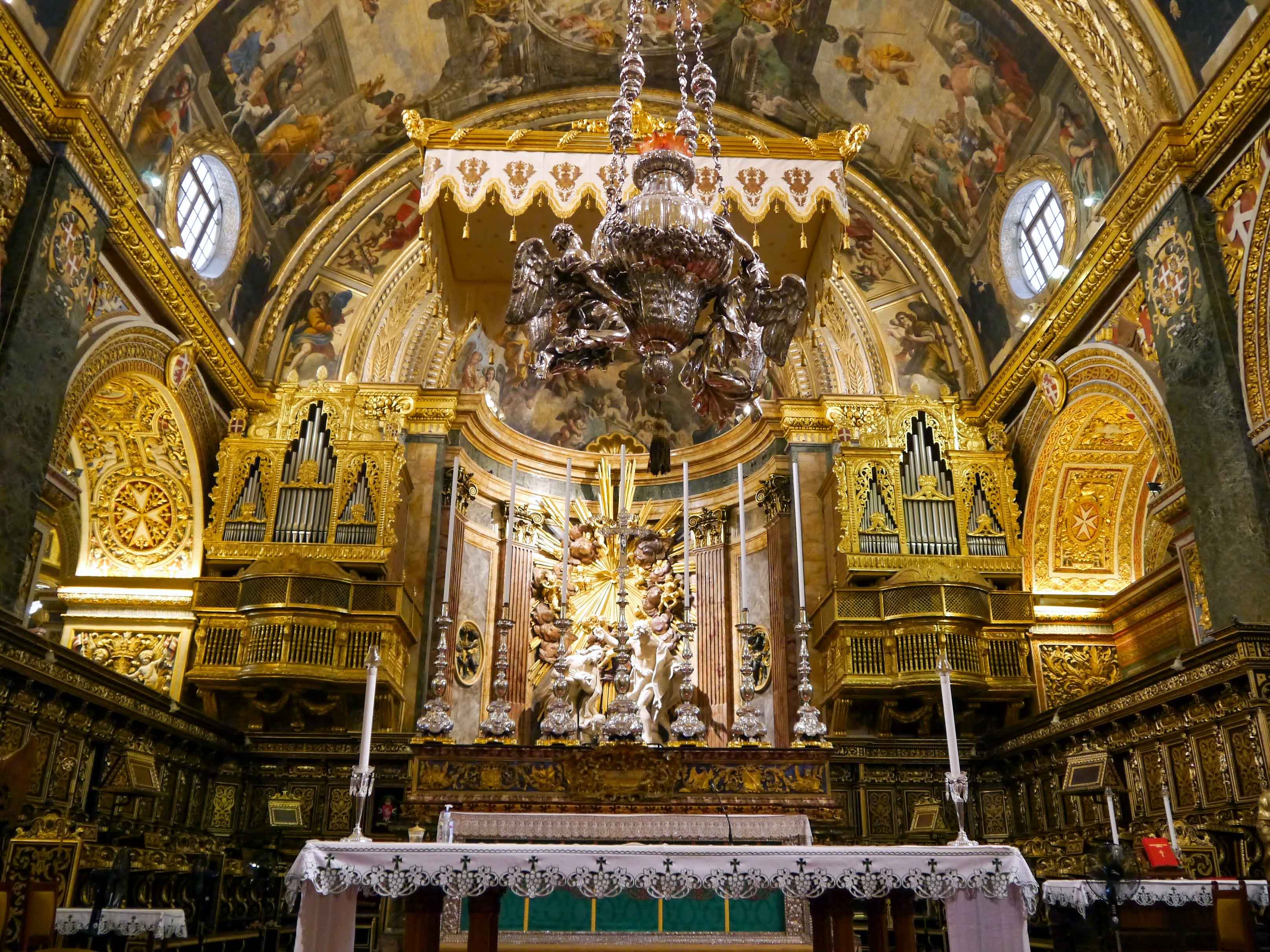
Across the Maltese islands, numerous palaces, inns, churches, forts, towers, and defensive lines associated with the Order can still be found. Throughout their stay, they transformed the entire Grand Harbor area into an extensive fortress, with the city of Valletta serving as its inner keep. Visitors can explore these structures – including Fort Ricasoli, Fort St Angelo, Fort St Michael, Cottonera Lines, Santa Margherita Lines, Floriana Lines, Fort St Elmo, and Fort Manoel – nestled within an urban environment, up close or observe them from various viewpoints. In the heart of Valletta, the fortress-like exterior of St John’s Co-Cathedral conceals a lavish Baroque interior, visually celebrating the wealth and influence of the formidable Knights. Each Langue was given its chapel in the cathedral, and they competed to create the most richly decorated. The floor is adorned with intricately inlaid tombstones, marking the resting place of 400 knights. Some graves feature depictions of the Grim Reaper, scythe aloft, serving as a poignant reminder of the inevitability of death. The Cathedral’s treasures include a magnificent painting, ‘The Beheading of John the Baptist’ by Caravaggio. The Grand Master’s Palace, a fittingly splendid residence for the supreme head of the Knights, provides insight into the 268-year history of the Order in Malta. Showcasing the opulence of the Order, the palace’s Armory collection is globally renowned. Additionally, the palace serves as the seat of the Office of the President of Malta. The Inns of the Tongues have been repurposed as government offices, law courts, or museums. The National Museum of Archaeology, originally the Inn of Provence, and the MUŻA art museum, housed in the Inn of Italy, are notable examples. Meanwhile, the Manoel Theatre, built at the beginning of the 18th century, remains operational today.
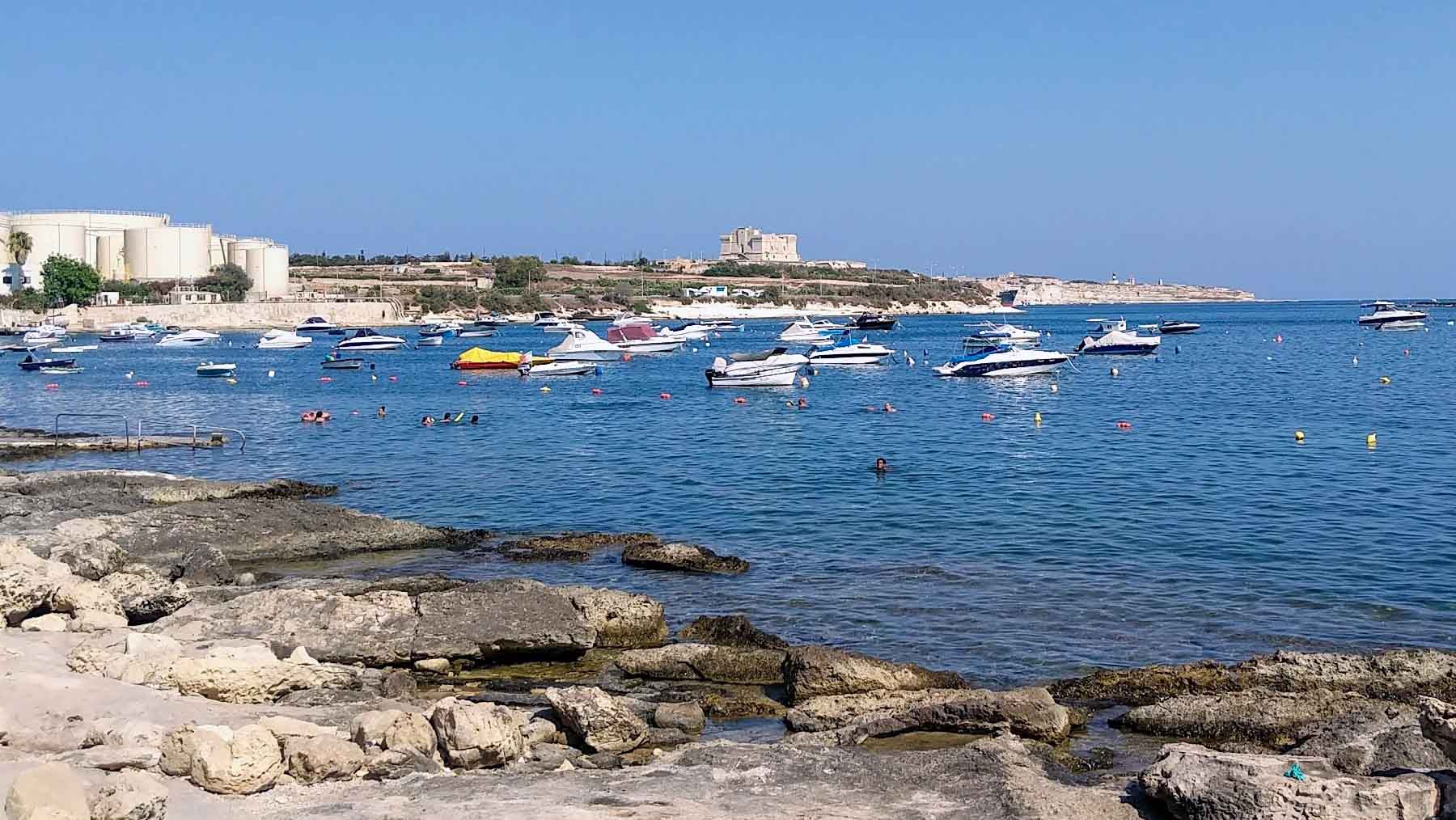
Mdina, the ancient Maltese capital dreaming quietly behind its formidable walls, also bears the mark of the Order. Exploring the Mdina Gate and Vilhena Palace offers visitors a glimpse into the historical legacy of the Order. Moving beyond Valletta and Mdina, Parisio Palace in Naxxar beckons exploration. Originally built in 1733 for Portuguese Grand Master Manoel de Vilhena as a hunting lodge, the palace underwent a complete transformation under the ownership of Marquis Giuseppe Scicluna, who acquired it in 1898. Malta’s coastline boasts enduring fortifications, preserving the island’s rich history. Notable examples include the St Lucien Fort at Marsaxlokk, the Wignacourt Tower and Qawra Tower in St Paul’s Bay, as well as the Red Tower on Marfa Ridge. In the town of Attard, a substantial section of the Wignacourt Aqueduct, which conveyed water from Rabat to Valletta, stands as a testament to the Order’s engineering contributions. Venturing to other islands reveals more remnants of the Order’s influence. St Anthony’s Battery and Dwejra Tower on Gozo, along with St Mary’s Battery on Comino, showcase the strategic fortifications established by the Knights. Each of these sites contributes to the diverse historical tapestry woven by the Order across the Maltese archipelago.
After being compelled to leave Malta, the Order separated into smaller groups. Today, five organizations continue the Hospitaller tradition, namely:
- The Sovereign Military Hospitaller Order of St John of Jerusalem, of Rhodes and of Malta (commonly known as the Order of Malta or Knights of Malta), representing the Catholic lay religious branch.
- The Most Venerable Order of the Hospital of St John of Jerusalem (commonly known as the Order of St John), serving as the mainly Protestant British branch.
- The Bailiwick of Brandenburg of the Chivalric Order of St John of the Hospital at Jerusalem (commonly known as the Johanitter Order), representing the German Protestant branch.
- The Order of St John of Netherlands, serving as the Dutch Protestant branch.
- The Order of St John of Sweden, representing the Swedish Protestant branch.
These organizations have returned to their 11th-century roots, focusing primarily on charitable and religious works. The Order of Malta is engaged in medical, social, and humanitarian projects in most countries around the world.
Sources
https://www.sosjinternational.org
Bradford, Ernle (2014) The great siege: Malta 1565
 Trespasser-on-Earth