
The megalithic temples of Malta are Neolithic monumental structures that stand as some of the earliest known free-standing stone buildings in the world.
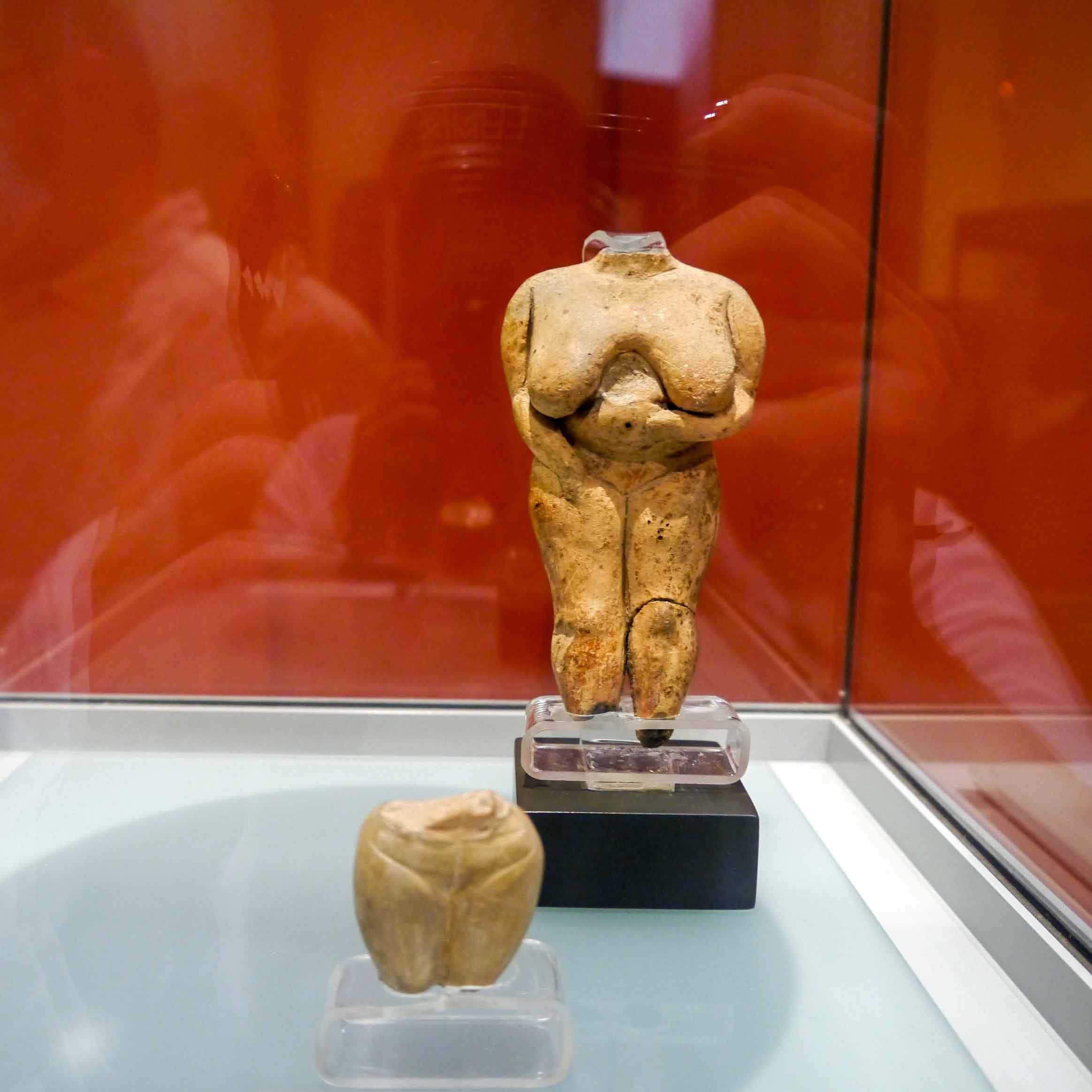
The megalithic temples that can be visited today were built between 3600 BC and 2500 BC. They include Ta’ Skorba, Ta’ Ħaġrat, Ħaġar Qim, Mnajdra, and Tarxien located on the island of Malta, as well as Ġgantija situated on the island of Gozo. Each complex stands as a unique architectural masterpiece, providing a testament to an extraordinary prehistoric culture recognized for its outstanding accomplishments in architecture, art, and technology. The buildings and the artifacts found within them indicate their role as ritual sites of a highly organized society. Ġgantija was inscribed as a UNESCO World Heritage Site in 1980 due to its cultural significance and historical importance. In 1992, the UNESCO Committee further extended the existing listing to include the other five megalithic temple sites. Several notable artifacts discovered in the temples are exhibited in the National Museum of Archaeology in Valletta, such as the Maltese Venus, the Sleeping Lady, and the Fat Lady statues. Initially, the building served as the Inn of Provence of the Knights of St. John.
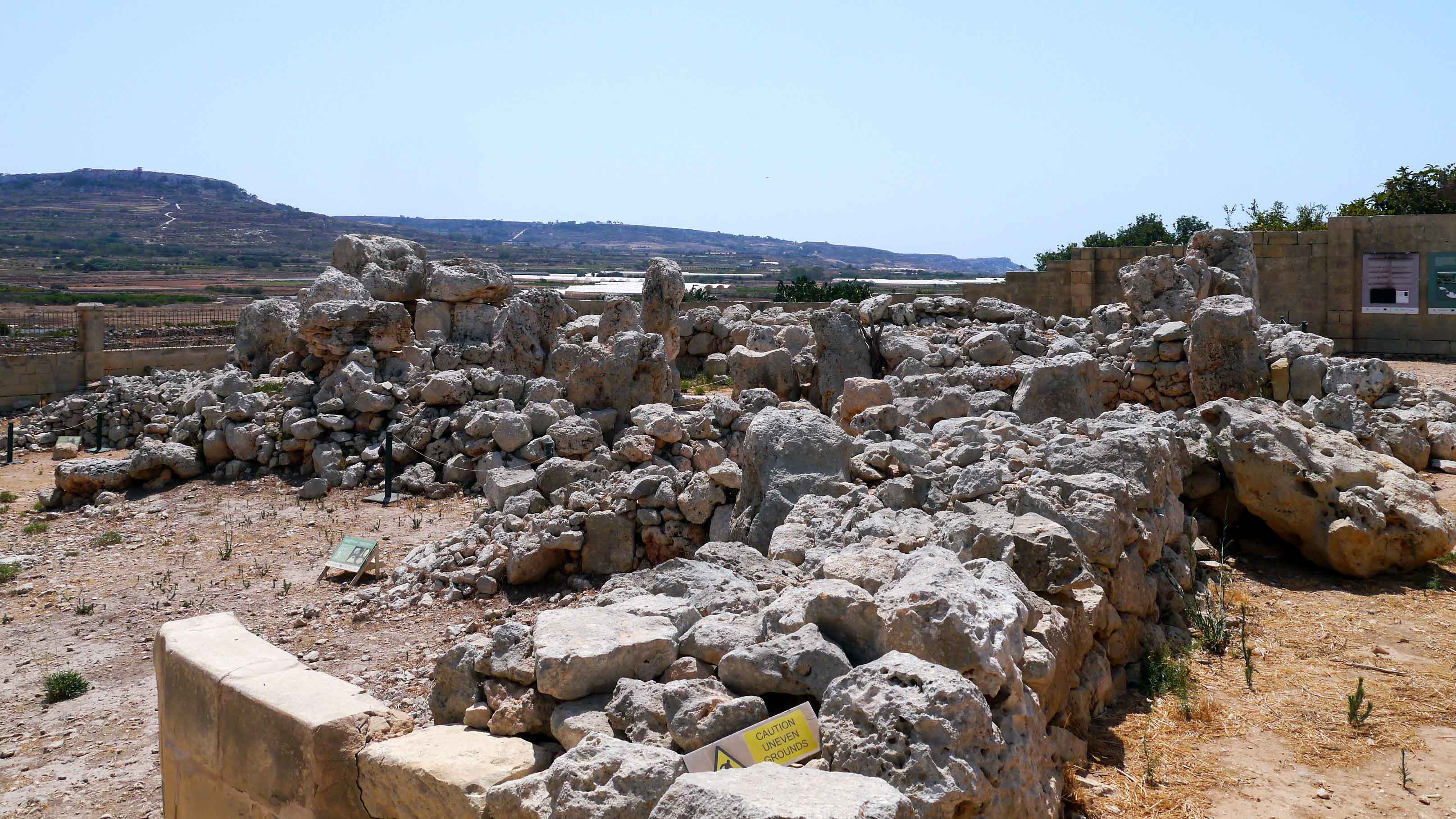
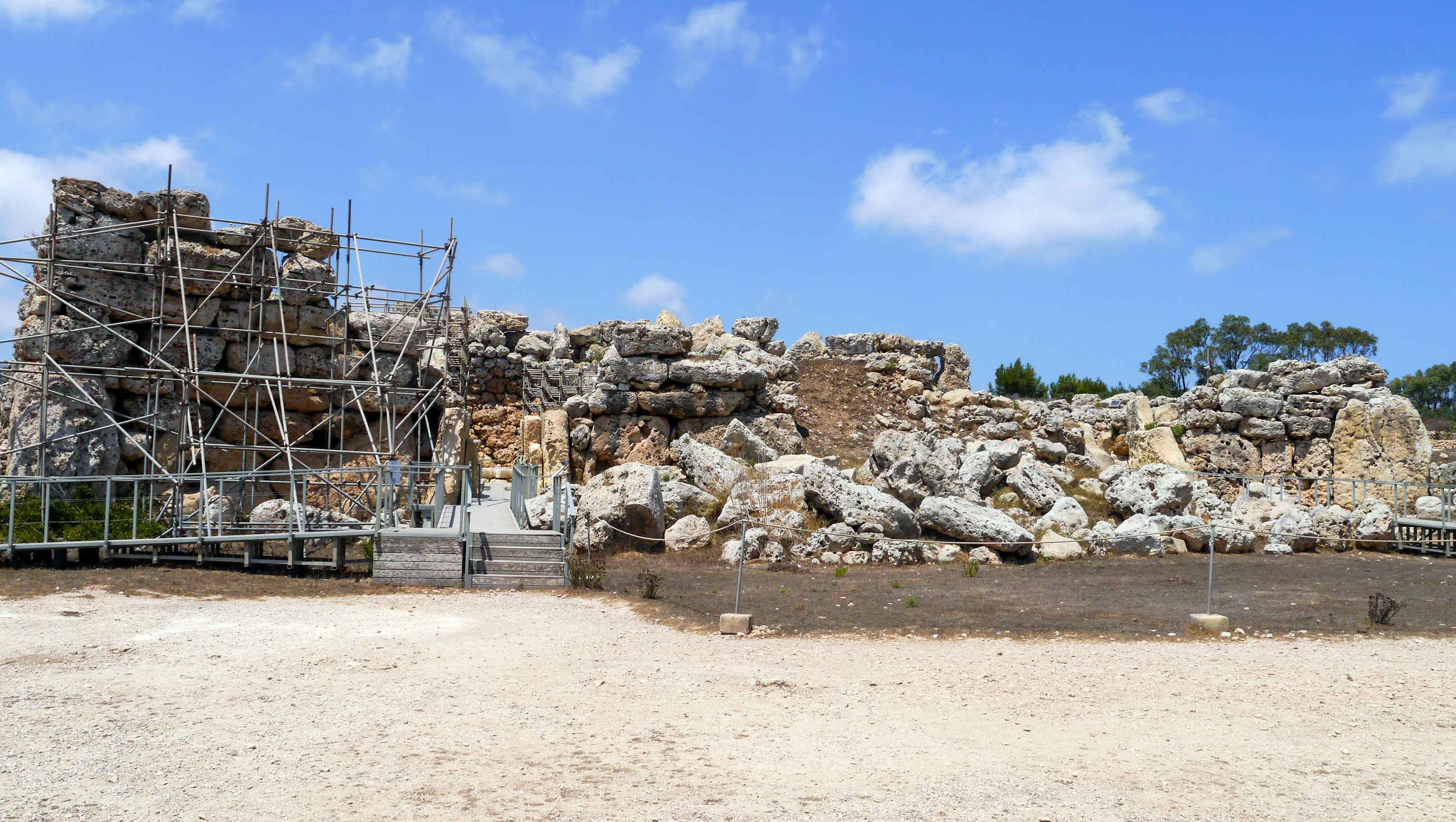
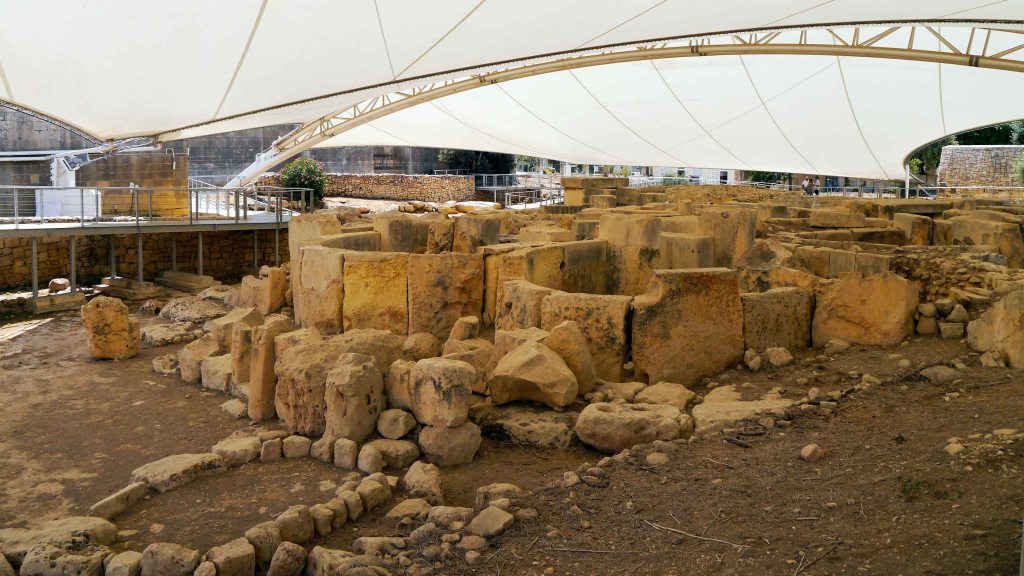
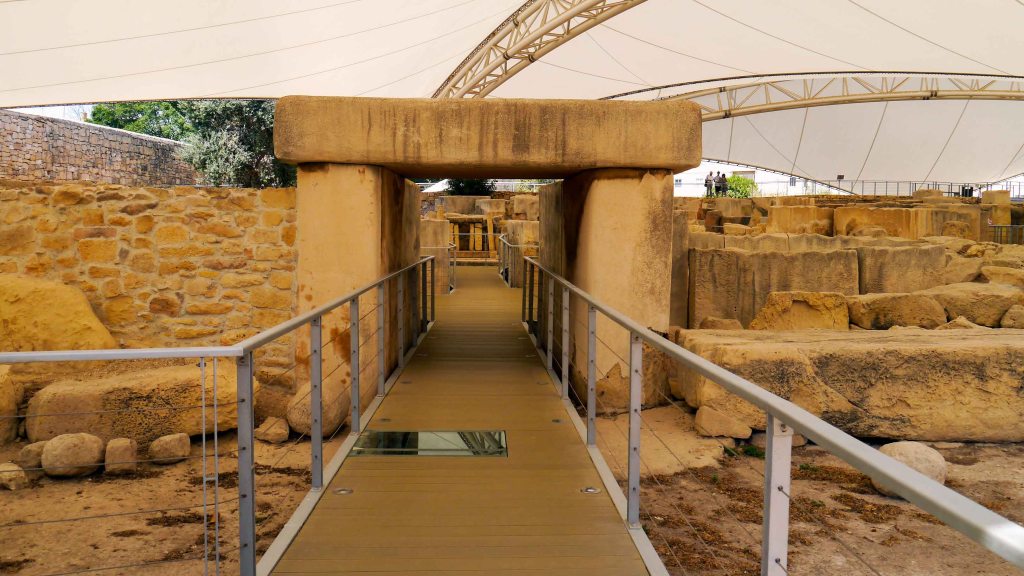
The temples share a common layout. They are typically accessed through an elliptical forecourt. The entrances to the buildings are centrally located on the façade, leading to a paved court. Inside, semi-circular chambers are symmetrically arranged on either side of the central axis, forming a trefoil plan. The number of chambers varies from one building to another. Both the façade and internal walls are constructed using upright stone slabs, known as orthostats, capped with horizontal blocks. The entrances feature two upright stones with a third spanning the top as a lintel, known as a trilithon. The remaining courses of horizontal masonry indicate that the structures once had corbelled roofs. External walls are usually built with larger blocks set alternately facing out and edge out, firmly integrating the wall into the rest of the structure. The space between the external wall and the inner chamber walls was filled with stones and earth, providing structural stability. For the external walls, the temple builders used hard coralline limestone, while the softer globigerina limestone was employed for inner furnishings, like doorways, altars, and decorative slabs.
In Malta, around the late 5th millennium BC, a distinct separation emerged between ordinary living spaces and ceremonial areas, as well as the realm associated with the deceased. This era marked the inception of rock-cut tombs. Initially, these tombs consisted of small chambers hewn from living rock, accessed through a shaft and sealed with a slab. Chambers were discovered individually or in clusters, and often used for multiple generations. They functioned as both burial grounds and ossuaries, with older remains pushed to the rear to make space for new burials. Over time, these sites evolved into complex funerary structures. Notable complexes that can be visited today include Ħal Saflieni Hypogeum in Malta and Xagħra Circle in Gozo. The Ħal Saflieni Hypogeum was designated as a UNESCO World Heritage Site in 1980, recognized independently from the temples.
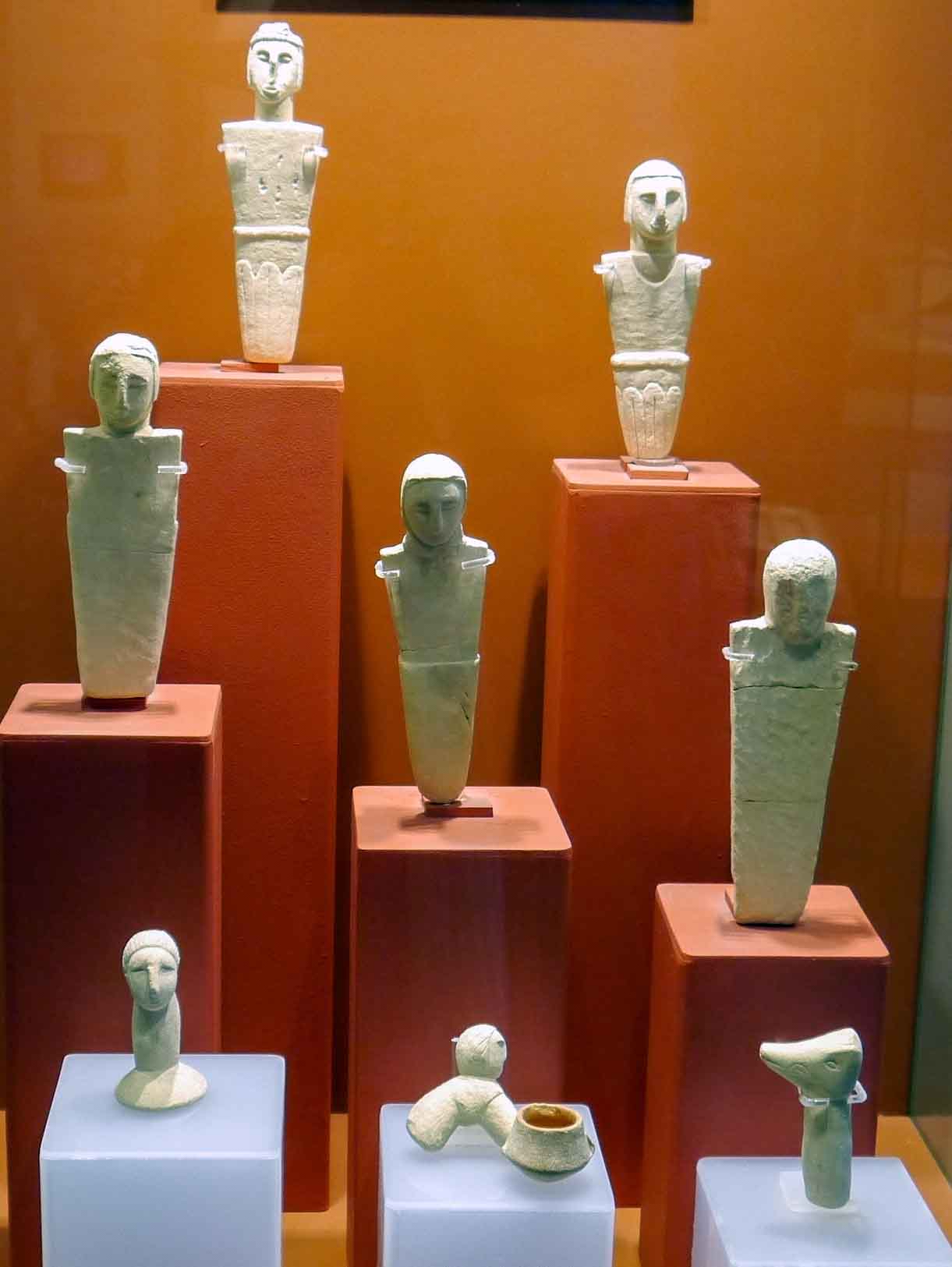
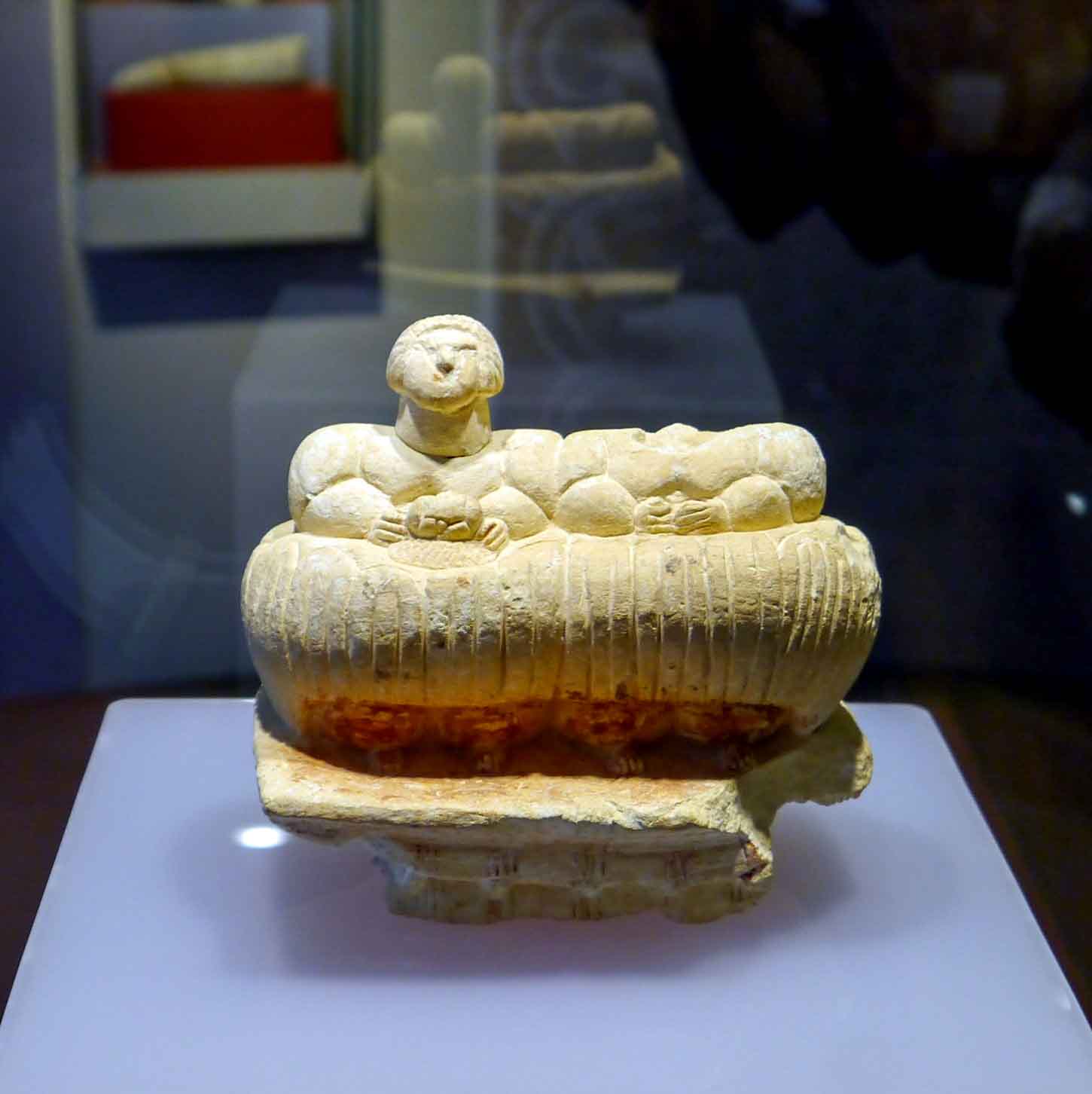
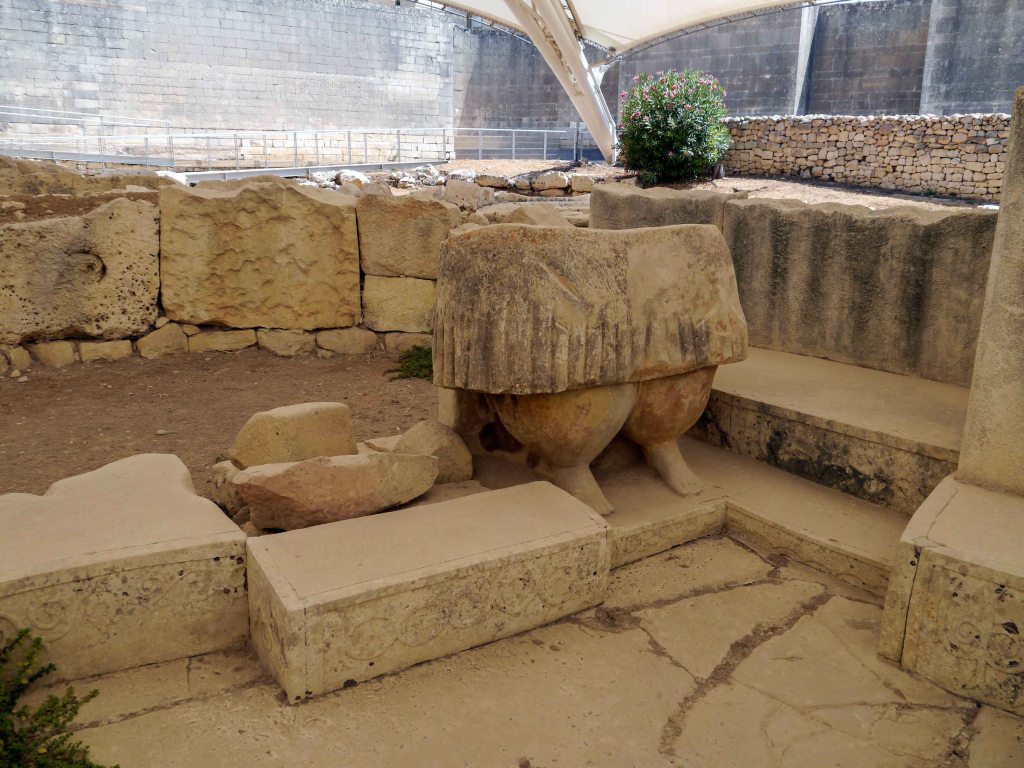
One prevalent type of statue found in the temples and tombs is known as the ‘Fat Ladies’. They have massive, rounded thighs and arms, while their hands and feet are noticeably small, almost doll-like. These figures are depicted in various poses: standing, seated on thrones, or squatting with their legs tucked to one side. Among them is a particularly charming figure referred to as the ‘Sleeping Beauty’, shown lying on her side with one hand under her head. These figures are typically adorned with pleated skirts and often lack heads. However, in some instances, there is a carved hole in place of the head, suggesting that it was likely interchangeable. These sculptures are commonly interpreted as fertility figures due to their plumpness.
Ta’ Ħaġrat, Ta’ Skorba, and Ġgantija, dating back to between 3600 BC and 3200 BC, are among the oldest temples. Situated on a plateau, Ta’ Ħaġrat and Ta’ Skorba offer panoramic views of the Maltese countryside. Notably, at Ta’ Skorba, the remains of several domestic huts were discovered. These buildings, constructed of stone and mudbrick, have an oval shape and an irregular rock floor. Within, alongside large quantities of pottery fragments and animal bone, remnants of stylized female figurines were also unearthed. Ġgantija is situated in a picturesque spot, offering a commanding view over Gozo’s central plateau. The site consists of two adjacent structures, each featuring separate entrances but sharing a façade. Inside each unit, five semi-circular chambers of various sizes flank a central corridor. The outer wall of the north temple complex is particularly impressive in its scale, with the largest megalith measuring 6 by 4 meters and weighing approximately 57 tones. The discovery of two plaster fragments with red ochre paint suggests that the internal walls were once adorned with plaster and paint. The presence of animal bones indicates communal rituals and feasting, while the existence of stone hearths attests to the use of fire. It is likely that the congregation gathered outside the monument during ceremonies, given the deliberate elevation of the large forecourt in front of the structures. Adjacent to Ġgantija stands the Xagħra Circle, a Neolithic funerary complex comprising a series of caves adapted to accommodate generations of burials. Evidence suggests this site served for burial purposes between 4000 BC and 2500 BC, with the caves collapsing prior to 2000 BC. Alongside a substantial quantity of human remains, archaeologists also discovered a diverse assortment of grave goods, including pottery, tools, and figurines. The Xagħra Circle provides intriguing insights into the funerary practices of the time, such as remains of a puppy with two children or a newborn cradled in its mother’s arms, offering new and intimate perspectives not previously attainable.

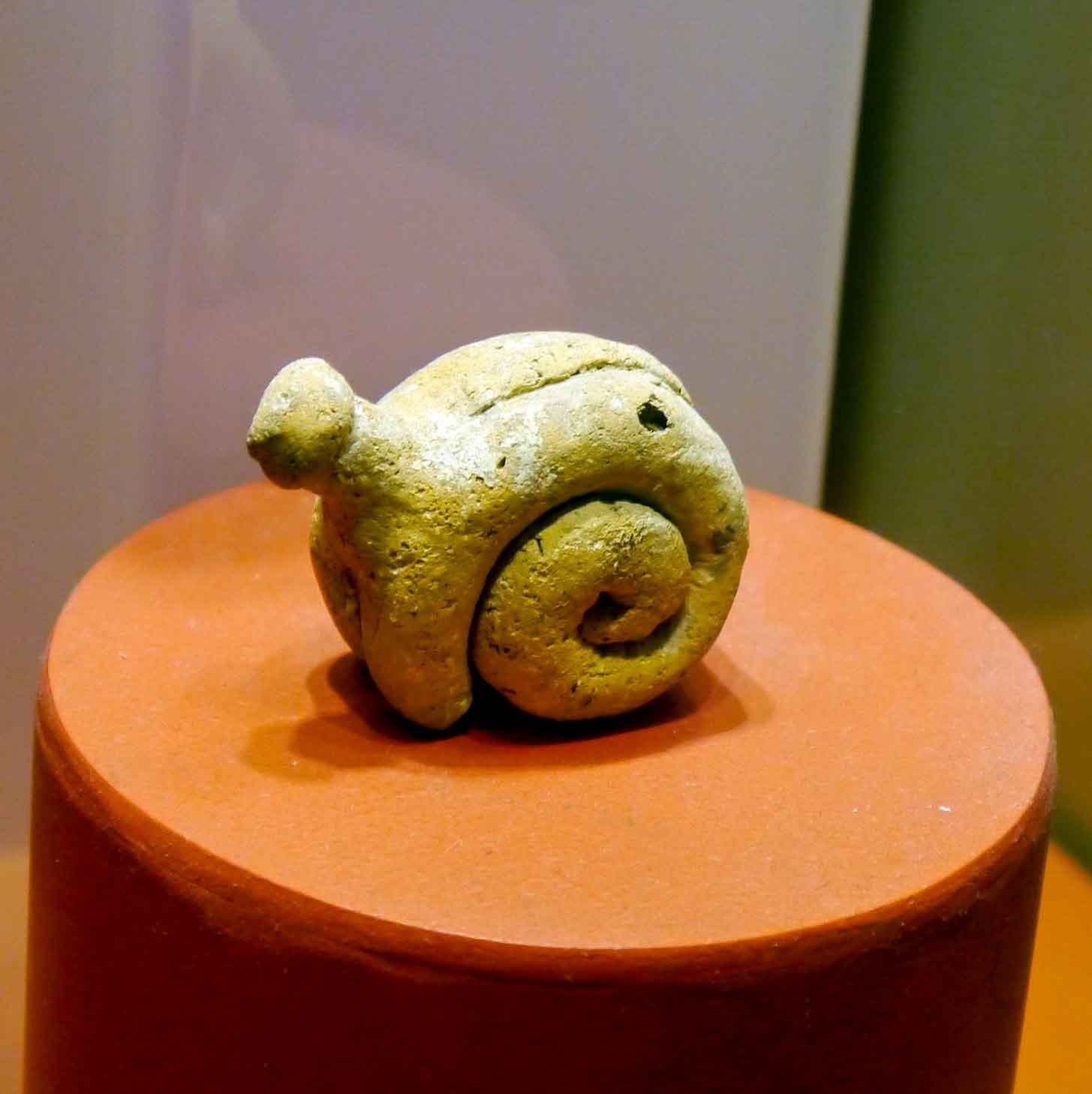
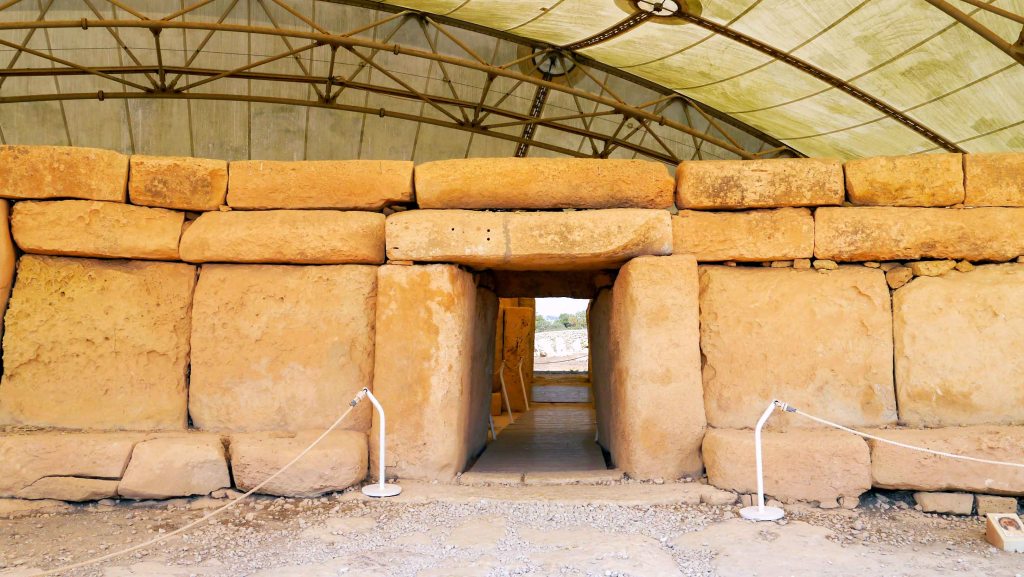
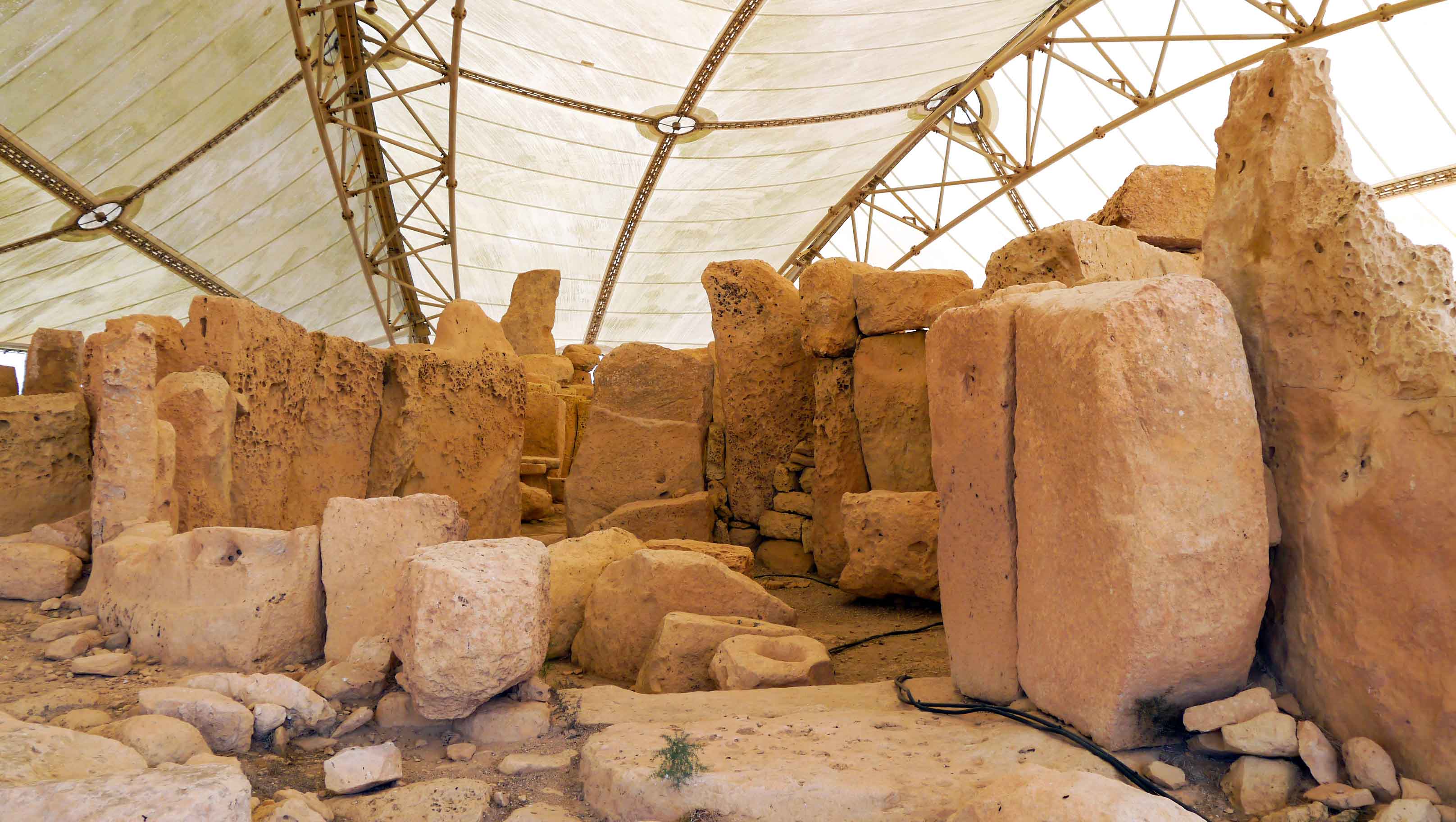
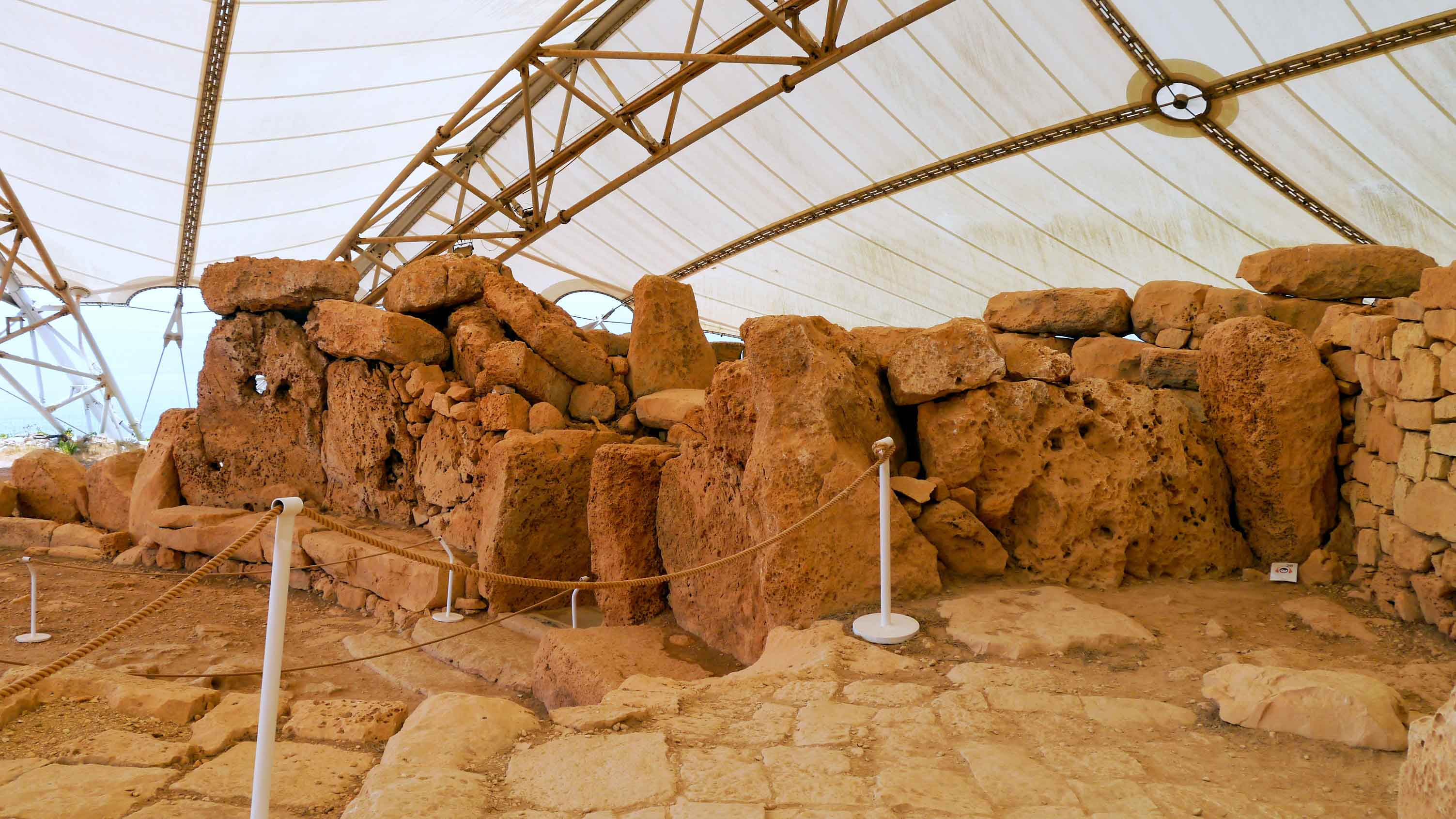
Ħaġar Qim and Mnajdra Temples are perched on a clifftop, offering a stunning view of the sea. To shield these ancient sites from the elements, permanent tent-like canopies have been installed. At Ħaġar Qim, extensive restoration work has been meticulously carried out, including the reconstruction of the façade of the main building with its trilithon entrance. This allows visitors a glimpse into its original appearance. Setting it apart from other Maltese temples, Ħaġar Qim features interconnected oval chambers arranged in a less uniform manner. Located a 500-meter walk downhill from Ħaġar Qim, Mnajdra follows a more typical layout. It consists of three adjacent buildings, each with a different orientation. What makes this site particularly intriguing is that the southern building is astronomically aligned. During the spring (20 March) and autumn (23 September) equinoxes, the rays of the rising sun pass through the main doorway, illuminating two decorated slabs in the main chamber. However, during the winter (21 December) solstice, sunlight highlights the right megalith flanking this doorway, while during the summer (21 June) solstice, it illuminates the left.


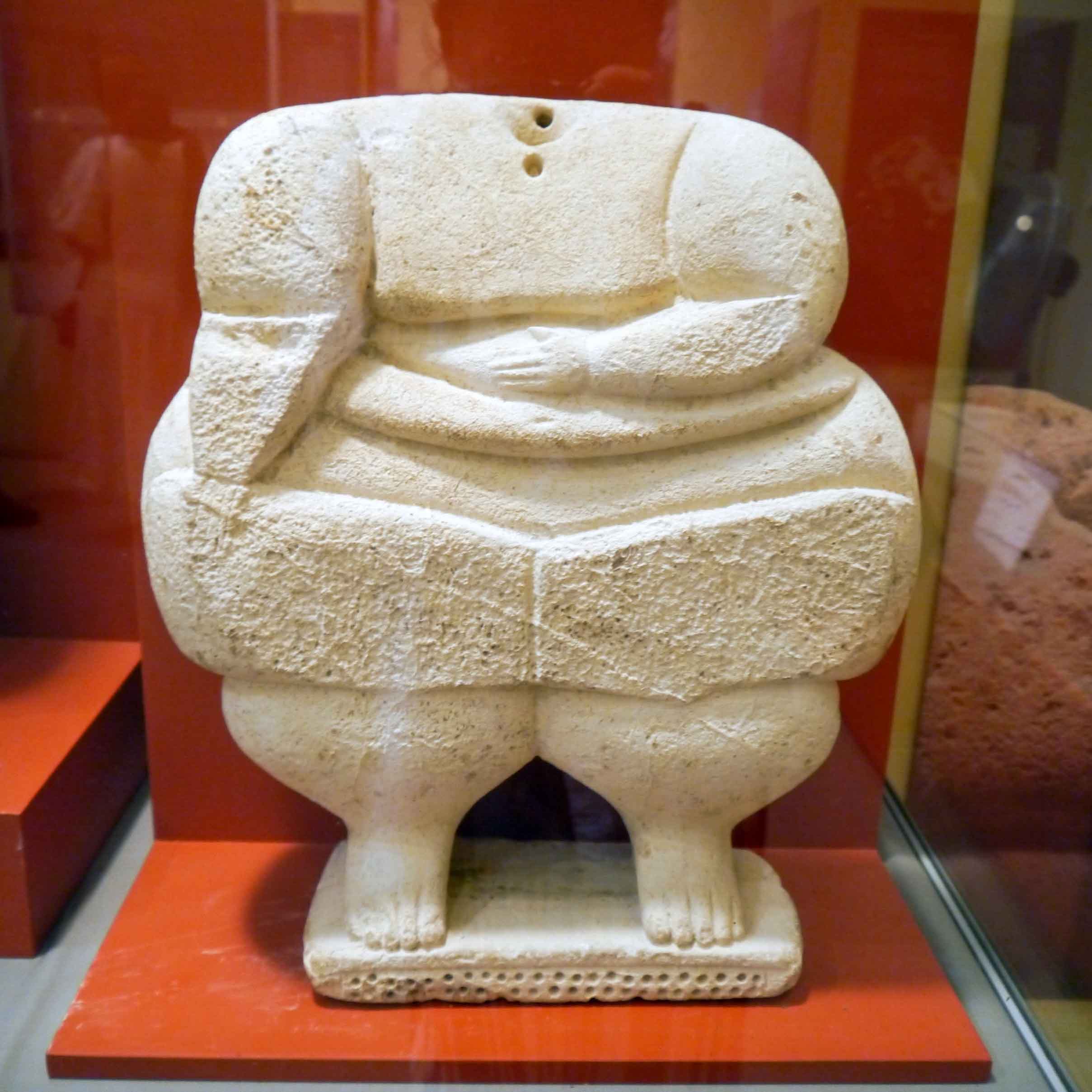
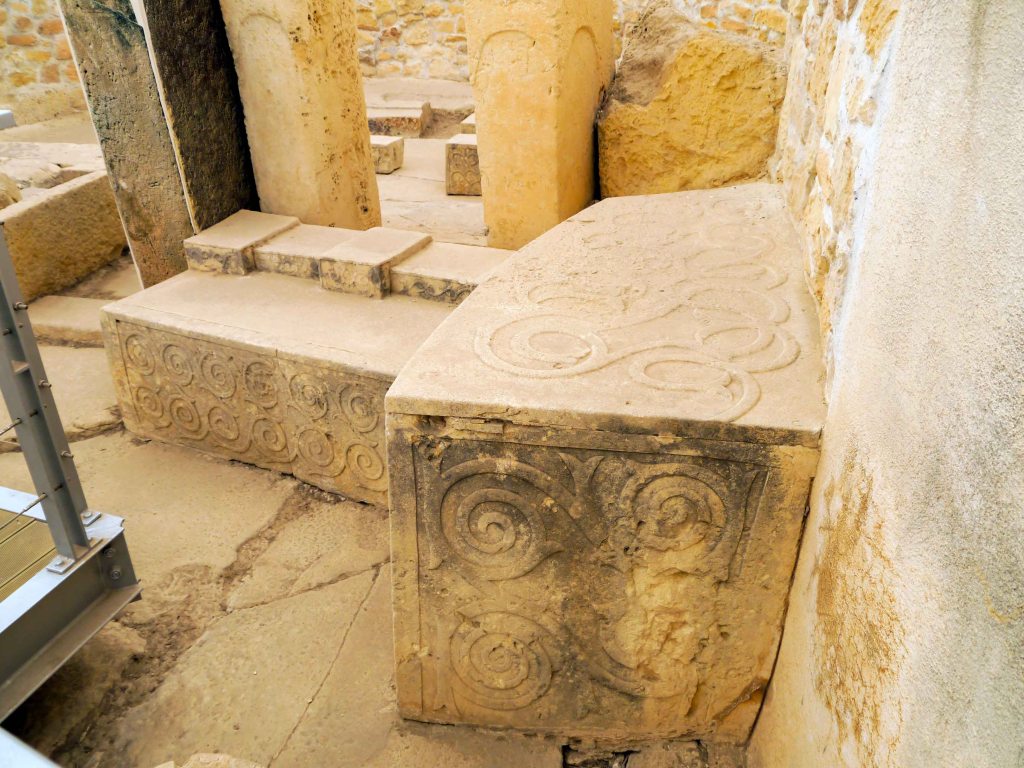
Tarxien, constructed between 3000 BC and 2500 BC, stands as the largest and one of the most recent temple complexes in Malta. The southern building is rich in prehistoric art, featuring carved stone slabs adorned with geometric motifs and depictions of various animals, including goats, bulls, and pigs. The significant quantity of animal bones discovered in these temples, many of which were stored in special niches, suggests that animals played an important role in the rituals conducted within these buildings. Notably, the temple houses the remnants of a huge ‘Fat Lady’ statue wearing a pleated skirt. Nearby, the Ħal Saflieni Hypogeum is a vast Neolithic subterranean burial complex, carved from solid rock and organized across three distinct levels. This complex was used over the course of many centuries, with the earliest remains dating back to around 4000 BC and the most recent to the Early Bronze Age, approximately 1500 BC. It is estimated that as many as 7000 individuals may have been interred here. The middle level features some of the most renowned aspects of the hypogeum. Certain chambers exhibit intricate decorations, including spiral and honeycomb designs in red ochre, a mineral pigment. These decorations represent the only instances of prehistoric wall paintings discovered on the Maltese Islands. Additionally, some of the chambers showcase carved features reminiscent of architectural elements commonly found in contemporary megalithic temples.


PS. One of the megalithic temples, Buġibba, is situated in the garden, right next to the swimming pool of a Maltese resort, Dolmen Hotel in St Paul’s Bay.
Sources
https://heritagemalta.org/
 Trespasser-on-Earth