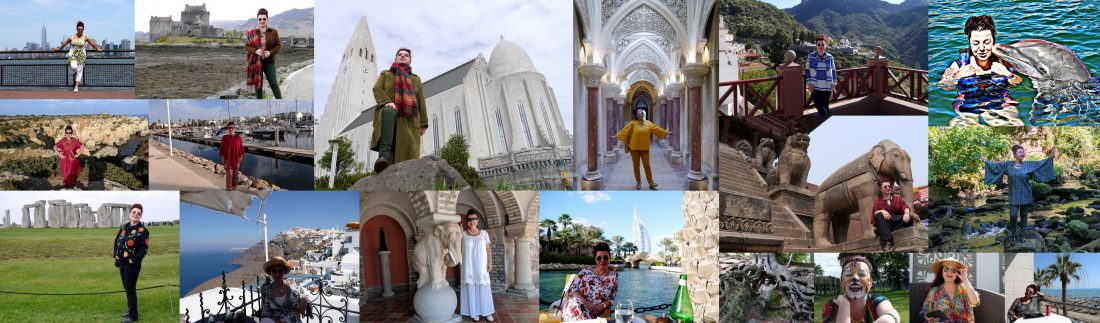
El Jadida, on Morocco’s Atlantic coast, offers long stretches of soft, sandy beaches as well as the chance to step back in time to a historic trading post and fortified city.
Contents:
Portuguese City of Mazagan
In 1502, the Portuguese established a settlement on this land, constructing a fortified town they named Mazagan. Over time, the town evolved into a prominent trading hub, connecting Europe and the East. However, in 1769, Sultan Mohammed ben Abdallah (reign: 1757-1790) expelled the Portuguese from Mazagan, resulting in its destruction as they fled. The Sultan subsequently founded the town of Mogador (Essaouira) to facilitate the resumption of trade. In the early 19th century, Mazagan was repopulated by local Arab tribes and a sizable Jewish community from Azemmour, leading to its renaming as El-Jadida [The New].
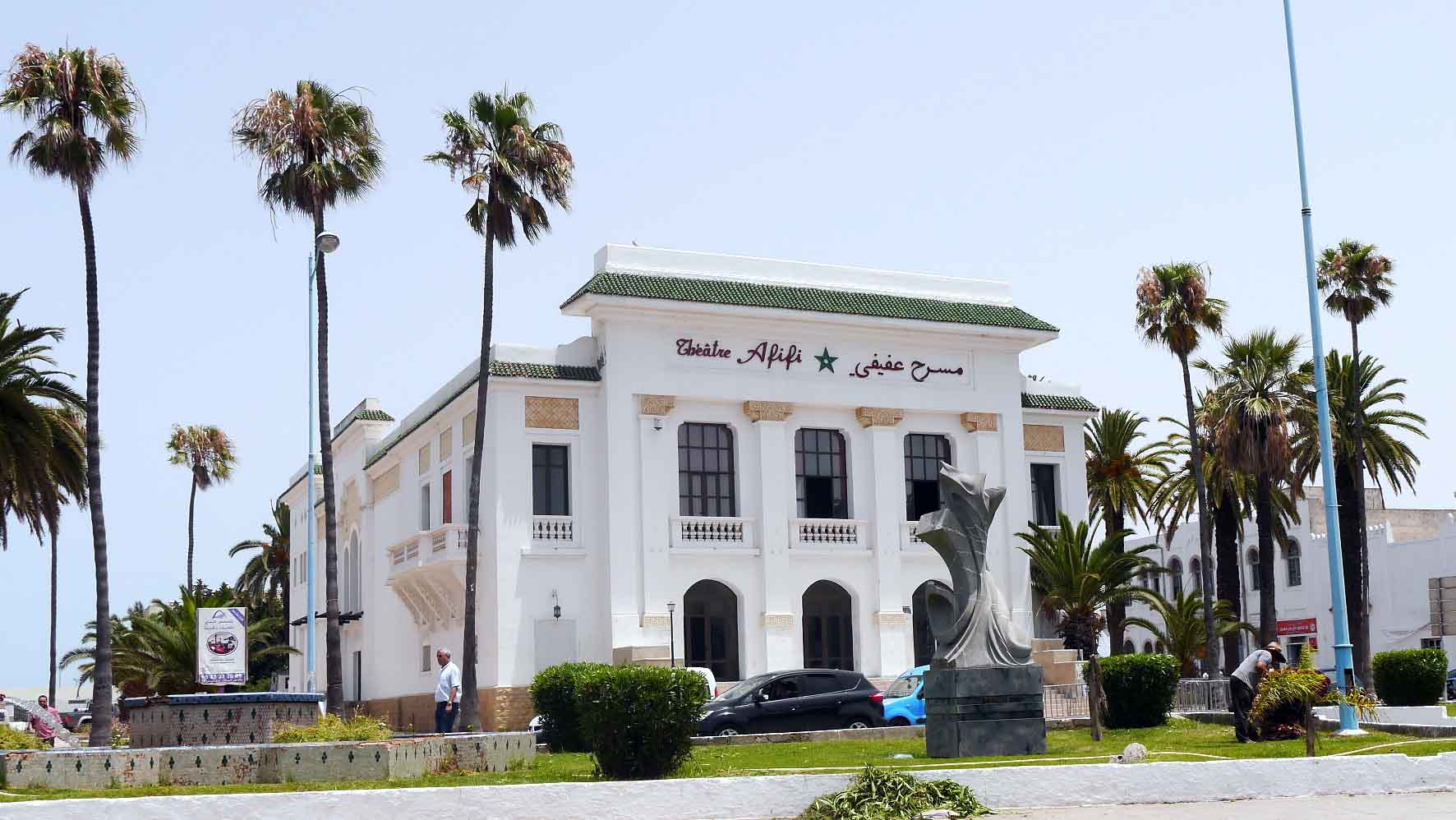
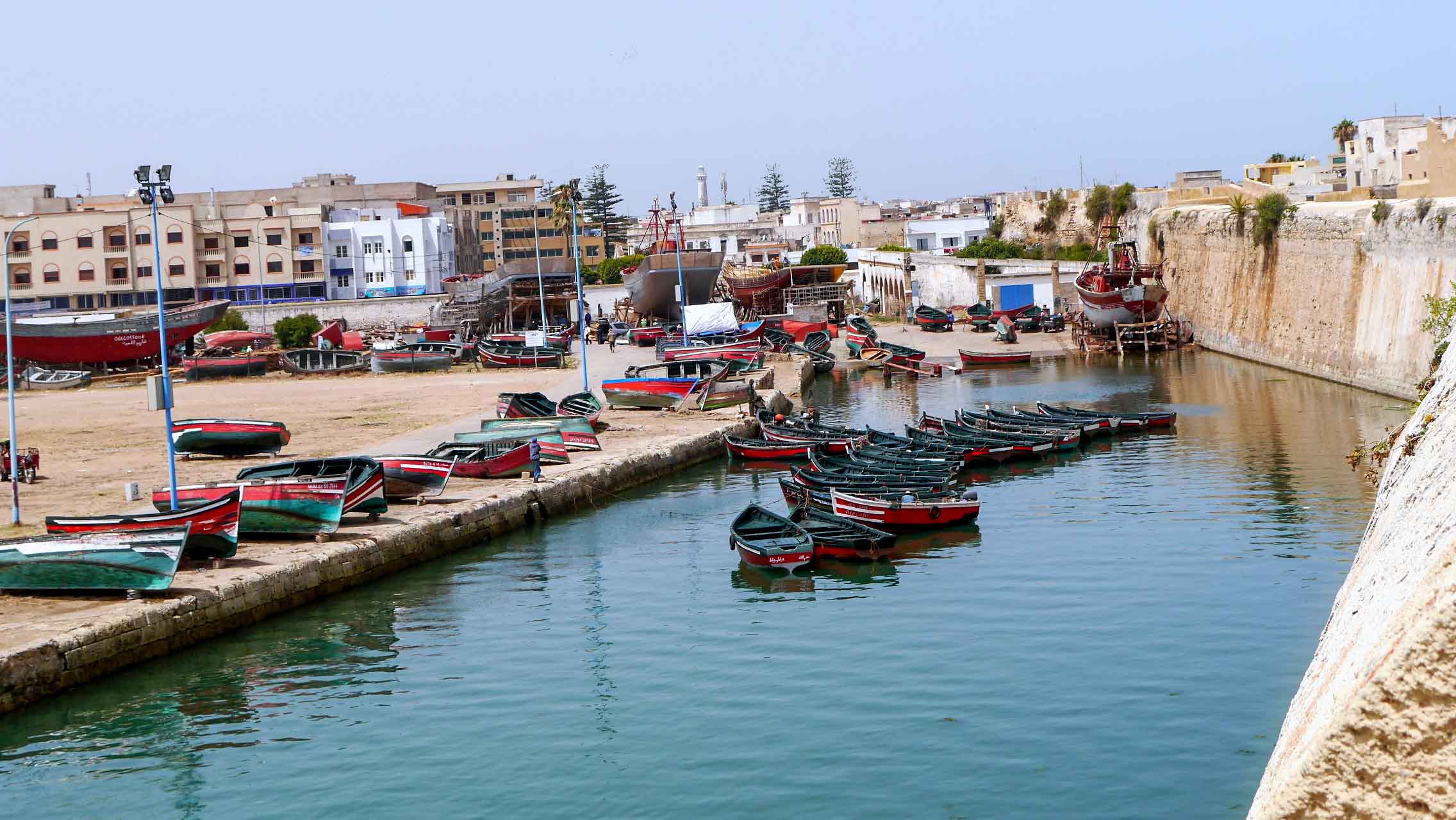

Portuguese City of Mazagan
The old town of El Jadida, known as the Portuguese City of Mazagan [Cité Portugaise Mazagan] holds the distinction of being one of the ‘Seven Wonders of Portuguese Origin in the World’. Recognized for its remarkable historical significance and well-preserved architectural heritage, Mazagan was inscribed as a UNESCO World Heritage Site in 2004. However, regrettably, the town appears desolate, with only a few tourists wandering through its streets.
Upon entering the main gate of the old town, visitors will find the 16th-century Church of the Assumption and the Grande Mosque, featuring its unique five-sided minaret. One of the most interesting attractions in the old town is the Portuguese Cistern. Initially constructed by the Portuguese in 1514 as an armory, this underground vaulted structure was later converted into a cistern after the citadel’s expansion in 1541. The columns and arches, both real and reflected in the water, create a pretty optical illusion. Its captivating ambiance captured the attention of Orson Welles, who chose this location for the dramatic riot scene in his 1951 film, Othello.
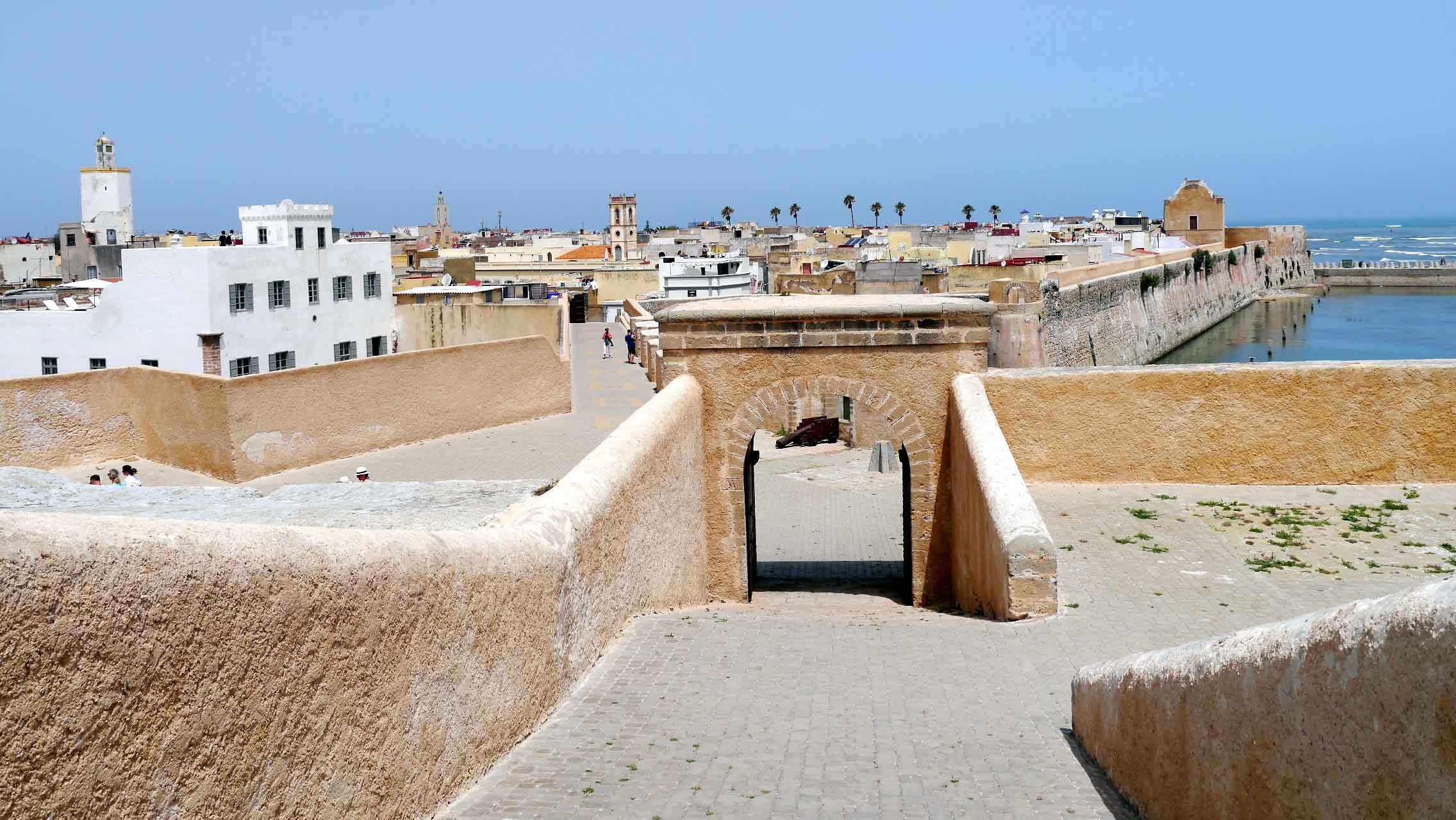
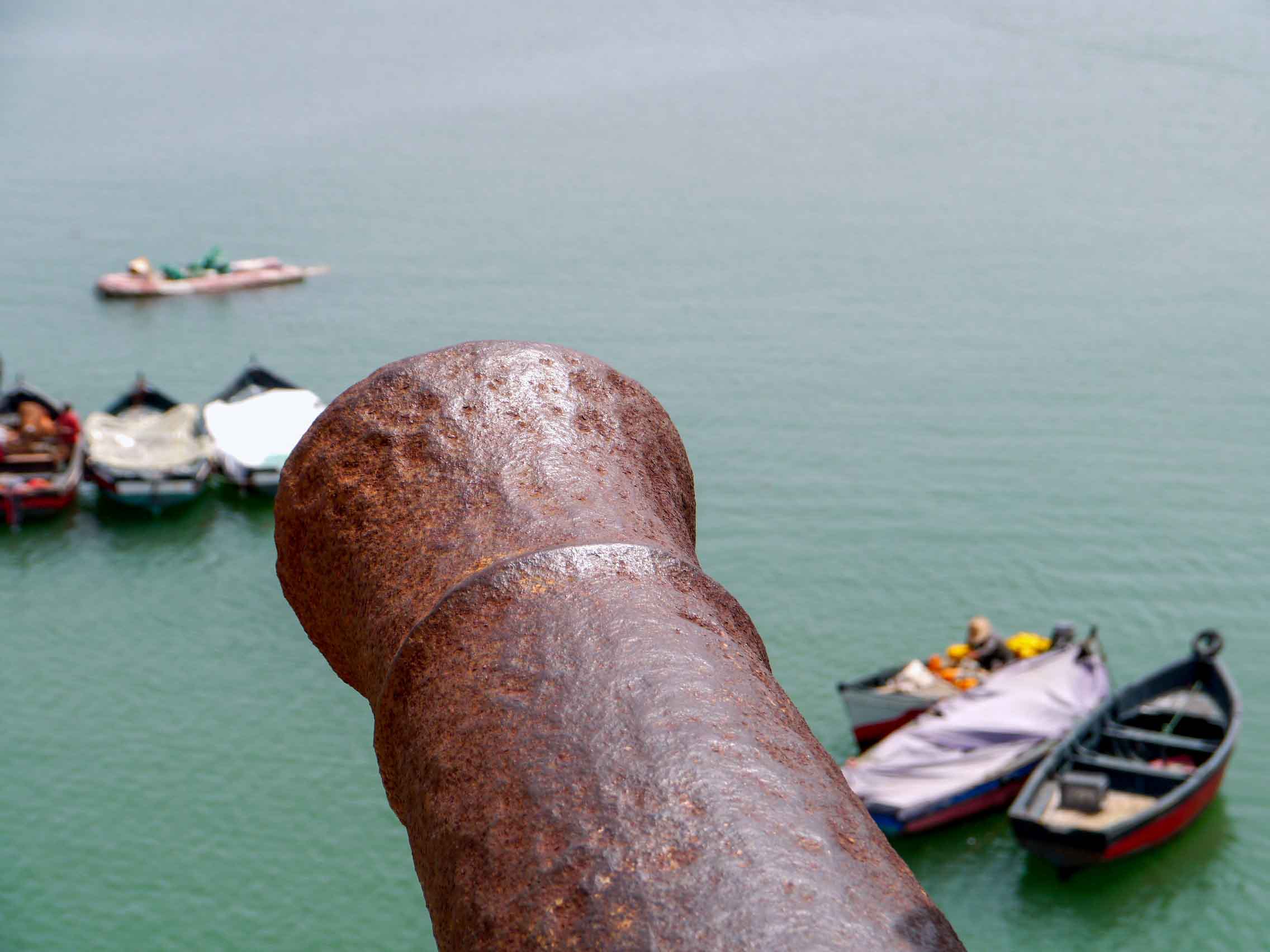
The walls of the old town were originally fortified with five bastions, but only four of them were rebuilt after the retreating Portuguese destroyed the town. The Bastion of St Sébastien, which once served as the seat of the Inquisition’s tribunal and prison, stands as a reminder of its history. Additionally, as a tribute to the Jewish community that once thrived here, the Star of David symbol can still be seen on the façade of the nearby ruined synagogue. The Bastion of l’Ange offers great views of the old town, the harbor and the ocean.



Sources
https://www.visitmorocco.com/en/travel/el-jadida-mazagan
 Trespasser-on-Earth