Tanit was a chief goddess of Ancient Carthage, revered as a sky goddess who ruled over the sun, moon, and stars, as well as a mother goddess of fertility. She was also honored as the goddess of wisdom and civilization and served as the protector of towns and homes where she was worshipped.
Ancient Carthage, initially founded as a small Phoenician outpost in North Africa in 814 BC, evolved into a formidable city-state over time. The Phoenicians, originating from the Levant – the eastern coast of the Mediterranean – were skilled seafarers and navigators who engaged in extensive trade across the Mediterranean. They dominated commerce throughout classical antiquity, establishing a vast maritime trade network that lasted over a millennium. This network not only facilitated economic expansion but also enabled cultural exchanges among the major cradles of civilization. To secure their trade routes, the Phoenicians established strategic trading posts across the Mediterranean, including Carthage. Gradually taking control of these remote and scattered trading hubs, by the 7th century BC, Carthage had become strong enough to exert control over Western Mediterranean trade and establish its own colonies. By the 5th century BC, it had emerged as an independent state, a distinct power separate from its Phoenician ancestry. From that time, Carthaginians were referred to as the Punic people, having developed a unique identity, economy, and political structure. As its wealth increased and its culture flourished, Carthage evolved into a major metropolis, reaching a population of approximately 500,000 at its peak. Carthage’s prosperity, backed by a powerful navy and a firm grip on trade, posed a significant threat to rival powers, particularly Rome. This rivalry culminated in the Punic Wars, a series of conflicts between the Roman Republic and Carthage from 264 to 146 BC. Ultimately, Carthage was razed to the ground by the Romans in 146 BC, marking the end of its dominance.
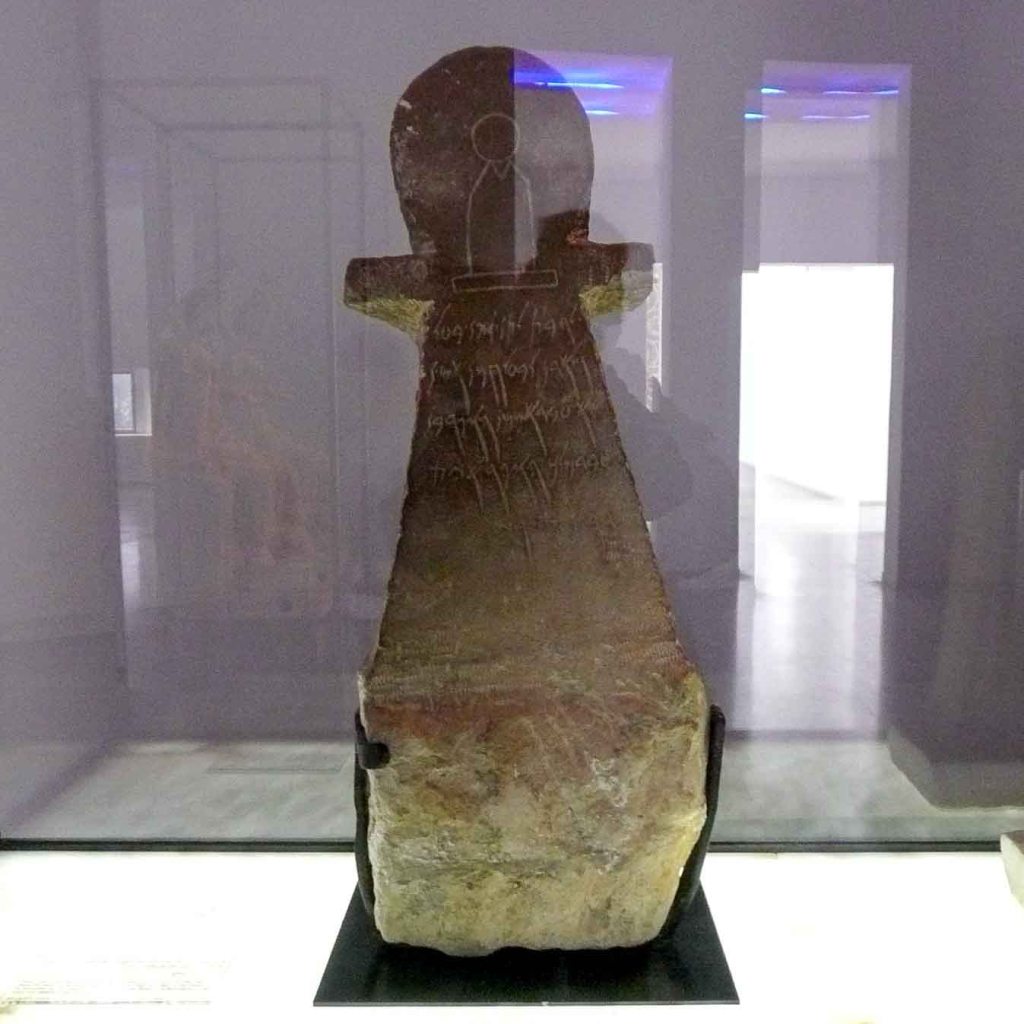
The worship of Tanit first appeared in the Carthaginian region in the 5th century BC, initially as the consort of Baal-Hamon, the storm god, who was regarded as the supreme deity. However, Tanit soon eclipsed the more established cult of Baal-Hammon and was frequently listed before him on religious inscriptions and monuments. She was often invoked in times of crisis, and her influence extended beyond religious practices into political and military affairs. Her worship involved elaborate rituals and ceremonies, including offerings of food, incense, and valuable goods, as well as the dedication of inscribed stelae bearing her symbol. Some archaeological evidence suggests that child sacrifice may have been performed in her honor, though this remains a subject of scholarly debate. Ancient North Africans often placed her symbol on tombstones, homes, and temples to invoke her divine protection and blessings. As Carthaginian influence expanded across the Mediterranean, Tanit’s worship spread to other regions – including the Iberian Peninsula, Malta, and Sardinia – carried by traders, settlers, and soldiers. In these areas, archaeologists have uncovered numerous artifacts, including votive stelae, amulets, and figurines bearing her image, demonstrating the widespread and enduring appeal of her cult beyond Carthage itself.
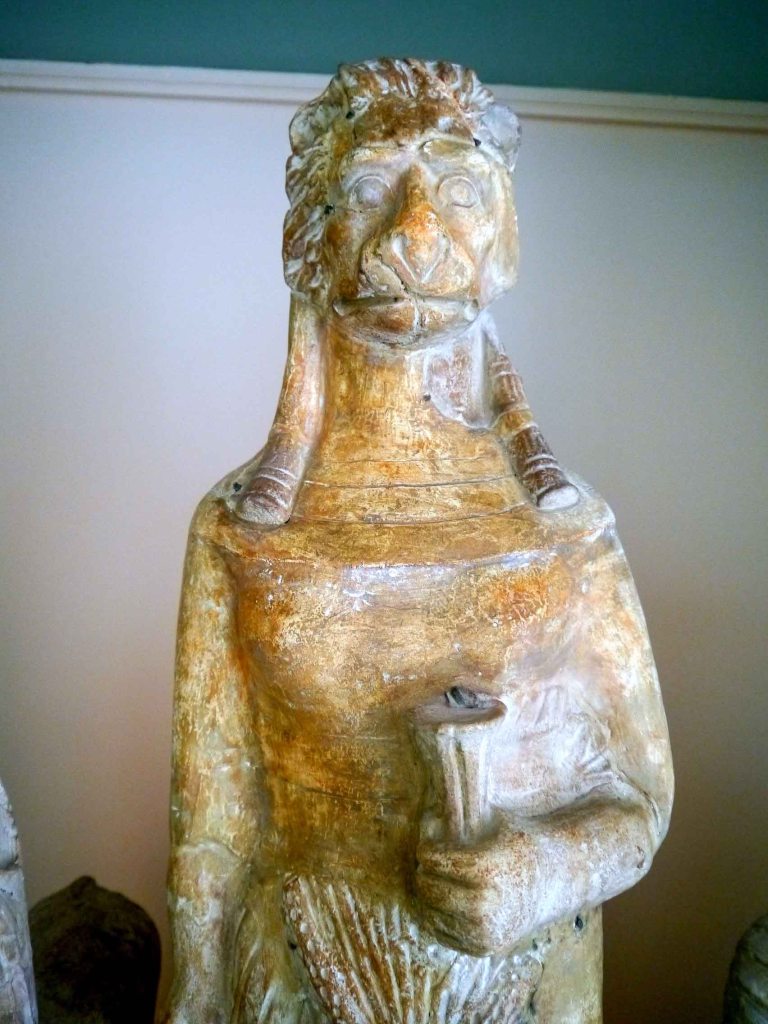
Tanit had her own distinctive symbol, known as the ‘Symbol of Tanit’: a triangle sitting on its base, with a circle at the top and a horizontal line between the two. Sometimes, two additional vertical bars extend from the ends of the horizontal line. Some stelae depict a more realistic representation of the goddess in this worshiping posture. She is also occasionally represented by an inverted crescent moon joined to the disc of the sun. Tanit’s other symbols include the palm tree (a desert version of the tree of life), grapes and pomegranates (both symbolizing fertility), the serpent, and the dove. As a protective deity, she was sometimes depicted riding a lion or holding a lance. In some statues from the later period of Carthage, Tanit was even portrayed with the head of a lion. These representations suggest that she was at times associated with warrior deities, embodying strength, power, and divine authority.

Tanit has inspired numerous cultural references across literature, music, and visual arts, reflecting her enduring legacy as a powerful and revered deity. In modern popular culture, she is referenced in fantasy novels, video games, and esoteric spiritual movements that draw inspiration from ancient goddess worship. One of the most notable depictions of Tanit appears in Gustave Flaubert’s historical novel Salammbô (1862), which immerses readers in the opulent and mystical world of ancient Carthage. In the novel, she is portrayed as an omnipresent divine force, deeply intertwined with the fate of the city and its people. Flaubert presents Tanit in a mystical and evocative manner, emphasizing her role as a celestial and maternal deity associated with the moon, fertility, and protection.
Today, several museums in Tunis house artifacts from Punic times, offering valuable insights into the culture, religion, and daily life of ancient Carthage. Among the most significant artifacts are those related to Tanit, whose worship was deeply embedded in Punic religious practices. Notable institutions preserving Tanit-related artifacts include the Carthage Museum, located on Byrsa Hill near the ruins of ancient Roman Carthage. This museum showcases an extensive collection of Punic relics, including funerary stelae bearing Tanit’s symbol, votive offerings, and inscriptions that provide evidence of her widespread veneration. Another important institution is the Bardo Museum in Tunis, one of the largest archaeological museums in North Africa. It holds a selection of artifacts from the Punic era, including religious figurines, votive stelae, and bronze amulets depicting Tanit’s iconography. The Archaeology Museum of Nabeul is particularly noteworthy for its collection of terracotta statues representing Tanit with a lion’s head. These striking sculptures highlight her dual nature as both a nurturing mother goddess and a formidable protector. The museum also houses additional Punic-era relics, including ceramic vessels, ritual objects, and decorative items that provide further context for Tanit’s role in Carthaginian society. Through these collections, visitors can explore the profound influence of Tanit and gain a deeper understanding of the spiritual and artistic heritage of ancient Carthage.
Sources
http://www.bardomuseum.tn
https://carthagemagazine.com/carthage-national-museum
https://www.patrimoinedetunisie.com.tn/en/museums/the-museum-of-nabeul/over-view
 Trespasser-on-Earth