Kenilworth Castle, now a ruined medieval castle, was once the setting for Robert Dudley’s seductive reception held for Queen Elizabeth I.
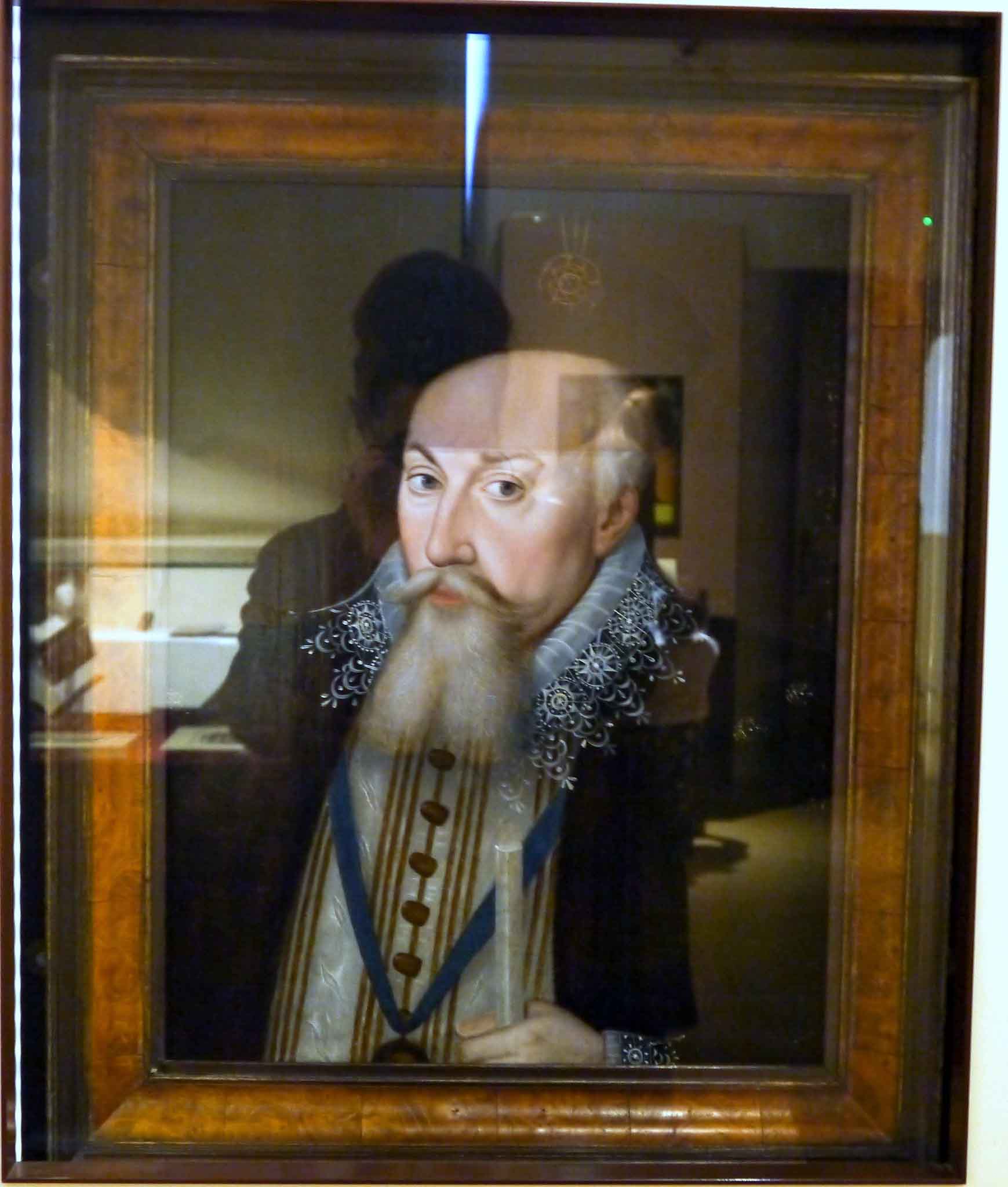
Queen Elizabeth (reign: 1558-1603) had known Robert Dudley (1532-1588) since childhood. Just a day after ascending to the throne, she appointed him as her Master of the Horses. Apart from the prestige associated with the role, this position required him to accompany her on all her travels. News of the queen’s deep affection for Dudley quickly spread throughout Europe, with rumors stating that “she is in love with Lord Robert and never lets him leave her”. Additionally, Queen Elizabeth bestowed upon her favored courtier Kenilworth Castle and the title of Earl of Leicester. Dudley became one of the greatest landowners in West Midlands and North Wales through royal grants.
Despite Elizabeth’s young age she was under pressure to marry. However, her relationship with Dudley was politically undesirable and, crucially, Dudley was already married. During that time, rumors circulated that Dudley intended to poison his wife in order to marry the queen. Then, one evening, his wife was discovered lying dead at the base of the stairs, her neck broken. While the subsequent inquest determined her death to be accidental, the sudden demise of his wife fueled speculations of foul play and presented an additional obstacle to their potential union.
On several of Elizabeth’s annual royal ‘progresses’, Dudley welcomed her and her entourage at Kenilworth Castle. However, it was during her final visit in 1575 that the entertainment at Kenilworth pushed the boundaries of spectacle to their limits.
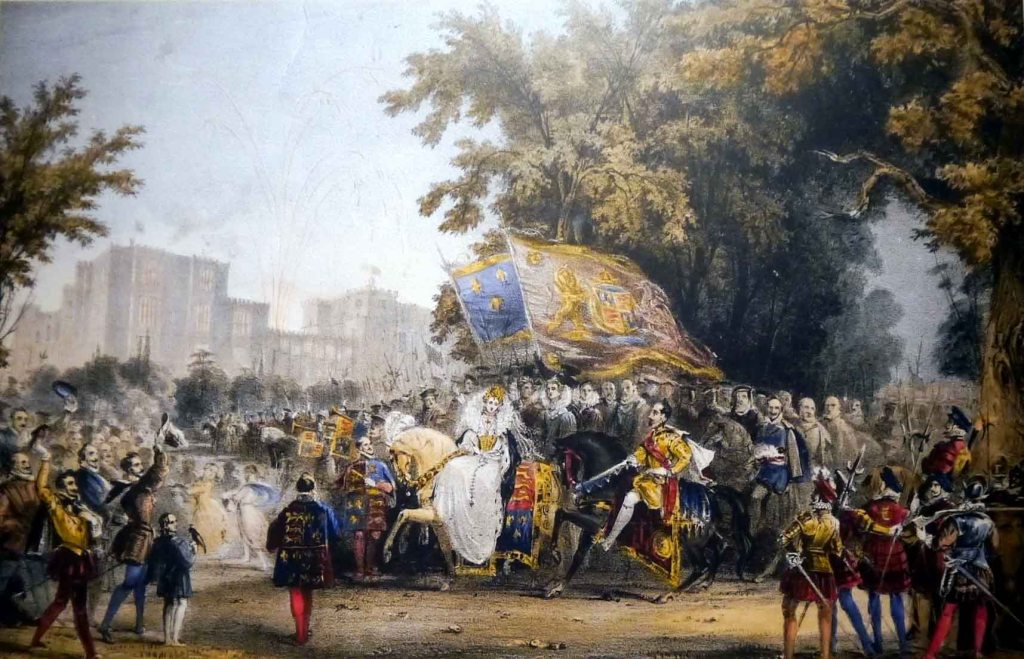
Two eyewitness accounts of the events during the royal visit have survived to this day. George Gascoigne’s ‘The Princely Pleasures, at the Court at Kenilworth’ provides a detailed description of the courtly entertainments. While, Robert Langham’s pamphlet, presented as a letter, offers a more general description of the festivities, including the local non-courtly performances. Langham’s account of the summer progresses has helped many historians and writers in envisioning the celebrations that greeted the queen upon her arrival at the great estates.
“The stately seat of Kenilworth Castle, the rare beauty of building… every room so spacious, so well belighted… in daytime, on every side so glittering by glass; at night, by continual brightness of candle, fire, and torchlight, transparent through the lightsome windows”
Robert Langham: A Letter (1575)
The festivities encompassed a variety of sporting and theatrical shows, including staged ‘skirmishes’ or mock battles on both land and water, tilting where opponents on horseback charged each other with lances, and bear-baiting. These spectacles were accompanied by culinary extravagance, dancing, diverse performances, fireworks, and ceremonial gunfire. Elizabeth and Dudley additionally shared a mutual passion for hunting, often embarking on rides together in the ancient forests surrounding Kenilworth.
Many of the performances witnessed by the queen served as thinly veiled declarations of Dudley’s unwavering devotion to her and as pleas for her hand in marriage. In the most explicit of the planned performances, the goddess Diana, representing chastity, and Iris, symbolizing marriage, were meant to engage in a debate over who should lay claim to the nymph named ‘Zabeta’ (a nickname for Elizabeth). The performance was designed to culminate in a direct appeal to the queen: “How necessarie were for worthy Queenes to wed”. However, on the day of the event, the play never took place, with inclement weather being blamed for its cancellation. It is more likely, though, that Elizabeth herself felt Dudley was pushing boundaries too far and thus banned the performance.
Although the marriage between Elizabeth and Dudley never materialized, their bond remained strong throughout their lives. Elizabeth’s deep affection for Dudley may even have acted as an emotional barrier, preventing her from marrying anyone else. Eventually, the queen become renowned as the Virgin Queen, devoting herself solely to her country.
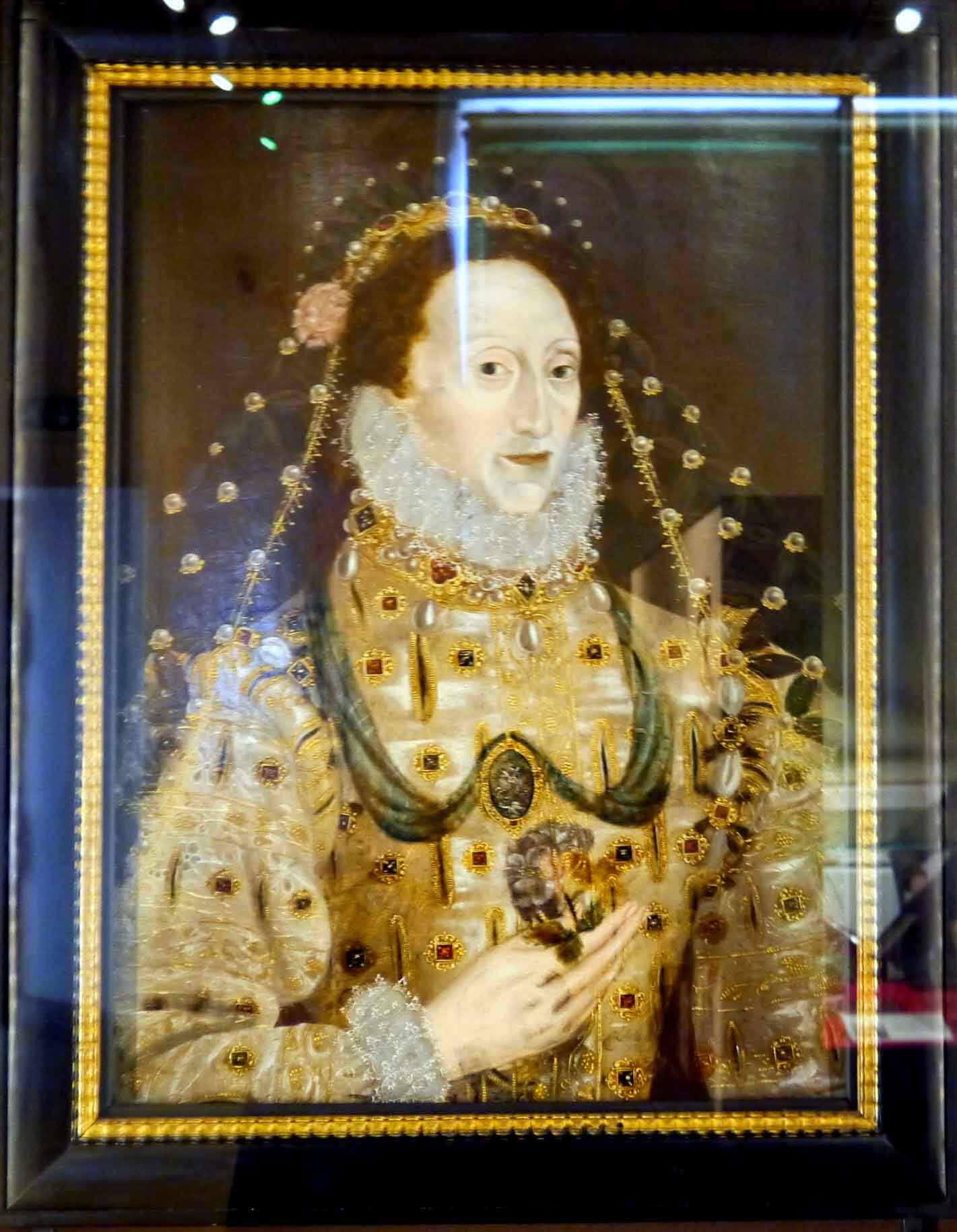
The portrait of Queen Elizabeth displayed in Leicester’s Gatehouse at the castle is intentionally left unrestored to reveal its hidden history, making it an intriguing piece. Examination of the surface has uncovered paint losses that indicate the queen’s features were originally painted over another woman. Further investigation has revealed that the original depiction of the queen showed her holding a serpent. Serpents often symbolize wisdom and prudence but can also allude to the concept of the original sin. Perhaps due to this double meaning, the serpent was subsequently painted over with a bunch of roses.
Sources
Robert Langham (1575) A Letter: Wherein, part of the entertainment unto the Queen’s Majesty, at Kenilworth Castle, in Warwickshire, in this summer’s progress, 1575, is signified: from a friend officer attendant in court, unto his friend a citizen, and merchant of London
https://www.english-heritage.org.uk/visit/places/kenilworth-castle/
 Trespasser-on-Earth