Edinburgh’s Beltane Fire Festival takes place on the 30th of April every year at Carlton Hill. This lively event, rooted in ancient pagan traditions, marks the beginning of summer.
The current festival derives from the pre-Christian May Day festival in Scottish and Irish Gaelic traditions. Typically, it took place midway between the spring equinox and the summer solstice, with the blooming of the hawthorn serving as the primary indicator, as stated by certain sources.
The festival served as a celebration of the fertility of their lands and cattle, coinciding with the seasonal migration of their animals to the summer pastures. At its core, the festival revolved around the sacred fire, which bestowed its name, ‘beltane’, derived from the Gaelic-Celtic term for ‘sacred fire’. Initially, all fires within the community were extinguished, and then a new sacred ‘Neid Fire’ was ignited by the village leader. Using this flame as a source, two bonfires were kindled, and the community’s animals were driven between them. It was believed that the smoke and flames from these fires would purify the herd, protecting them in the upcoming year and ensuring their fertility. Additionally, villagers would take embers from the sacred fire to relight their own hearths, followed by dancing in a clockwise direction around the fire to bring good fortune to their families.
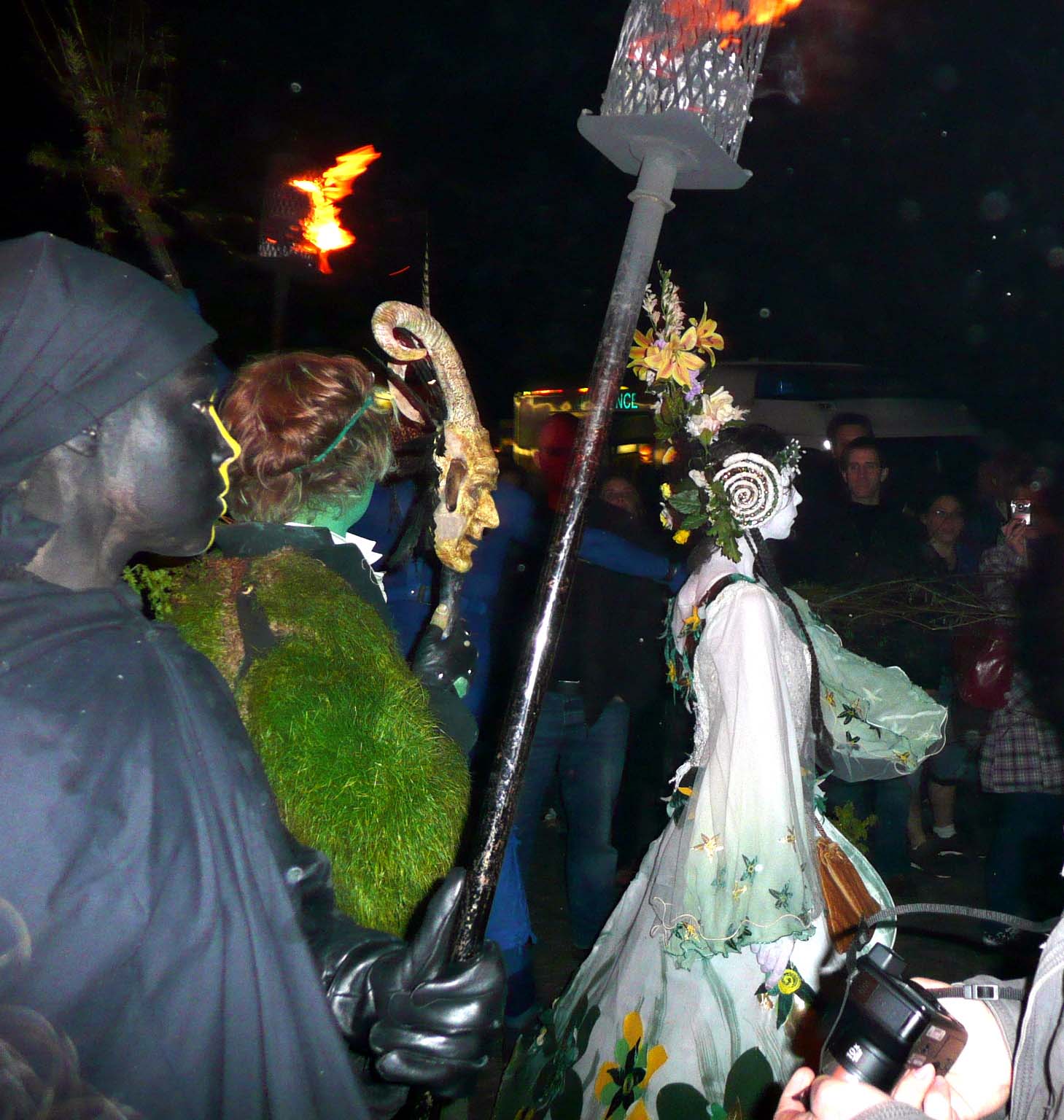
The contemporary Beltane Fire Festival in Edinburgh is a revival of this ancient Gaelic tradition, first held in 1988. Since then, it has grown to become the largest fire festival of its kind. During the vibrant evening of fiery celebrations, whimsical characters parade and dance to the rhythmic beats of pounding drums, illuminated by flickering flames. The festival features an array of characters, ranging from traditional to modern.
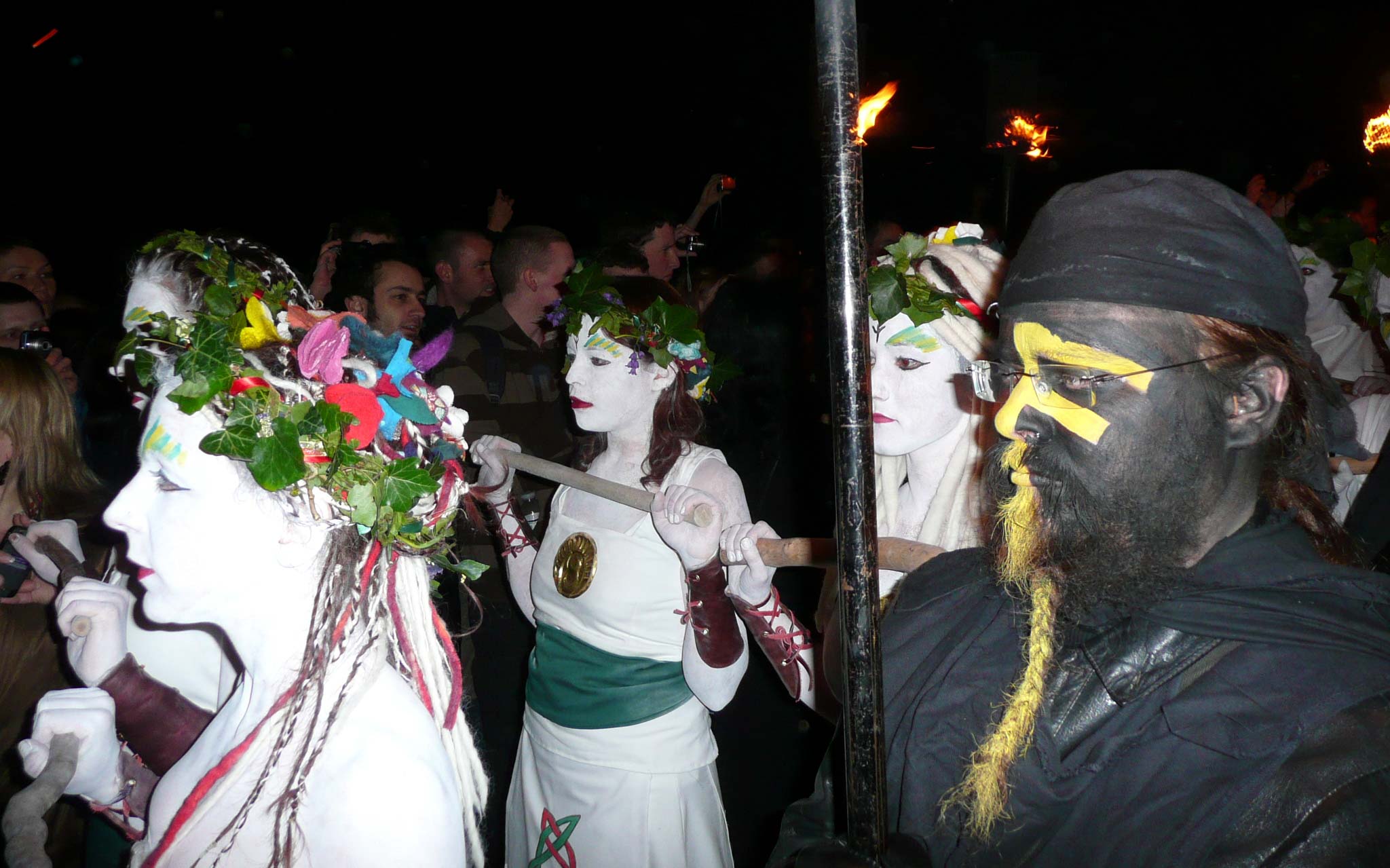
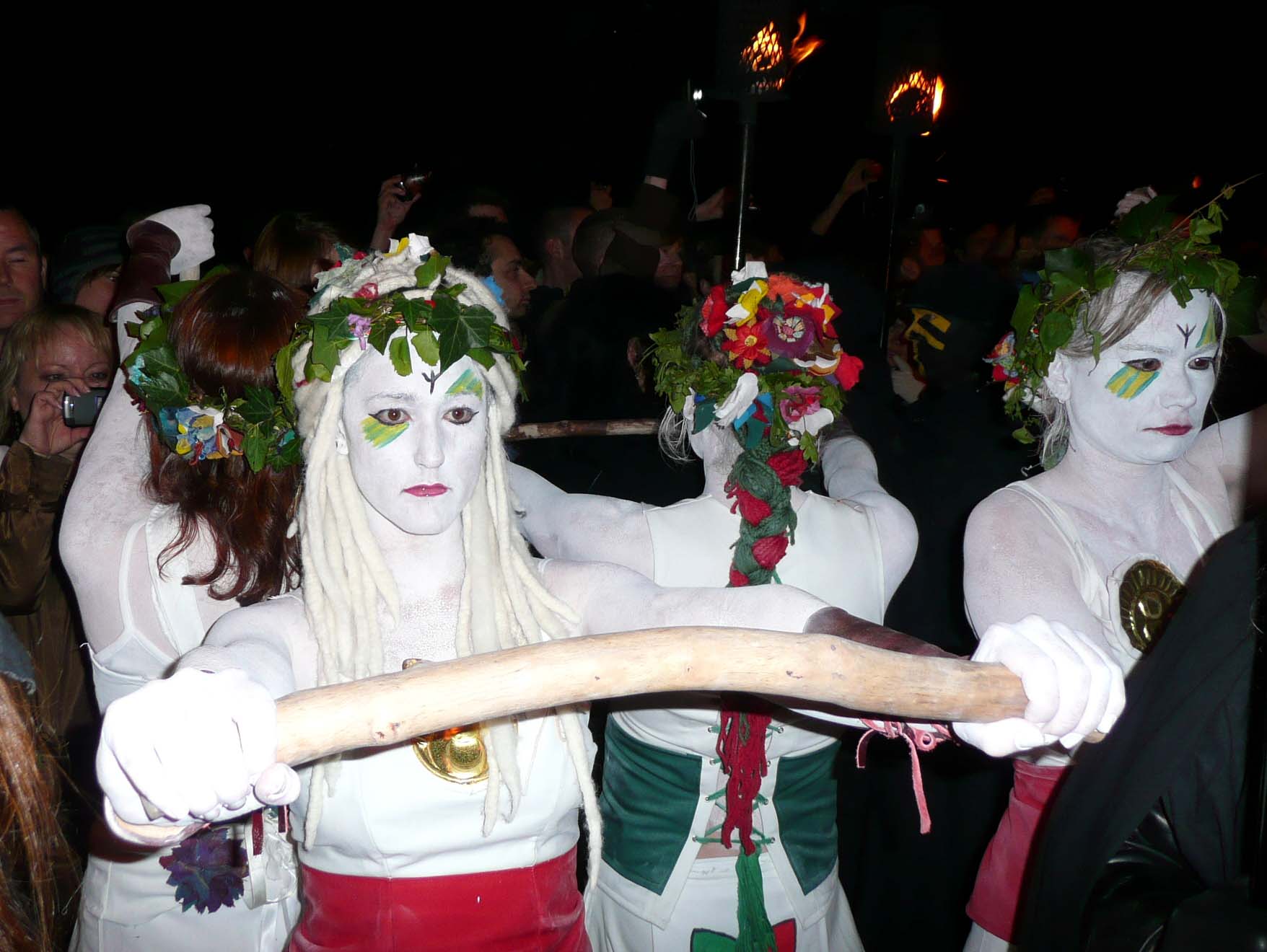
The procession is led by the May Queen, symbolizing purity, strength, and the potential for growth. She embodies the energy of the earth and encompasses all aspects of existence. Accompanying her is the Green Man, dressed in ivy, leaves, and flowers, representing the vibrant spirit of spring vegetation and embodying the essence of fertility. Initially, at the start of the procession the Green Man takes on the form of the Horned God. Following closely behind are the White Women, led by the Queen’s four Handmaidens (North, South, East, and West). Serving as guardians and caretakers of the May Queen, the White Women symbolize order and discipline. The procession is also accompanied by drummers and torchbearers. Through their journey, they encounter various groups that either aid or hinder their progress towards the Green Man’s fate and the May Queen’s destiny. Notably, the Red Men and the Red Beastie Drummers attempt to disrupt the procession with their wild and lascivious behavior. Their energy stems from rebirth, introducing chaos and disorder.
The procession begins at the National Monument, known as the Acropolis among Beltaners, and proceeds counterclockwise along the path through the Fire Arch – a gateway into the Other World, a realm where things are fragmented into their elemental forms. While journeying through the Other World, the procession encounters the four classical elements of nature. The Air Point embodies the qualities of wind, air, and communication. Air can be gentle and ethereal, yet it can also possess formidable power. The Earth Point represents the entirety of our world, encompassing mountains, forests, and living beings. The Water Point symbolizes the diverse facets of water, emphasizing its cleansing and purifying capacities. Water is essential for all forms of life, but it can also display great force and violence. Lastly, the Fire Point embodies the warmth of the spring sun and underscores its purifying nature. Fire provides light and warmth, yet it also possesses the ability to consume everything in its path.
The procession is followed by a dramatic ritual led by the Blue Man, the esteemed elders of the Queen’s court. In this solemn ceremony, the Green Man (still embodying the Horned God) touches the May Queen and meets an instant demise. Without delay, the Queen’s Handmaidens swiftly tear off his garments. Then, the Queen breathes new life into him, and he is reborn as the youthful Green Man. Together, they ignite a huge bonfire, symbolizing the birth of summer. As the evening draws to a close, all participants converge at a designated location known as the Bower.
 Trespasser-on-Earth