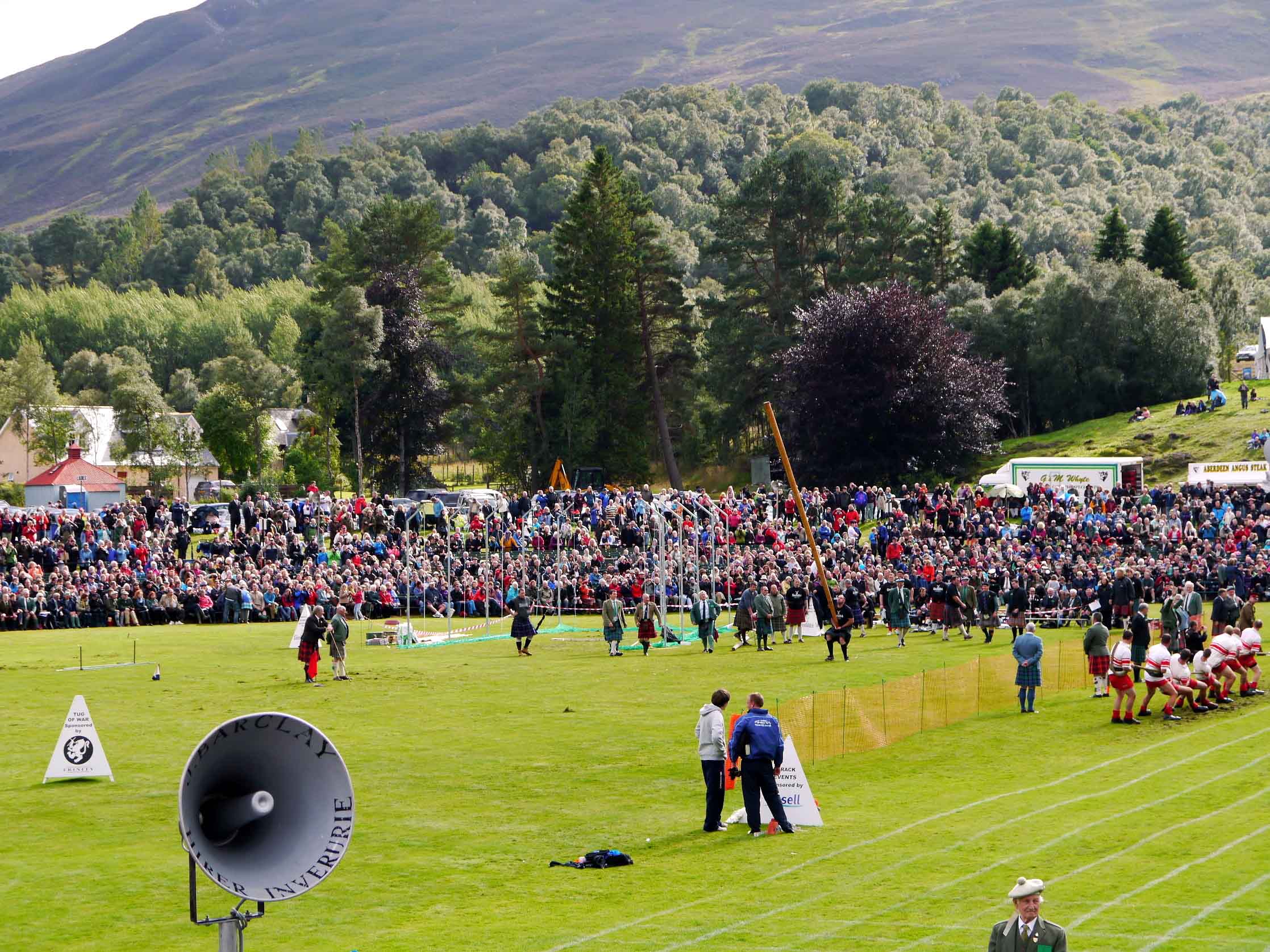
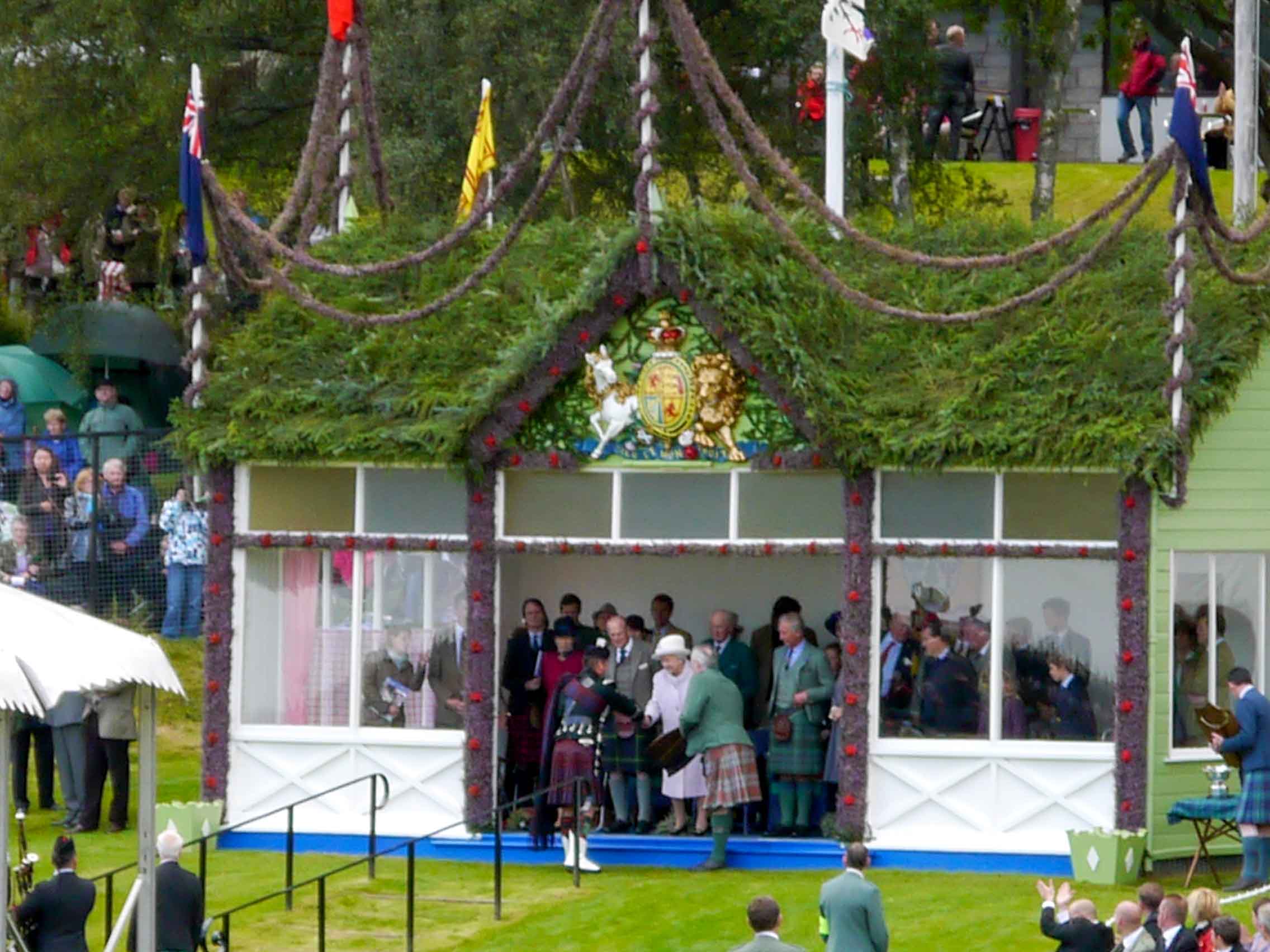
It is a Highland Game held in Braemar every year on the first Saturday of September, and it has traditionally been attended by the British Royal Family.
Highland games are annual events held in Scotland and other countries with a significant Scottish diaspora during the spring and summer seasons. They serve as celebrations of Scottish and Celtic culture. The earliest known reference to the Scottish Highland Games dates back to the reign of King Malcolm Canmore (c. 1031–1093). He summoned men to race up Craig Choinnich, overlooking Braemar, to determine the fastest runner for the King’s Messengers. Over time, Clan Chiefs began organizing running and jumping competitions within their clans to identify the fittest individuals, who would then be responsible for delivering items and conveying news to other clans. It is believed that these gatherings also included challenges that tested the strength and bravery of soldiers. Moreover, they were not solely focused on physical trials; musicians and dancers were encouraged to showcase their abilities, thus gathering further recognition for the clans they represented.
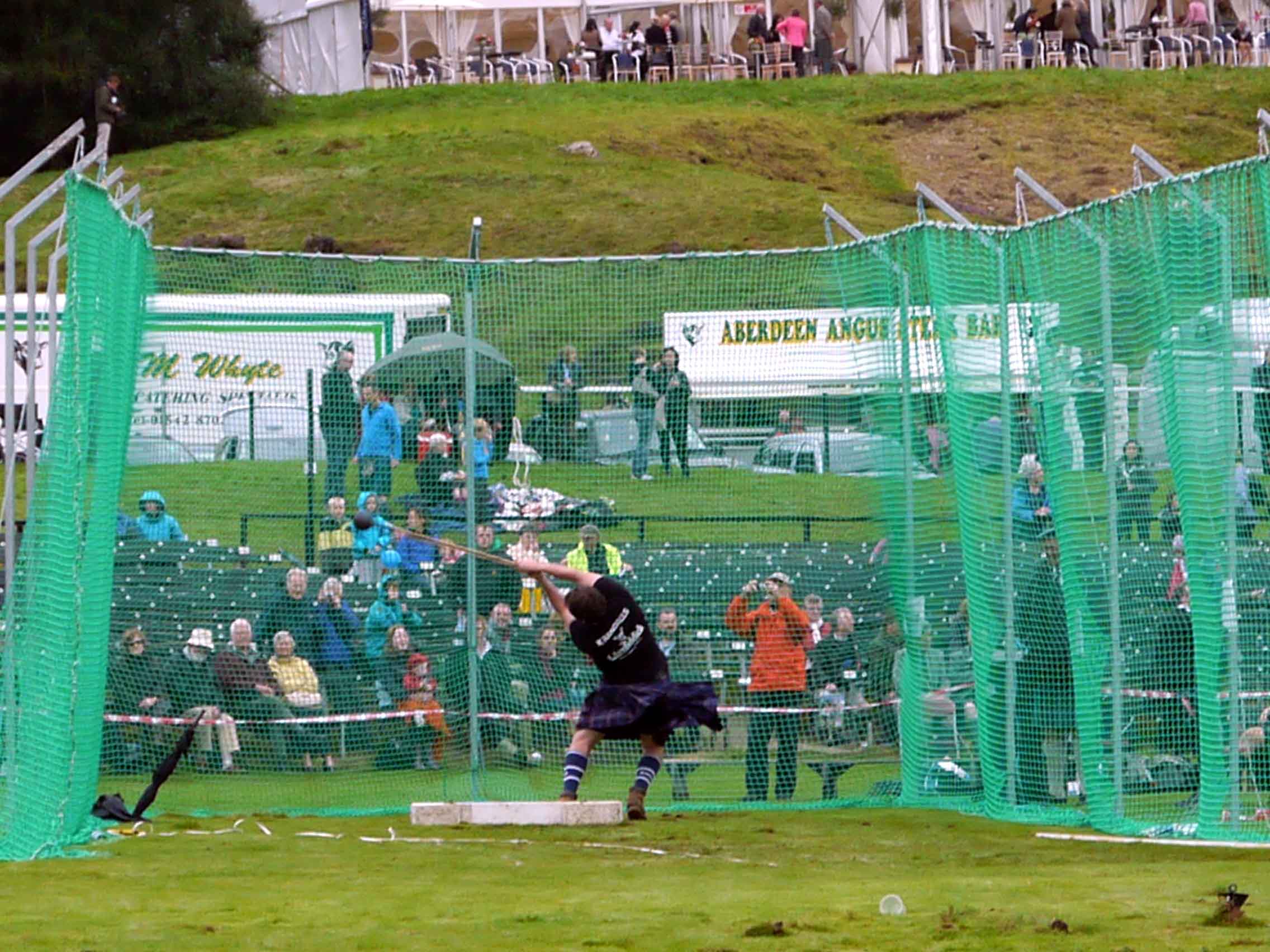
The kilted ‘Heavies’ are the main attraction of each Highland game. In Braemar, the Heavy Events uphold century-old traditions such as Tossing the Caber, Throwing the Hammer, and Putting the Stone. More recently, additional events like Throwing Weight for distance and Over the Bar for height have been introduced. The Light Events also play a significant role in the Gathering tradition, including track running and jumping competitions. Additionally, Hill Running is an unmissable traditional event, with the Braemar hill race spanning approximately 5 kilometers and ascending 370 meters to the five cairns visible on the horizon above the village. Lastly, the Services Events feature top military athletes competing in Tug of War and Medley Relay races, vying for the honor of winning a silver trophy presented by His Majesty the King.
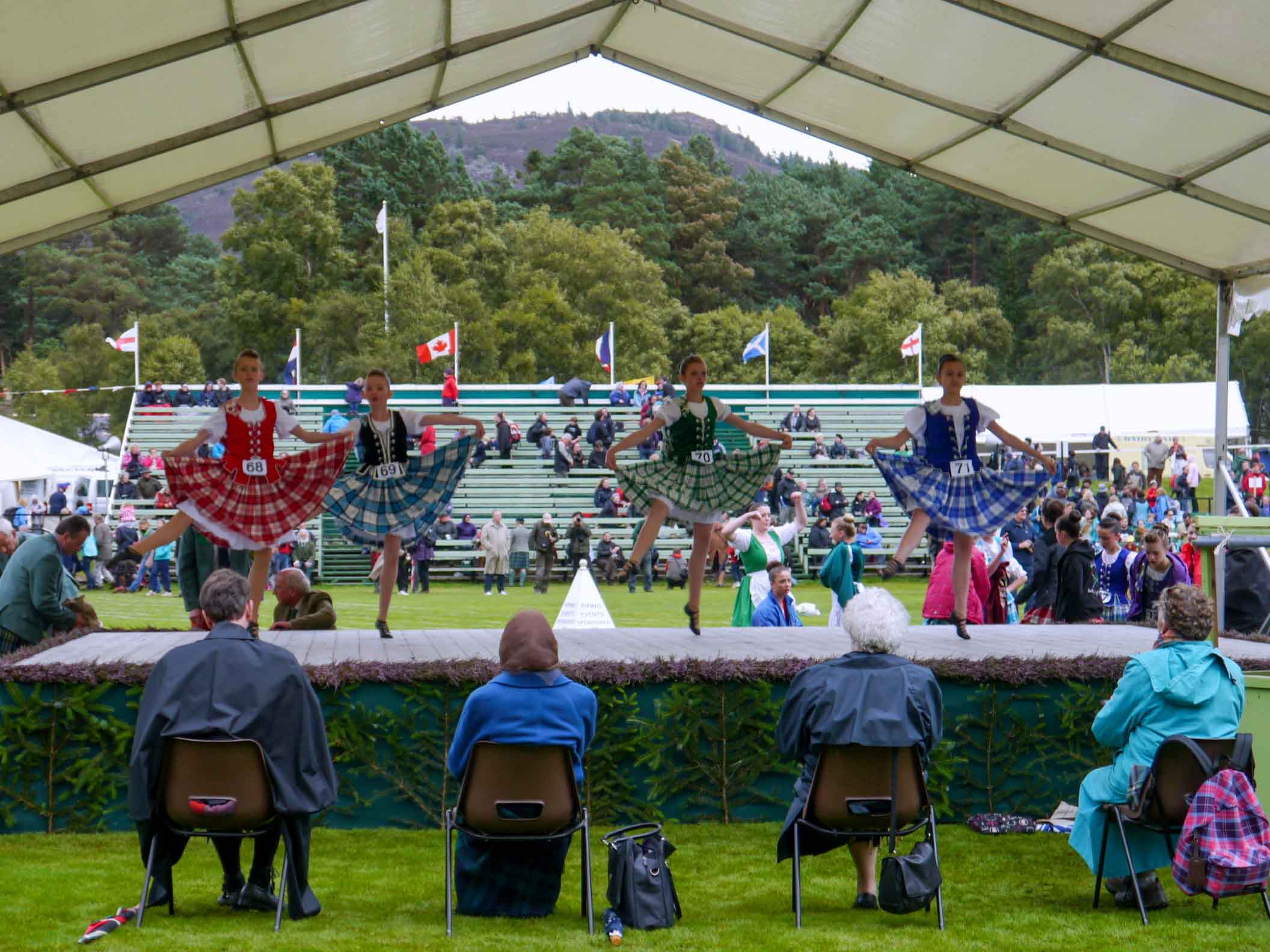
The Massed Pipe Bands at the Braemar Gathering are an iconic and internationally renowned part of the event. Bands from around the world have participated in this spectacle over the years. The event also includes Solo Piping Competitions in various categories, highlighting the strong support for preserving the piping tradition in Scotland. The Highland Dancing Competition is another integral component of the day. Highland Dancing, a style of competitive solo dancing that has evolved over centuries in the Scottish Highlands, is performed to the accompaniment of Highland Bagpipes. While this competition was traditionally dominated by male participants, the introduction of the Aboyne dress encouraged female contestants to join, resulting in its current dominance of female competitors.


 Trespasser-on-Earth