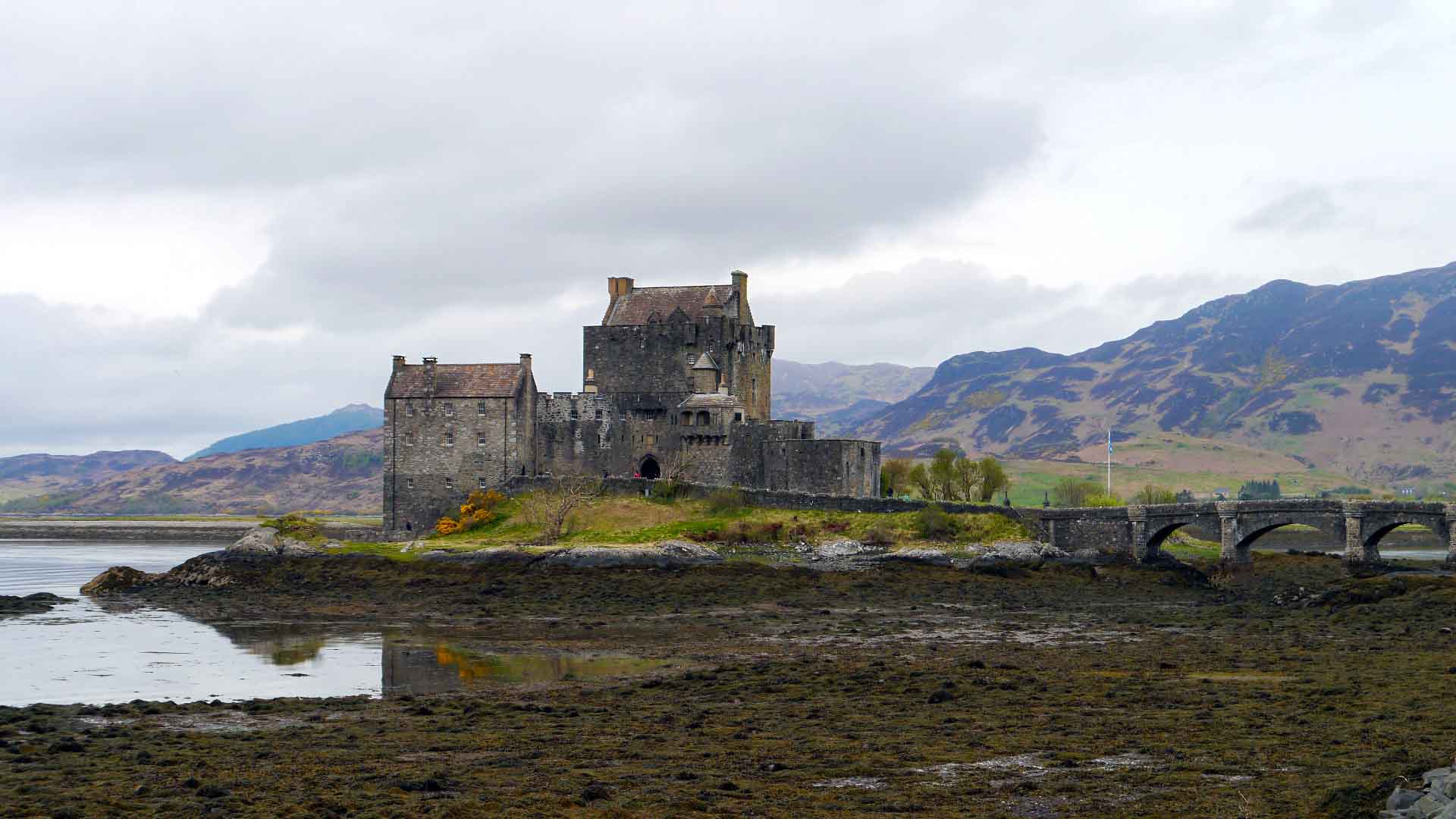
The picturesque Eilean Donan Castle stands dramatically on a small island at the meeting point of three sea lochs, offering a striking glimpse into the turbulent history of the Scottish Highlands.
Located where Loch Duich, Loch Long, and Loch Alsh converge, Eilean Donan Castle is widely regarded as one of Scotland’s most iconic landmarks. Perched on a small tidal island, the castle’s picturesque setting amid rugged mountains and shimmering waters has made it one of the most photographed historic sites in the country, frequently appearing in films and television programs.
The origins of the castle date back to the early 13th century, when the first fortified structure was built to defend the area against Viking incursions. Between the 9th and 13th centuries, Norse raiders and settlers controlled much of northern Scotland and the Western Isles, posing a constant threat to the mainland. The stronghold at Eilean Donan was therefore strategically positioned to monitor maritime routes and protect the surrounding lands from invasion. By the late 13th century, the castle had become associated with the powerful Clan Mackenzie, one of the most influential clans in the region. The Mackenzies relied on the loyal support of Clan MacRae, whose members often served as the castle’s constables and defenders. Over the following centuries, the castle underwent several reconstructions and expansions, reflecting the turbulent clan politics and military realities of medieval Scotland. Defensive walls were strengthened, towers were added, and the complex gradually evolved into a small yet formidable fortress.
The stronghold’s most dramatic turning point occurred in 1719 during the Jacobite rebellion. The Mackenzies had supported the Jacobite cause, which sought to restore the Stuart monarchy to the British throne. During the uprising, Spanish troops allied with the Jacobites briefly occupied the castle. Government forces soon responded by attacking the stronghold, bombarding it from naval ships anchored in the loch. The castle was heavily damaged and subsequently destroyed, leaving it in ruins.
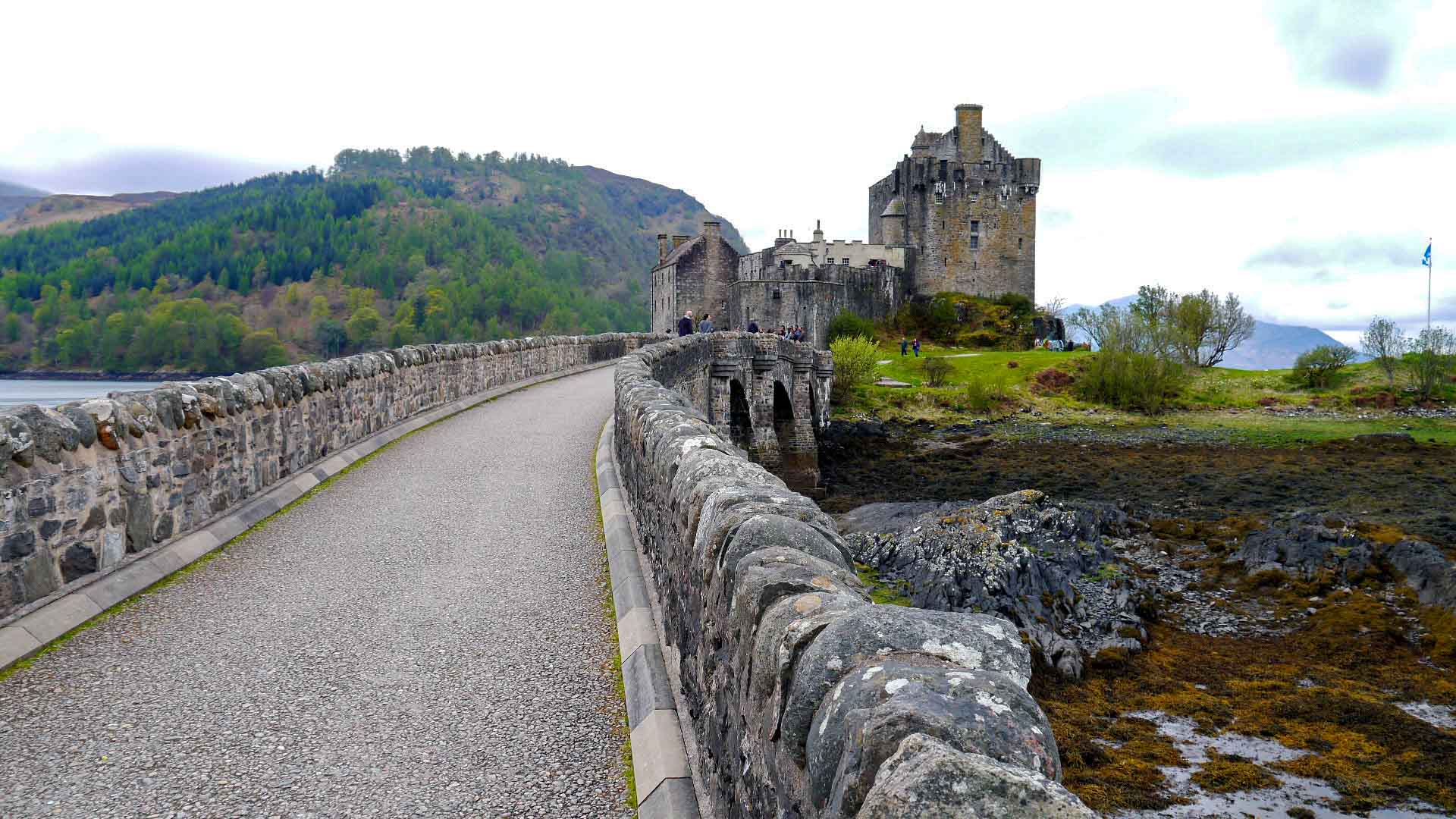
With overgrown walls and crumbling towers, the castle remained largely abandoned until 1911, when Lieutenant Colonel John MacRae-Gilstrap purchased the island. A descendant of Clan MacRae, he undertook an ambitious restoration project aimed at returning the castle to its former glory. Over the next two decades, the ruins were stabilized and rebuilt, guided by historical records and architectural studies. A picturesque stone bridge was also constructed to connect the island to the mainland, replacing the earlier boat access. The castle gradually regained the appearance of a medieval Highland fortress and was officially reopened in 1932, becoming one of the most celebrated historic restorations in Scotland.
Today, Eilean Donan Castle is not only a powerful symbol of Scotland’s clan heritage but also a prominent tourist attraction. Visitors can explore its restored halls and towers, as well as exhibitions that display historical artifacts and recount the stories of the clans who once defended it.

 Trespasser-on-Earth