Glasgow, once defined by its industrial might and later by the challenges of post-industrial decline, has in recent decades reinvented itself as a city of creativity and culture.
One of the most visible symbols of this transformation is its remarkable and ever-growing collection of murals. Scattered across the city’s buildings, alleyways, and bridges, these artworks have become points of interest for both residents and visitors, encouraging exploration beyond the usual landmarks and telling stories that reflect Glasgow’s unique character and history. The mural program began in 2008, initiated by Glasgow City Council as part of an urban regeneration strategy aimed at revitalizing neglected spaces and attracting tourism. What started as a small collection of commissioned artworks soon evolved into a vibrant open-air gallery that has transformed the city’s visual landscape. These murals turned blank walls into vivid storytelling spaces, offering an accessible form of art that anyone could encounter on the street. Street art in Glasgow serves not only as a form of creative expression but also as a strategic tool for urban renewal, helping to reduce the negative visual impact of bare firewalls, neglected buildings, and vacant sites.
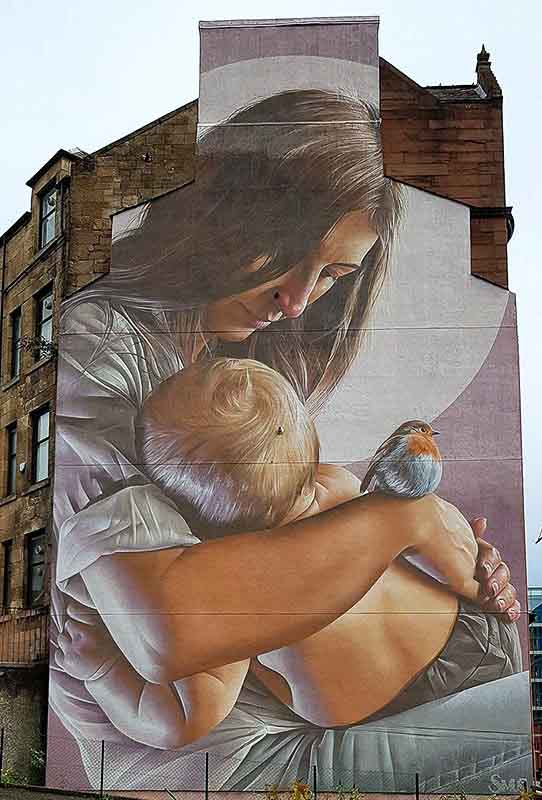
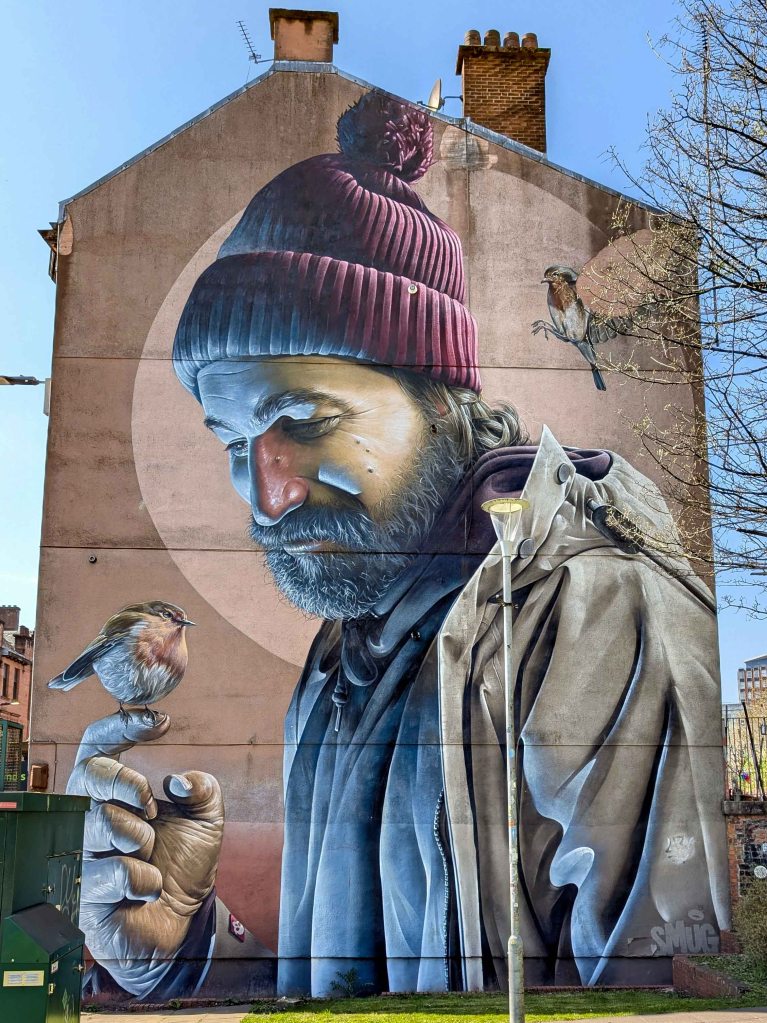
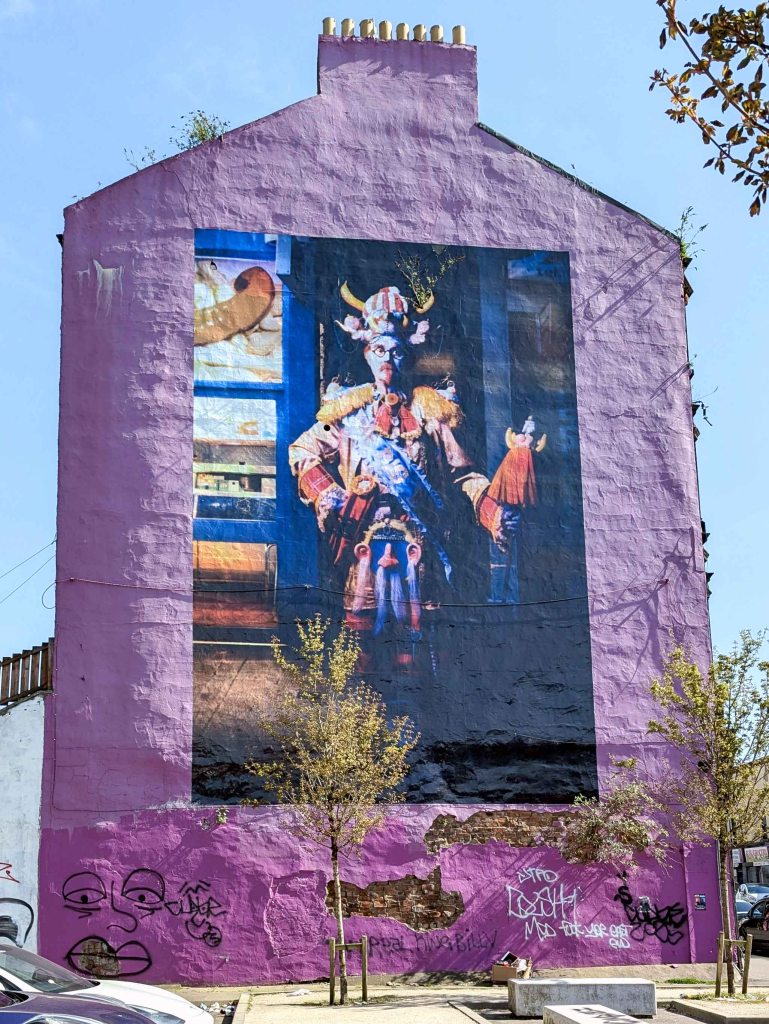
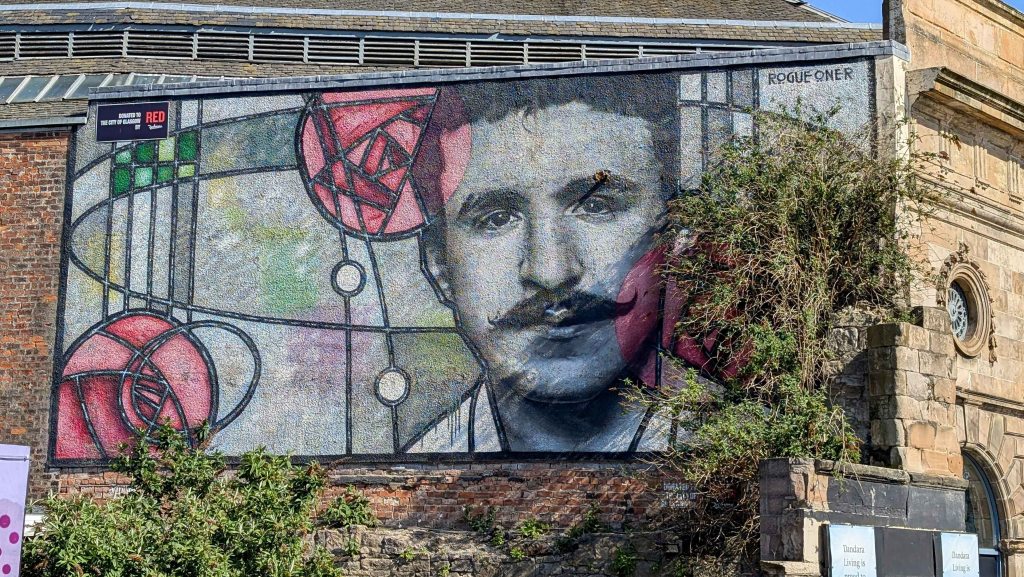
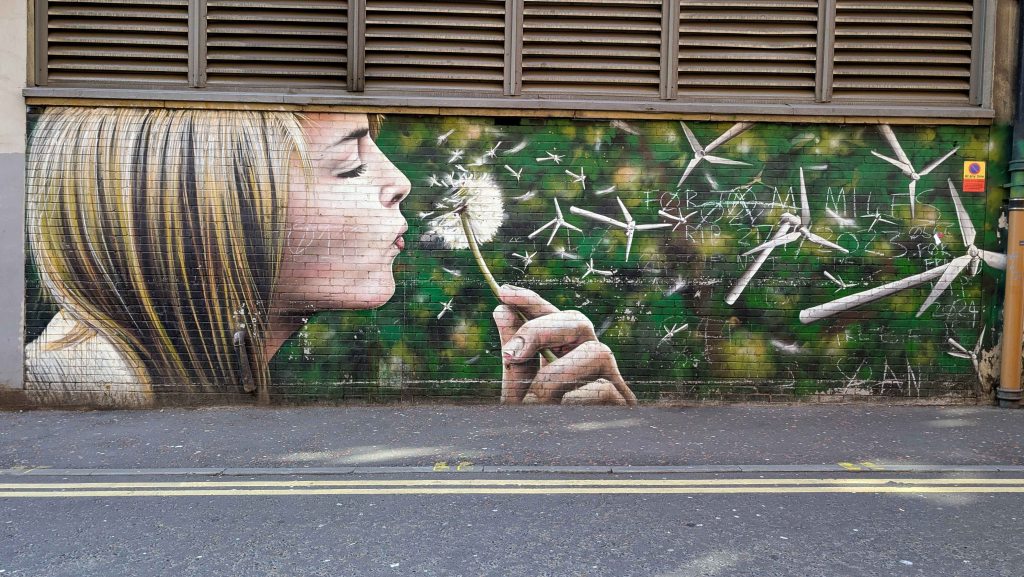
The range of artwork is extensive, spanning from massive, photorealistic portraits to colorful, abstract compositions, offering something for every taste – from conservative to avant-garde, quirky to surreal. Local and international artists such as Smug (Sam Bates, Australia), Rogue One (Bobby McNamara), and Rachel Maclean have contributed to this visual transformation, creating works that celebrate Glasgow’s history, identity, humor, and people. Among the most iconic are contemporary interpretations of Glasgow’s founding legend, including Smug’s ‘St Enoch and Child’ and ‘St Mungo’, which reimagine ancient saints in modern, urban contexts. Other pieces honor famous Glaswegians, who have shaped Scotland’s cultural identity. For instance, Rogue One’s mural of Charles Rennie Mackintosh, the visionary architect and designer, pays homage to Glasgow’s artistic heritage, while Rachel Maclean’s and Rogue One’s murals of Billy Connolly, Scotland’s beloved comedian, celebrate the warmth, wit, and resilience of the city’s people. Many murals also draw attention to Glasgow’s natural environment, sports culture, and industrial heritage. Smug’s ‘Fellow Glasgow Residents’, for example, humorously depicts local wildlife peeking through holes in a wall – a playful reminder of the coexistence between nature and urban life. Others engage more directly with social and environmental issues, such as Rogue One’s ‘The World’s Most Economical Taxi’ and ‘Wind Power’, which invite reflection on sustainability, innovation, and community values.
Integrated into the very fabric of the city, these murals challenge traditional notions of where art belongs, blurring the boundaries between gallery and public space. Yet part of their beauty lies in their impermanence. Due to the transient nature of street art, some works are damaged, painted over, or lost to redevelopment. Buildings are demolished, new walls appear, and new stories are told. This constant change is part of the murals’ enduring appeal – a reminder that the city itself is alive, dynamic, and ever-changing. Exploring them, therefore, becomes a continuous journey, as the streets of Glasgow transform into a living canvas that reflects the soul of the city and the creativity of its people.

PS. Kelburn Castle, located in Ayrshire near Glasgow, is a historic building dating back to the 13th century. The castle gained worldwide attention in 2007 when the Brazilian street artists Nunca, Nina Pandolfo, and the twin duo Os Gêmeos were commissioned to transform its exterior walls into a vibrant canvas. The resulting murals are bold, colorful, and whimsical, featuring playful characters, fantastical creatures, and surreal landscapes that blend the real with the imaginary. By covering the castle’s entire exterior, the artists created a striking visual contrast between the traditional stone structure and the contemporary urban art that now adorns it.
 Trespasser-on-Earth