One of Edinburgh’s best-loved stories about the devotion of a dog could be a Victorian tale.
Greyfriars Bobby gained fame in 19th-century Edinburgh for faithfully guarding his owner’s grave for 14 years. The story unfolds in 1850 when John Gray, accompanied by his wife Jess and their son John, arrived in Edinburgh and joined the Edinburgh City Police as a night watchman. Seeking companionship during the long nights, John found a loyal partner in Bobby, a Skye Terrier. Together, they became a familiar sight as they strolled the cobbled streets of the old town. However, the hardships of their street life took a toll on John, and he succumbed to tuberculosis on February 15, 1858. John was laid to rest in Greyfriars Kirkyard, but Bobby adamantly refused to abandon his owner’s grave.
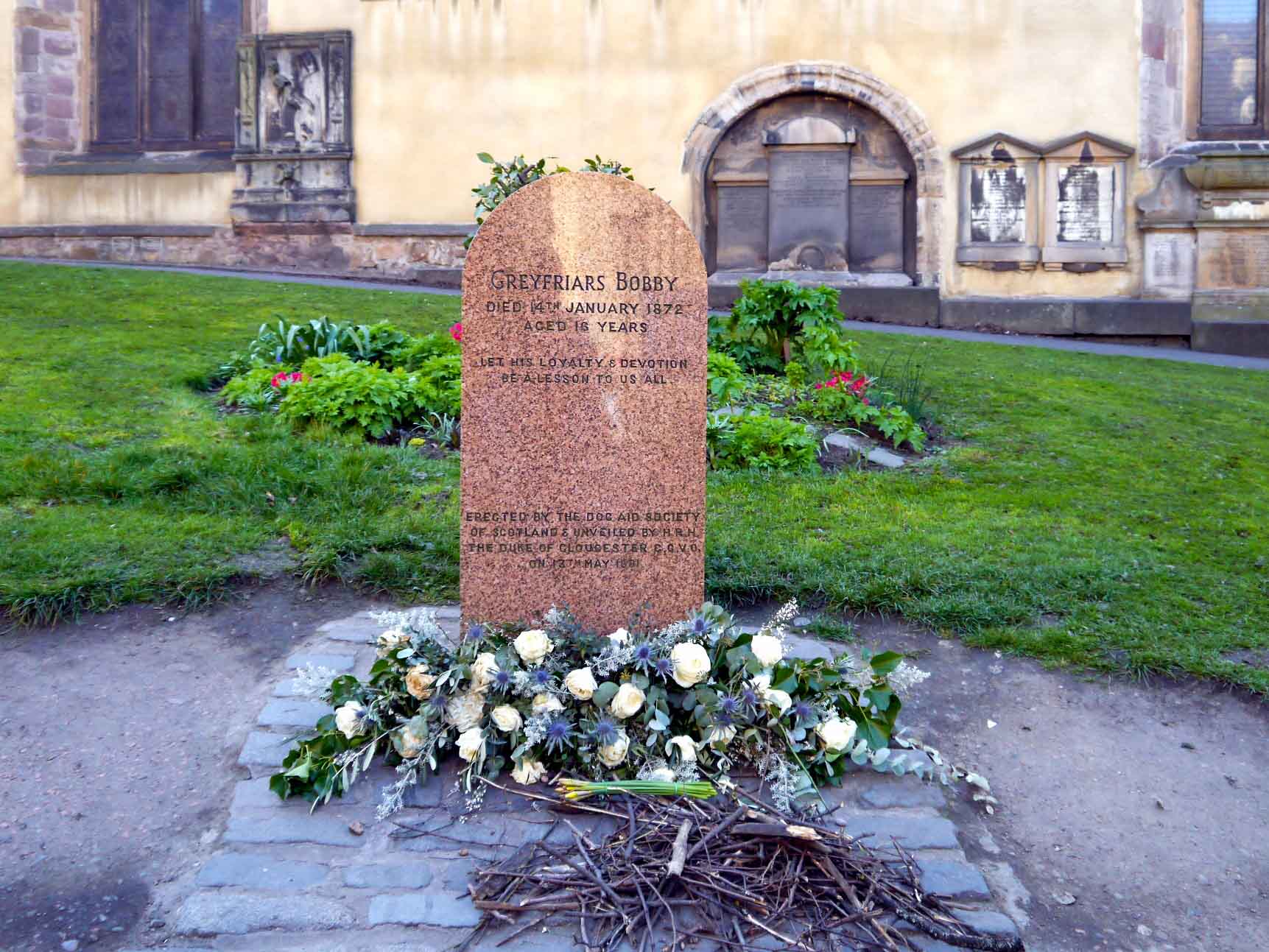
Bobby quickly became a familiar figure in the area and received care from the locals. He would temporarily leave his ‘post’ at the One O’clock gun of Edinburgh Castle to enjoy a meal at John Traill’s Coffee House, located at 6 Greyfriars Place (now Forrest Road). According to John Traill, Bobby and John Gray, a farmer, had been regular visitors to his coffee house when the one o’clock gun fired. Despite the differing details, Bobby’s daily appearances turned into a spectacle that attracted crowds. In 1867, a new bylaw was enacted, requiring all dogs in the city to be licensed. Failure to comply resulted in their destruction. Sir William Chambers, the Lord Provost of Edinburgh at the time and also the director of the SSPCA (Scottish Society for Prevention of Cruelty to Animals), decided to cover Bobby’s license fee and presented him with an inscribed collar. Thus, until his death on January 14, 1872, Bobby remained dedicated to guarding his owner’s grave.
However, the accuracy of this story has faced numerous challenges over times. Notably, three recently published books were dedicated to setting the record straight: ‘Greyfriars Bobby: The Real Story at Last’ by Forbes Macgregor (2002), ‘Greyfriars Bobby’ by Richard Brassey (2010), and ‘Greyfriars Bobby: The Most Faithful Dog in the World’ by Jan Bondeson (2011). The primary question that arises is which of the two individuals named John Gray was the actual owner of Bobby – the night watchman or the farmer. Additionally, it is worth noting that John Traill did not become the owner of the coffee house until four years after the death of John Gray, the night watchman. Although, he referred to John Gray the farmer in his accounts. Similarly, the tradition of the one o’clock gun, which served as a time signal for ships in the harbor of Leith and the Firth of Forth, was not established until 1861.
There is also a view that suggests the original Bobby was simply a stray dog, receiving food from sympathetic visitors who assumed he was mourning the loss of his owner, eventually leading him to make the graveyard his home. As Bobby’s tale gained popularity, the number of visitors to the graveyard increased, potentially bringing commercial benefits to the local community. It is also suggested that James Brown, the caretaker of the graveyard, perpetuated this myth. Furthermore, the extended lifespan attributed to Bobby could be explained by the presence of a younger replacement dog trained to imitate him.
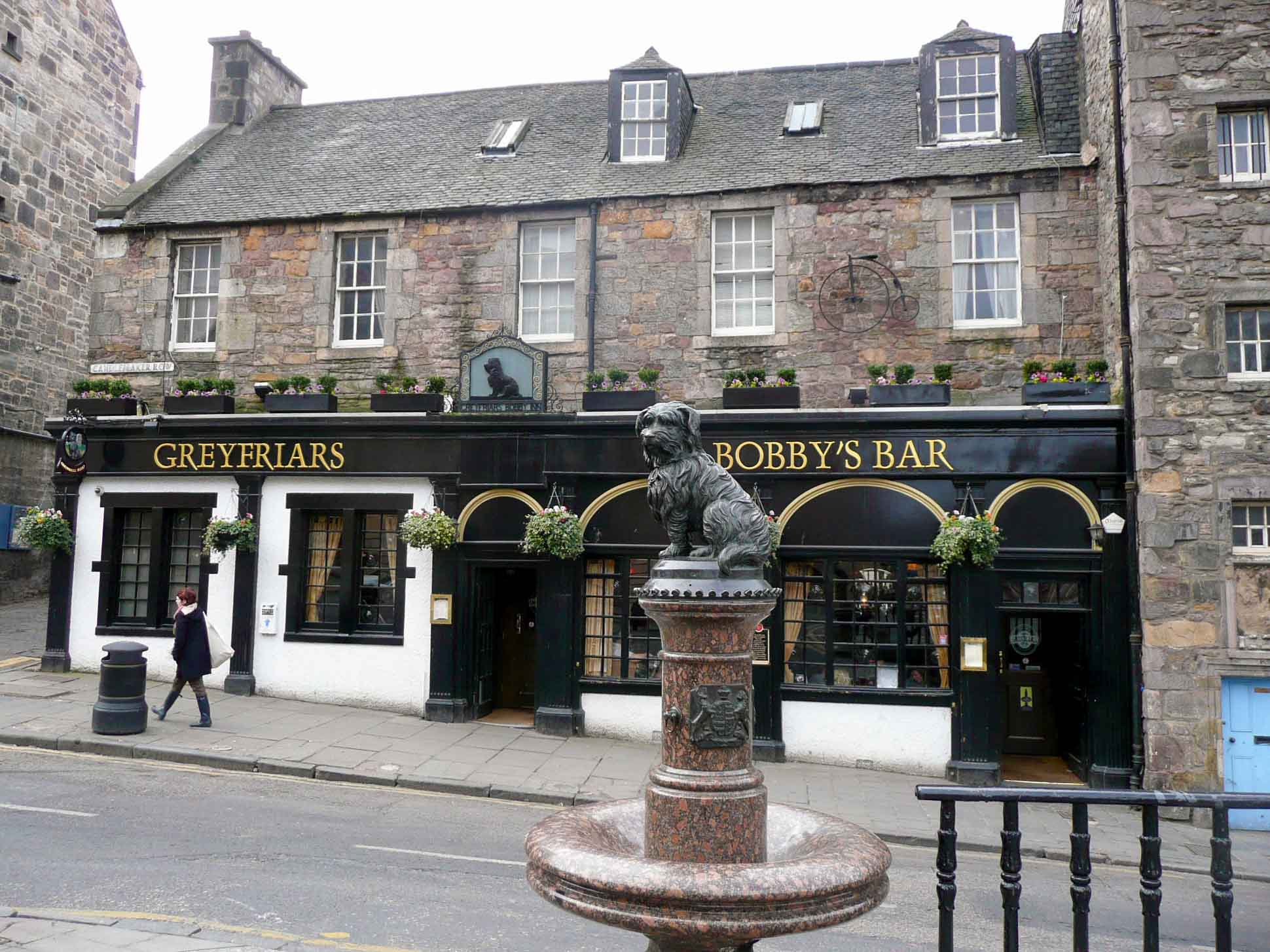
Nonetheless, Bobby’s story remains widely known and cherished in Scotland. His grave in Greyfriars Kirkyard, along with the nearby statue, continues to be a popular tourist attraction. Bobby’s collar, bowl, and drinking cup are displayed at the Museum of Edinburgh. Additionally, he has been featured as the central character in various books and films.
Sources
https://www.historic-uk.com/HistoryUK/HistoryofScotland/Greyfriars-Bobby
 Trespasser-on-Earth