More than just a place of worship, the intricate Pura Besakih represents the deep connection between the Balinese people, their deities, and the natural world that surrounds them.
Set amid lush volcanic mountains, iconic rice paddies, and sandy beaches, the ‘Island of the Gods’ is home to a unique religious architecture and tradition. One of its most sacred sites is Pura Besakih, which holds great significance in the Hindu religion of the island. It is the largest and holiest temple complex in Bali and a place of special pilgrimage for the Balinese people, who believe that the spirits of their ancestors reside there.
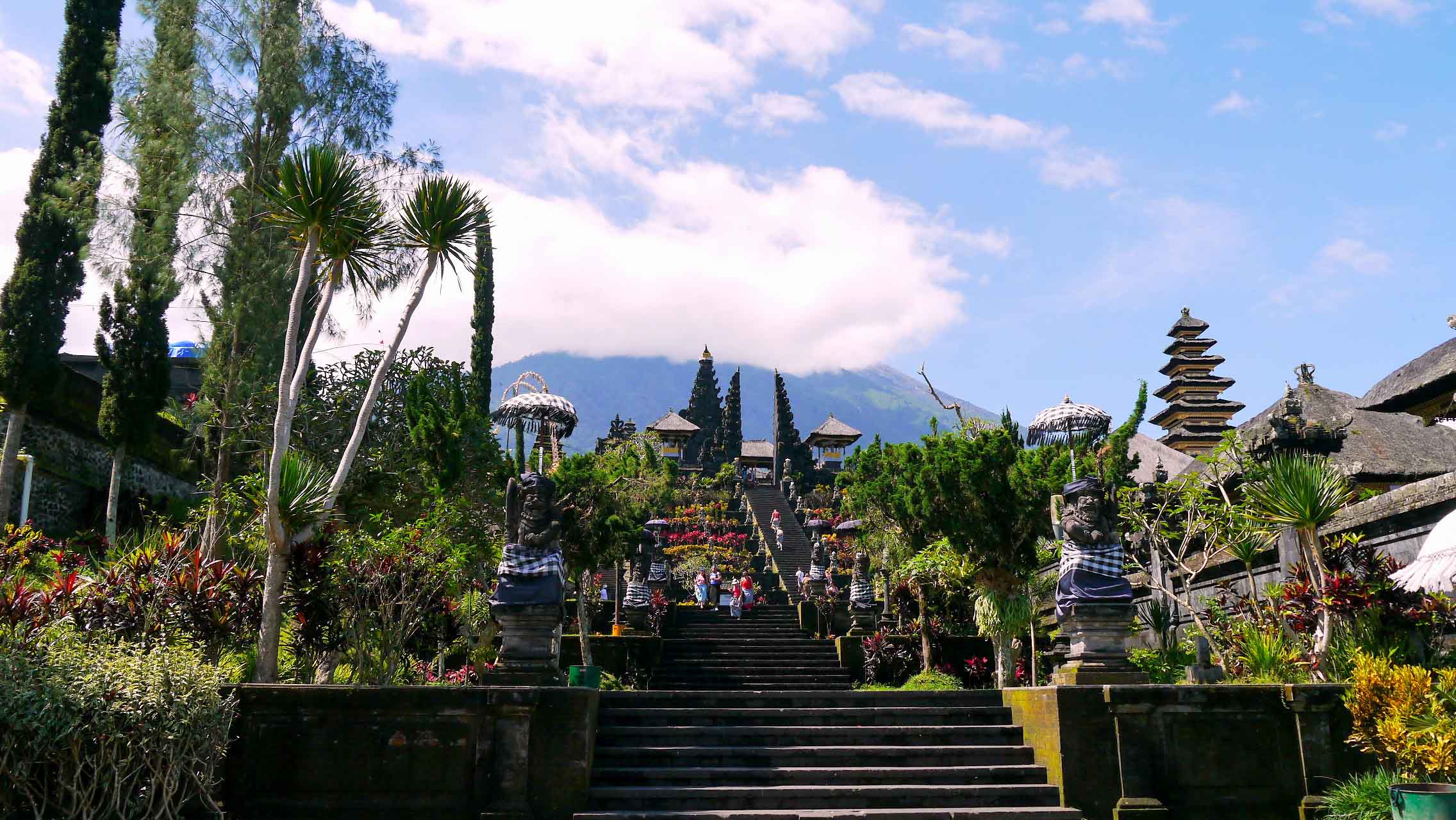
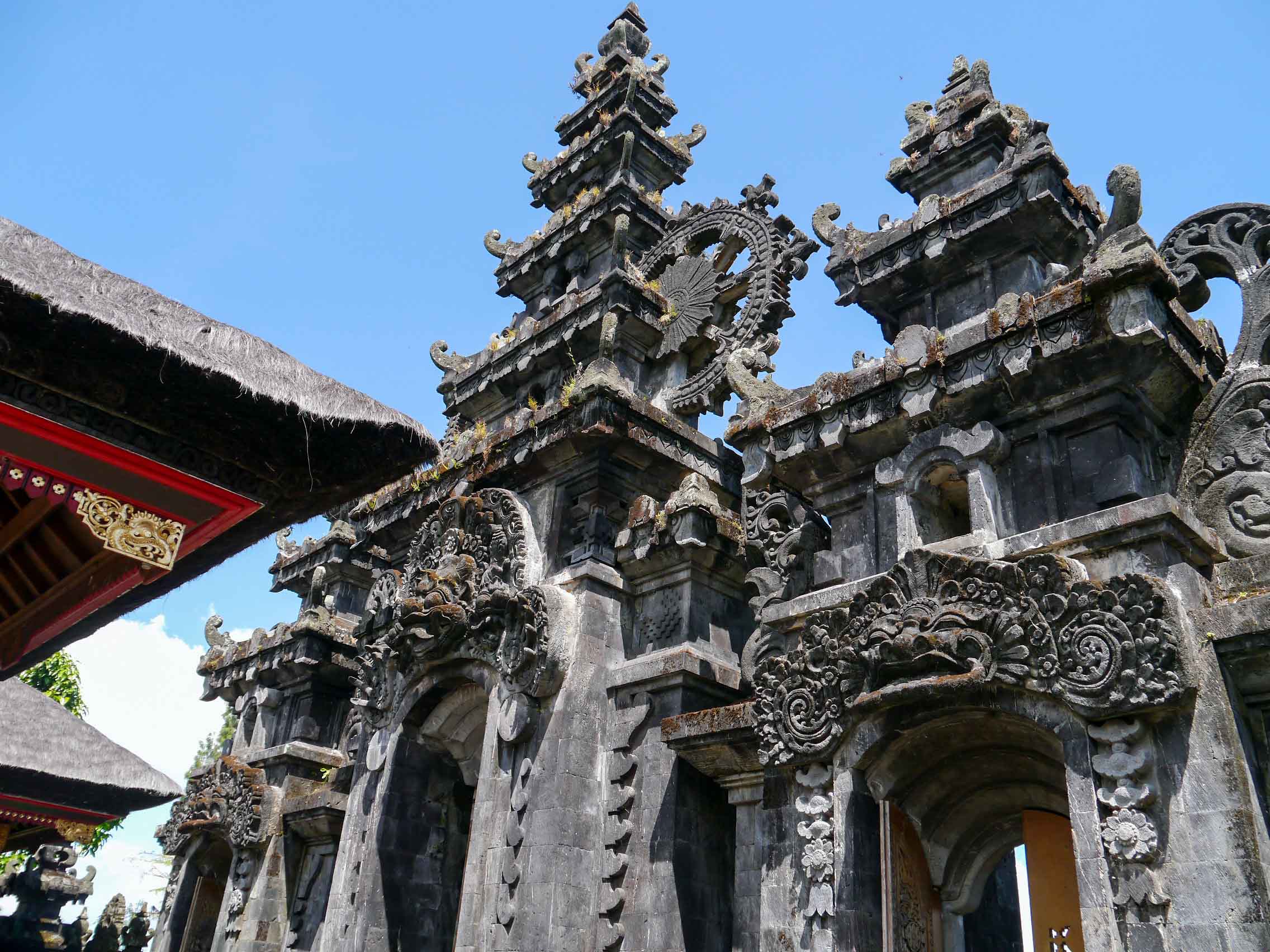
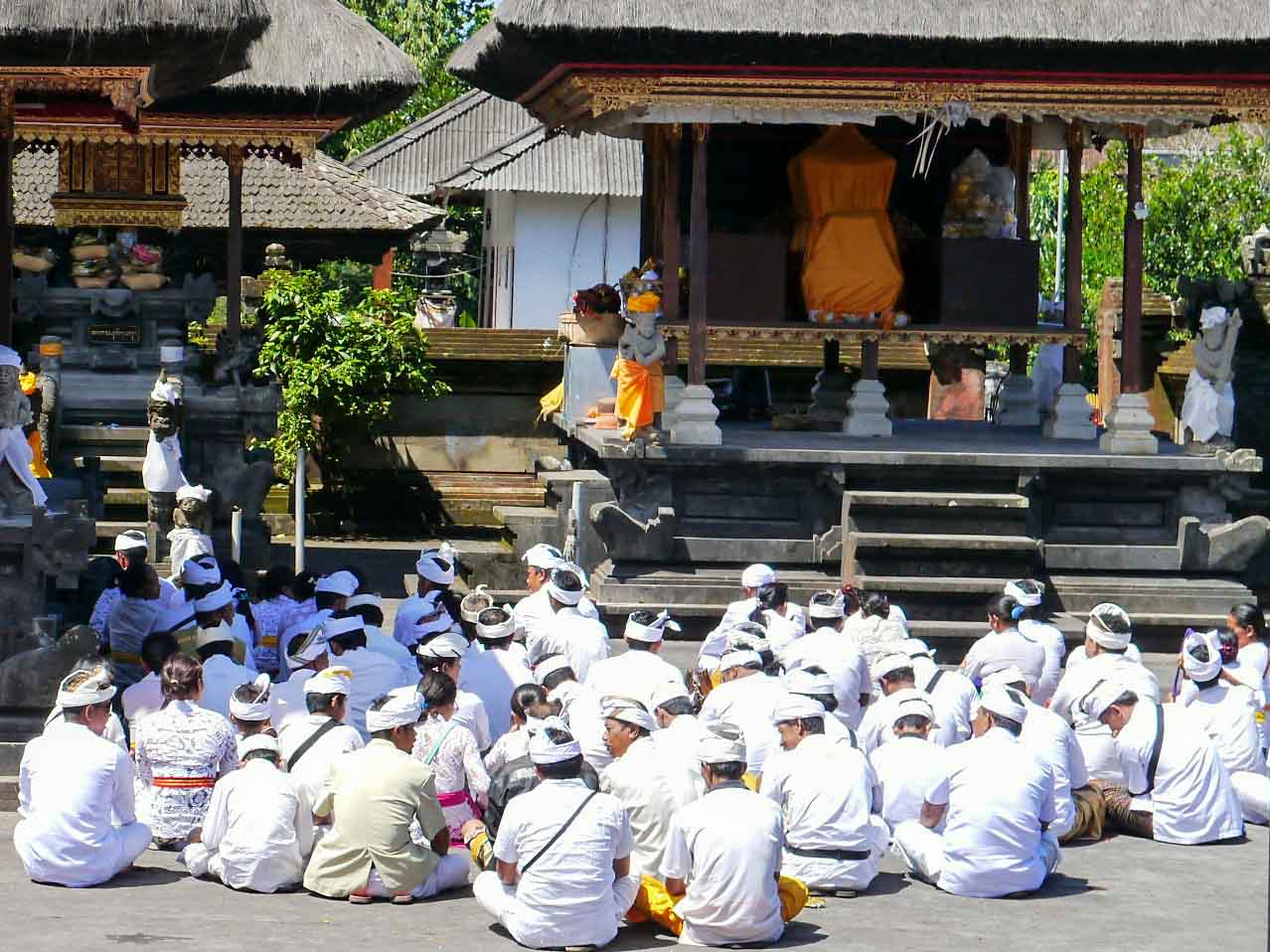
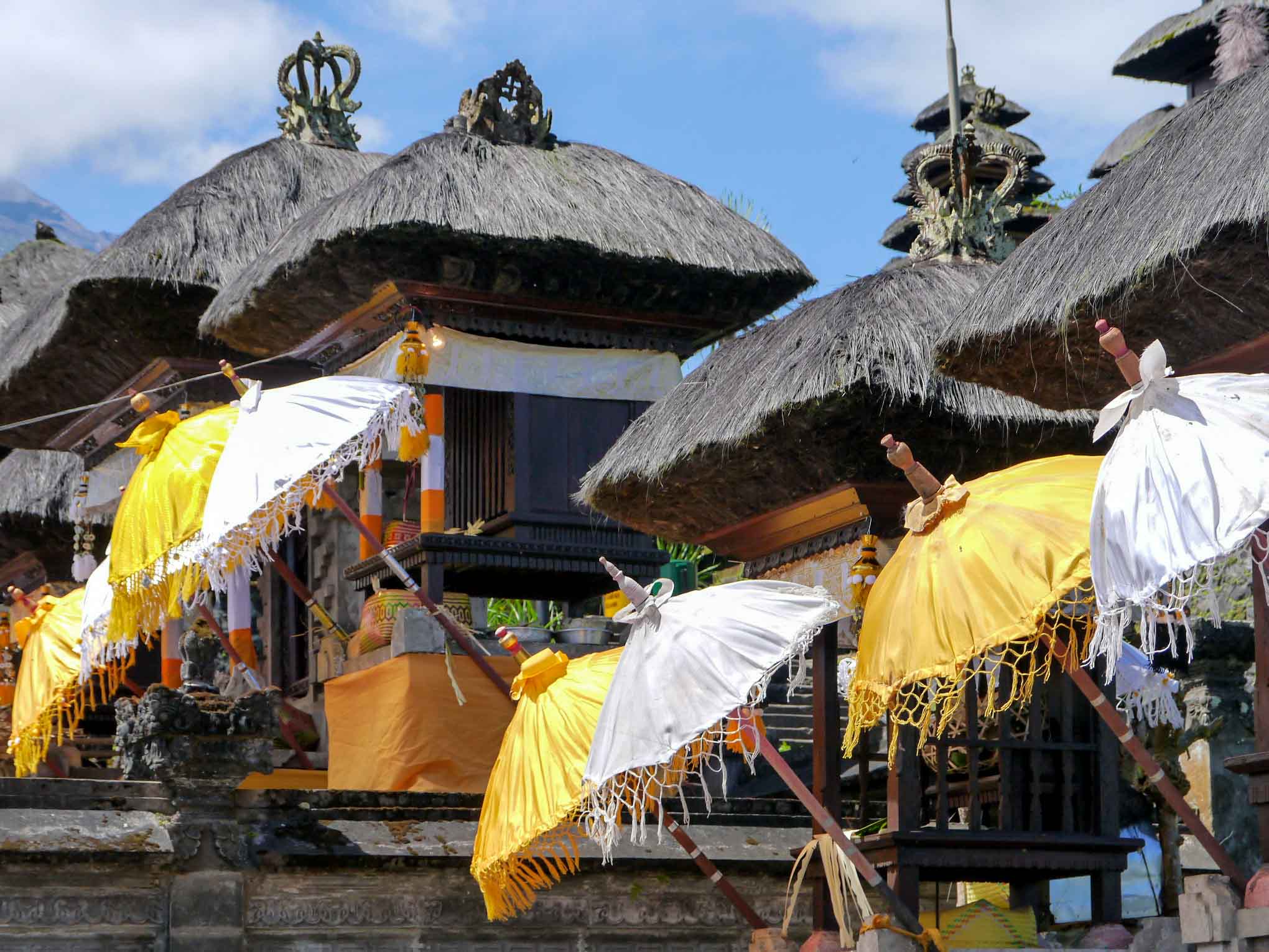
Spread across three square kilometers on the slopes of the majestic Mount Agung, the layout of Pura Besakih follows the sacred orientation of Balinese Hindu cosmology, with its temples aligned toward kaja [toward the mountain, especially Mount Agung] and kelod [toward the sea]. In this worldview, the mountain represents purity and sacredness, as it is believed to be the realm of the gods, while the sea represents the opposite: chaos, impurity, and the realm of spirits. However, the sea is not viewed as ‘evil’, but rather as a powerful and unpredictable domain associated with cleansing, transition and spiritual balance. The temple’s layered terraces, rising steadily toward the mountain, further emphasize this sacred connection between the earthly realm and the divine. This grand complex comprises 23 distinct yet interconnected temples Intricately carved candi bentars [stone gateways], towering meru shrines [multi-tiered towers], and open courtyards reflect the artistic and symbolic richness of Balinese Hindu architecture. Each temple within the complex serves a different purpose and holds a unique status. Throughout the year, the complex hosts numerous religious ceremonies and festivals, drawing worshippers dressed in traditional attire who come to offer prayers, food, and flowers.
The precise origins of Pura Besakih remain unclear; however, its significance as a sacred site likely dates back to ancient times, long before written records were kept on the island. In the late 8th century, the Javanese sage Rsi Markandaya is believed to have led the first settlers to this region, establishing a spiritual foundation by building simple shrines and introducing rituals that would shape Balinese Hindu practice. Over time, these early structures were gradually expanded, with additional temples and altars constructed as the population grew and religious devotion deepened. By the 14th century, during the height of Hindu-Javanese influence in Bali, Pura Besakih had developed into a major temple complex of regional importance, reflecting both political authority and spiritual centrality. Its role continued to evolve over the centuries, surviving periods of upheaval and natural disaster. In 1917, a powerful earthquake caused widespread destruction across Bali and severely damaged the temple complex, leaving only a few shrines intact. This devastation prompted major restoration efforts in the 20th century, during which the complex was carefully rebuilt to preserve its original religious and architectural character. The temple’s resilience was tested again during the eruption of Mount Agung in 1963, one of the most significant volcanic events in Bali’s history. Lava flows advanced dangerously close to the temple, coming within mere meters of its outer boundaries, yet ultimately spared the sacred complex. For the Balinese people, this near-miraculous preservation is deeply meaningful and is often interpreted as a sign of divine protection. It reinforces the belief that the gods chose to demonstrate their power while safeguarding the holy site built in their honor, further strengthening Pura Besakih’s status as the spiritual heart of Bali.
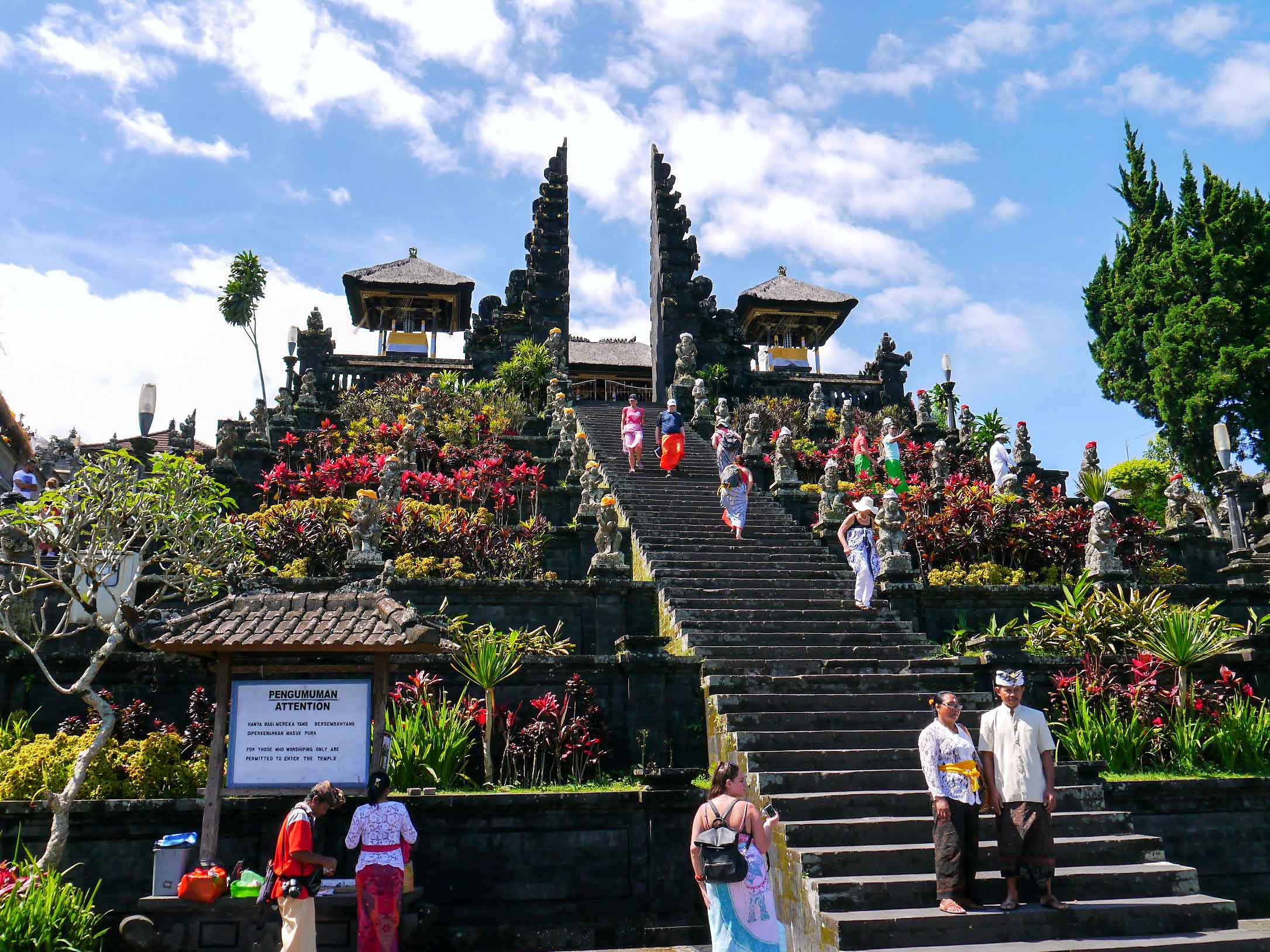
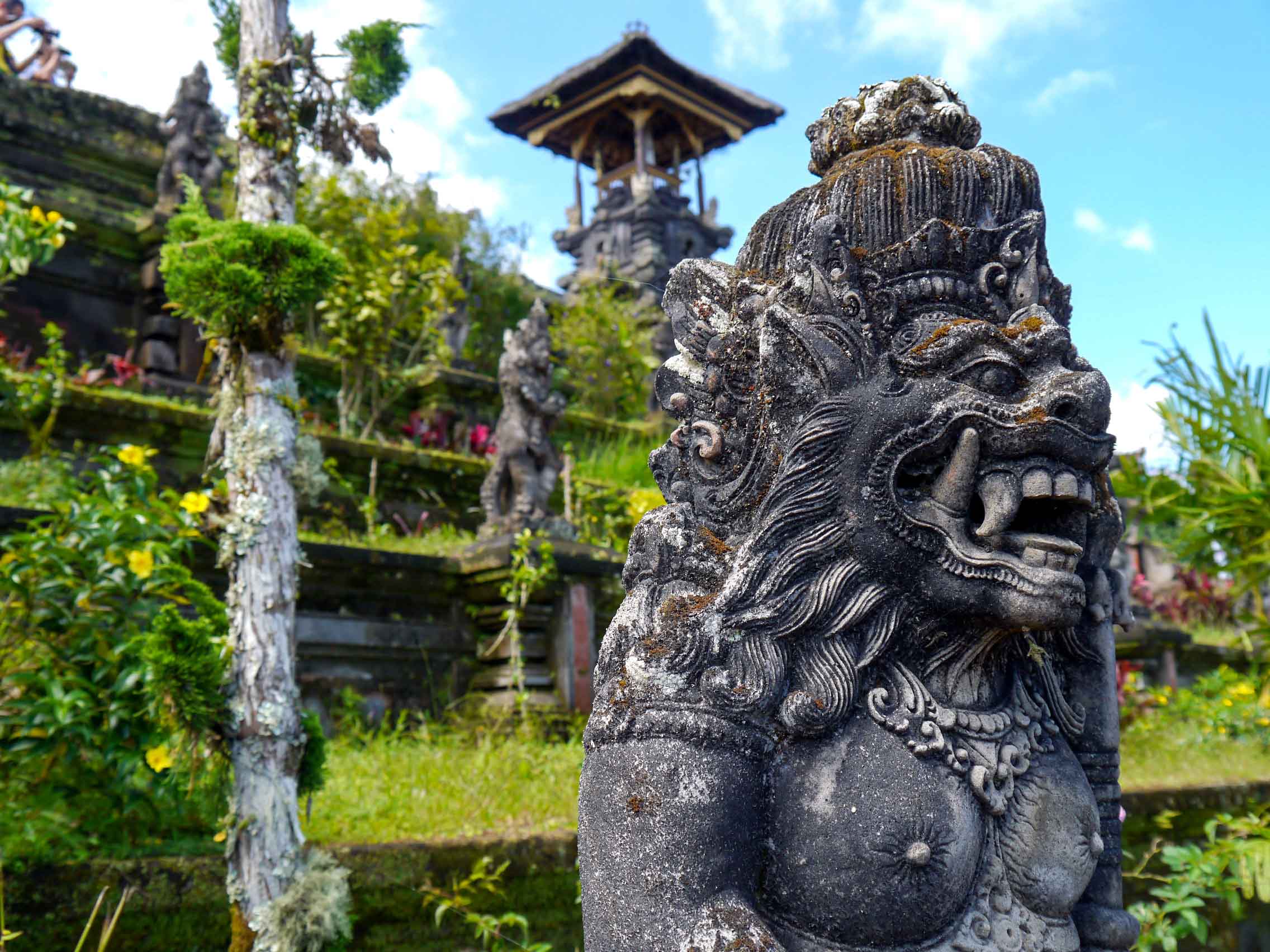
The Pura Besakih complex features three principle temples devoted to the Hindu trinity – Shiva, Brahma, and Vishnu – reflecting the balance of creation, preservation, and destruction central to Balinese Hindu belief. At its heart stands the central temple, Pura Penataran Agung [Great Temple of State], dedicated to Shiva, the destroyer. This temple serves as the spiritual nucleus of the entire complex, where major ceremonies and island-wide rituals are conducted. Its ascending terraces rise dramatically up the mountainside, resembling ancient Indonesian stepped pyramids and symbolizing a sacred journey from the earthly realm toward the divine. The main stairway is richly adorned with intricately carved figures from the great Hindu epics, the Ramayana and the Mahabharata, illustrating moral lessons and mythological stories that continue to shape Balinese culture. Access to the uppermost sanctuaries is reserved for worshippers, while visitors can walk along surrounding footpaths and observe the temple from behind low stone walls.
Flanking the central temple are two equally significant shrines that complete the sacred triad. To the right stands Pura Kiduling Kreteg [Temple South of the Bridge], dedicated to Brahma, the creator. This temple is associated with renewal and life, and it hosts important rituals such as the Aci Ceremony, during which devotees pray for harmony, prosperity, and the well-being of the world. To the left lies Pura Batu Madeg [Temple of the Standing Stone], dedicated to Vishnu, the preserver. At its core stands an ancient stone believed to hold spiritual power, serving as a tangible link to the earliest forms of worship practiced in the region.
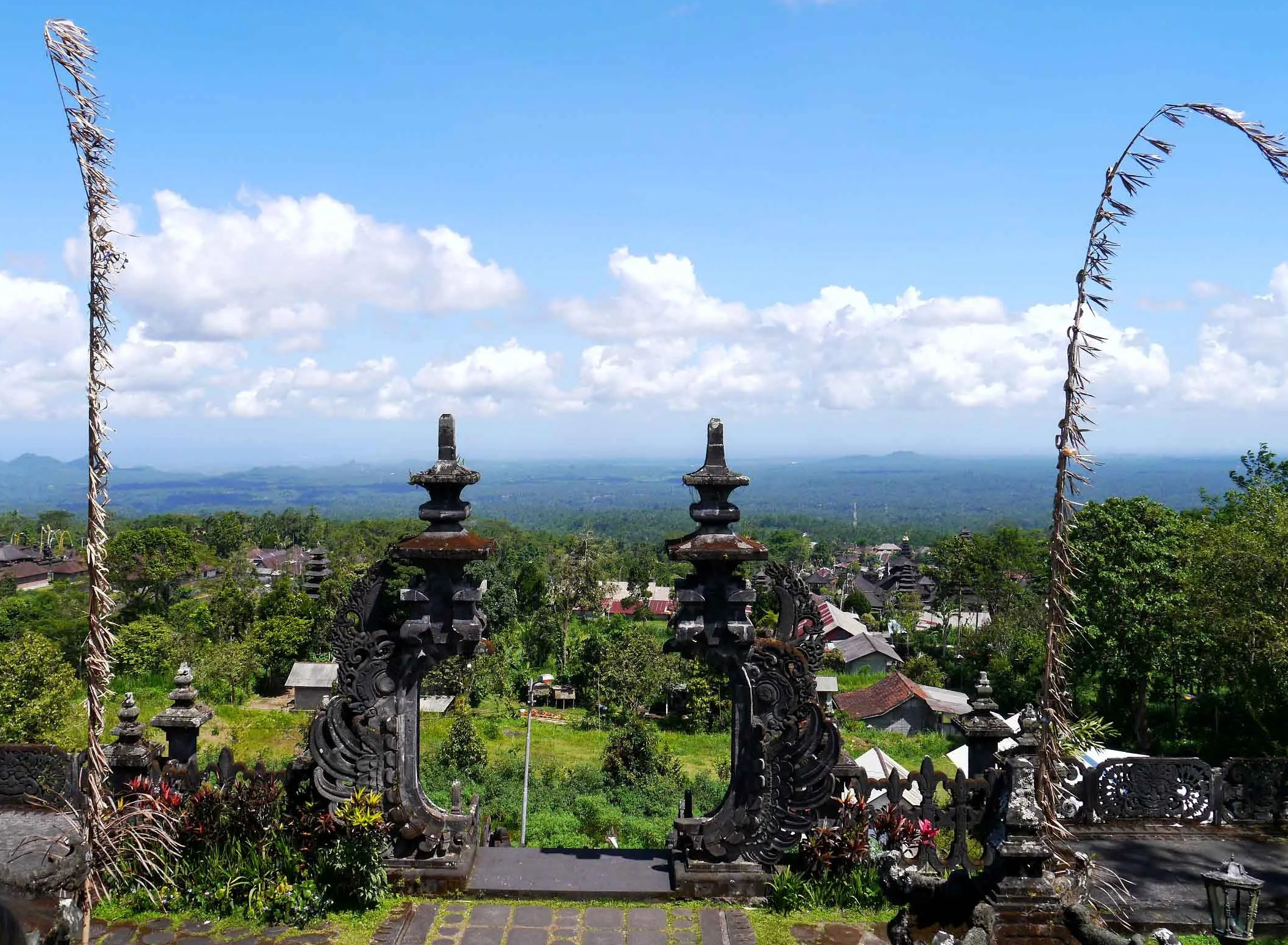
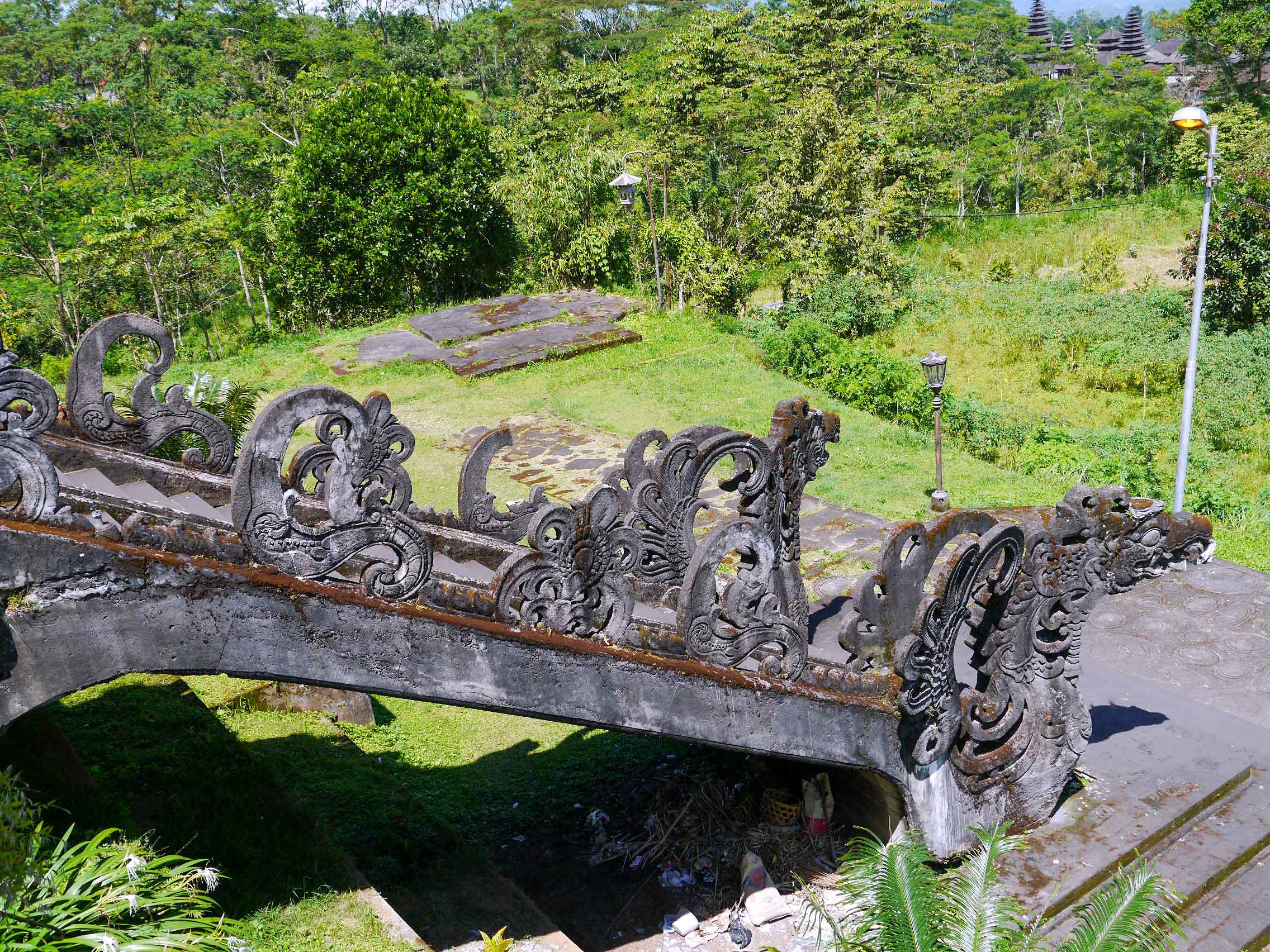
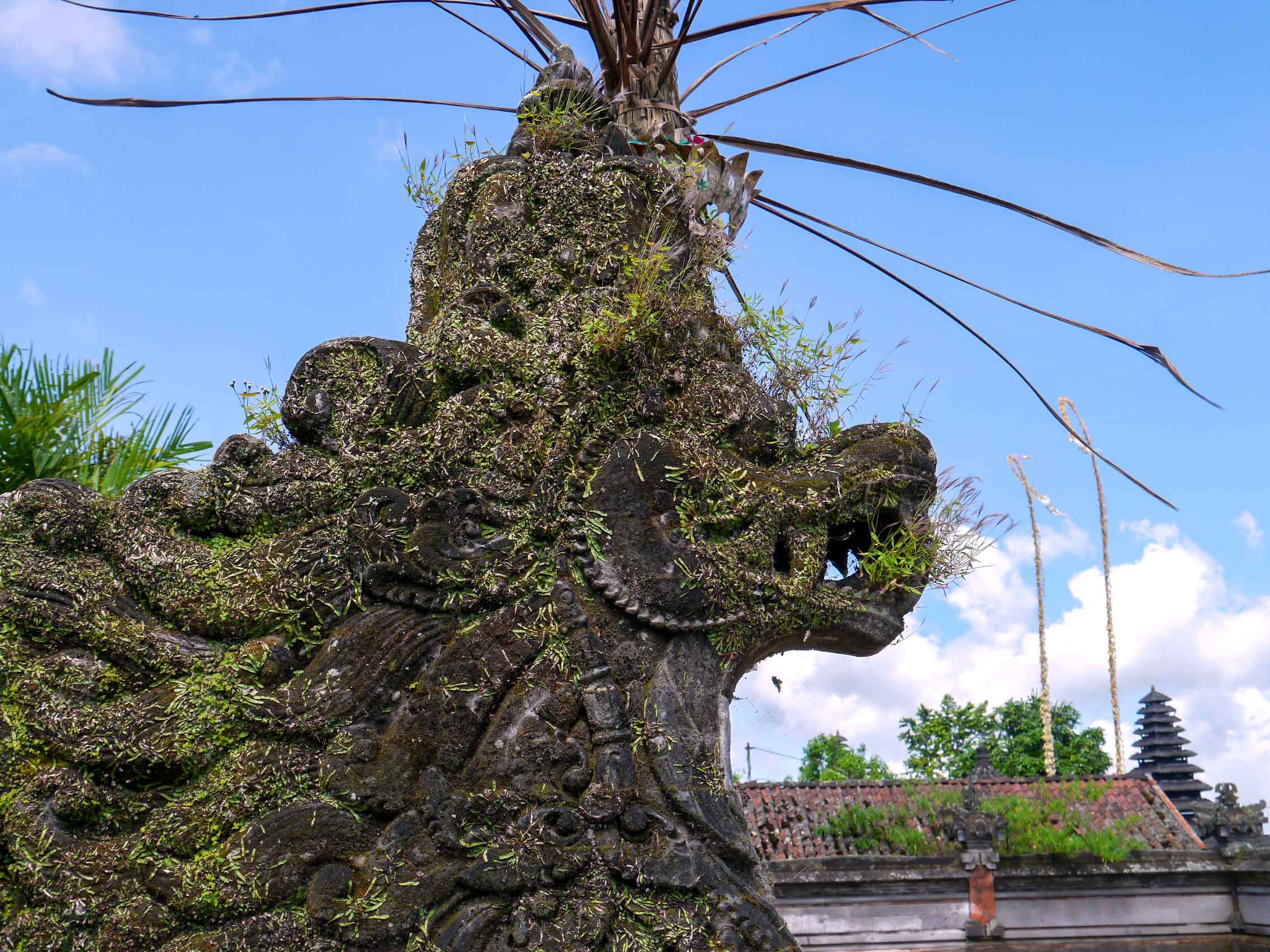
Beyond the main complex, the sacred landscape continues to unfold along the slopes of Mount Agung. Climbing higher, one reaches Pura Gelap [Temple of Lightning and Thunder], a striking and somewhat mysterious shrine known for its dramatic atmosphere. Its imposing staircase, flanked by carved dragons that appear to ascend toward the sky, creates a powerful visual impression of movement between worlds. From this elevated vantage point, visitors are rewarded with breathtaking panoramic views of the entire temple complex, as well as the surrounding valleys and volcanic terrain.
Through its history, scale, and continued religious importance, Pura Besakih stands as a powerful expression of Bali’s enduring cultural identity and deep spiritual devotion.


Know Before You Go
You must wear a sarong and sash for visiting the temples.
Sources
https://www.besakih.org/

