
Caernarfon Castle and Conwy Castle, together with their walled towns, as well as Harlech Castle and Beaumaris Castle in the former principality of Gwynedd in North Wales, rank among the most impressive and strategically sophisticated medieval fortifications in Europe. Built in the late 13th century following the conquest of Wales by King Edward I of England (reign: 1272-1307), these castles were not merely defensive structures but powerful symbols of English authority, embodying both military dominance and political control.
After the defeat of the Welsh princes, including Llywelyn ap Gruffudd, Prince of Gwynedd, in 1283, Edward moved quickly to consolidate control over his newly conquered territory. To achieve this, he launched an ambitious castle-building program. The mountainous region of Snowdonia, traditionally regarded as the heartland of Welsh resistance, was encircled by a strategic ring of castles designed both to suppress further rebellion and to assert permanent English dominance over the population. Under the direction of James of St George – one of the foremost military architects of the time, whom the king had met in Savoy upon his return from the Crusades – these fortresses were intended to serve not only as military strongholds but also as royal residences and centers of civil and judicial administration. This network of castles formed part of a broader colonial strategy that also involved the establishment of English-style towns populated by settlers loyal to the Crown. By integrating fortified boroughs with military architecture, Edward ensured both sustained military control and economic stability, effectively embedding English governance into the region’s physical and social structure. However, this policy carried significant consequences: it imposed heavy financial burdens on the Crown and caused profound social disruption, as native Welsh communities were frequently displaced, their lands appropriated, and their political autonomy systematically eroded.
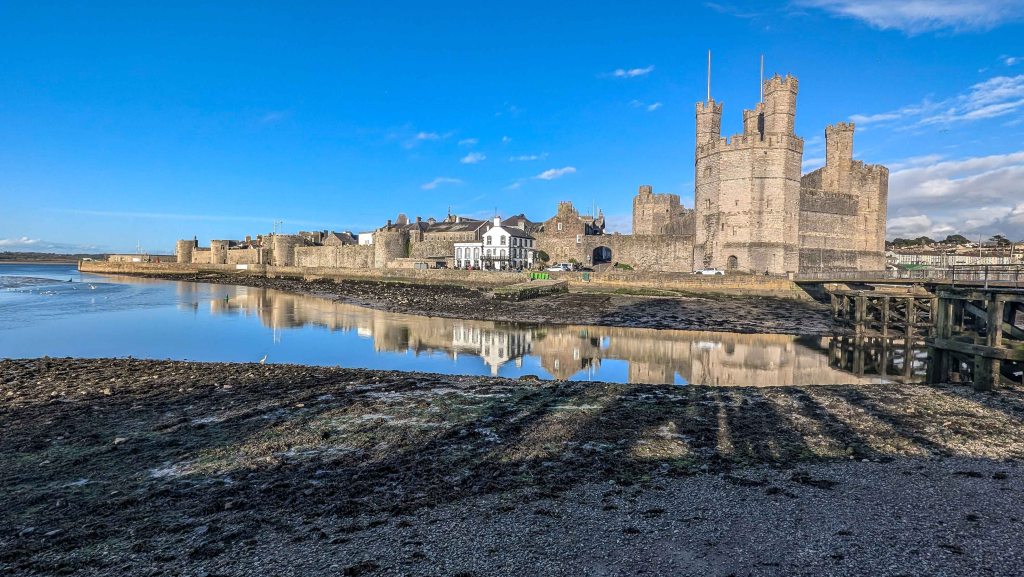
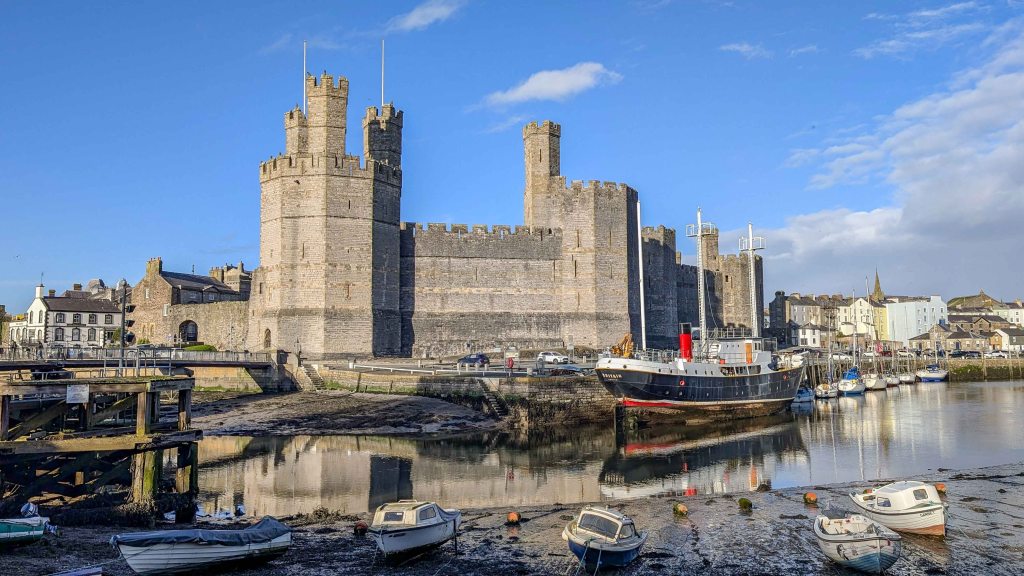
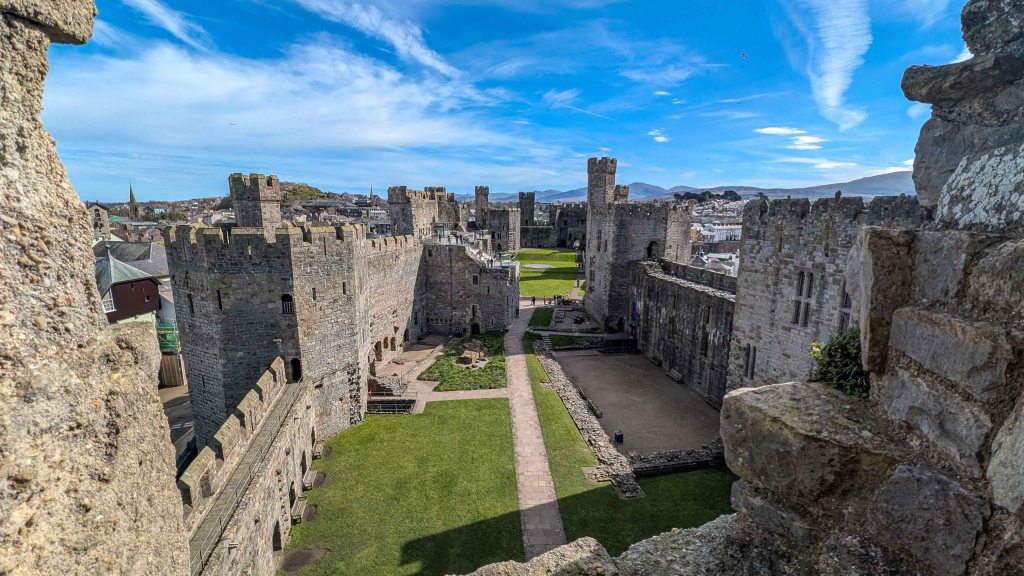
Of all the fortifications built by Edward in Wales, Caernarfon Castle became the most important. It served as the principal seat and administrative center of the English Crown in North Wales, where the Justiciar of North Wales resided and exercised royal authority. Construction began in 1283, shortly after Edward’s conquest of the region, and progressed at a remarkable pace, carried out by laborers conscripted from across England. During the first two years, efforts focused primarily on extensive earthworks, including the excavation of moats and the laying of deep foundations. From around 1286 onwards, large-scale masonry and carpentry work commenced. The castle’s walls were constructed using light-colored limestone and darker sandstone arranged in distinctive horizontal bands, a design inspired by the walls of Constantinople (modern-day Istanbul). The deliberate reference to the architecture of the Byzantine Empire symbolized imperial power and was intended to project the strength and legitimacy of Edward’s rule in Wales. Construction continued intermittently for several decades; however as royal interest and financial resources declined, parts of the original design by James of St George were never completed. Notably, the inner faces of the King’s Gate and Queen’s Gate remained unfinished, as did many of the intended domestic buildings within the castle wards.
Besides the decorative bands on its façade, Caernarfon Castle also differs from other Edwardian fortresses in its architectural form. It features polygonal towers rather than the more common cylindrical ones, giving it a distinctive and imposing appearance. The most prominent of these is the Eagle Tower, the highest and most formidable structure within the castle. Ten-sided in plan and crowned with three turrets, it rises to approximately 39 meters, with walls exceeding 4.5 meters in thickness. Inside, the tower contains four levels, each centered on a great chamber surrounded by smaller rooms. Passageways built within the thickness of the walls enhanced defense and allowed for internal movement protected from attack. The tower derives its name from three stone eagles – now badly weathered – once mounted on the battlements alongside other carved figures when construction neared completion in 1316. The Eagle Tower is traditionally associated with the birth of Edward II, known as Edward of Caernarfon, the fourth son of Edward I and the first English Prince of Wales. However, it is unlikely that the tower had reached an advanced stage of construction at the time of his birth in 1284, when only its foundations had probably been laid.
In 1294, a major Welsh uprising led by Madog ap Llywelyn broke out. Madog, a distant relative of Llywelyn ap Gruffyd, sought to challenge English rule and revive native Welsh authority. Because Caernarfon had already become the principal administrative center of English authority in Gwynedd – and a powerful symbol of conquest – it was a natural target for the rebels. At the time, the castle was still under construction and remained vulnerable, with parts of its defenses relying on temporary timber structures rather than completed stone fortifications. Madog’s forces successfully captured Caernarfon, sacking both the town and the unfinished castle. This attack exposed the fragility of English control in Wales and demonstrated the scale of resistance among the Welsh population. The seriousness of the revolt forced Edward to abandon his planned continental campaign and instead lead a military response in North Wales. By 1295, English forces had regained control of Caernarfon. In the aftermath, efforts to strengthen the castle were intensified, and construction resumed with renewed urgency to ensure that such a loss would not be repeated. Over the next two centuries, Caernarfon Castle remained permanently garrisoned and continued to serve as the administrative center of North Wales. During the early 15th century, it became a focal point in the uprising led by Owain Glyndŵr, a Welsh military commander who waged a prolonged revolt against English rule. Although the castle endured several sieges, it successfully resisted capture, even with a relatively small defending force.
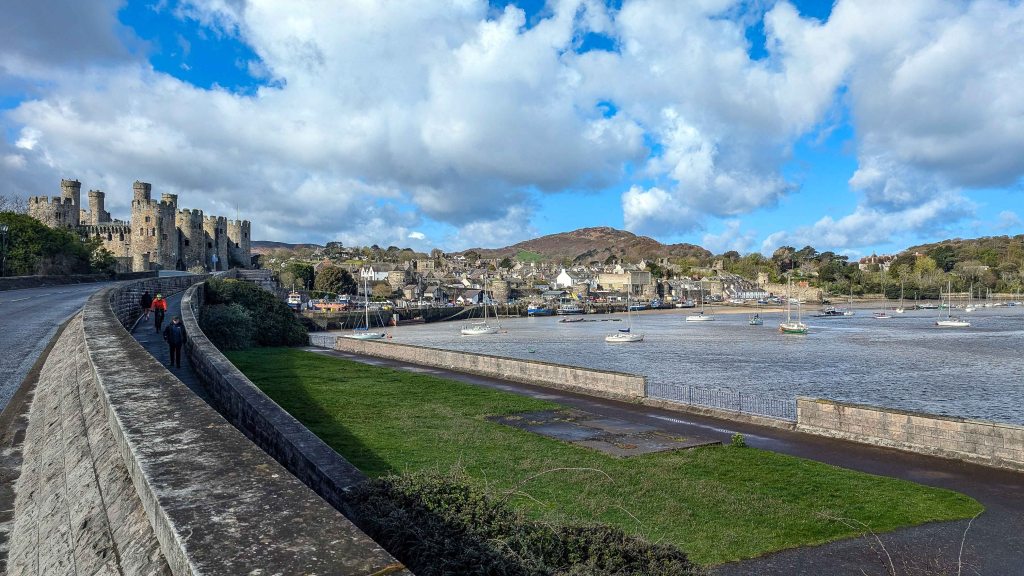
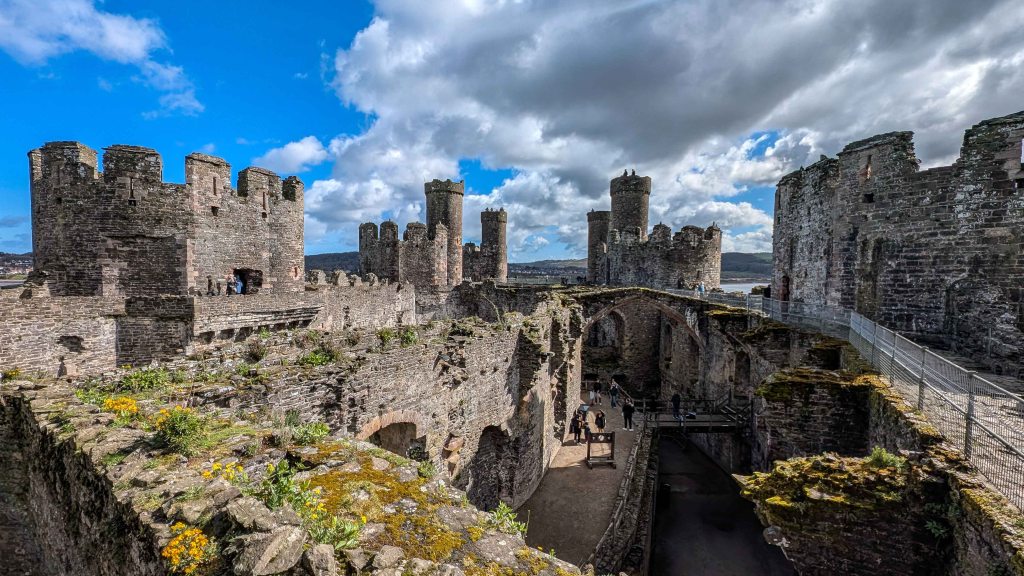
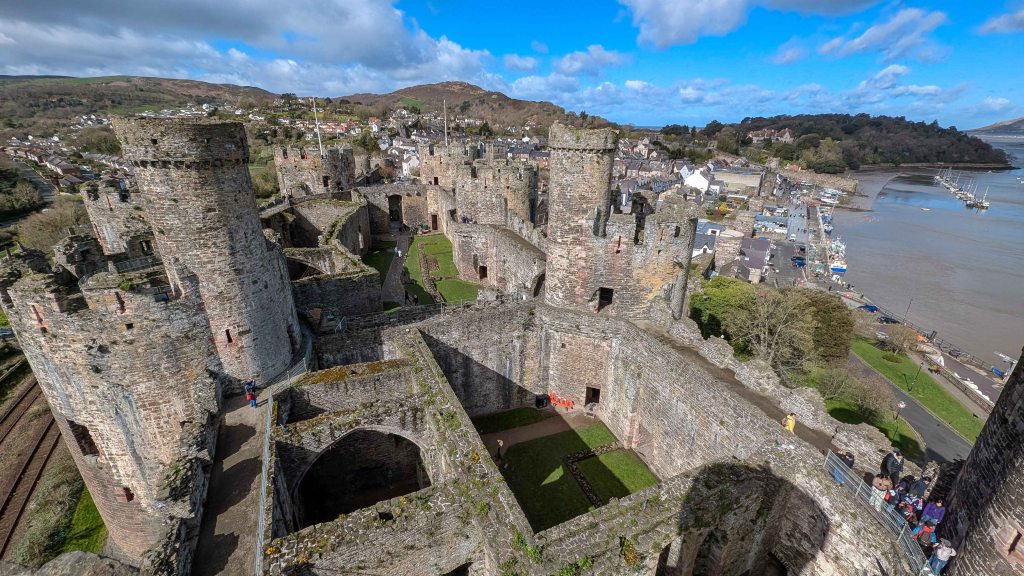
Another key fortress is Conwy Castle, strategically positioned to control a river crossing and nearby coastal routes. Built in the remarkably short period between 1283 and 1287, Conwy Castle represented the cutting edge of late 13th-century military engineering. Its design incorporated massive curtain walls reinforced by eight imposing towers and complemented by slender turrets, all carefully arranged to create overlapping and interlocking fields of fire. The entire structure was anchored directly onto a solid rock base, enhancing both its strength and defensive resilience. Originally coated in a bright white render, the castle would have appeared striking and highly visible from a distance, projecting both power and authority across the surrounding landscape. For contemporaries, nothing of comparable scale or visual impact had previously been seen in the region. To make way for this new center of English power, Edward ordered the relocation of the local Cistercian community to Maenan, further inland in the Conwy Valley. Their original monastery, Aberconwy Abbey, had long served as the traditional burial place of the Princes of Gwynedd, making it a site of deep political and cultural significance. Although Edward financed the construction of a new abbey for the displaced monks, the removal of the monastery from Conwy symbolized the deliberate dismantling of Welsh princely authority and its replacement with English rule. The former abbey church in Conwy was subsequently adapted to serve as the parish church of St Mary.
In 1294, Conwy Castle came under threat during the uprising led by Madog ap Llywelyn. The revolt spread rapidly across North Wales, fueled in part by early successes, including the capture of Caernarfon Castle. At the height of the crisis, Edward himself was forced to take refuge in Conwy during the winter of 1294-95. The situation was perilous, as Welsh forces controlled much of the surrounding territory, effectively isolating the king and his garrison. However, Conwy Castle proved exceptionally well designed for such circumstances. Its formidable defenses made direct assault extremely difficult. In addition, the royal apartments were constructed so that they could be defended independently if other parts of the castle were compromised. Crucially, the castle was well supplied with fresh water and had direct access to the sea via its private dock, allowing provisions and reinforcements to be brought in by ship despite the surrounding siege. This logistical advantage enabled the garrison to withstand a prolonged blockade, preventing the Welsh forces from capturing the castle. The failure to take Conwy marked a turning point in the campaign and contributed significantly to the restoration of English control in the region.
Over the following centuries, Conwy Castle played a significant role in a number of military conflicts, demonstrating the enduring strength of its design. Despite facing repeated threats, it was never taken by direct siege. However, in 1401, during the uprising led by Owain Glyndŵr, the castle fell through an act of deception rather than force. On Good Friday, while the garrison attended a service at St Mary’s Church, a group of Glyndŵr’s supporters approached the castle disguised as carpenters. Having gained the trust of the guards, they were allowed entry and, once inside, overpowered and killed the small number of defenders left on watch. This bold and unexpected coup gave significant momentum to Glyndŵr’s cause, encouraging further resistance and contributing to the spread of rebellion across Wales. For approximately fifteen weeks, the castle remained under rebel control, serving as both a symbolic and strategic foothold against English authority. Eventually, under increasing pressure, a negotiated settlement was reached. The rebels agreed to surrender the castle, but the outcome was harsh: they were handed over to English authorities and subsequently executed, bringing a brutal end to this brief but significant episode.
None of Edward’s mighty coastal fortresses possesses a more dramatic setting than Harlech Castle, which rises atop a sheer rocky outcrop overlooking the sea far below, with the rugged peaks of Snowdonia forming an imposing natural backdrop. This striking landscape was not merely aesthetic but integral to the castle’s defensive strength, combining natural and man-made features into a formidable stronghold. Like Edward’s other major castles in North Wales, construction at Harlech began in 1283 under the direction of James of St George and was completed with remarkable speed in just seven years. The castle was built on a rocky promontory approximately 60 meters high, with steep, inaccessible slopes on its northern and western sides providing natural protection. The more vulnerable southern and eastern approaches were secured by a deep ditch cut into the rock, demonstrating a careful integration of topography into defensive planning. Harlech was designed as a concentric castle, reflecting architectural ideas influenced by experiences gained during the Crusades. This design consisted of multiple layers of defensive walls, with the outer walls lower than the inner ones, allowing defenders to maintain a tactical advantage. If attackers breached the outer defenses, they would still face a higher and stronger inner line, enabling defenders to withdraw from one line of defense to another while continuing to resist. Harlech Castle followed a compact quadrangular plan, with two concentric lines of defensive walls constructed primarily of grey-green sandstone, while softer yellow sandstone was used for finer architectural details and decorative elements.
One of Harlech Castle’s most innovative features was its ‘way from the sea’ – a steep, fortified passage of 108 steps descending the cliff face to the shore. This route allowed supplies, reinforcements, and communication to be maintained by sea even when the castle was surrounded by enemy forces on land. Its effectiveness was demonstrated during the rebellion of Madog ap Llewelyn in 1294–95, when the castle, though cut off, was able to hold out thanks to continued resupply by ship. However, the castle’s strength was not absolute. During the uprising led by Owain Glyndŵr, Harlech Castle was besieged again and, in 1404, fell into Welsh hands. At the time, the castle was poorly equipped, with the garrison possessing only a limited supply of shields, helmets, lances, and firearms. After a prolonged blockade, its defenses could no longer be sustained. Glyndŵr established his headquarters there, using the castle both as a base of operations and as a symbol of restored Welsh authority. It remained under his control until 1409, when it was eventually recaptured by English forces. This episode highlights both the resilience and the limitations of even the most advanced medieval fortifications when confronted with sustained pressure and logistical challenges.
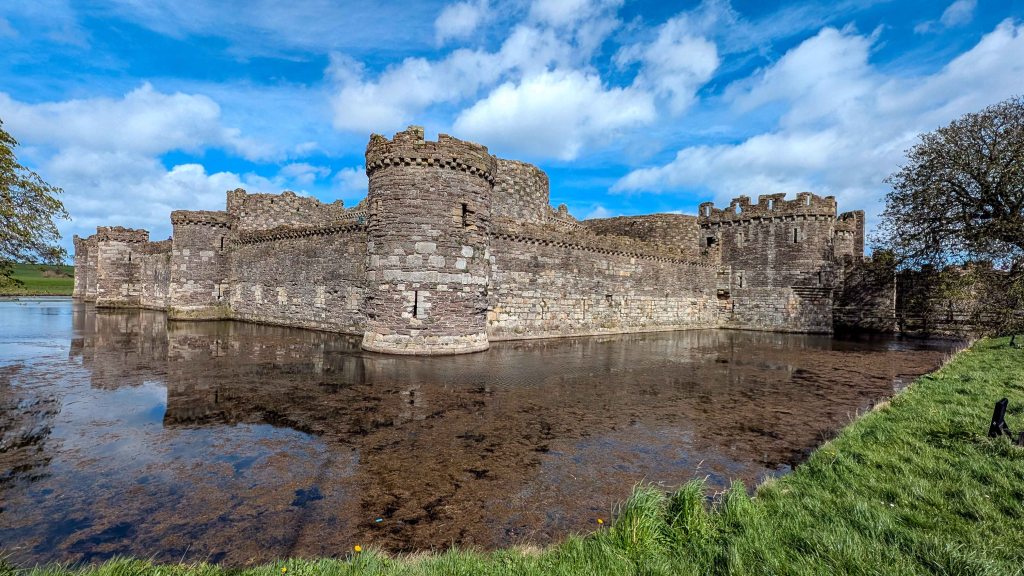
The last of the great strongholds – and the most technically refined – to be built by Edward in North Wales was Beaumaris Castle. It was intended as the crowning achievement of the king’s ambitious castle-building program and the ultimate expression of his strategy to consolidate English control over Wales. Working with his master architect James of St George, Edward created a fortress of immense scale and sophistication, designed as a concentric stronghold with multiple layers of walls and defenses. The formidable outer curtain wall alone was equipped with around 300 arrow loops, enabling dense and overlapping fields of fire against attackers. Beyond this, the castle was further protected by a wide, water-filled moat connected to the sea, allowing ships to approach directly and supply the garrison even during prolonged sieges.
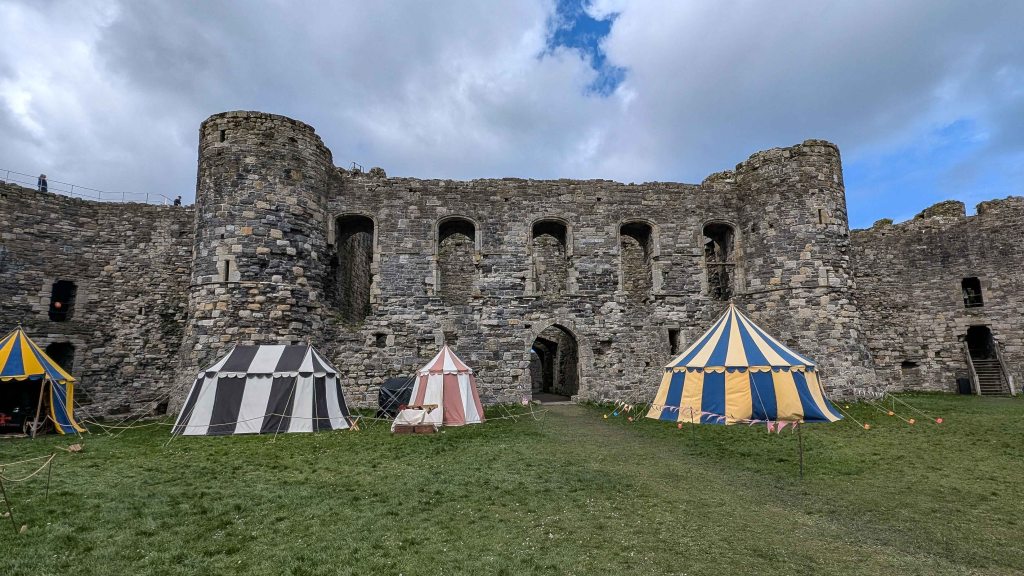
Construction began in 1295, immediately following the suppression of the Welsh rebellion led by Madog ap Llywelyn. To make way for the new fortress and its associated English borough, the prosperous port settlement of Llanfaes was cleared, and its inhabitants were relocated to Newborough in the west of Anglesey. This act not only provided space for the castle but also reinforced English control by removing a native Welsh population from a strategically important site. During the initial phase of construction, only ten of the intended sixteen towers and part of the outer walls were begun. The remaining sections were left incomplete, and the towers that had been started were not raised to their full height until a second phase of building more than a decade later. The transition between these two phases remains visible today as a horizontal break in the masonry running around the castle walls.
Financial difficulties, combined with the growing demands of Edward’s military campaigns in Scotland, led to a gradual reduction in building activity at Beaumaris Castle. By the 1320s, work had largely ceased. Consequently, several key elements of the original design were never realized: the south gatehouse and the six great towers of the inner ward never reached their intended height, while the Llanfaes Gate was only partially begun before being abandoned altogether. Even in its incomplete state, Beaumaris Castle represents the pinnacle of medieval military engineering. Its precise geometry, advanced defensive planning, and integration of land and sea defenses make it one of the most sophisticated castle designs of the Middle Ages, and a fitting culmination of Edward’s architectural and military ambitions in Wales.
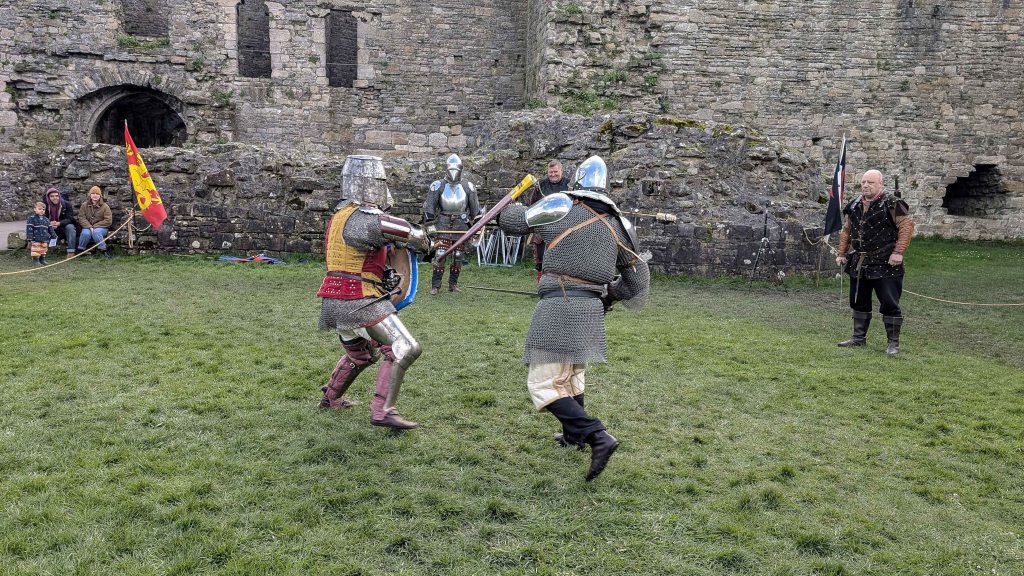
The accession of the Tudor dynasty in 1485 marked a turning point in the history of these castles. As a ruling house of Welsh origin, the Tudors helped ease long-standing tensions between the Welsh population and the English Crown. This shift reduced the strategic importance of the great fortresses of North Wales, which had originally been constructed to assert and maintain English control. As a result, many of these castles gradually fell into decline. Although essential repairs were carried out during the 16th century, these efforts were limited. By the early 17th century, much of the fabric of the castles had deteriorated significantly: roofs had decayed, valuable materials had been removed, and many internal structures had fallen into ruin. Despite this neglect, their defensive capabilities remained formidable. This became evident during the English Civil War, when several of the castles were reoccupied and garrisoned by Royalist forces. They once again assumed a military role, resisting Parliamentary armies until, in many cases, they were eventually forced to surrender in 1646. This marked the last period of active military use for these fortifications. In the later 17th century, orders were issued for their demolition to prevent future military use; however, these were only partially implemented and, in many cases, not carried out at all, allowing the castles to survive. Nevertheless, their condition continued to deteriorate over the following centuries, as they were left exposed to the elements and subject to stone-robbing. It was not until the late 19th century that serious efforts were made to preserve and restore these historic structures.
Today, these fortifications remain a powerful testament to medieval military innovation, political ambition, and architectural brilliance. Collectively recognized as a UNESCO World Heritage Site under the title Castles and Town Walls of King Edward in Gwynedd, they continue to attract visitors from around the world. They provide valuable insight into medieval warfare, systems of governance, and the mechanisms of conquest. Caernarfon Castle, in particular, gained renewed prominence as the setting for the 1969 investiture of Charles III as Prince of Wales, reaffirming its enduring status as a powerful symbol of authority, continuity, and the complex historical relationship between Wales and the English Crown.
Sources
https://cadw.gov.wales/visit/places-to-visit/castell-caernarfon
https://cadw.gov.wales/visit/places-to-visit/castell-conwy
https://cadw.gov.wales/visit/places-to-visit/castell-harlech
https://cadw.gov.wales/visit/places-to-visit/beaumaris-castle

